Ground Training for Pilots in Delhi: A Beginner's Roadmap
Ground training for pilots in Delhi means clearing six DGCA computer-based papers before you can sit for a Commercial Pilot Licence: Air Navigation, Aviation Meteorology, Air Regulations, Technical General, Technical Specific, and RTR. A 12th-pass student can begin the process today by confirming eligibility, registering a Computer Number on the DGCA portal, and picking an academy with a structured, trackable study plan.
Key Takeaways
Eligibility comes first: You need 10+2 with Physics and Mathematics, and a valid DGCA Class 2 medical and we recommend getting your Class 1 medical, before any academy can register you for ground classes.
Registration happens on a government portal: Every candidate creates a Computer Number account on pariksha.dgca.gov.in and applies for exam sessions through that same dashboard.
Six subjects, one exam calendar: DGCA runs four regular exam sessions a year, so your study sequence should match the next realistic session, not an arbitrary personal deadline.
Delhi's density is an advantage: The capital has one of India's highest concentrations of DGCA-approved ground schools, which means more mock-test infrastructure and faster question-bank access than smaller cities.
Most delays are avoidable: Skipped RTR practicals and untracked weak topics are the two biggest reasons Delhi aspirants repeat papers.
At a Glance: Ground Training for Pilots in Delhi
Item | Detail |
|---|---|
Minimum eligibility | 10+2 with Physics and Mathematics |
Medical required before enrollment | DGCA Class 2 medical (Class 1 recommended) |
Registration portal | pariksha.dgca.gov.in (Computer Number account) |
DGCA exam subjects | Air Navigation, Aviation Meteorology, Air Regulations, Technical General, Technical Specific, RTR |
Exam sessions per year | Four regular sessions |
Typical ground school duration | 6 to 12 months, depending on study pace and academy structure |
What comes after ground school | Simulator training, then flight training in India or abroad, then type rating |
What Is Ground Training for Pilots in Delhi, Exactly?
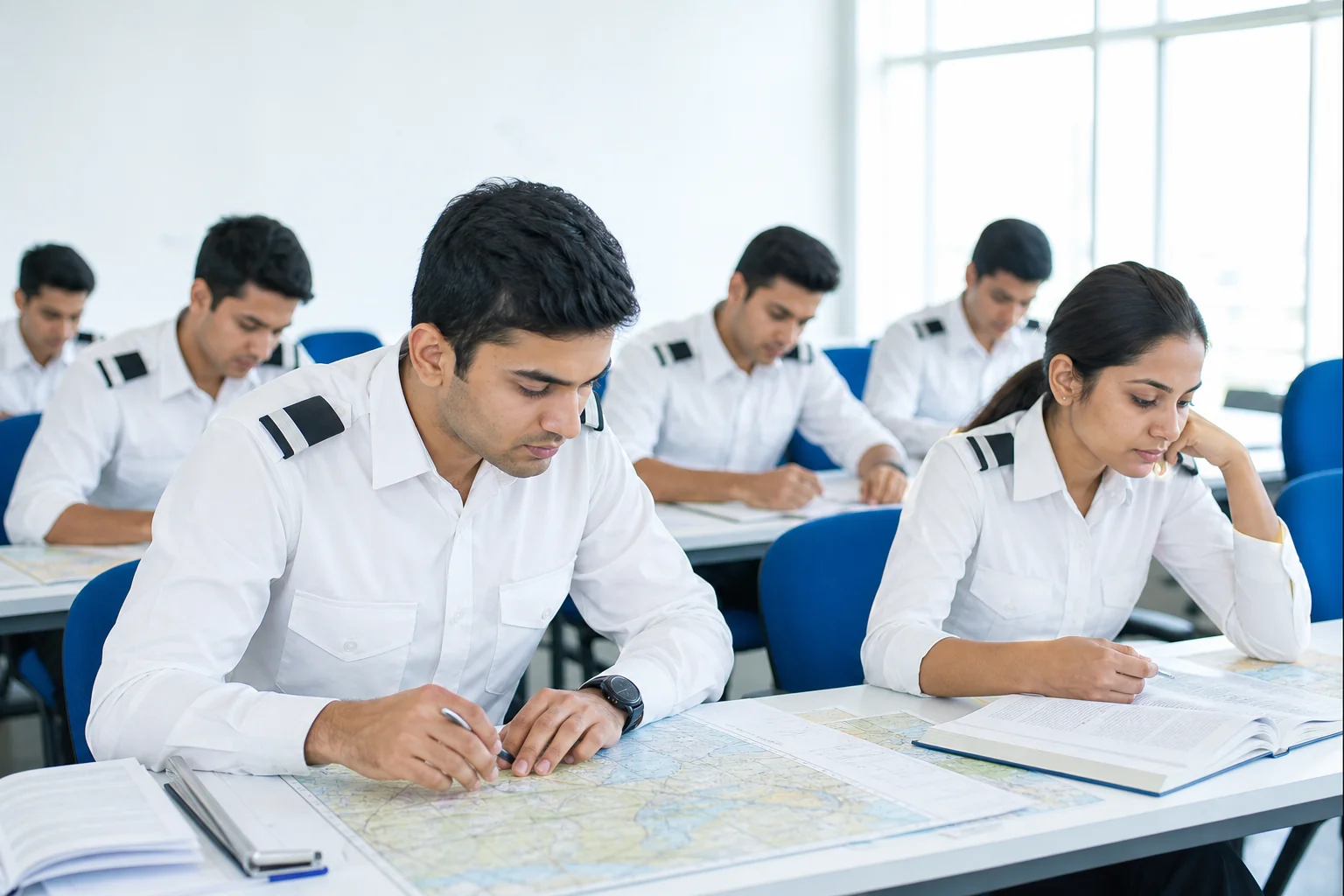
Ground training is the classroom phase of becoming a commercial pilot. Before you ever sit inside an aircraft, DGCA requires you to pass computer-based exams covering navigation, weather, aviation law, aircraft systems, and radio procedure. Delhi has become a natural hub for this stage of training. It sits close to DGCA's administrative machinery, and it hosts a dense mix of academies, from long-running traditional institutes to newer, technology-driven schools.
That density matters more than it sounds. A city with many academies also has more mock-test centers, more instructors who have actually cleared these exams recently, and more peer competition, which tends to push pass rates up. For a full subject breakdown, our instructor insights on common ground school mistakes is worth reading before you sign up anywhere.
1. Confirm You Are Eligible Before You Enroll
Before you pay a single rupee to any academy, check two things. First, you need 10+2 with Physics and Mathematics; without this combination, DGCA will not process your exam application later, no matter how good your ground school grades are.
Second, get your DGCA Class 2 medical and also your Class 1 medical done early. It is far cheaper to discover a disqualifying condition before you enroll than after you have paid for months of classes. Our detailed guide on why the Class 2 medical matters before ground training walks through what examiners actually check and why timing this correctly protects your money.
2. Get Your Computer Number and DGCA Account Set Up
Every DGCA exam candidate needs a Computer Number, which is your permanent identity on the exam system. You register on pariksha.dgca.gov.in, set up your login using your registered email and mobile number, and this account stays with you through every future exam attempt.
Once your account is live, you use the same dashboard later to apply for exam sessions. Some Delhi academies help students complete this step during orientation week, but you can also do it yourself before you have even chosen a school. Doing it early removes one bottleneck from your timeline.
3. Choose a Ground Training Academy in Delhi
Not every academy in Delhi teaches ground school the same way. Some still run purely lecture-based classes with printed notes and periodic paper tests. Others build the entire syllabus around a large digital question bank, track your weak topics automatically, and give parents a way to check progress remotely.

Before enrolling anywhere, ask to see the question bank size, the pass-rate history, and whether the academy offers simulator exposure alongside ground classes. Rian Air's own facility near Ramphal Chowk is one example of the newer model: four floors, hybrid simulators on site, and a digital logbook tracking every student from day one. You can read more in how Rian Air is redefining pilot training at Ramphal Chowk, and compare academy models directly in our piece on Rian Air vs other ground training academies.
4. Understand the Six DGCA Subjects You'll Study
DGCA's ground exam covers six papers, and each one demands a different kind of study effort. Air Navigation is calculation-heavy and rewards daily practice more than last-minute revision. Aviation Meteorology asks you to interpret real weather patterns, not just memorize definitions.
Air Regulations tests your knowledge of aviation law and DGCA rules, which changes occasionally and needs current material. Technical General and Technical Specific cover aircraft systems and engines, the two papers most students underestimate. RTR, the radio telephony paper, includes a practical component that catches out students who only study theory.
Most Delhi academies sequence these subjects so lighter conceptual papers come first, building confidence before students hit the heavier technical papers. A well-run DGCA exam guide can help you map this sequence against your own study capacity.
5. Apply for DGCA Exam Sessions
DGCA conducts four regular exam sessions every year and eight OLODE exam sessions every year. Once your Computer Number account is active, you log in, go to your dashboard, and click Apply for Examination → Select Exam Session, as outlined in official step-by-step application guidance when you enquire with Rian Air.
Book your slot as soon as your academy confirms you have finished a subject's syllabus. Waiting too long often means missing that session's window entirely and losing months to the next one.
How to Pass the DGCA Exam in Your First Attempt?
Passing on the first attempt comes down to disciplined question-bank practice, timed mock tests under exam conditions, and tracking which topics you get wrong repeatedly. Students who treat every mock test as a diagnostic tool, not a scorecard, consistently outperform those who just re-read notes.
A platform that logs every attempted question and flags weak areas automatically removes the guesswork from this process. That is the exact approach behind Rian Air's pilot career intelligence app, built to turn theory prep into a data problem instead of a memorization marathon.
6. Avoid the Mistakes Most First-Time Aspirants Make
Three mistakes repeat across almost every batch of Delhi aspirants. The first is treating RTR as an afterthought; its practical radio component needs spoken practice, not just written revision.
The second is skipping regular self-assessment, so weak topics only surface during the actual exam. The third is underestimating Technical Specific, which covers your aircraft type in real depth and punishes shallow reading. Our detailed breakdown of common mistakes DGCA aspirants make during ground school covers each of these with instructor observations from actual batches.
How Much Does Ground Training for Pilots in Delhi Cost?
Ground training fees in Delhi vary widely by academy, and the headline number rarely includes exam retake fees, study material updates, or simulator add-ons. Ask for a complete written breakdown before enrolling, and confirm what happens financially if you need to repeat a paper.
Hidden charges are common enough across the industry that we wrote a dedicated guide on pilot training cost in India and the hidden fees parents miss. If financing is a concern, our practical guide to education loan eligibility for pilot training explains what banks actually look for.
7. Plan What Comes After Ground School
Ground training is the beginning, not the whole path. Once you clear your DGCA papers, the next stages are simulator training, actual flight training in India or abroad, and eventually a type rating on an aircraft like the A320 or B737 or Instructor Rating.
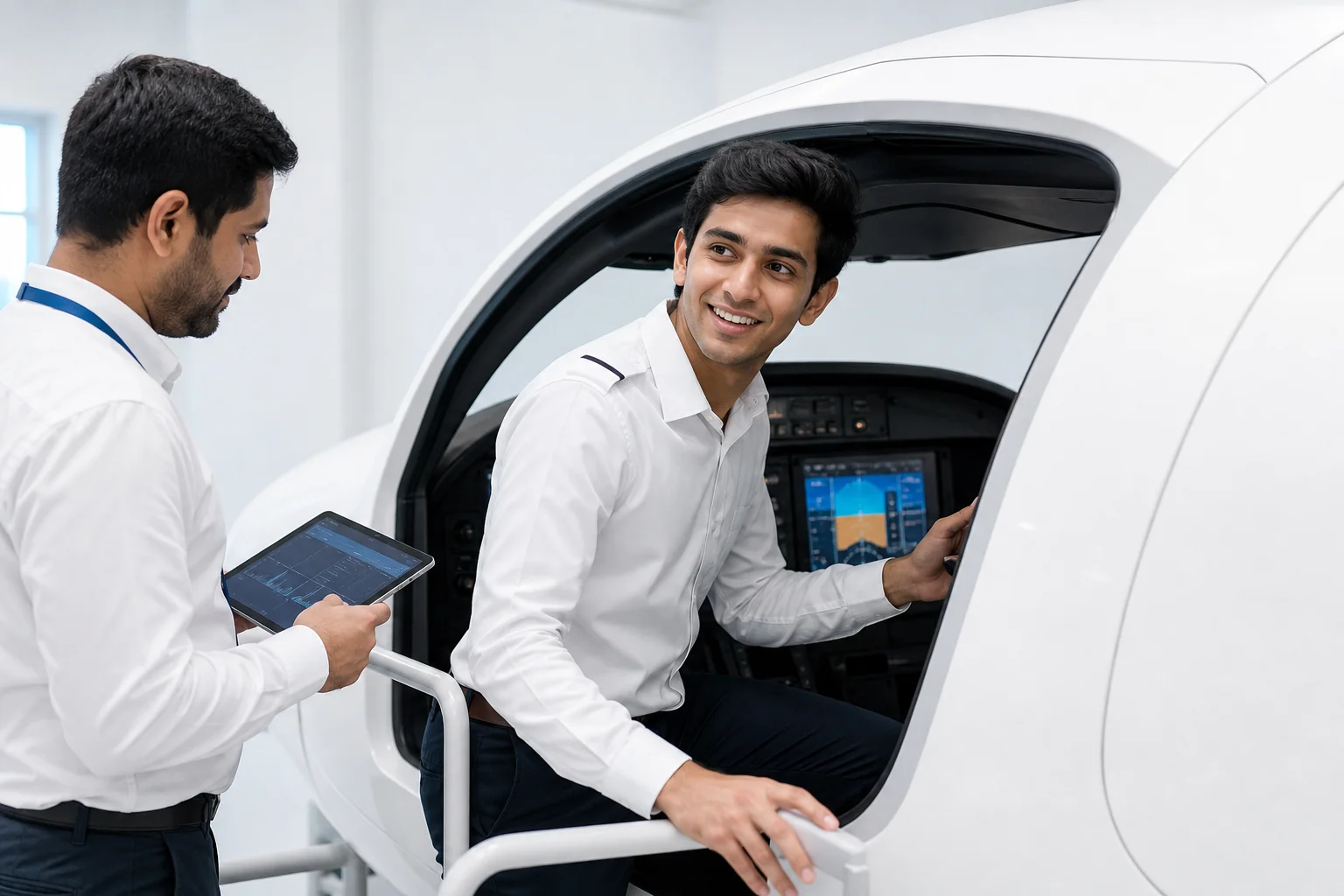
Many students underestimate how much a strong simulator foundation shortens later flight training. Building simulator hours right after ground school, rather than waiting, keeps concepts fresh and reduces relearning time once you get into a real aircraft.
Is Delhi a Good City to Start Pilot Training Compared to Kerala or Mumbai?
Delhi works well for ground training because of its academy density and proximity to DGCA's regulatory ecosystem, though Kerala and Mumbai each have their own strengths in simulator access and flight training infrastructure. The right choice depends on whether you plan to stay in one city through the full pathway or move between cities for different training stages.
If you are weighing this decision seriously, our comparison of how fixed-base simulator training actually works is a useful next read once you finish ground school, regardless of which city you started in.
Frequently Asked Questions
Can I start ground training in Delhi right after 12th, before my Class 2 medical?
You can enroll conditionally at some academies, but do not skip the medical. Confirm it early so a disqualifying condition does not surface after you have already paid for months of classes.
Do I need to travel to another city for flight training after Delhi ground school?
pariksha.dgca.gov.inDelhi has no flight schools but just ground training organisations. India has enough DGCA-approved flight training organisations that a full CPL is possible domestically, and some students still choose international pathways for aircraft availability reasons. Our piece on whether you need to travel abroad for pilot training covers both routes in detail.
Are there scholarships for ground training in Delhi?
Some academies, including Rian Air, run merit-based scholarship programs, including a Women Empowerment track for aspiring women pilots. Read the actual eligibility criteria in our guide to Women Empowerment CPL ground training scholarship eligibility before assuming you qualify, and always ask for the terms and conditions sheet directly from any academy offering one.
Ground training for pilots in Delhi rewards preparation more than luck: get your medical and Computer Number sorted early, pick an academy that tracks your weak topics instead of just teaching to a syllabus, and book your exam sessions as soon as each subject is genuinely ready. If you want a structured, data-tracked way to move from enrollment to exam readiness, Start Your Pilot Journey with Rian Air's Delhi ground school, or Explore Pathways to see how ground training connects to simulator work, flight training, and type rating. You can also follow real training updates on Instagram or watch student walkthroughs on YouTube.