
Women Empowerment CPL Ground Training Scholarship Eligibility
Nine women applied for one scholarship seat each, cleared a merit assessment, and are now training in Tunisia on a fully refunded ground training deposit. This is what the women empowerment scholarship for CPL ground training eligibility looked like in practice for Ambili, Rana, Ann, Anet, Aysha, Neha, Angel, Nadia, and Manasa, not just as a list of rules on a webpage.
Key Takeaways
Deposit and refund: The refundable ground training deposit for this scholarship cohort was INR 80,000, and each woman received a full refund once she met her program conditions.
Merit, not luck: Selection combined academic screening, an aptitude round, and a personal interview, not a lottery or random draw.
Real training location: All nine women are currently training in Tunisia, one of Rian Air's partner flight training countries.
A genuine milestone: Ambili became the first woman pilot from this group to fly solo in Tunisian airspace and is set to complete training and return to India in October 2026.
Basic eligibility still applies: Age, education, English proficiency, and DGCA medical fitness rules apply to every applicant, scholarship or not.
At a Glance: Women Empowerment Scholarship Facts
| Detail | What It Actually Is |
|---|---|
| Ground training fee | Zero* fee, based on merit (*refundable commitment deposit applies) |
| Deposit amount (this cohort) | INR 75,000, refundable |
| Minimum age | 18 years, or turning 18 during CPL completion |
| Academic requirement | 10+2 with Physics and Mathematics |
| Medical requirement | DGCA Class 2 and Class 1 Medical certification |
| Citizenship and travel document | Indian citizen, valid Indian passport with 2+ years validity |
| Current flight training location for this batch | Tunisia |
| Selection method | Academic screening, aptitude check, personal interview |
Who Is the Women Empowerment Scholarship For?
The scholarship is for Indian women who want to become commercial pilots but need a fair, merit-based route into ground training. It sits alongside Rian Air's gender-neutral merit scholarship, but this one is built specifically to bring more women into the cockpit.
The core eligibility rules are simple. An applicant must be at least 18, or turn 18 during CPL completion. She needs 10+2 with Physics and Mathematics, working English skills, and DGCA Class 2 and Class 1 Medical clearance. She must hold Indian citizenship and a passport valid for at least two years.
None of these rules bend for the scholarship track. What changes is the fee structure: qualifying candidates get their DGCA ground training at zero fee, based on merit, with a refundable commitment deposit standing in place of the usual training cost. Every applicant still submits documents for DGCA, visa, and training exactly as any other cadet would.
If you want the full breakdown of how this differs from other scholarship claims in the industry, read what a real scholarship in pilot training should look like.
Meet the Women Who Secured a Seat
Nine names came up again and again during this scholarship cycle: Ambili, Rana, Ann, Anet, Aysha, Neha, Angel, Nadia, and Manasa. Each one applied separately, from different cities, with different academic backgrounds, but the same goal.
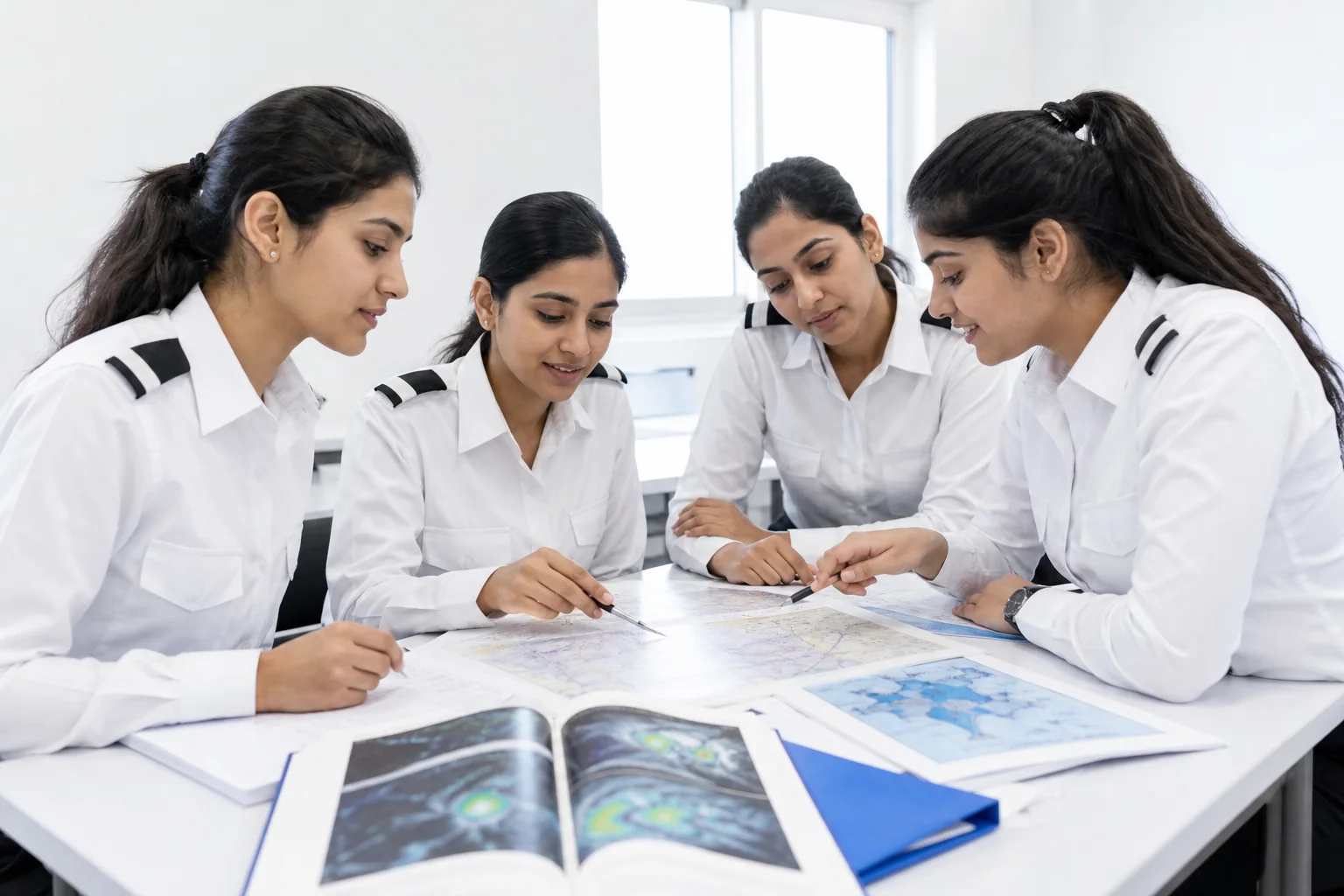
Their applications went through the same screening pipeline as any cadet. Documents were verified first: 10+2 marksheets, passport details, medical readiness status. Then came an aptitude round testing basic math, physics reasoning, and English comprehension, the kind of thinking a cadet uses daily in navigation and meteorology classes.
The interview stage is where most candidates say the process actually became personal. It wasn't a script of yes or no questions. Panelists asked about motivation, family support, and how each woman planned to manage the demands of ground school alongside flight training abroad.
Ambili's case stands out. She has become the first woman pilot from the scholarship batch to fly solo in Tunisian airspace, a real operational milestone, not a ceremonial one. She is close to finishing her flight training and is expected back in India in October 2026.
Nine women, one deposit refund policy, and one first flight over Tunisian skies: the scholarship's real proof is in outcomes, not in the wording on a webpage.
What Does the Merit Criteria Actually Look Like?
Merit here means a three-part check: academic screening, an aptitude test, and a face-to-face interview. It is not a single cutoff score, and it is not decided by a form submission alone.
The academic screening confirms the basics: completed 10+2 with Physics and Mathematics, and a genuine grasp of English, since ground school material and DGCA exams are conducted in English. This step filters out incomplete applications early.
Next comes the aptitude round. It checks reasoning speed and comfort with numbers, both skills a cadet leans on constantly in Air Navigation and Meteorology classes. Weak scores here don't disqualify a candidate outright, but they do shape how much extra support she may need once training starts.
The interview is the final filter. It is where the panel checks commitment level, family backing, and readiness to relocate for flight training. For a program built around trust, this stage matters as much as the paperwork. If you're preparing for your own ground school entry, our instructor insights on common ground school mistakes covers what trips up most first-time cadets.
How Does the Refundable Deposit Process Work?
The deposit works as a commitment marker, not a hidden fee. Each woman in this program paid INR 80,000 as a refundable ground training deposit, and each one received the full amount back once she met the conditions attached to her enrolment.
Why have a deposit at all, if the ground training itself is at zero fee based on merit? It filters out applicants who aren't serious about following through on flight training, since seats and instructor time are limited resources. A refundable deposit protects that seat allocation without charging anyone for training itself.
For these nine women, the deposit was returned after they met their program's compliance conditions, tied to progressing into flight training as scheduled. None of them describe it as a fee they paid to attend ground school. They describe it as money returned once they proved they were following through on what they signed up for.
Parents and sponsors often ask how this compares to standard education financing. If your family is weighing a loan alongside a scholarship application, our guide on education loan eligibility for pilot training in India breaks down the numbers side by side.
Training in Tunisia: Ground School to Solo Flight
All nine scholarship recipients are training in Tunisia right now, one of the international partner locations used for flight training after ground school in India. Tunisia offers clear airspace, steady flying weather across most of the year, and lower per-hour aircraft costs than several European alternatives.
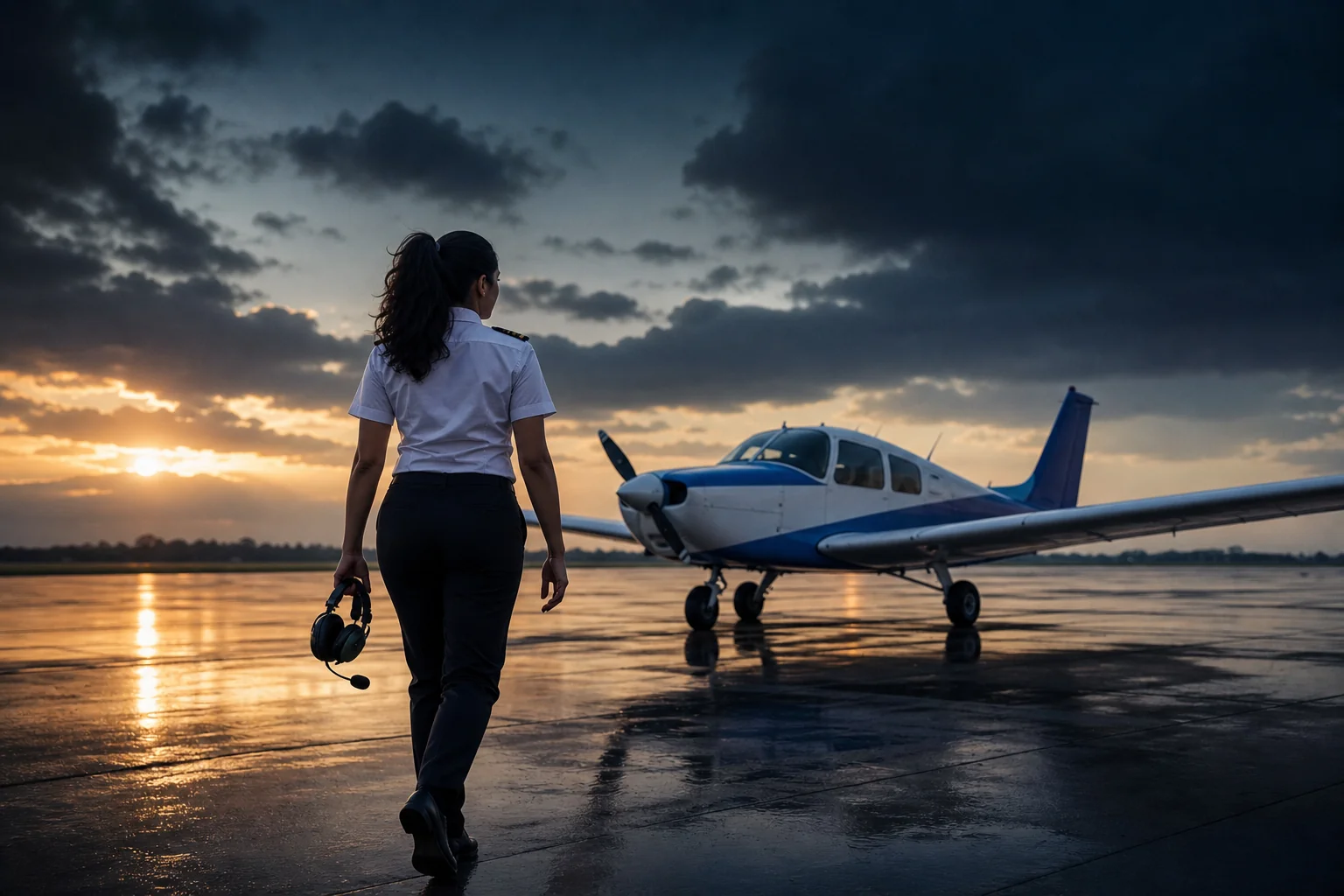
Ground training happens first, covering Air Navigation, Meteorology, and Air Regulations, along with simulator hours and study material access. Once that phase closes, cadets move into flight training with a partner academy, where daily routines shift from classroom sessions to pre-flight briefings, circuit practice, and logged flying hours.
Ambili's solo flight in Tunisian airspace marks the point where a cadet flies unsupervised for the first time, a checkpoint every commercial pilot remembers clearly. Her expected return to India in October 2026, after completing training, puts her on track toward type rating and airline readiness next.
Curious how Tunisia compares against Malta or in-country options? Our detailed comparison of CPL training in India vs Malta vs Tunisia lays out costs, timelines, and weather patterns for each.
After CPL, What Next for These Women Pilots?
After CPL, a pilot typically moves toward type rating on an aircraft like the A320 or B737, followed by airline interviews and first officer placement. That sequence applies to scholarship graduates the same way it applies to any other cadet.
Ambili and her batch will need to log flying hours, complete any remaining checkrides, and then decide which type rating suits their career goals. This decision isn't cosmetic. Airlines look at fleet size and hiring pace when they choose between A320 and B737 candidates, a topic we cover in detail in A320 vs B737: which type rating to choose first.
Progress tracking matters here too. A digital logbook and performance dashboard let both the cadet and her family follow flying hours, test scores, and milestones like a first solo flight, without waiting for update calls. That kind of visibility is part of what RAPT, Rian Air's tracking platform, is built to give parents and sponsors.
Common Questions About the Women Empowerment Scholarship
Who qualifies for the women empowerment scholarship for CPL ground training eligibility?
Indian women aged 18 or above, with 10+2 in Physics and Mathematics, DGCA medical clearance, and a valid passport qualify to apply. Final selection depends on academic screening, an aptitude round, and an interview.
Is the refundable deposit the same as a training fee?
No, the deposit is not a training fee. It is a refundable commitment amount, INR 80,000 for this program, returned in full once a candidate meets the program's stated conditions.
Where do scholarship recipients complete flight training?
Scholarship recipients complete flight training at partner academies abroad, with Tunisia currently hosting this cohort's nine women, including Ambili, who recently flew solo there.
Can a low income student apply for this scholarship?
Yes, this scholarship exists specifically to reduce the financial barrier for women who might otherwise skip pilot training due to cost, alongside other low cost training options explained on our site.
What happens after ground training ends?
After ground training, cadets move into flight training, then type rating preparation, and finally airline interview rounds, the same path any CPL holder follows toward a first officer role.
Ambili's solo flight over Tunisian airspace and her expected return in October 2026 show what this scholarship looks like when it actually works: real deposits refunded, real training completed, real milestones logged. If you're an aspiring woman pilot weighing your own eligibility, start your pilot journey with a scholarship enquiry today, or explore the full range of training pathways available across India, Malta, and Tunisia. For daily updates from cadets in training, follow us on Instagram or subscribe on YouTube to see how these journeys unfold in real time.