How Fixed-Base Simulator Training Actually Works
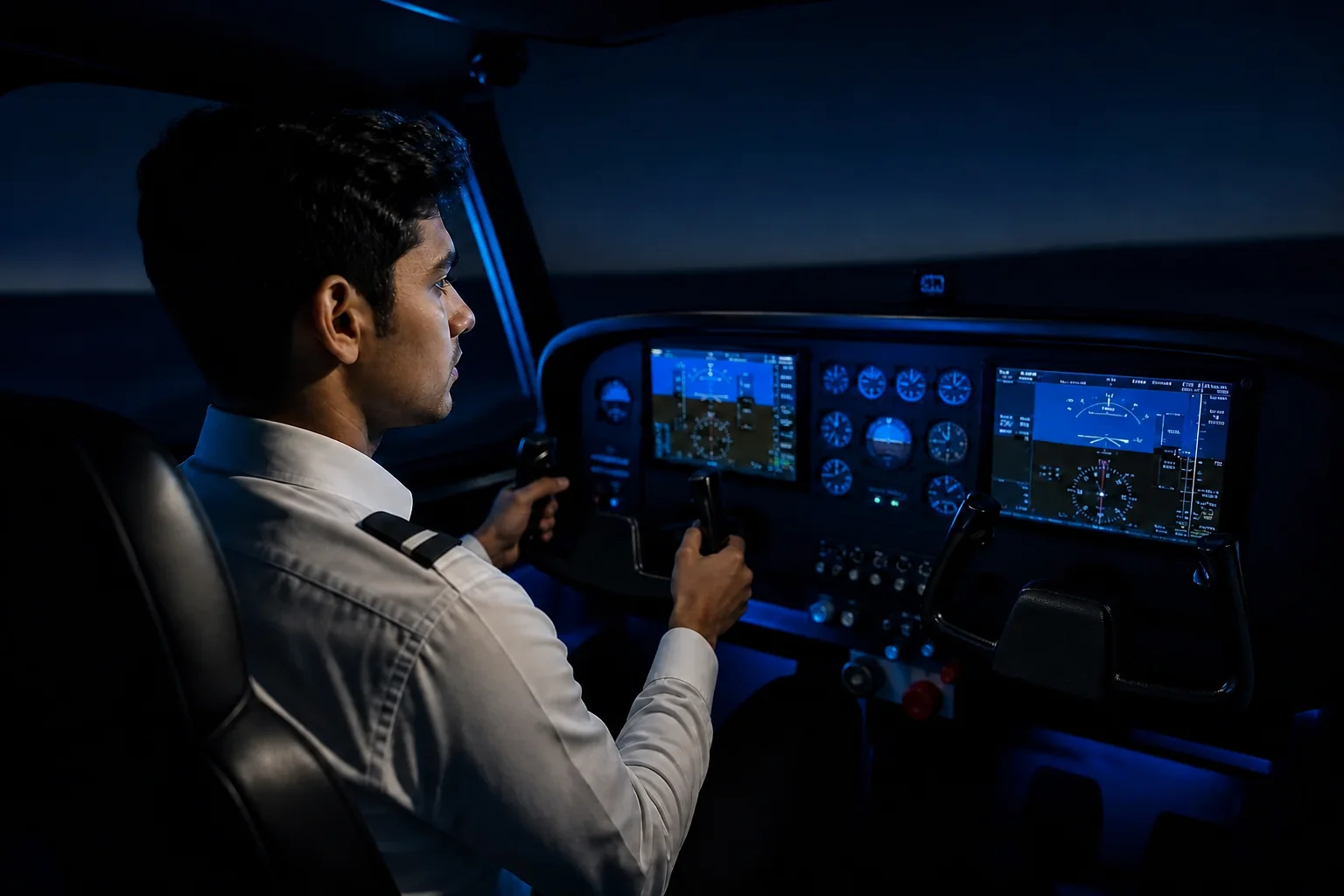
A fixed-base simulator works by placing a trainee inside an exact replica of a real cockpit, without any motion platform, and running realistic flight scenarios that the student repeats until the correct response becomes automatic.
This is how fixed-base simulator training builds the reflexes and checklist discipline a student needs before ever taking an aircraft off the ground.
Key Takeaways
- No motion, full realism: A fixed-base simulator does not tilt or shake, but its instruments, switches, and controls match the real aircraft down to the layout.
- Repetition builds reflexes: Students repeat checklist flows and radio calls dozens of times per session until they no longer need to think through each step.
- Failure is the point: Engine-out drills, weather diversions, and system faults are practiced safely, something a real aircraft rarely allows without real risk.
- Fewer real flight hours needed: Structured simulator logging lets a student arrive at the aircraft already competent at procedures, cutting wasted air time.
- Every session is recorded: Platforms like RAPT™ log each simulator session digitally, so instructors and parents can track exact skill progress over time.
Fixed-Base Simulator Training at a Glance
Aspect | What Happens |
|---|---|
Session length | Typically 60-90 minutes, including pre-brief and debrief |
Equipment used | Fixed-base simulator matching a C172 cockpit layout, no motion platform |
Core skills trained | Instrument scan, checklist flows, radio calls, emergency response |
Failure scenarios | Engine failure, weather diversion, instrument malfunction, communication loss |
Progress tracking | Logged digitally per session with instructor notes and performance scores |
DGCA relevance | Simulator time supports procedural readiness ahead of logged flight hours |
Where offered by Rian Air | Kerala's C172 fixed-base simulator and DA40-42 hybrid simulators in Delhi |
1. What a Fixed-Base Simulator Actually Is
A fixed-base simulator is a cockpit replica bolted to the floor. It does not move, tilt, or vibrate. What it does replicate, precisely, is everything the student touches: the yoke, throttle, switches, instrument panel, and often the visual field seen through the windscreen.
The C172 fixed-base simulator that Rian Air runs in Kerala mirrors the Cessna 172 cockpit that most Indian students train on for their CPL DA40-42 fixed-base simulator in Delhi helps them with modern avionics used in Tunisia. A student sitting in it sees the same altimeter, the same fuel gauge position, the same trim wheel location as the real aircraft parked on the apron.
This matters because muscle memory is location-specific. If a student learns to reach for the mixture control in one spot during simulator sessions, that same reach happens automatically in the real cockpit later.
Full-motion simulators add hydraulic platforms that simulate g-force and turbulence, useful for advanced type ratings, but for early CPL-stage training, the fixed-base version delivers nearly identical procedural value at a fraction of the operating cost.
Delhi students at Rian Air's academy use DA 40-42 hybrid simulator setups for similar procedural training, while Kerala students get direct access to the dedicated C172 unit, one of the first of its kind in the state.
2. How a Training Session Is Structured
Every simulator session follows a predictable rhythm: pre-brief, scenario, debrief. That structure is what turns simulator time into measurable skill, rather than just screen time.
The instructor opens with a pre-brief, setting the scenario objective, for example, a crosswind landing at a specific airfield or a partial engine failure at 3,000 feet. The student then flies the scenario inside the fixed-base cockpit while the instructor observes from beside or behind, sometimes injecting new failures mid-session to test adaptability.
After the scenario ends, the debrief covers what went right, what broke down, and what to repeat next time. This is where most of the actual learning happens. A student who flew the approach perfectly but forgot a checklist item leaves with a specific, correctable note rather than a vague sense of "it went okay."
Every session gets logged the same day, tied to the student's profile inside the RAPT™ platform, so the next instructor picks up exactly where the last one left off instead of starting from scratch.
3. Building Muscle Memory Through Repetition
Muscle memory forms when the same physical action is repeated enough times that the brain stops consciously directing it. In a fixed-base simulator, a student might run the same pre-landing checklist flow fifteen or twenty times in a single session, adjusting only the failure variable each time.
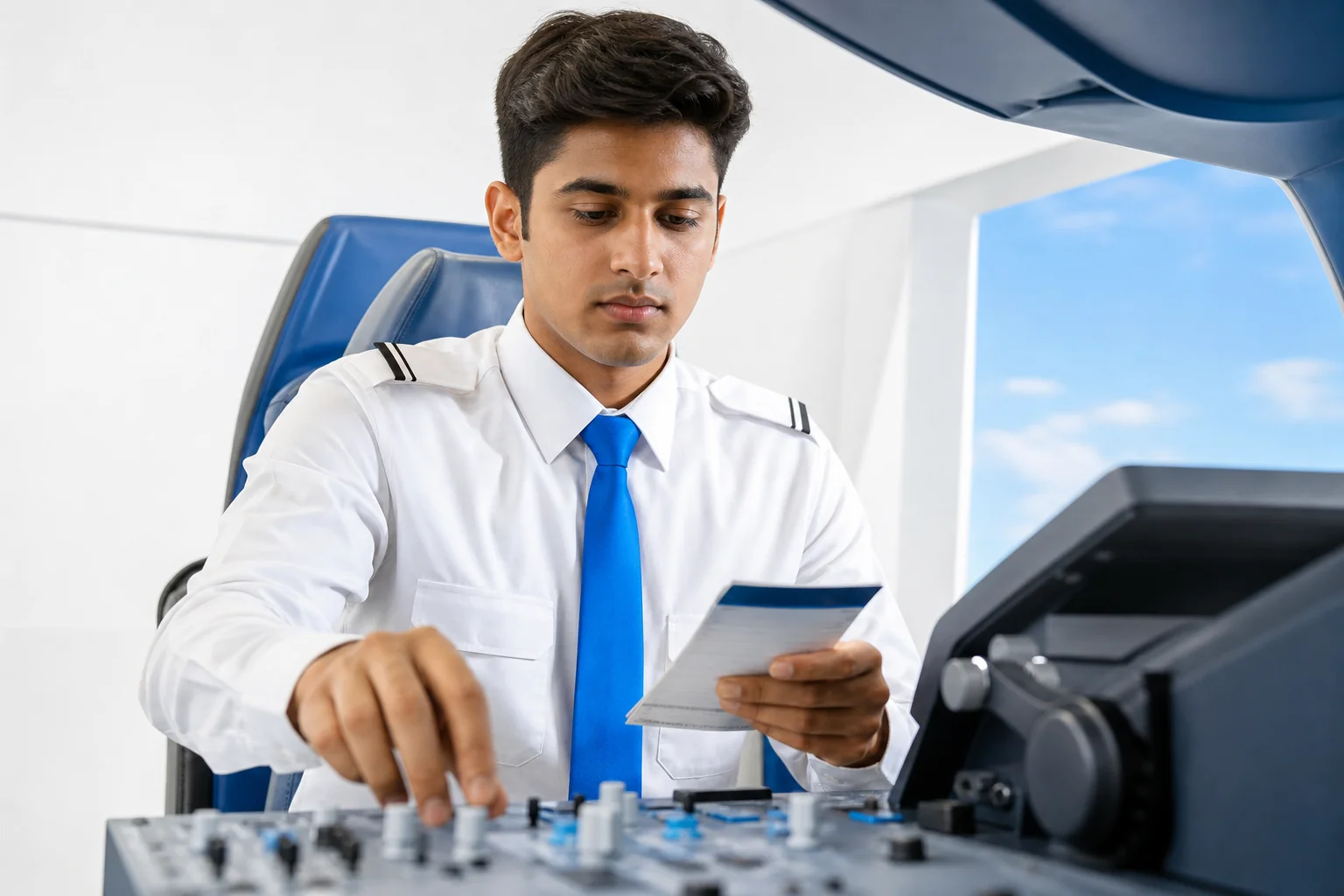
Compare this to ground school, where a student memorizes a checklist on paper. That is knowledge. Repeating the same physical sequence of switch flips and instrument scans inside a cockpit replica, dozens of times, converts that knowledge into reflex. The hand moves before the brain finishes the sentence.
Radio calls follow the same pattern. A first-time student stumbles over standard phraseology. By the tenth repetition in a simulator session, the same call comes out clean and on the correct frequency, without hesitation.
This is precisely the kind of rehearsal that is expensive and risky to do repeatedly in a real aircraft burning fuel at altitude.
4. Why Failure Scenarios Matter More Than Perfect Flights
A student who never fails in training has not actually been tested. Fixed-base simulators exist to inject failure safely, engine trouble, sudden weather, a dead radio, so the response becomes a habit rather than a panic reaction.
Instructors deliberately introduce scenarios a real aircraft cannot safely replicate on demand. An engine failure at 500 feet after takeoff is one of the most dangerous moments in real flight; in a fixed-base sim, it is practiced routinely until the student's response, pitch for best glide, identify a landing spot, run the checklist, becomes automatic.
Weather diversions work the same way. A sudden crosswind or a fog bank rolling in over the destination airfield forces the student to decide, communicate, and divert, all skills that flight schools in India increasingly emphasize given how unpredictable monsoon-season conditions can be over Kerala and parts of Maharashtra.
The goal of a failure scenario is never to trick the student. It is to make the correct response boring by the time it matters in a real cockpit.
5. How Simulator Hours Reduce Real Flight Costs and Delays
Simulator hours are dramatically cheaper to run than real aircraft hours, since there is no fuel burn, no engine wear, and no dependency on weather or aircraft availability. That difference compounds fast across a full training program.
India has faced well-documented aircraft availability constraints, with training fleets grounded for maintenance or shared across too many students at once, pushing course completion timelines out by months.
A student who arrives at the aircraft already procedurally fluent from structured simulator sessions needs fewer real flight hours to reach the same competency bar, the same lever that shortens the road to what happens after CPL,, which directly reduces exposure to those scheduling delays.
It also reduces cost pressure on families. Every hour a student spends mastering a checklist flow learned in DGCA ground school or a failure response in a simulator is an hour they are not paying for fuel, instructor time in the air, and aircraft rental.
For families budgeting a multi-year training pathway, that shift matters. If you're mapping out the full cost structure from ground school onward, our guide on how to become a commercial pilot in India after 12th breaks down the stages where these savings show up.
6. Tracking Progress: Logged Sessions and Parent Visibility
Every fixed-base simulator session at Rian Air gets logged against the student's digital profile, capturing scenario type, instructor notes, and a performance score rather than a vague pass or fail.
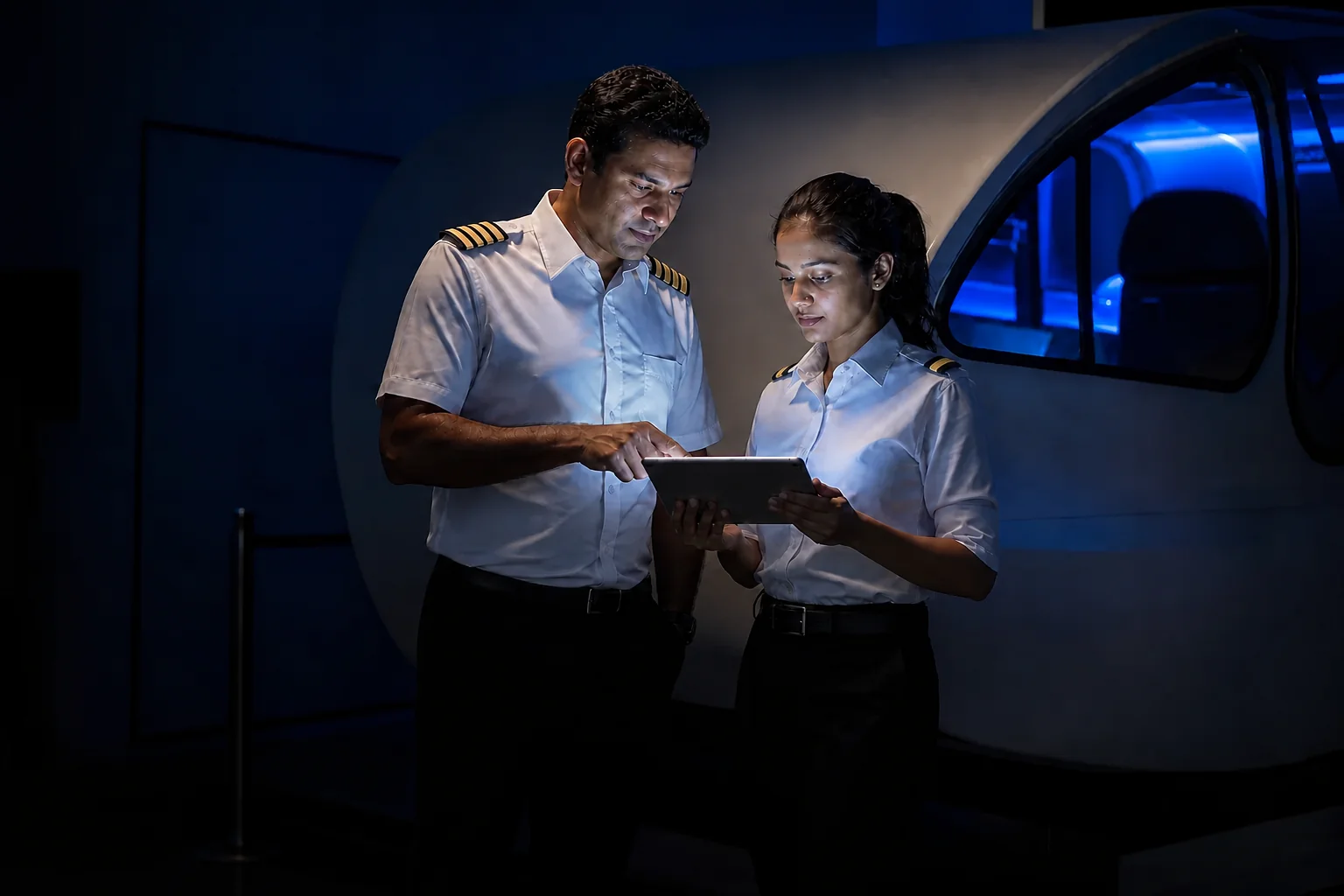
That data lives inside the RAPT™ platform, which functions as a digital pilot logbook and career intelligence tool combined. A student can see exactly which failure scenarios they've mastered and which ones still need repetition, instead of relying on memory of how a session went weeks earlier.
Parents and sponsors get a parallel view through the parent dashboard, showing session frequency, skill trends, and instructor feedback without needing to sit in on every debrief.
For families financing training from a distance, this visibility answers the question that used to require a phone call to the academy: is my child actually progressing, or just logging hours?
7. Fixed-Base vs Full-Motion vs Real Aircraft: Where Each Fits
Each training environment serves a different stage of a pilot's development, and mixing them in the wrong order wastes both time and money.
| Training Method | Best Used For | Relative Cost | Realism Level |
|---|---|---|---|
| Fixed-base simulator | Checklist flows, radio calls, failure drills, early CPL stages | Low | High for procedures, no motion feedback |
| Full-motion simulator | Type rating prep (A320/B737), advanced handling, g-force scenarios | High | Very high, includes motion and visual cues |
| Real aircraft (e.g. C172) | Actual flight hours, solo flight, checkride readiness | Highest | Complete, but expensive to repeat scenarios |
A student typically moves from fixed-base repetition, into real aircraft hours for the CPL, and later into full-motion simulators when preparing for an A320 or B737 type rating. Skipping the fixed-base stage doesn't save time, it just shifts the same repetition into the far more expensive real aircraft phase.
Is fixed-base simulator training enough before real flight training?
No. Fixed-base simulator training prepares the procedural and reflex side of flying, checklists, radio calls, failure response, but it cannot replace the physical sensations of real flight like actual crosswind handling or aircraft feel, which is why it precedes rather than replaces logged aircraft hours.
How many simulator hours should a student log before solo flight?
There's no fixed national number, since it depends on the individual student's pace and the academy's syllabus structure. What matters more than a specific hour count is instructor sign-off confirming the student consistently executes checklists and emergency procedures without prompting across multiple sessions.
Getting Started with Simulator Training in Delhi and Kerala
Rian Air runs its C172 fixed-base simulator in Kerala and hybrid DA40/42 simulator training out of Delhi, giving students in both regions structured access to the same procedural training, alongside pilot training in Thrissur, Kerala, before they log real aircraft hours.
Students from Mumbai and across Maharashtra also route through these programs as part of their broader CPL pathway with the latest generation of DA40/42 simulator being installed there.
If you want to see exactly where simulator training fits into your specific pathway, whether that's training entirely in India or a mix with international CPL programs, you can compare CPL training routes in India mapped out by stage.
Parents wanting visibility from day one can also read the full pilot training cost in India breakdown, which itemises where the scholarship and fee heads land.
Talk to a pilot career advisor about how many simulator sessions your specific timeline needs, or ask to see the fixed-base simulator in person before committing to a training pathway. You can also follow real training sessions on Instagram or watch full simulator walkthroughs on YouTube.
Ready to build the reflexes that carry you through your first solo and beyond? start your pilot training with a fixed-base simulator session designed to make your first real flight feel like your fiftieth.