
Rian Air vs Others: Which is Better for Pilot Training
Rian Air vs others which is better for pilot training comes down to three things alumni actually check: how the academy proves progress, how it structures fees, and whether it offers a real path abroad. Rian Air's students point to its digital logbook, simulator-first ground school, and centres across Delhi, Thrissur, and soon Thane as the reasons they picked it over a traditional academy.
Key Takeaways
- Technology gap: Rian Air runs a digital logbook and a 20,000+ question CPL/ATPL bank through its RAPT™ platform. Most traditional academies still track progress on paper.
- Batch size: Rian Air caps students per batch. Alumni from larger academies often describe instructor time as the biggest complaint.
- Centre reach: Rian Air now operates across north, central, and south India, with a dedicated training building in Delhi and one coming up in Thane, Maharashtra.
- International option: Students weighing CPL abroad compare Rian Air's Tunisia pathway through The Aviator Institute against solo arrangements many academies leave families to sort out themselves.
- Money-back promise: Rian Air offers a money-back promise if a student is not taken through DGCA exams, subject to terms and conditions available on request.
At a Glance: Rian Air vs Traditional Ground Training Academies
Factor | Rian Air | Typical Traditional Academy |
|---|---|---|
Digital logbook | Yes | Rare, mostly manual entries |
24x7 study library | Yes | No Library |
Simulator-based ground training | Yes | Varies, mostly never |
Multiple centres across India | Yes (north, central, south, expanding to north east) | Usually one city |
Parent progress dashboard | Yes | No, updates by phone call |
Women empowerment scholarship | Yes, merit-based | Uncommon |
International CPL pathway partner | Yes, Tunisia (The Aviator Institute) | Depends on academy, often ad hoc |
Batch size | Limited per batch | Often large, 100s at times |
Why Alumni Compare Rian Air Against Other Academies Before Choosing
Ask any alumnus how they picked their academy and few say it was the brochure. Most describe calling multiple institutes, sitting through demo classes, and asking blunt questions about fees and outcomes.
That is the right instinct. A pilot training decision usually locks in three to four years of cost, location, and career direction. Getting it wrong is expensive to undo.
Students weighing rian air vs others which is better for pilot training tend to focus less on marketing claims and more on three practical checks: can I see my own progress data, will I get real simulator time before flying, and is the fee structure written down clearly. Rian Air's answer to all three is documented through its structured path from 12th grade to commercial pilot license, which many alumni say was the deciding factor.
Rian Air vs Others: Which Is Better for Pilot Training on Technology?
Rian Air is better on technology for students who want visible, trackable progress. Its RAPT™ platform ties ground school scores, simulator hours, and a digital logbook into one dashboard, something most traditional academies do not offer.
A paper logbook works, but it hides patterns. A student weak in Meteorology for months might not notice until a mock exam fails. RAPT flags that weak topic automatically and routes more questions from that section.
Parents get a version of this too. A sponsor in Mumbai can check attendance and mock test scores without calling the front desk. That single feature answers a common search query parents type: how to actually track progress remotely rather than trust a monthly update call.
Fees and Cost Structure: Yes/No Comparison
Fee transparency is where alumni say academies differ the most, often more than course content itself.
| Question | Rian Air | Common at Other Academies |
|---|---|---|
| Are all fee components listed upfront? | Yes | Often no, add-ons appear later |
| Installment or milestone-based payment plans? | Yes | Sometimes, rarely tied to checkpoints |
| Merit-based scholarship available? | Yes | Rare |
| Women empowerment ground training program? | Yes, merit-based, refundable commitment deposit applies | Uncommon |
| Written money-back promise on DGCA exams? | Yes, terms and conditions apply | Rarely offered |
Hidden fees are the single biggest complaint alumni raise about academies in general, not just one brand. Rian Air's own writing on pilot training cost breakdown and hidden fees parents miss covers this pattern in detail, and it is worth reading before signing with any institute.
Families exploring funding routes should also check education loan eligibility for pilot training in India before comparing academies on fee alone, since loan approval terms can change which option is actually affordable.
Simulator-Based Ground Training: Does Every Academy Offer It?
No, not every academy runs simulator-based ground training. Many still teach theory purely from textbooks and slides, saving all simulator exposure for after ground school ends.
Rian Air pairs classroom learning with a C172 fixed-base simulator in Kerala, hybrid simulators in Delhi and an upcoming simulator in Maharashtra, so students apply what they learn the same week they learn it. Alumni describe this as the difference between memorising a checklist and actually running it.
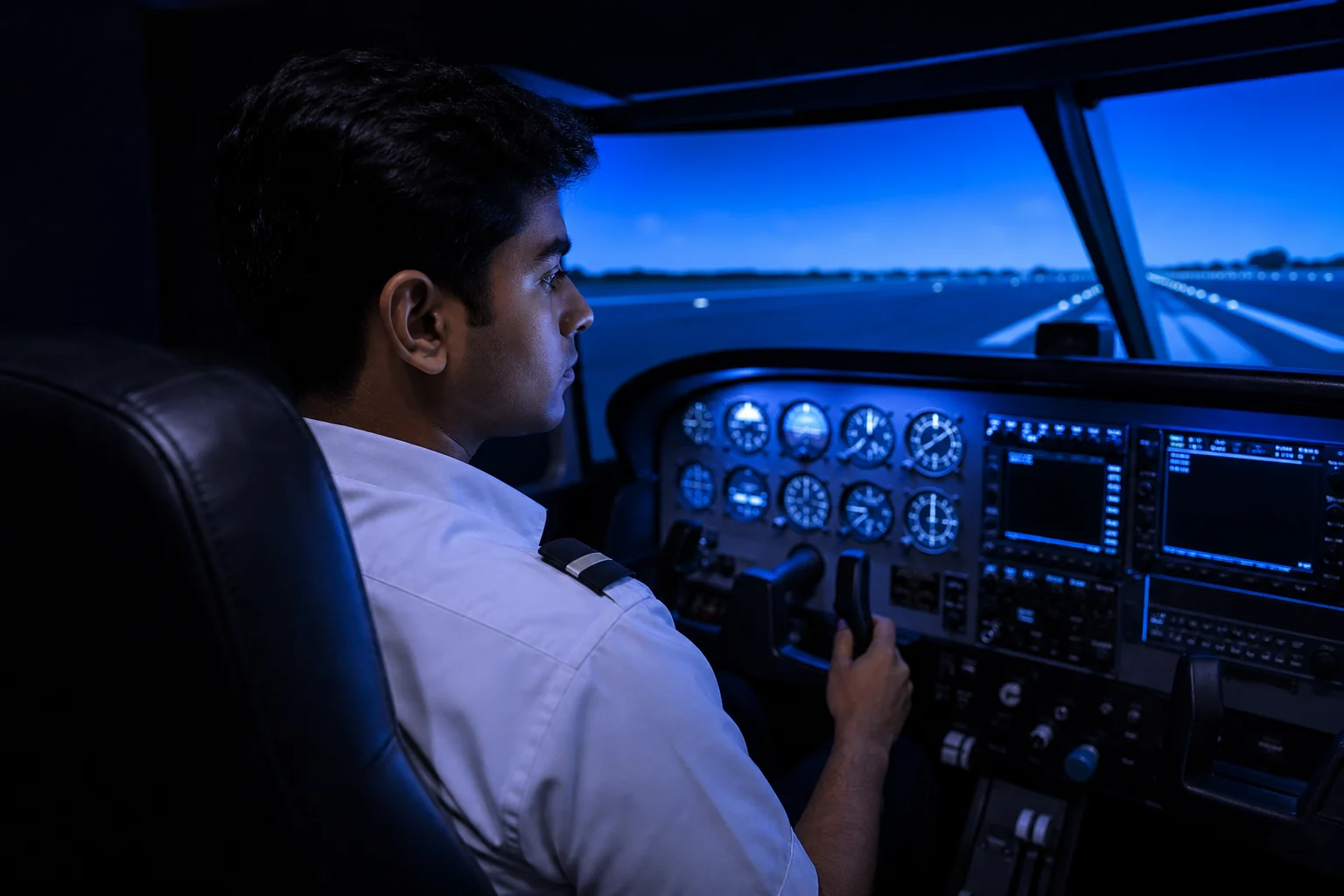
This is not a small detail. A student who never touches a simulator until flight training starts is learning cockpit flow for the first time under pressure, at cost per flying hour. Ground school simulator time removes that first-time shock cheaply.
Campus Reach: Does the Academy Have Centres Across India?
Rian Air currently runs centres across north, central, and south India, and is now expanding into the north east. Most traditional academies operate from a single city, which forces relocation for out-of-state students.
The Delhi centre is a dedicated building, not a shared classroom inside a larger institute. A similar model is coming up in Thane, Maharashtra. That matters for families in Mumbai comparing local options against a Delhi or Kerala-based academy that would mean months away from home.
Read more on how the Ramphal Chowk Delhi centre is structured if location and commute matter to your decision.
International Pathways: CPL Training in Tunisia, Malta or New Zealand?
Tunisia is a strong option for Indian students because it offers lower per-hour aircraft costs than Malta while still training on European-standard fleets like the Diamond DA40. Malta suits students prioritising EASA-linked exposure, and New Zealand suits those chasing daylight hours and stable weather for faster completion.
Alumni who trained abroad describe the same worry: an academy that only "arranges" the trip without an actual training partnership. Rian Air's partnership with The Aviator Institute in Tunisia gives students a named, checkable partner rather than a loosely brokered arrangement.

For a side-by-side look at India, Malta, and Tunisia specifically, alumni recommend reading CPL training in India vs Malta vs Tunisia for Indian students before committing to any one country. The right choice depends on budget, weather windows, and how soon a student wants to finish flying hours.
Batch Size, Campus Life and Women Empowerment: The Human Factors
Small batch sizes came up repeatedly when alumni described why they chose Rian Air. Fewer students per batch means more simulator slots and more direct instructor time, which matters most in the weeks before a DGCA exam.
Cultural events also came up, somewhat unexpectedly. Pilot training is intense, and students who move cities for it often lose the social side of regular college life. Rian Air runs cultural events specifically to keep that part of student life intact, something alumni from other academies said they missed.
The Women Empowerment Program is a separate factor for female aspirants. It offers merit-based, zero-fee DGCA ground training, with a refundable commitment deposit applying. This kind of program is uncommon among traditional academies, most of which run gender-neutral admissions without a dedicated pathway for women.
Gender-neutral, merit-based scholarships exist alongside it, open to any qualifying student regardless of background. Together these widen access for candidates who would otherwise be priced out entirely, a gap the Directorate General of Civil Aviation has flagged as a persistent barrier to pilot supply in India.
Which Academy Should You Choose? A Practical Checklist
Before enrolling anywhere, ask these questions and write down the answers. A verbal promise that is not documented is worth very little later.
- Is the full fee breakdown given in writing, with no undisclosed add-ons?
- Can I see simulator hours logged during ground school, not only during flight training?
- How many students are in one batch, and how is instructor time split?
- Does the academy have more than one training centre, in case I need to relocate later?
- Is there a documented pathway abroad with a named partner institute?
- Can a parent track attendance and exam scores without calling the office?
These same questions form the basis of Rian Air's own guidance on common mistakes DGCA aspirants make during ground school, which is worth reading regardless of which academy you eventually choose.
Frequently Asked Questions
What is the best pilot training academy in India?
There is no single "best" academy for every student. The right one depends on budget, whether you want simulator-based ground training, and if you need centres near home. Rian Air ranks well on technology, transparency, and centre reach, but comparing at least two academies before enrolling is still worth the time.
Is cheap pilot training in India actually cheaper long term?
Not usually. A low headline fee often excludes simulator hours, retest fees, or type rating costs that appear later. Compare total cost across the full CPL to type rating pathway, not just the ground school fee, before deciding an option is cheap.
What are the top pilot schools in India based on?
Top pilot schools are typically judged on DGCA pass rates, simulator infrastructure, fleet condition, fee transparency, and how many centres they operate. Government-run academies like IGRUA follow a traditional model, while newer technology-driven academies compete on tracking tools and international tie-ups instead.
Does batch size actually affect training quality?
Yes, it does. Smaller batches mean more simulator slots and direct instructor attention per student, which becomes critical in the final weeks before a DGCA exam or check ride.
If you are still weighing Rian Air against another academy, the fastest way to get a clear answer is to compare fee sheets, simulator access, and centre locations side by side. Explore Rian Air's training pathways to see how ground school, simulator training, and international CPL options fit together, or start your pilot journey with Rian Air today by requesting a fee breakdown and centre details for Delhi, Thrissur, or Thane. Follow the day-to-day training life on Instagram or watch simulator sessions on YouTube before you decide.