How Rian Air Is Redefining Pilot Training at Ramphal Chowk in Delhi
Rian Air is redefining pilot training at Ramphal Chowk in Delhi by putting an entire four-floor building to work for one purpose: turning ground school candidates into airline-ready pilots. A DA40/42 hybrid simulator, an AI-integrated classroom, and an exclusive Airbus-linked flight pathway sit under one roof, with a Rs 80,000 fee running until March 2027 while most Delhi academies charge between Rs 1.5 lakh and Rs 3.5 lakh for a comparable spread.
Key Takeaways
- Dedicated infrastructure: Four floors at Ramphal Chowk are split by function: simulators, admin and meetings, an AI smartboard classroom, and India's first 24x7 library reserved only for pilots.
- Simulator roadmap: A DA40/42 hybrid simulator is already installed, with two more coming, including one with AR/VR integration built for Airbus A320 procedures.
- Pricing versus the market: Air Navigation, Meteorology, Regulations, simulator sessions, and RAPT access cost Rs 80,000 until March 2027, rising by Rs 20,000 after that, against a market range of Rs 1.5 to 3.5 lakh.
- Airbus-linked pathway: Rian Air is the exclusive channel partner of the Aviator Institute, one of three schools inside the Airbus Flight Academy network, for a minimum of five years.
- Track record so far: Every student enrolled in the 2026 intake has cleared their attempts to date, with the next regular batch starting 19 September and capped at 24 seats.
Rian Air Ramphal Chowk At a Glance
| Detail | Ramphal Chowk, Delhi Campus |
|---|---|
| Floors dedicated to pilots | 4 (simulators, admin/meetings, classroom, 24x7 library) |
| Simulator | DA40/42 hybrid installed; two more planned, one AR/VR for A320 |
| Batch size | 24 students at a time |
| Fee (Air Nav, Met, Regs, sim sessions, RAPT access) | Rs 80,000 till March 2027, then +Rs 20,000 |
| Market comparison | Rs 1.5 lakh to Rs 3.5 lakh at other Delhi academies for a similar scope |
| Flight training partner | Aviator Institute, part of the Airbus Flight Academy network |
| Flight training wait period | Roughly one year, facilitated only through Rian Air in Delhi, Thrissur, and Maharashtra |
| Next intake | Regular batch starts 19 September |
What Makes the Ramphal Chowk Building Different From a Typical Delhi Academy?
The Ramphal Chowk building is different because it dedicates one full structure to pilots alone, splitting simulators, administration, classrooms, and a library across four separate floors instead of squeezing everything into a single rented office suite. No other academy in Delhi currently runs infrastructure built this way.
Most ground schools in the capital operate out of a couple of rented rooms: a classroom, maybe a small counter for admissions, and simulator access arranged off-site or shared with other batches. Rian Air's approach separates each function so nothing competes for space or time.
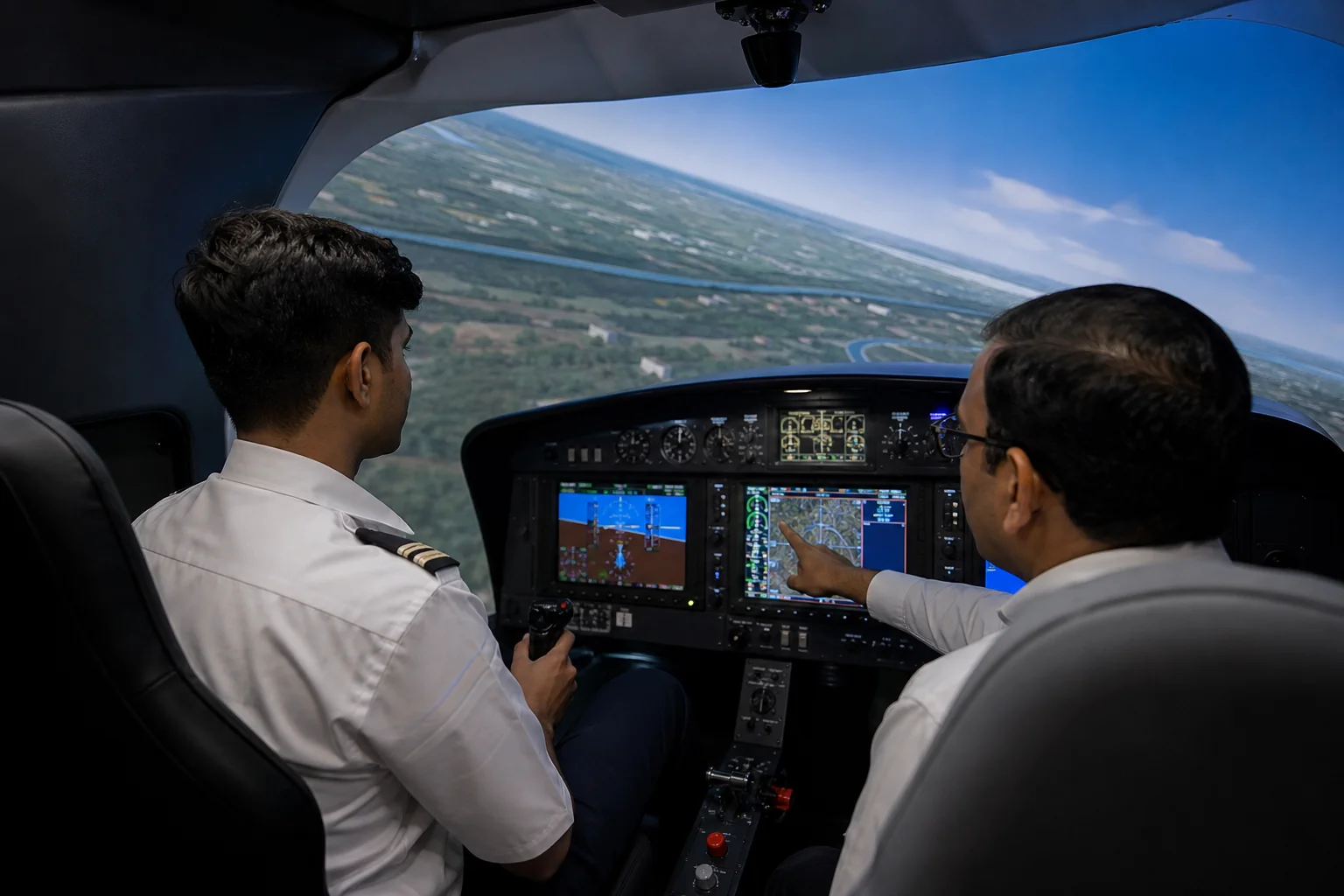
The first floor holds the simulator suite, currently anchored by a DA40/42 hybrid unit, with two more simulators due to join it, one built around AR/VR integration specifically for A320 procedures training. The second floor is reserved for meetings and administrative work, keeping parent conversations and paperwork away from active training.
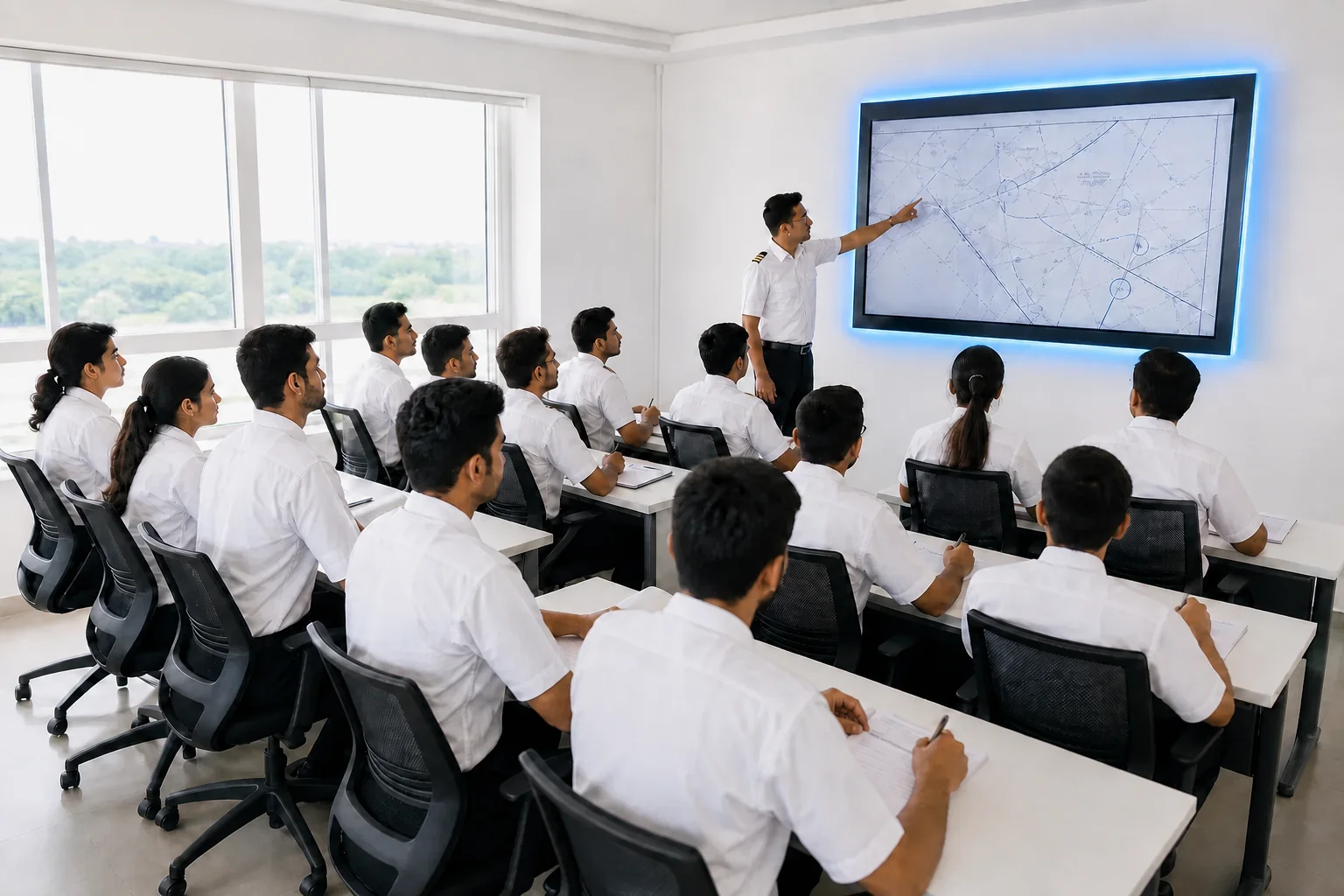
The third floor is a modern classroom fitted with an AI-integrated digital smartboard, capped at 24 students per batch so instructors can track individual progress rather than lecture to a packed hall. The fourth floor is a 24x7 library open only to pilots in training, which Rian Air describes as the first of its kind in India.
Because revision material, simulator time, and classroom instruction all sit in the same building, students can complete a full day of preparation and then genuinely switch off once they leave. That structure supports the kind of steady study habit outlined in Parents' Guide: How to Pass DGCA Exam in First Attempt, where consistent daily tracking, not last-minute cramming, is what actually moves DGCA scores.
Why Does the Aviator Institute-Airbus Connection Matter?
The Aviator Institute connection matters because it links Ramphal Chowk students to one of only three schools operating inside the Airbus Flight Academy network, which means the training standard, syllabus rigor, and intake numbers are set by Airbus itself, not by an individual school's marketing team.
Rian Air holds exclusive channel partner status for this pathway across three locations: Ramphal Chowk in Delhi, Thrissur in Kerala, and Thane in Maharashtra. That exclusivity is locked in for a minimum of five years, which means no other Indian academy can offer a comparable route to the Aviator Institute through the same period.
Because Airbus sets the standard and controls intake, the flight training slots at the Aviator Institute are limited. Students who commit to this pathway currently face a wait of roughly one year before a flight training slot opens, and that slot can only be arranged through Rian Air at these three locations.
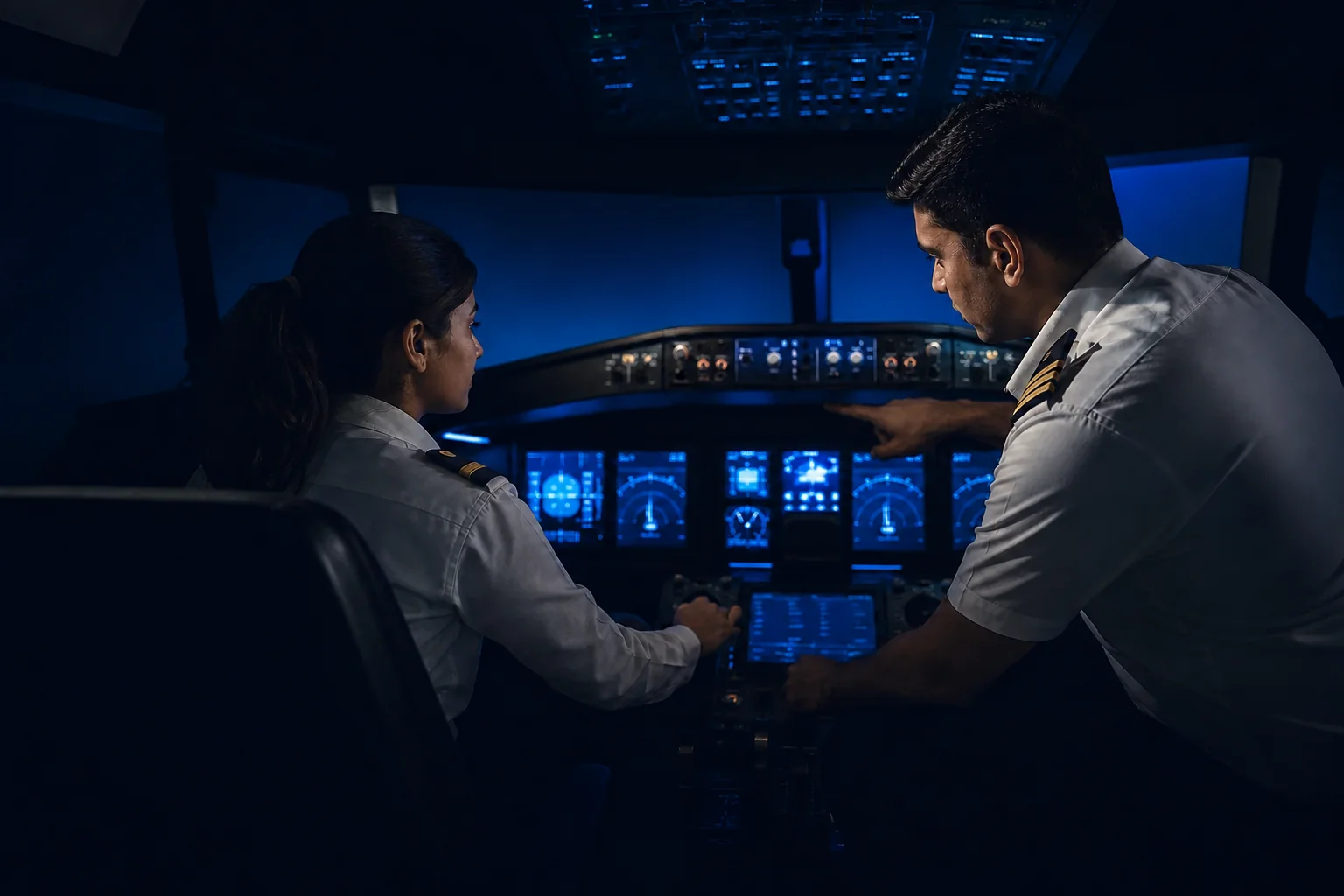
That waiting period is worth planning for early. A student who starts ground school and simulator preparation at Ramphal Chowk now is in a far stronger position when their flight training slot finally opens than one who begins the paperwork after the wait has already started. For context on how simulator hours change readiness before real aircraft time, see How Fixed-Base Simulator Training Actually Works.
Rian Air Ramphal Chowk vs Other Delhi Pilot Academies
Set side by side, the differences between Rian Air's Ramphal Chowk campus and the typical Delhi pilot academy come down to infrastructure, batch size, price, and the flight training pathway behind the ground school fee.
Factor | Rian Air, Ramphal Chowk | Typical Delhi Academy | Premium Global Cadet Program |
|---|---|---|---|
Dedicated building | Yes, 4 floors solely for pilots | Rarely; shared office space common | Yes, but overseas and fee-heavy |
Simulator on site | DA40/42 hybrid, two more planned incl. AR/VR A320 | Often off-site or shared access | Full-motion simulators, high cost |
Batch size | 24 students | Varies, often larger, less individual tracking | Small, but limited to selected cadets |
Ground school fee (Air Nav, Met, Regs, sim, RAPT) | Rs 80,000 till March 2027 | Rs 1.5 lakh to Rs 3.5 lakh | Typically higher, quoted per program |
Airbus-linked flight pathway | Exclusive via Aviator Institute, 5-year lock | Not typically available | Often airline-specific, not Airbus academy network |
24x7 library for pilots | Yes, first in India per the school | No | Varies |
Women's scholarship pathway | Merit-based Women Empowerment Program | Rare | Rare |
The gap in ground school pricing is the one families notice first. Rs 80,000 covering Air Navigation, Meteorology, Regulations, simulator sessions, and RAPT platform access, against a market range of Rs 1.5 lakh to Rs 3.5 lakh, is a meaningful difference before a single flight hour is booked. Parents comparing total costs across academies should also read Pilot Training Cost in India Breakdown: Hidden Fees Parents Miss to understand what tends to get added later at other schools.
How Does the RAPT Platform Fit Into Daily Training at This Campus?
RAPT fits into daily training at Ramphal Chowk by giving each student a single digital record of ground school scores, simulator sessions, and revision progress, so both the student and their instructors can see exactly where preparation stands without waiting for a physical report.
Students complete their scheduled classroom sessions, simulator time, and revision inside the building, then head home once the day's work is genuinely done. That structure removes the guesswork of studying alone at night with no way to check whether the effort is actually landing on the right topics.
Because RAPT logs performance data continuously, a weak subject shows up early instead of surfacing for the first time in a mock exam a week before the real DGCA paper. That kind of early flagging is exactly what the instructors describe fixing repeatedly in Instructor Insights: Common Mistakes DGCA Aspirants Make During Ground School.
CPL Pathway: Where Does Tunisia Fit After Ramphal Chowk?
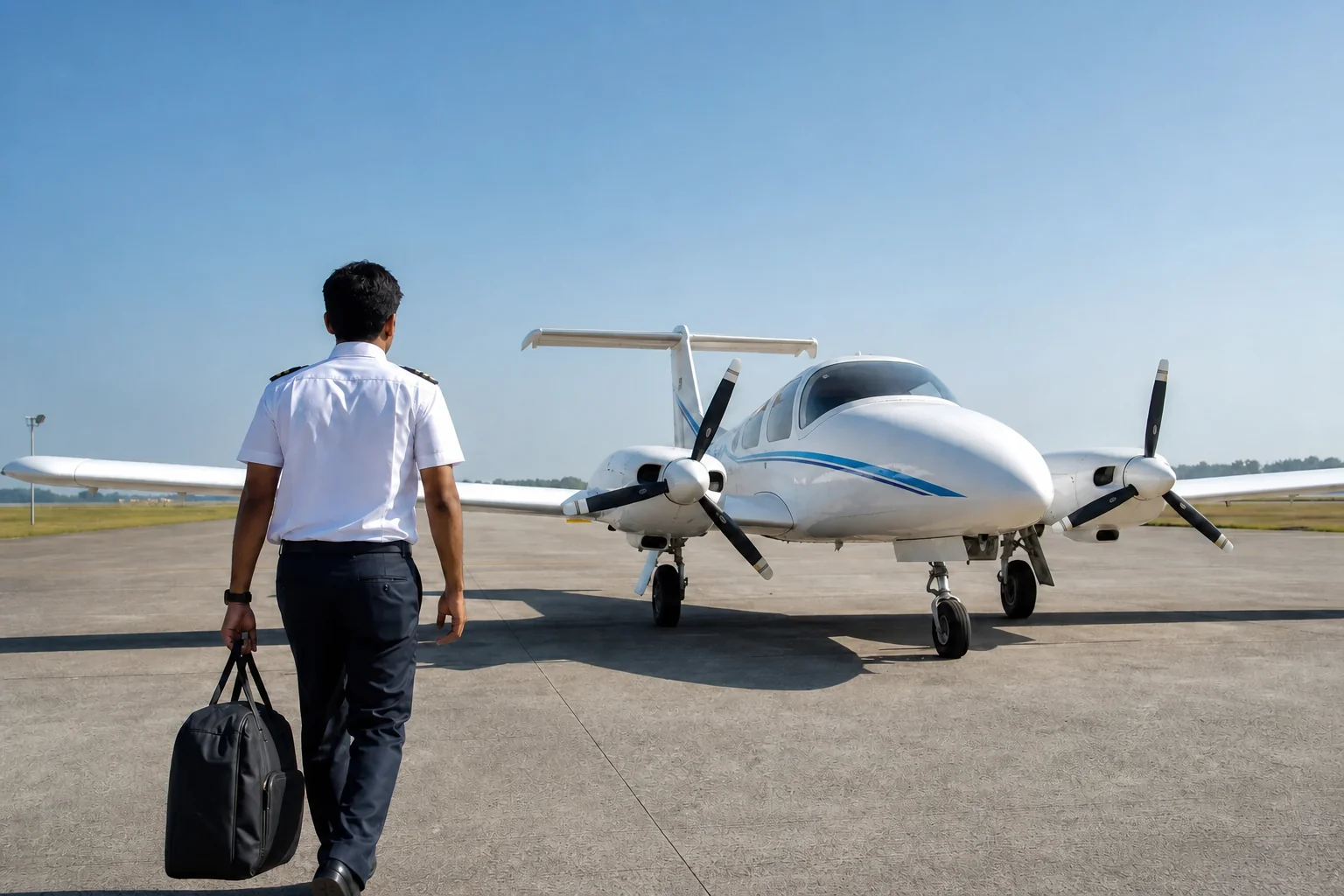
Tunisia fits into the pathway after Ramphal Chowk as the flight training destination where students build their CPL flying hours on Diamond DA40/42 aircraft once their ground school and simulator preparation in Delhi is complete, keeping the Airbus-linked training standard consistent from classroom to cockpit.
The logic behind sending students to Tunisia rather than routing them straight into an Indian flying club comes down to aircraft availability and cost per flying hour. Tunisia's Diamond fleet runs on glass-cockpit avionics similar to what students will meet again during type rating preparation, and the cost per hour there tends to sit below equivalent European options.
Malta remains an option in the broader industry for CPL hours, and some Indian students still choose it for weather consistency. For a Ramphal Chowk student on the Aviator Institute pathway, though, Tunisia is the pairing that keeps the training chain, ground school in Delhi, simulator hours, then CPL flying, aligned with the same Airbus-linked standard end to end. Students weighing destinations in detail can compare the full trade-offs in Free Printable Checklist: DGCA CPL Exam Subjects and Syllabus Explained before committing to a location.
The one-year wait for an Aviator Institute flight training slot applies regardless of destination, since Airbus controls the intake numbers. Booking ground school early at Ramphal Chowk is the only way to start that clock sooner rather than later.
Who Should Consider the Women Empowerment Program Here?
Women considering a pilot career should look at the Women Empowerment Program at Ramphal Chowk if cost has been the main barrier, since it offers zero-fee DGCA ground training based on merit, with only a refundable commitment deposit applying rather than the standard course fee.
A gender-neutral, merit-based scholarship also runs alongside it, so eligibility isn't limited to one group of applicants. Both scholarship routes sit on top of the same Ramphal Chowk infrastructure: the same simulators, the same AI classroom, the same RAPT tracking that every fee-paying student uses.
Families weighing whether a candidate qualifies for either scholarship, or whether standard enrolment makes more sense, can review the full eligibility picture through Rian Air directly rather than relying on second-hand information about how the deposit works.
Frequently Asked Questions
When does the next batch start at Ramphal Chowk Delhi?
The next regular batch at Ramphal Chowk starts on 19 September, with enrolment capped at 24 students so each candidate gets tracked individually through ground school, simulator sessions, and RAPT-based revision.
What is included in the Rs 80,000 fee?
The Rs 80,000 fee, valid till March 2027, covers Air Navigation, Meteorology, Air Regulations, simulator sessions on the DA40/42 hybrid unit, and full access to the RAPT platform for tracking and revision.
How long is the wait for flight training through the Aviator Institute partnership?
Candidates on this pathway currently face a wait of roughly one year for a flight training slot, since Airbus sets the intake numbers for the Aviator Institute and Rian Air is the only school facilitating that access in Delhi, Thrissur, and Maharashtra. The next batch for DGCA compliant program for Indian students starts on 15th of March 2027.
Is Rian Air DGCA compliant?
Yes, the ground school syllabus at Ramphal Chowk follows the DGCA-mandated subjects, Air Navigation, Meteorology, and Air Regulations, delivered through RAPT-tracked classroom sessions ahead of the actual DGCA papers.
How does a 12th-pass student even start this pathway?
A student with Physics and Mathematics in Class 12, a valid DGCA medical clearance, and eligibility age can enrol directly into ground school at Ramphal Chowk. The complete eligibility route is covered in How to Become a Commercial Pilot in India After 12th.
According to the Directorate General of Civil Aviation, ground school subjects and skill test standards are set nationally, which is why the consistency Ramphal Chowk offers through RAPT tracking matters for exam readiness. The Airbus Flight Academy network operates only a small number of partner schools worldwide, which is the structural reason Rian Air's exclusive access through the Aviator Institute is difficult for any other Indian academy to replicate in the near term.
What isn't fully settled yet is how simulator number two and the AR/VR A320 unit will change batch scheduling once both come online; that detail will matter more once installation is complete.
If the combination of a dedicated pilot-only building, an Airbus-linked flight pathway through the Aviator Institute, and a ground school fee well under market rate fits what you're looking for, the next batch at Ramphal Chowk starts 19 September with only 24 seats. Start Your Pilot Journey by reaching out before that intake fills, or Explore Pathways to see how the Delhi ground school links to the Tunisia CPL route. For a closer look at day-to-day training life, follow updates on Instagram or watch training walkthroughs on YouTube.