
Education loan for pilot training in India eligibility: A practical guide
An education loan for pilot training in India eligibility check comes down to four things: your academic record, a co-applicant with steady income, collateral for loans above roughly ₹7.5 lakh, and admission to a DGCA-approved academy. Meet those four, and most public sector banks and NBFCs will process the file within a few weeks.
Key Takeaways
- Collateral threshold: Loans above approximately ₹7.5 lakh typically need property, fixed deposit, or insurance-backed security under the common education loan scheme followed by public sector banks.
- Co-applicant matters most: A parent or guardian's income and CIBIL score often decide approval faster than the student's own academic marks.
- Disbursement is staged: Banks release funds against training milestones (ground school, simulator, flying hours, type rating) rather than as one lump sum.
- Documentation varies by lender: The exact checklist changes bank to bank and even branch to branch, so always confirm the current list before applying.
- Home collection available: Rian Air arranges document pickup from the nearest bank branch anywhere in India except Kerala, where students visit a branch that already has their loan file open.
At a Glance: Loan Eligibility Snapshot
| Factor | Typical Requirement |
|---|---|
| Applicant age | Usually 16-35 years at loan sanction |
| Academic qualification | 10+2 pass, science stream preferred but not always mandatory |
| Co-applicant | Parent, spouse, or guardian with verifiable income |
| Collateral | Usually required above ~₹7.5 lakh; unsecured limits vary by lender |
| Course requirement | Admission letter from a DGCA-recognised training organisation |
| Loan tenure | Commonly 7-15 years including moratorium during training |
| Disbursement mode | Staged, against training milestones and fee due dates |
| Processing time | Typically 2-6 weeks depending on documentation completeness |
Who Qualifies: Education Loan for Pilot Training in India Eligibility Explained
A lender checks three layers before sanctioning a pilot training loan: the applicant's own profile, the co-applicant's financial strength, and the credibility of the training institute. Miss any one layer and the file gets delayed, not necessarily rejected.

On the applicant side, banks want a 10+2 pass certificate, an admission offer from a recognised academy, and proof of Indian citizenship. Age limits are loose in practice, generally capped near 35 at the time of sanction, since pilot training attracts second-career candidates too.
The co-applicant carries more weight than most families expect. A parent's salary slips, income tax returns, and CIBIL score often decide the sanctioned amount and interest rate more than the student's marksheet does. If you want a broader look at how much the full training path actually costs before you approach a bank, the pilot training cost breakdown in India is worth reading first, since your loan amount should match real costs, not the headline brochure figure.
Finally, the institute matters. Loans are sanctioned faster when the training organisation is DGCA-approved and has a track record banks recognise, because the lender is effectively underwriting the course, not just the student.
1. Check Which Banks and NBFCs Actually Fund Pilot Training
Not every lender treats aviation courses the same way. Public sector banks like State Bank of India, Bank of Baroda, and Punjab National Bank typically follow the Indian Banks' Association (IBA) model education loan scheme, which covers vocational and professional courses including commercial pilot licence training at recognised institutes.
Private banks assess pilot training case by case, since it falls outside the usual engineering or medical loan bracket. NBFCs such as Avanse and InCred often move faster on paperwork but charge a higher interest rate than PSU banks, which is a trade-off worth weighing against your timeline.
- Public sector banks: Lower interest, slower processing, stricter collateral rules above the threshold.
- Private banks: Moderate interest, case-by-case underwriting, faster in-branch decisions.
- NBFCs: Quickest disbursal, higher rates, more flexible on unconventional courses like CPL abroad.
If your training pathway includes a stint outside India, say under a Malta, New Zealand, or Tunisia programme, confirm with the lender in writing that the loan covers the specific foreign leg. Some banks fund only the Indian portion of a hybrid CPL pathway.
2. Understand Collateral Requirements for High-Value Aviation Loans
Pilot training in India runs into several lakhs, sometimes crossing ₹35-40 lakh for a full CPL-to-type-rating pathway. Because the amount usually exceeds the unsecured threshold, most lenders will ask for collateral once the loan crosses roughly ₹7.5 lakh.
Acceptable collateral generally includes residential or commercial property, fixed deposits, government bonds, or a life insurance policy with adequate surrender value. Some banks accept a combination, for example a smaller FD plus a third-party guarantor, when the family doesn't hold property in its own name.
Unsecured pilot training loans exist but stay limited in size and carry a steeper interest rate. Families planning for the full training cost, including simulator hours and type rating, should budget for some form of collateral from the outset rather than discovering the requirement mid-application.
3. Gather the Complete Documentation Checklist
Documentation is where most applications lose weeks. Below is a comprehensive checklist compiled from common bank and NBFC requirements for pilot training loans in India.

Applicant documents:
- Duly filled loan application form
- Passport-size photographs
- Aadhaar card and PAN card
- 10th and 12th mark sheets and certificates
- Admission letter and fee structure from the training academy
- Course duration and syllabus document from the institute
- DGCA class 1 and class 2 medical certificate (if already obtained)
- Passport copy (mandatory for CPL training with a foreign component)
Co-applicant (parent/guardian/spouse) documents:
- Identity and address proof (Aadhaar, PAN, voter ID)
- Last 6 months' bank statements
- Latest 2-3 years' income tax returns
- Salary slips (if salaried) or business proof and profit-loss statements (if self-employed)
- Form 16 or equivalent income proof
- CIBIL score report or consent for the bank to pull one
Collateral-related documents (where applicable):
- Property title deed and encumbrance certificate
- Latest property tax receipt
- Fixed deposit receipt or bond certificate, if offered as security
- Life insurance policy documents with surrender value proof
- Valuation report from a bank-approved valuer (for property collateral)
Guarantor documents (if separate from co-applicant):
- Identity and address proof of the guarantor
- Income proof of the guarantor
- Signed guarantor declaration form
Disclaimer: This checklist reflects commonly requested documents across Indian banks and NBFCs financing pilot training. The exact list, formats, and additional requirements vary from bank to bank and change over time. Always confirm the current, branch-specific list directly with your chosen lender before submitting an application.
4. Sequence Disbursement Against Training Milestones
Banks rarely hand over the full sanctioned amount on day one. Pilot training loans are usually released in tranches tied to each stage: ground school fees, simulator training blocks, flight training hours, and finally type rating.
This staged approach protects both sides. The bank avoids releasing lakhs of rupees before a student has even cleared DGCA ground exams, and the family avoids paying interest on money that's sitting idle in an account rather than funding active training.
A typical sequence looks like this: first tranche for admission and ground school, second tranche once ground exams are cleared and simulator training begins, third tranche for flight training hours as they're logged, and a final tranche for type rating once the CPL is issued. If your academy uses a digital tracking system, disbursement requests become easier to justify to the bank because progress is documented, not just claimed. Understanding what the DGCA CPL exam syllabus actually covers also helps you and the bank agree on realistic timelines for each tranche.
5. Use Home Document Collection to Save Time
Chasing document pickups across a bank branch, a notary, and a courier office adds weeks to what should be a straightforward process. Rian Air arranges home collection of documents from the nearest bank branch anywhere in India, except in Kerala.
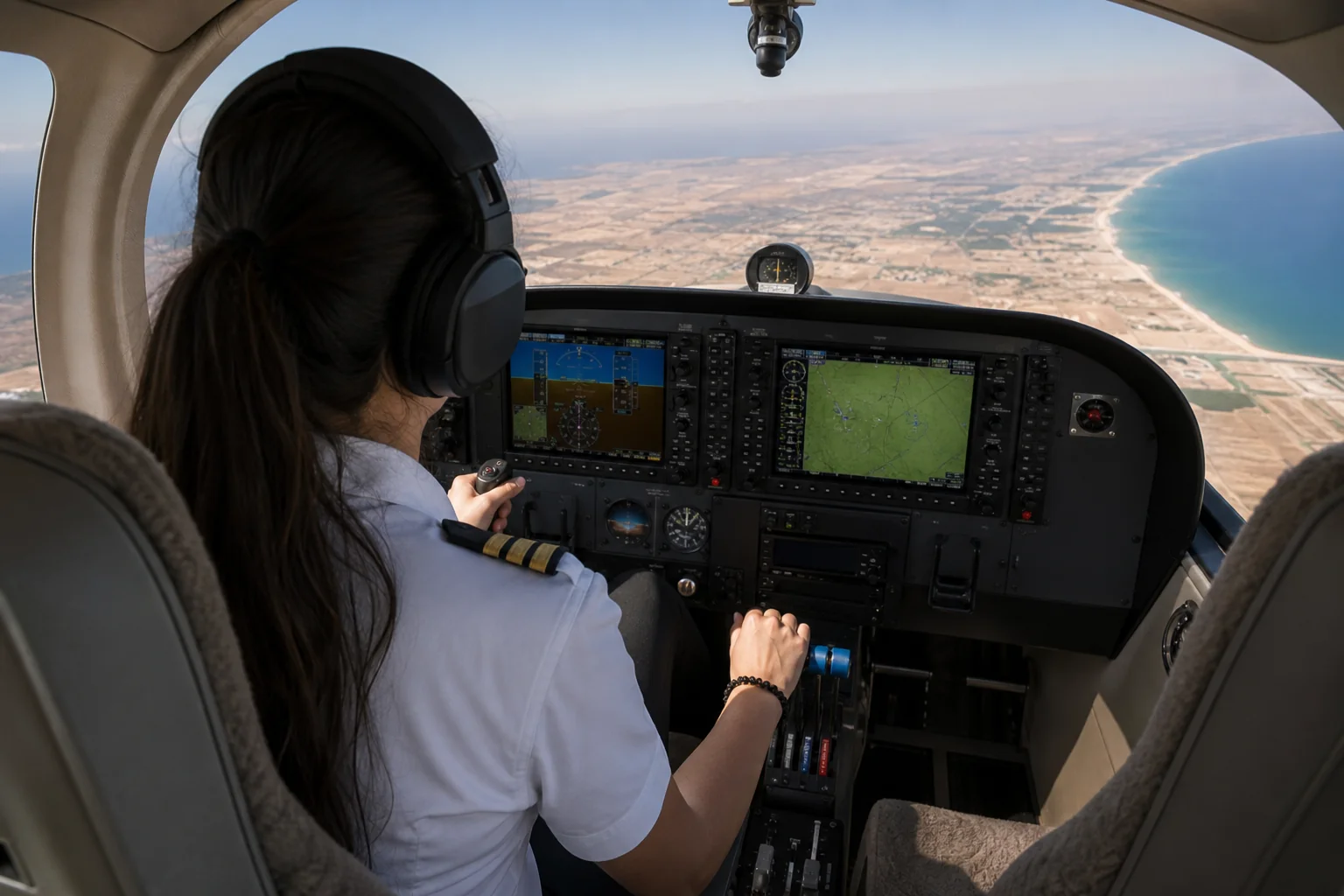
In Kerala, the process works slightly differently: the student visits the nearest branch in person, but by the time of that visit, their loan file has already been opened. That removes the usual first-visit delay of form-filling and initial data entry.
Rian Air has maintained a track record of 100% loan approval for students and sponsors who meet the bank's own eligibility criteria. That number reflects preparation, not influence over the bank's decision: complete documentation, realistic loan amounts matched to actual training costs, and applications submitted only when the eligibility check genuinely lines up.
How Does Co-Applicant Income Affect Loan Approval?
Co-applicant income directly determines the loan amount a bank will sanction and often the interest rate offered. A co-applicant with stable salaried income and a CIBIL score above 700 typically secures faster approval and a larger unsecured component than one with irregular or undocumented income.
Banks calculate a debt-to-income ratio for the co-applicant, factoring in existing EMIs, before deciding how much additional loan burden the household can absorb. Self-employed co-applicants can qualify too, but they'll need audited financials or ITRs going back two to three years to establish income stability.
What Is the Best Pilot Training Academy in India for Loan-Backed Students?
For a loan-backed student, the best pilot training academy in India is the one a bank can underwrite with confidence: DGCA-approved, with transparent fee structures, documented simulator infrastructure, and a track record banks recognise when assessing the file.
Brand recognition alone doesn't move a loan file forward. What does is an academy that issues clear admission letters with itemised fee breakdowns, provides progress documentation that supports staged disbursement, and has handled bank paperwork often enough to know which documents each lender actually wants. A fixed-base simulator training programme that generates verifiable logged hours, for instance, gives banks concrete proof of progress when releasing the next tranche. Academies with a working parent dashboard for tracking training progress make this even easier, since the same data that reassures parents also supports the bank's disbursement decision.
Delhi and the wider National Capital Region, along with academies in Mumbai and Thrissur in Kerala, have seen a steady rise in loan-backed enrolments over the past few years as families realise a structured, bank-friendly training path shortens both the approval process and the overall training timeline.
Frequently Asked Questions
Can a 12th pass student get an education loan for pilot training?
Yes, a 12th pass student can get an education loan for pilot training, provided a co-applicant, usually a parent, offers verifiable income and the training institute is DGCA-approved. The student's own academic record matters less than the co-applicant's financial profile at this stage.
Is collateral compulsory for pilot training loans?
Collateral becomes compulsory once the loan amount crosses roughly ₹7.5 lakh under most bank policies. Below that threshold, some lenders sanction unsecured loans, though the amount and terms are usually less favourable than a collateral-backed application.
Does the co-applicant's CIBIL score matter?
Yes, the co-applicant's CIBIL score matters significantly. A score above 700 generally speeds up approval and can improve the interest rate offered, while a low or poor score can lead to rejection even if the student's profile is strong.
Can an education loan cover CPL training abroad?
Some banks cover the foreign leg of a hybrid CPL pathway, such as training in Malta, New Zealand, or Tunisia, but this must be confirmed in writing before applying. Not every lender extends coverage automatically to the international portion of a course.
If you're comparing where that international leg fits into your overall plan, the guide on how to become a commercial pilot in India after 12th lays out the full pathway from ground school to licence, which helps frame how much of it a bank loan actually needs to cover.
Getting your education loan for pilot training in India eligibility right the first time saves weeks of back-and-forth with a branch manager. Rian Air's team reviews your documentation before you approach a bank, matches your loan request to real training costs, and arranges home collection of paperwork across India (branch visit only in Kerala, with your file already open). Start Your Pilot Journey with a free eligibility and documentation review, or Explore Pathways to see how ground school, simulator training, and flight hours line up against a staged loan disbursement plan. For day-to-day updates from the academy floor, follow us on Instagram or subscribe on YouTube.