
Free Printable Checklist: DGCA CPL Exam Subjects and Syllabus Explained
The DGCA CPL exam has seven subjects: Air Navigation, Aviation Meteorology, Air Regulations, Technical General, Technical Specific (Single Engine), Technical Specific (Multi Engine), and RTR(A). Most run for two or three hours with 50 to 100 questions, and understanding the DGCA CPL exam subjects and syllabus explained here will save you from repeat attempts and wasted exam fees.
Key Takeaways
- Seven subjects total: Air Navigation, Aviation Meteorology, Air Regulations, Technical General, Technical Specific (Single Engine), Technical Specific (Multi Engine), and RTR(A) in two parts.
- Two exam formats: Regular exams run in March, June, September and December across most Indian cities at Rs 2,500 per subject; every other month is an Online On-Demand Exam (OLODE) at Rs 5,000 per subject, available only in major cities.
- Exam length varies by subject: Air Navigation and Technical General are 100 questions over 3 hours; the rest are 50 questions over 2 hours.
- Weak-subject tracking matters more than raw study hours: students who isolate and re-attempt only their wrong answers clear subjects faster than those who re-read entire textbooks.
- RTR(A) is structurally different from the other six subjects and deserves separate preparation time; a full breakdown of its two parts is coming in a dedicated post.
DGCA CPL Exam Subjects at a Glance
| Subject | Questions | Duration | Marks |
|---|---|---|---|
| Air Navigation | 100 | 3 hours | 100 |
| Aviation Meteorology | 50 | 2 hours | 100 |
| Air Regulations | 50 | 2 hours | 100 |
| Technical General | 100 | 3 hours | 100 |
| Technical Specific (Single Engine) | 50 | 2 hours | 100 |
| Technical Specific (Multi Engine) | 50 | 2 hours | 100 |
| RTR(A) - Part 1 and Part 2 | Different format | Varies | Pass/Fail components |
What Are the DGCA CPL Exam Subjects?
A DGCA-approved ground school in Delhi, Mumbai, or Thrissur will walk you through the same seven papers regardless of location, because the syllabus is set nationally by the Directorate General of Civil Aviation, not by the academy. Knowing the full list before you start prevents the common surprise of discovering a seventh subject mid-course.
The subjects are Air Navigation, Aviation Meteorology, Air Regulations, Technical General, Technical Specific for the single-engine aircraft you fly, Technical Specific for the multi-engine aircraft you fly, and Radio Telephony Restricted (Aeronautical), known as RTR(A). Six of these are written papers conducted by the DGCA; RTR(A) is administered separately and combines a written and a practical component.
1. Air Navigation Syllabus Checklist
Air Navigation carries 100 questions across a full 3-hour paper, making it one of the two longest exams in the DGCA CPL syllabus alongside Technical General. It tests how well you can plan and execute a cross-country flight on paper before you ever do it in the air.
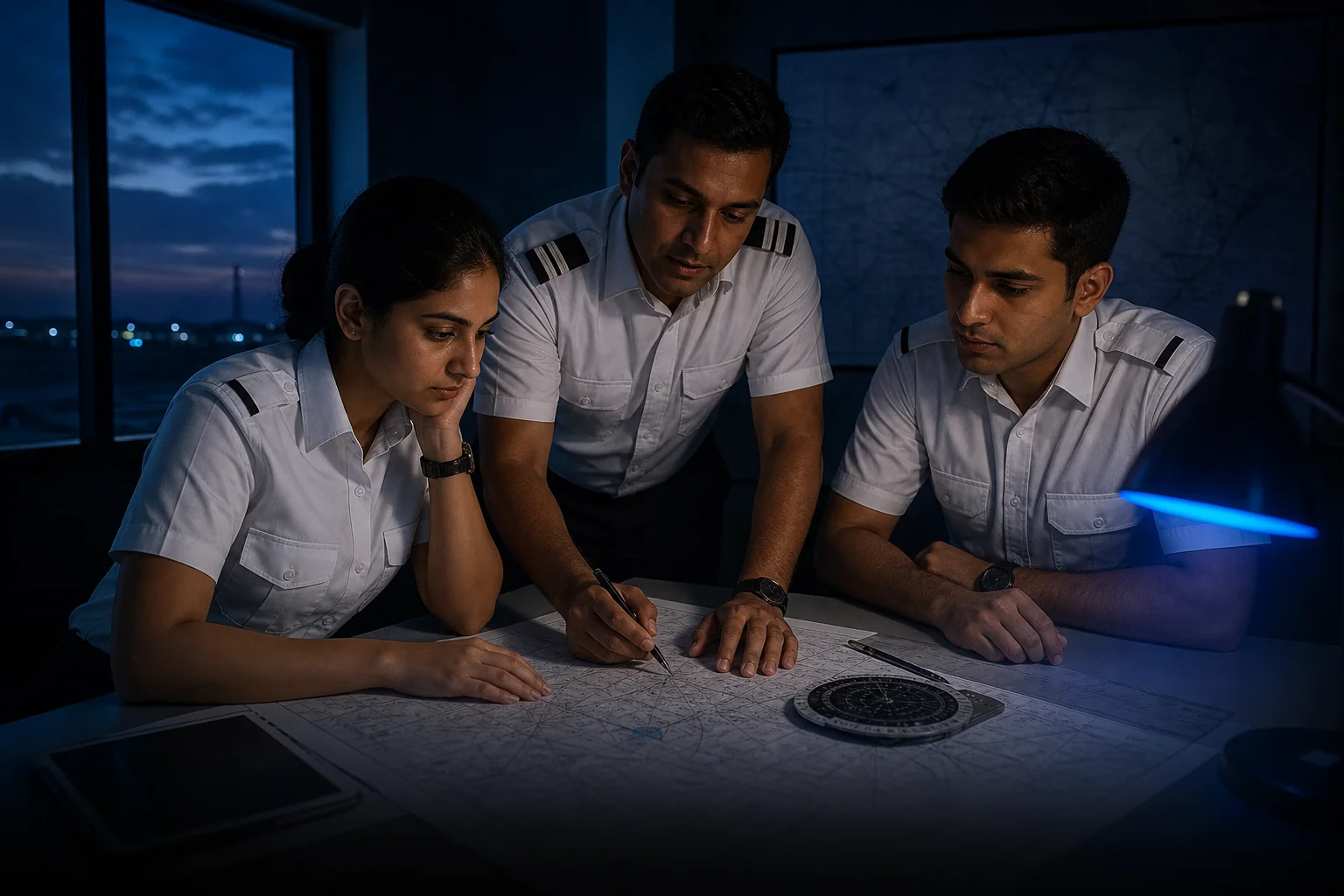
Your daily checklist for this subject should cover:
- Dead reckoning and time-speed-distance calculations
- Great circle and rhumb line navigation, and the difference between them
- Magnetic variation, deviation, and compass errors
- Use of the flight computer (E6B) and topographical charts
- Radio navigation aids: VOR, NDB, DME, and basic GPS principles
Tick each topic only once you can solve a fresh practice question without referring to notes, not merely once you have read the chapter.
2. Aviation Meteorology Syllabus Checklist
Aviation Meteorology runs 50 questions in 2 hours and asks you to interpret weather the way a pilot actually needs to, not as pure theory. It is one of the subjects where daily revision of small, repeatable facts beats last-minute cramming.
Cover these on your checklist:
- Atmospheric structure, pressure systems, and fronts
- Cloud types, formation, and associated hazards like icing and turbulence
- Thunderstorms, wind shear, and monsoon-specific weather patterns relevant to Indian routes
- Reading METAR, TAF, and significant weather charts
- Visibility, ceiling, and how they affect VFR versus IFR decisions
3. Air Regulations Syllabus Checklist
Air Regulations is a 50-question, 2-hour paper built on legal text, so rote memorisation without context is the single biggest reason students fail it twice. Understanding why a rule exists sticks far longer than memorising its clause number.
- Aircraft Rules 1937 and its key amendments
- Relevant ICAO Annexes, especially Annex 1 (Licensing) and Annex 2 (Rules of the Air)
- DGCA Civil Aviation Requirements (CARs) covering licensing and operations
- Rules on airworthiness, log books, and medical validity periods
- Air Traffic Services procedures and airspace classification in India
4. Technical General Syllabus Checklist
Technical General is the other 100-question, 3-hour paper, and it covers the aircraft as a machine rather than as a specific type. Students who skip this depth because "the Technical Specific paper will cover it anyway" tend to score poorly on both.
- Airframe structures and materials
- Piston and turbine engine principles
- Flight instruments: pitot-static system, gyroscopic instruments, and electronic displays
- Electrical, hydraulic, and fuel systems common across trainer aircraft
- Basic aerodynamics: lift, drag, stability, and control
5. Technical Specific (Single & Multi Engine) Checklist
Both Technical Specific papers run 50 questions in 2 hours each, one for the single-engine aircraft you train on and one for the multi-engine type. These narrow the general knowledge from Technical General down to the exact systems of your training aircraft.
Your checklist should be built around your specific aircraft manual, typically covering:
- Engine type, fuel system, and performance limitations of your specific trainer
- Systems unique to that airframe: propeller governing, cowl flaps, or turbocharging where applicable
- Multi-engine specific items: critical engine theory, single-engine performance, and Vmc
- Emergency procedures and system failure responses specific to that aircraft
Because these papers change with the aircraft type your academy operates, confirm with your training provider exactly which aircraft manual to study before you build this section of your checklist.
6. RTR(A) Radio Telephony Checklist
RTR(A) is split into two parts and does not follow the same multiple-choice format as the other six subjects; it combines written theory with a practical radio-telephony demonstration. Because this format genuinely is different, we are publishing a dedicated, detailed breakdown of RTR(A) separately rather than compressing it into a single section here.
For now, keep these on your daily checklist:
- Standard phraseology for departure, en-route, and arrival phases
- Emergency and urgency communication procedures (Mayday and Pan-Pan calls)
- Reading back clearances accurately under time pressure
How Often Are DGCA Exams Conducted?
DGCA conducts regular written exams every month, but four months of the year carry special weight: March, June, September, and December are the primary regular exam cycles held in most cities across India. Every other month runs as an Online On-Demand Exam, or OLODE.
OLODE exams exist so students are not forced to wait for the next quarterly cycle if they miss a subject or want to retake one sooner. The trade-off is availability and cost: OLODE exams are only conducted in major cities, and they cost more per subject than the regular exam.
Regular Exam vs OLODE Exam: Cost and Availability Compared
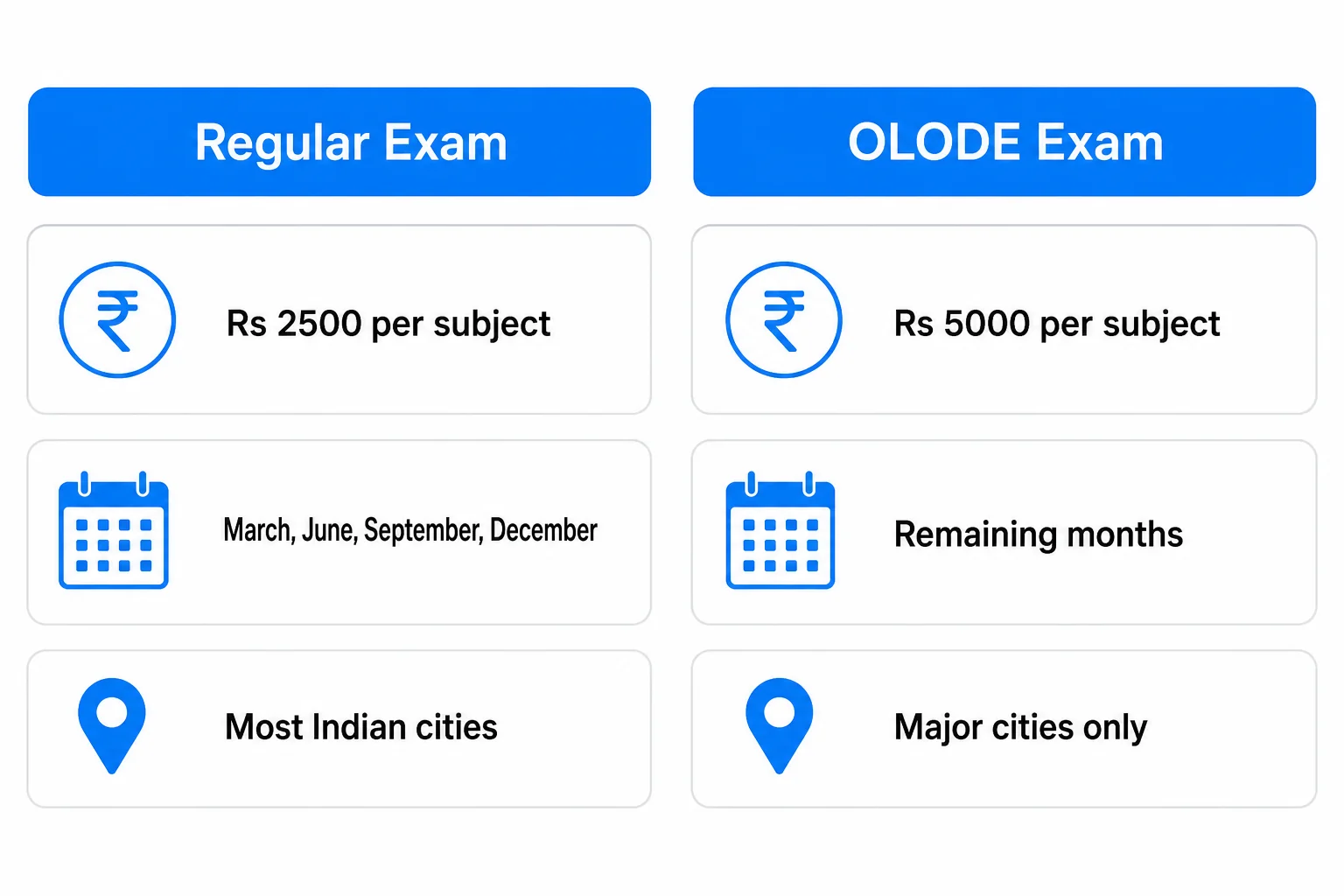
| Feature | Regular Exam | OLODE Exam |
|---|---|---|
| Fee per subject | Rs 2,500 | Rs 5,000 |
| Months conducted | March, June, September, December | All remaining months |
| City availability | Most cities in India | Major cities only |
| Best suited for | Planned, first attempts | Quick retakes of a single failed subject |
If you fail a subject in March, waiting for June costs you nothing extra in fees but three months of momentum. An OLODE retake in April or May costs double the fee but can keep your overall training timeline on track, which matters more than the exam fee difference if flight training slots depend on your ground exam completion.
How to Use This Checklist During Ground School
Print this checklist, pin it beside your study desk, and tick off each syllabus point only after you can answer fresh practice questions on it, not after finishing a reading pass. A checklist that tracks reading is not the same as one that tracks readiness.

This is exactly the gap Rian Air's RAPT platform is built to close. Instead of re-reading a whole chapter after a mock test, RAPT lets a student pull up only the questions they got wrong, retest on those specific weak points, and watch their subject-wise accuracy improve over repeated attempts.
The platform draws from a bank of over 20,000 DGCA-aligned questions and offers tests in easy, moderate, and difficult modes, so a student can gauge whether they are ready for the actual exam pressure or still building fundamentals. Students can also build a personal study schedule around their weakest subjects rather than following a generic timetable, which directly improves both speed and accuracy under exam conditions.
For parents financing this training, the same data feeds into a parent dashboard, giving visibility into which subjects a child has cleared, which are still weak, and how close they are to being exam-ready, without needing to ask for updates constantly.
Common Mistakes Aspirants Make With the Syllabus
The most frequent error is treating all seven subjects as equally difficult and splitting study time evenly, when in reality subjects like Air Regulations demand a different study method (contextual understanding) than Technical Specific (aircraft-specific memorisation).
A second mistake is losing track of the OLODE calendar. Students who fail a subject in September but don't check which nearby month runs OLODE in their city end up waiting far longer than necessary, delaying flight training that depends on a completed ground exam record.
A third mistake, particularly common with Air Regulations and Technical General, is memorising answers to past question patterns without understanding the underlying rule or system. DGCA periodically revises question sets, and memorised answers without comprehension fall apart the moment phrasing changes.
Students preparing across cities in Delhi, Mumbai, or Kerala's Thrissur belt face one more practical issue: exam city availability. Regular exams are widely available, but if you plan to lean on OLODE for a retake, confirm your nearest major city center well ahead of your target month rather than assuming your home city will have a slot.
Frequently Asked Questions
How many subjects are there in the DGCA CPL exam?
There are seven DGCA CPL exam subjects: Air Navigation, Aviation Meteorology, Air Regulations, Technical General, Technical Specific for your single-engine aircraft, Technical Specific for your multi-engine aircraft, and RTR(A) in two parts.
What is an OLODE exam?
OLODE stands for Online On-Demand Exam, the DGCA's exam format held in months other than March, June, September, and December. It costs Rs 5,000 per subject and runs only in major cities, compared to Rs 2,500 in most Indian cities during the regular cycle.
How much does the DGCA CPL exam cost overall?
Each subject costs Rs 2,500 in the regular exam cycle or Rs 5,000 under OLODE, and with seven subjects total, fees add up depending on how many attempts each subject takes. Retakes for failed subjects are charged again at the applicable exam-format rate.
Can I retake a subject I failed in the DGCA CPL exam?
Yes, you can retake any failed subject in the next available exam cycle, either the next regular exam quarter or an earlier OLODE slot in a major city. Repeated failures usually point to a study-method problem rather than a knowledge gap, which is where targeted weak-area practice matters most.
Clearing all seven DGCA CPL exam subjects on schedule is less about total study hours and more about knowing exactly which syllabus points you have actually mastered versus merely read once. If you are still mapping out the full path from 12th grade to a commercial pilot license, our guide on becoming a commercial pilot in India after 12th lays out the sequence in full, and if fees are a planning concern, the breakdown of hidden training costs parents often miss is worth reading before you commit to an academy.
Rian Air's ground school in Delhi, Mumbai, and Thrissur pairs this exact syllabus with the RAPT platform's weak-area tracking, so students preparing for their DGCA CPL exams can measure real readiness, not just hours logged. If you're weighing your options, explore pathways across ground school, simulator, and flight training, or check your eligibility for the Women Empowerment or merit-based scholarship programs. For a direct conversation about your syllabus progress and exam planning, talk to a pilot career advisor today, and follow our Instagram or YouTube channel for ongoing DGCA prep tips.