Do you have to travel abroad for pilot training in India
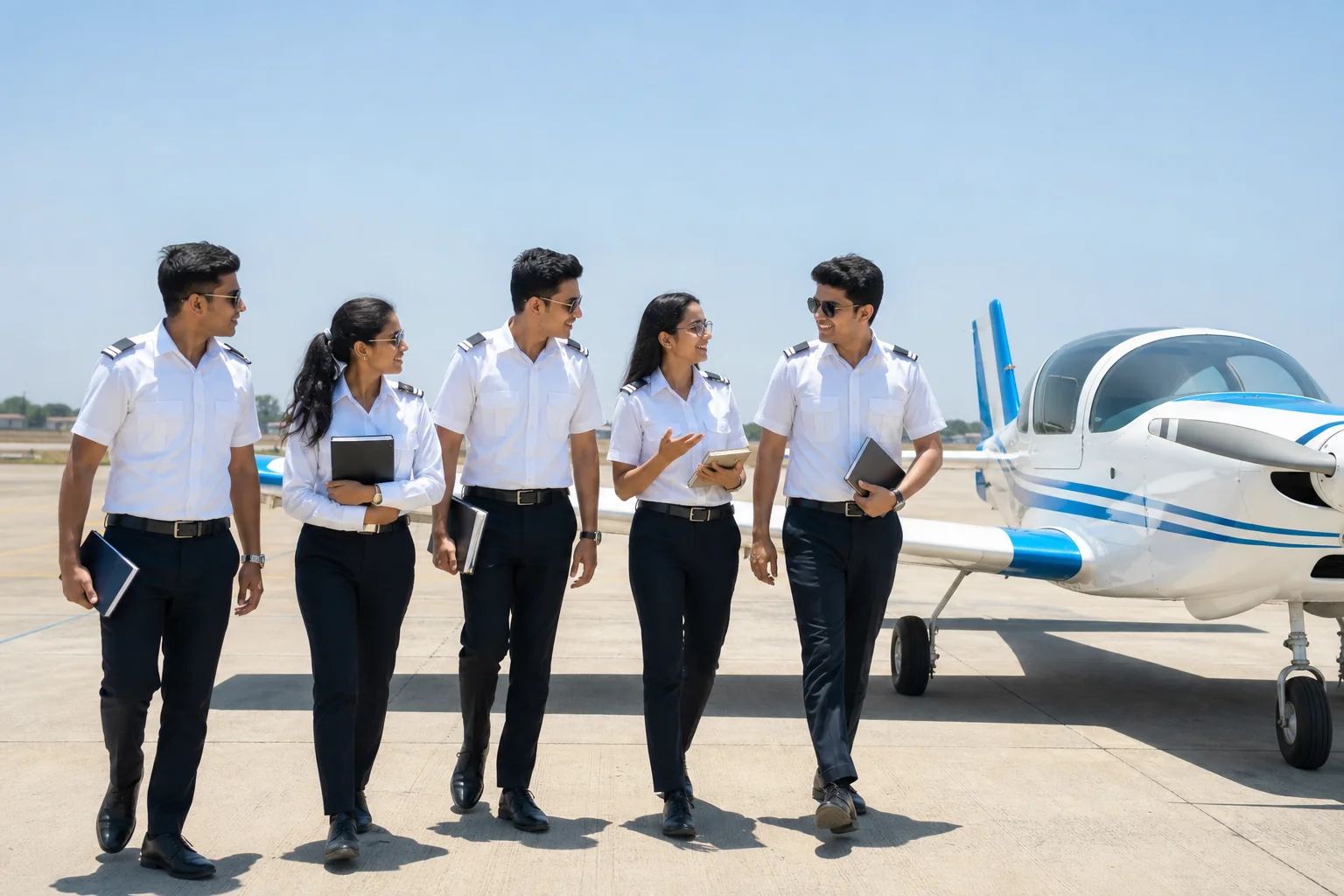
No, you do not have to travel abroad for pilot training. India now has enough DGCA-approved flight training organisations, modern simulators, and glass-cockpit aircraft. You can complete a full Commercial Pilot Licence right here at home. Some students still choose countries like Tunisia for international exposure. But that is a preference, not a requirement. It also comes with costs Indian academies do not add.
Key Takeaways
India has enough capacity now: Dozens of DGCA-approved flight schools have opened across India since 2020. This has eased the seat crunch that once pushed students abroad.
DGCA now ranks flight schools: A formal rating system lets parents compare academies on real data instead of word of mouth. They can now pick one closer to home.
Fleets are modernising fast: Piper Archer DX, DA40/42 NG, and Tecnam aircraft with glass cockpits are replacing older analogue trainers at several Indian academies.
Abroad training has hidden costs: Visa fees, travel, living expenses, currency swings, and licence conversion back in India can erase the savings from a lower headline course fee.
Tunisia is a common exception: Schools like the Aviator Institute cap Indian intake at 15 students a year to protect training quality. Many students rate it above other abroad options like South Africa.
At a Glance: Training in India vs Abroad
| Option | Aircraft Fleet | Visa Complexity | Cost of Living | Licence Conversion Needed |
|---|---|---|---|---|
| India (DGCA FTOs) | Mix of legacy and new Piper/DA40/Tecnam | None | Low | No |
| Tunisia (e.g. Aviator Institute) | Modern Airbus-network fleet | Moderate | Low-moderate | Yes, on return |
| Malta | Modern European trainers | Moderate | Moderate | Yes, on return |
| New Zealand | Modern fleet, high-quality airspace | High | High | Yes, on return |
| USA / Canada | Modern fleet, large flight schools | High | Very high | Yes, on return |
| South Africa | Often older, less maintained | Low-moderate | Low | Yes, on return |
How Many Flight Schools Does India Actually Have Now?
The number of flight training organisations in India has grown sharply since 2020. Academies like IGRUA, Rajiv Gandhi Aviation Academy, Bombay Flying Club, Skynex Aero, Vision Flight Training, Ekviair, Avyanna Aviation Academy, and Rian Air's own Delhi and Kerala facilities now cover the country from north to south.
Delhi and Mumbai carry much of this new capacity. That is because both cities sit close to major airline hubs. Kerala has become a strong training corridor too, thanks to lower operating costs and good weather for year-round flying. If you live in Delhi or anywhere in Maharashtra, you can now reach a properly equipped DGCA-approved academy without booking an international flight first.
This growth has a side effect worth naming honestly. Some of the older, well-known academies are running at capacity, with longer waitlists for aircraft slots. That is not a reason to leave India. It is a reason to widen the search past the two or three most famous names, and look at newer, better-equipped options closer to home.
Do You Have to Travel Abroad for Pilot Training?
You do not have to travel abroad for pilot training. A student can complete ground school, simulator hours, and the full CPL flying syllabus inside India. This can happen end to end, through a DGCA-approved organisation, without ever leaving the country.
Abroad training becomes a genuine choice, not a necessity, mainly for two reasons. First, exposure to international airspace and radio procedures. Second, access to aircraft slots when a preferred Indian academy has a long queue. Neither reason changes one basic fact: a DGCA licence earned entirely in India is fully valid for an Indian airline career. For a full walkthrough of the domestic path, see how to become a commercial pilot in India after 12th.
Why the DGCA Flight School Ranking System Matters When Choosing
Until recently, choosing a flight school in India meant relying on brochures, agents, and hearsay. The Directorate General of Civil Aviation has since introduced a rating system for flight training organisations. It scores them on safety record, infrastructure, instructor ratios, and exam pass rates.
This changes how a family should shop. Instead of picking the most advertised name, a student can now compare ranked academies. They can choose one that is close to home, cutting hostel costs and travel time. A high DGCA rating combined with proximity to Delhi, Mumbai, or Kerala is a stronger signal than a flashy website.
Watch for red flags no matter the ranking. Be wary of an academy that cannot show its current fleet list, or one that is vague about instructor-to-student ratio. Also watch for schools still flying analog-panel aircraft with no plan to modernise. Our CPL exam subjects and syllabus checklist is a useful reference while comparing ground school quality across shortlisted academies.
Modern Aircraft Are Replacing Outdated Fleets in Indian Academies
One common argument for travelling abroad is "better aircraft." That argument is losing weight fast. Several Indian academies are actively retiring older analog trainers. They are bringing in the Piper Archer DX, DA40/42 NG models, and Tecnam aircraft, all fitted with glass cockpit avionics.
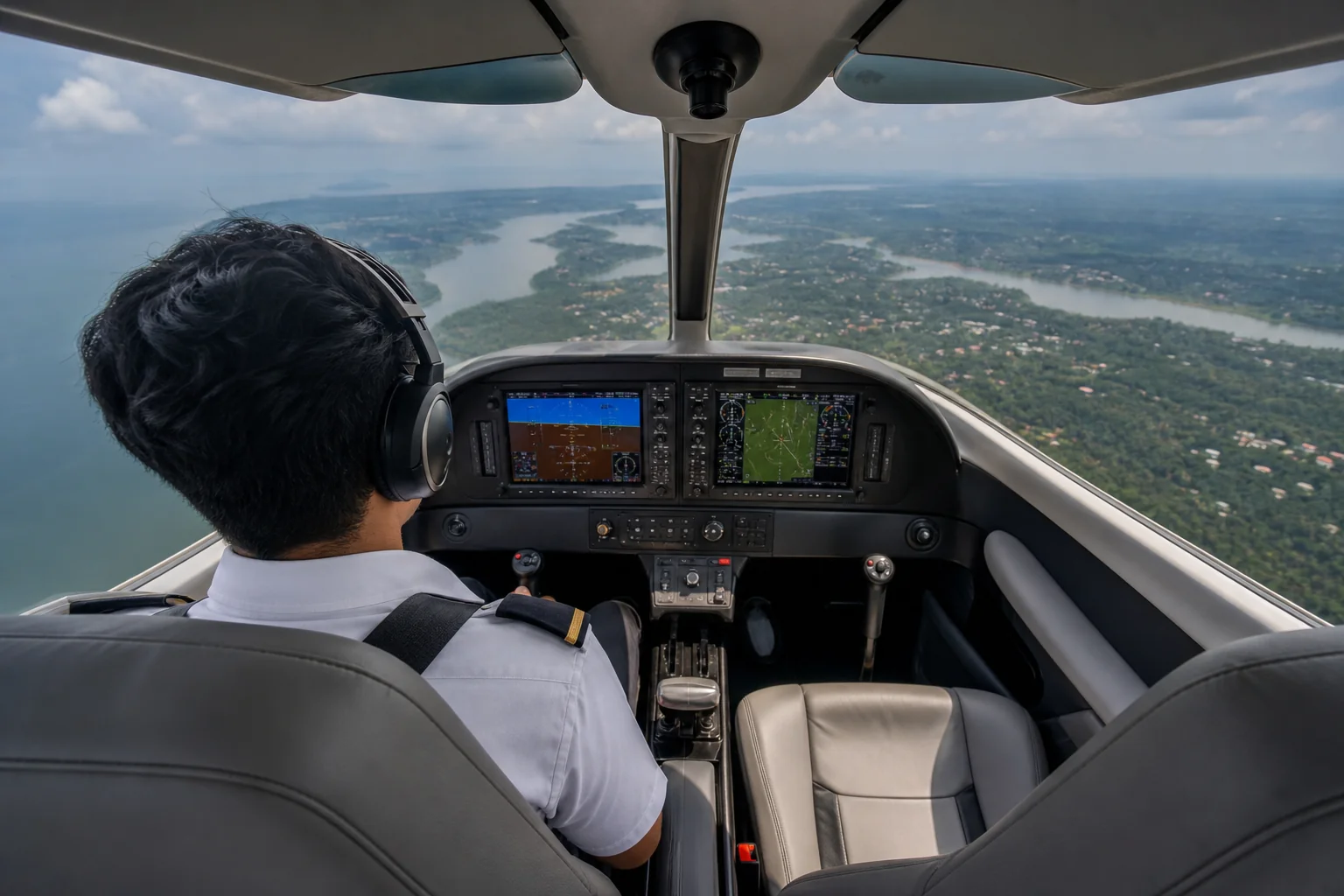
Glass cockpits matter for a simple reason. Every modern airliner a graduate will eventually fly, from an A320 to a B737, uses digital primary flight and navigation displays instead of analog gauges. Training on a glass cockpit trainer from day one builds instinctive familiarity with that layout. This shrinks the adjustment gap later at type rating stage. Our guide on A320 type rating preparation covers this transition in detail.
Why Some Students Still Choose Countries Like Tunisia Over India
Fuel prices in India are higher than in several training destinations. This shows up directly in per-hour flying costs. That gap is the single biggest reason some students still look abroad. There is also the appeal of flying in busier, more varied international airspace before applying for an airline job.
Tunisia has become a preferred choice for many Indian aspirants after India itself. The Aviator Institute, part of an Airbus-linked flight training network, takes in only 15 Indian students per academic year. That cap is deliberate. It protects the student-to-instructor and student-to-aircraft ratio. It also keeps the school compliant with global aviation standards and DGCA rules for licence recognition back home.
Compare that with South Africa, another country marketed as a low-cost training destination. Several schools there still operate older, less-maintained aircraft under the banner of "cheap training." Students who have trained in both markets increasingly rate Tunisia ahead of South Africa. The reason is simple: a lower fee is not a saving if the aircraft, maintenance standard, or instructor availability falls short of what a DGCA licence conversion later expects.
What About the USA, Canada and New Zealand?
The USA, Canada and New Zealand offer modern fleets and strong training reputations. But their visa processes have become a genuine deterrent for many Indian students. Interview backlogs, financial proof requirements, and rejection risk add months of uncertainty before a single flying hour is logged.
Even when a visa comes through, the cost of living in these countries is high. It starts competing with the budget a student would otherwise set aside for their type rating after CPL training finishes. Many families now do this math upfront. They choose to keep that money for the type rating stage instead, which is arguably the more career-critical expense. See our comparison of CPL training in India vs Malta vs Tunisia for a side-by-side breakdown of these trade-offs.

Hidden Costs to Calculate Before Choosing a Flight School Abroad
A course fee quoted by an overseas academy is rarely the full picture. Before comparing it against an Indian academy's fee, a family should add up:
- Visa fees and processing time: including the risk of a rejected application, which is money spent with no training to show for it.
- Return flight tickets: for the student, and often for a parent visiting during the course.
- Living expenses abroad: accommodation, food, and local transport, usually higher than equivalent costs in India.
- Currency fluctuation: a course quoted in euros or dollars can quietly get more expensive over an 18-24 month training period.
- Licence conversion process in India: converting a foreign CPL to a DGCA licence involves extra exams, paperwork, and sometimes further flying hours.
Our detailed pilot training cost breakdown walks through domestic fee structures parents can use as a direct comparison baseline against any abroad quote.
What Are the Best Pilot Training Academies in India Right Now?
There is no single "best" academy in India right now. It depends on a student's home city, budget, and the DGCA rating of academies near them. A strong shortlist process looks at the DGCA rating first, then current fleet (glass cockpit vs analog), simulator access, and instructor-to-student ratio.
Students based in Delhi, Mumbai, or Kerala have a genuine advantage here. All three regions now host DGCA-approved academies with modern simulators and updated fleets. This removes the old argument that quality training only existed in one or two metro cities.
Is Cheap Pilot Training in India Actually Cheap?
Cheap pilot training in India is rarely cheap once you factor in delays, repeat exams, and outdated aircraft. A low headline fee that hides an old fleet or a weak instructor ratio tends to cost more in the end. It often means extra flying hours and retests. Our piece on why cheapest flight training does not exist breaks this down further.
How the Government Is Making It Easier to Train Within India
Beyond individual academies improving their fleets, the broader push is coming from policy. The government has been actively simplifying the process for setting up new flight training organisations within India. The aim is to add training capacity faster. This should reduce the old bottleneck that once sent students abroad out of necessity rather than choice.
This matters for a Delhi or Mumbai-based family weighing options today. The domestic pipeline is not just bigger than it was five years ago. It is actively being expanded further, with more DGCA-approved seats expected to open in the coming years.
Frequently Asked Questions
Do you have to travel abroad for pilot training if you live near Delhi or Mumbai?
No. Delhi and Mumbai both have DGCA-approved flight training organisations with modern simulators and updated aircraft. A student in either city can complete full CPL training without travelling abroad.
Is pilot training abroad better than pilot training in India?
Neither is universally better. Abroad training can offer international airspace exposure. But Indian academies now match many abroad schools on fleet quality and DGCA compliance, at a lower overall cost once hidden expenses are counted.
How do I choose between Tunisia, Malta, New Zealand and India for CPL training?
Compare each option on total cost, including visa and living expenses, fleet modernity, and visa difficulty. Also check how straightforward the DGCA licence conversion will be on return, not just the course fee alone.
A lower course fee abroad only saves money if the visa, living cost, currency risk, and licence conversion process are all factored in before enrolment, not after.
Whether a student trains in Delhi, Kerala, or eventually abroad in Tunisia, the decision should rest on ranked data and true total cost. It should not rest on assumptions about what other countries offer. Explore how Rian Air's DGCA-aligned ground school, simulator infrastructure, and international pathways fit your specific situation. Take the first practical step: see how Rian Air's Delhi campus is structured, then compare that against any abroad quote you are holding. If you are ready to map out your own training pathway, Start Your Pilot Journey with a personalised consultation, or Explore Pathways across India, Tunisia, and Malta before deciding. For day-to-day updates from Rian Air's simulator floor and student milestones, Follow on Instagram or Subscribe on YouTube.