



DGCA Medical Explained: Class 1 vs Class 2 and When You Need Each
A DGCA medical is the aeromedical fitness assessment every Indian pilot candidate must clear, and it comes in two grades. Class 2 is the first, lighter check taken at the student or private pilot stage. Class 1 is the stricter certificate required for a Commercial Pilot Licence (CPL) and an Airline Transport Pilot Licence (ATPL). Our advice is simple: clear both before you spend anything on training.
DGCA's Civil Aviation Requirement (CAR) Section 7, Series C, Part I, Revision 7, dated 1 October 2025, says a Class 1 Medical Assessment is required for applicants and holders of a CPL and an ATPL. That one line is why this medical decides whether a flying career is possible at all.
At Rian Air, we work with aspiring pilots and parents in Delhi, Mumbai and Thrissur. We take an initial deposit of ₹2,500, included in the total fees, before we facilitate the Class 2 medical for a student. This guide explains both classes, the tests, the common reasons for rejection, the costs and what to do first.
Class 1 vs Class 2 at a glance
The table below shows how the two medicals differ in practice. Class 2 is the early filter. Class 1 is the certificate that finally supports your CPL application.
Point | Class 2 medical | Class 1 medical |
|---|---|---|
Licence stage | Early assessment at the student and private pilot level | Commercial (CPL) and Airline Transport (ATPL) licences |
When we advise it | Before you pay for any ground training | Before you pay for any flight training, and in practice together with Class 2 |
Who examines you | DGCA-approved examiner or centre | DGCA-approved Aeromedical Evaluation Centre or IAF Boarding Centre |
How the fee is paid | Directly to the doctor | DGCA fee through BharatKosh |
Role in your plan | The cheapest early filter | The certificate DGCA needs for a CPL |
Class 2 is not a substitute for Class 1 standards. Clearing it tells you that nothing obvious stands in your way. Clearing Class 1 tells you the career is medically open.
What is the DGCA medical assessment and who conducts it?
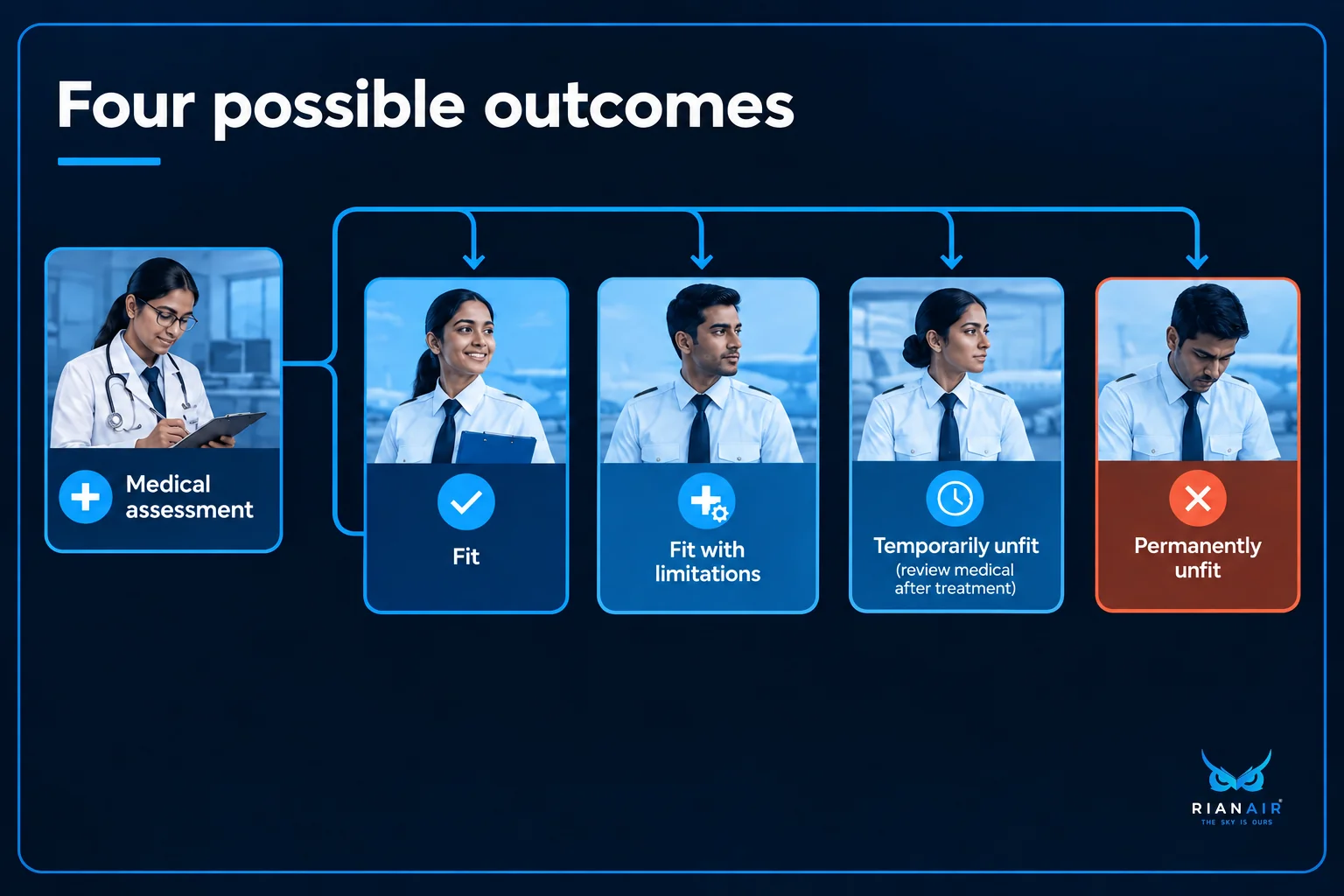
The DGCA medical assessment is the fitness check every Indian pilot candidate must pass before a licence is issued. It is carried out by DGCA-approved examiners, Aeromedical Evaluation Centres or IAF Boarding Centres, and ends in one of four outcomes: fit, fit with limitations, temporarily unfit or permanently unfit.
DGCA publishes an empanelment list of approved Aeromedical Evaluation Centres, with the authorisation of each centre. Always check that your chosen centre is on the current list before you book.
For Class 1, DGCA's FCL circular says that all required investigations at IAF Boarding Centres are conducted at those centres only. In other words, you do not bring outside lab reports in place of the centre's own tests.
The four possible outcomes
Fit: you meet the standard for the class you took.
Fit with limitations: you meet the standard, with a condition such as corrective lenses.
Temporarily unfit: a finding needs treatment or more tests, followed by a review medical.
Permanently unfit: the finding rules out the class of medical you applied for.
When do you need Class 1 and when do you need Class 2?
Class 2 is the early assessment, taken at the student or private pilot stage, and Class 1 is required for the CPL and ATPL. DGCA only insists on Class 1 for a CPL, but we advise clearing both medicals before spending any money on ground classes, flight hours or fees.
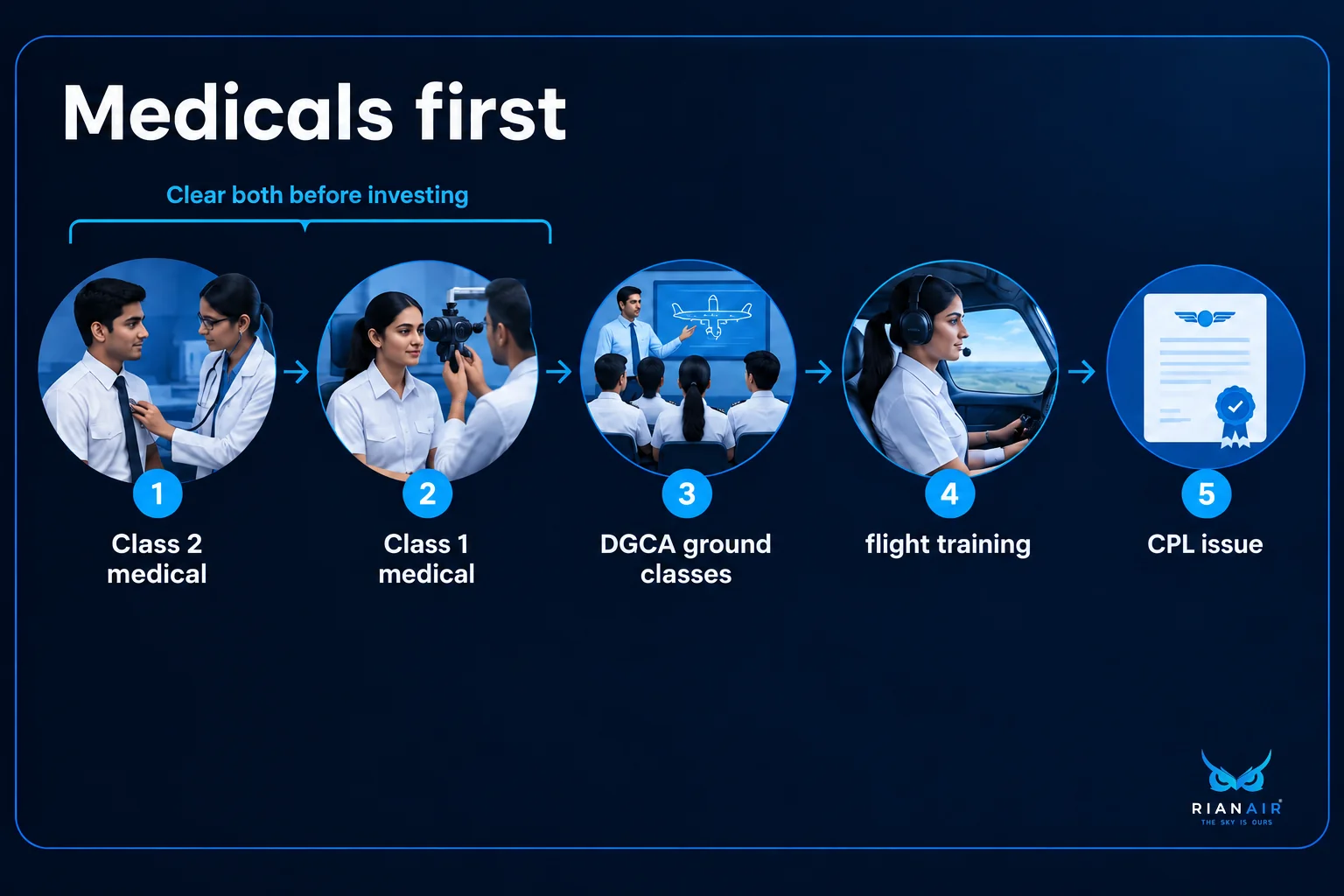
Many people say Class 1 only has to be done before flight training. We say both Class 2 and Class 1 have to be done before investing in this career, even a single penny. The reason is the order of spending. Ground classes, simulator time and flying hours all cost more than the two medicals together.
Our own experience shows why the early order matters. If a finding appears after a deposit, the money is already at risk. If it appears before, you lose a few hours and a modest fee, and you can choose another path with a clear head.
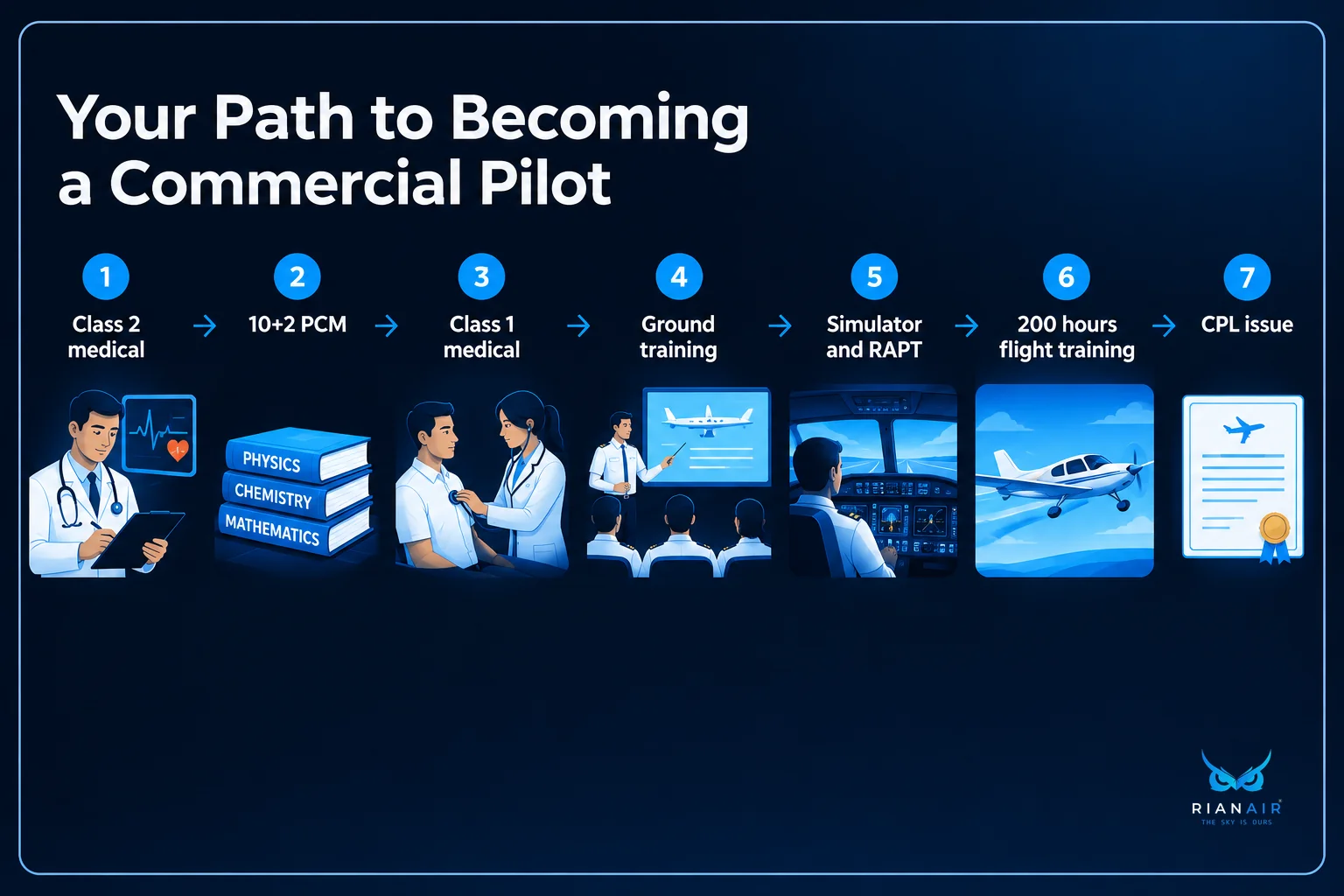
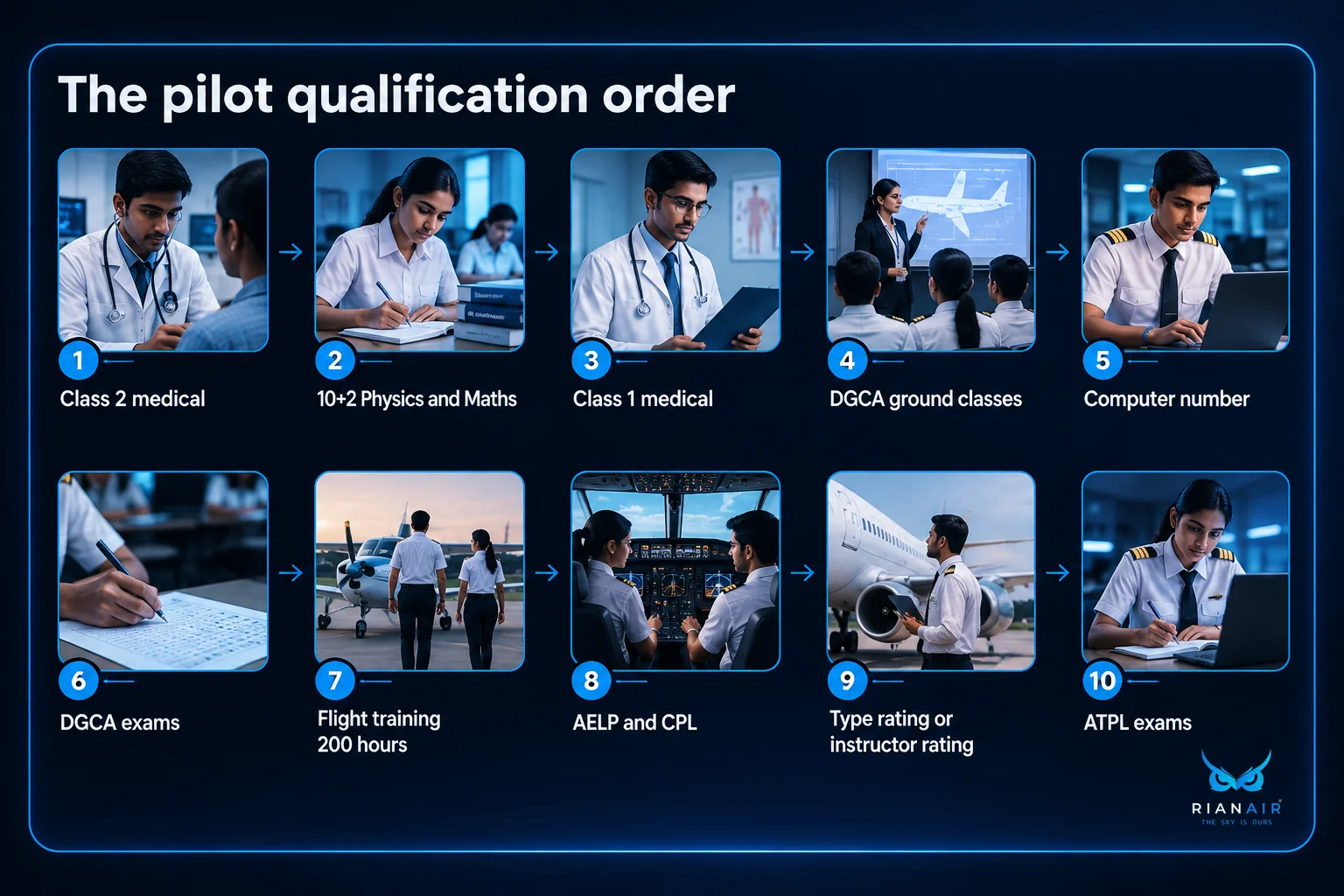
A sensible order for most students
Take an optometrist's colour vision test before anything else.
Complete the Class 2 medical.
Complete the Class 1 medical.
Only then begin ground classes, a computer number and DGCA exams.
Start flight training after the exams are cleared.
We explain the thinking in more detail in our pages on the importance of Class 2 before ground training and the importance of Class 1 before flight training.
Which medical tests does the DGCA require?
The DGCA medical covers general physical health, eyesight, colour vision, hearing, heart, lungs, blood and urine, and body measurements such as BMI.
Class 1 is more detailed than Class 2: it follows the stricter Annex 1 standards (paras 6.3.2 to 6.3.4), while Class 2 is assessed against the lighter Class 2 standards in the same CAR. The exact list depends on the class, your age and the centre. Your examiner confirms the full schedule before you attend.
The schedule is set by the CAR, so treat the table as a plain-language map and not a replacement for the official document. Your examiner will tell you which investigations apply to you.
What the CAR says about vision, BMI and blood pressure
Under CAR Section 7, Series C, Part I, the Physical, Visual, Colour Perception and Hearing requirements follow ICAO Annex 1, Chapter 6 (paras 2.2 and 2.4), plus DGCA's medical circulars. The CAR itself does not print a single BMI or blood pressure cut-off.
You are judged as a whole: free of any abnormality, disability or medication effect likely to interfere with the safe operation of an aircraft (para 2.3). An examiner who finds a high BMI or raised blood pressure can ask you to treat it and return.
For vision, the ICAO Annex 1 visual requirements for a Class 1 assessment are distance vision of 6/9 or better in each eye and 6/6 or better with both eyes together, near vision N5 at 30 to 50 cm and intermediate vision N14 at 100 cm, with or without correction. Treat these as a guide, because the examiner applies the current standard on the day.
Class 1 vs Class 2: how the tests differ
Standard: Class 1 follows the stricter ICAO Annex 1 standards (paras 6.3.2 to 6.3.4) and the DGCA medical circulars.
Where tests are done: Class 1 investigations at IAF Boarding Centres are done at those centres only. Class 2 can be done with an approved examiner.
Depth: Class 1 covers the CPL and ATPL, so expect a more detailed schedule than Class 2.
How long each medical stays valid
As published against para 5.1 of the CAR, a Class 1 medical is valid for 1 year up to age 60, and 6 months after that. The shorter 6-month period also applies above age 40 if you fly single-crew commercial operations; check your own certificate for which applies to you. A Class 2 medical is valid for 2 years up to age 50, and 1 year after that.
A renewal can be done from 45 days before your current assessment expires. Check your own certificate for the exact expiry date, and renew before it lapses so it is current when your documents go to DGCA.
Area | What is checked | Why it matters for flying |
|---|---|---|
General physical and history | Medical history, physical examination, general health | Spots conditions that could affect you in flight |
Eyesight | Distance and near vision, whether vision corrects to the required standard | Reading instruments and seeing traffic |
Colour vision | Ishihara-type plate test | Reading lights, charts and displays by colour |
Hearing and ENT | Hearing test and ear, nose and throat examination | Radio communication and pressure changes |
Heart | Blood pressure, pulse and ECG | Detecting heart or circulation problems early |
Chest and lungs | Respiratory examination | Breathing at altitude |
Blood and urine | Laboratory tests, including haemoglobin | Finding anaemia, diabetes and other conditions |
Body measures | Height, weight and BMI | Cockpit fit and general fitness |
Tests we ask students to do beforehand
We ask every student to complete a series of tests beforehand, from a NABL-approved lab or a NABH-approved hospital. Start with the cheapest check, because it can save you the most.
Colour vision first. Ask an optometrist for an Ishihara-type test. If there is a problem, you will know before you spend on anything else.
Update your eye prescription. Carry a recent report, and note whether your vision corrects to the required standard.
Carry recent reports. Bring any earlier blood, ECG or hearing results to the centre.
Why do candidates get rejected or declared temporarily unfit?
Common reasons for rejection or a temporary unfit result include colour vision deficiency, vision outside the required standard, high BMI, low haemoglobin, hearing or ear problems, and abnormal blood pressure, ECG or blood sugar. Many findings are temporary and can be reviewed after treatment. Colour blindness is permanent.
Temporary findings are the most common and the most forgiving. Something as ordinary as ear wax, low haemoglobin or a high BMI can be flagged with a defined window to fix it and return. After treatment, a review medical decides whether you are fit.
A permanent finding: one student's case
One of our students, whom we will call Mr. A, failed his medical because he could not pass the Ishihara test. The doctor declared him colour blind and permanently unfit. He learned this before spending on flying, which is exactly what an early medical is for.
The CAR gives no fixed waiting period for a temporarily unfit finding. The examiner sets the treatment or tests needed, and a review medical decides whether you are fit, so ask for the review conditions in writing before you leave the centre. If you are declared temporarily unfit, do not panic. Read our guide on what happens if you fail the Class 2 medical and whether you can retake it for the review process.
Why clear both medicals before you invest in pilot training?
Because a medical finding can end a pilot career before it starts, and it costs very little to learn early. Class 2 and Class 1 together cost a small fraction of ground classes, flight hours or a cadet programme, so we ask students to clear both before investing even a single rupee.
These are the amounts a family can put at risk later. They are Rian Air's own estimates from our experience, not DGCA figures, and they vary by school and location:
Single-engine flying costs between ₹22,000 and ₹30,000 per hour, and multi-engine flying between ₹45,000 and ₹65,000 per hour.
Type rating costs between ₹15 lakh and ₹25 lakh, depending on aircraft type and training location.
Airline cadet programme fees start from ₹89 lakh and go up to ₹1.5 crore.
Step | What you spend | What it protects |
|---|---|---|
1. Class 2 and Class 1 medicals | DGCA fee ₹5,000 plus examiner and centre costs; overall ₹6,000 to ₹25,000 | Tells you the career is medically open |
2. First flying hours | ₹22,000 to ₹30,000 for one single-engine hour (our estimate) | One flying hour costs more than the DGCA medical fee |
3. Type rating | ₹15 lakh to ₹25 lakh (our estimate) | Only worth paying if your medical stays valid |
Seen against those numbers, a medical is the cheapest insurance in aviation. Parents often compare schools on marketing and not on results. A better first question is whether your child is medically fit for a CPL.
How our deposit works
We charge an initial deposit of ₹2,500, and it is included in the total fees. We take it before we facilitate the Class 2 medical for the student. If DGCA's assessment declares the student permanently unfit, we refund everything the student has paid us, as per DGCA certification and within applicable timelines, and we wish them well in whatever they choose next.
The same logic applies if you plan to train abroad. Students who fly overseas still have to come back and convert, and our guide to foreign licence conversion to a DGCA CPL shows the steps. If you are still deciding on location, read whether you have to travel abroad for pilot training. On the Indian route, our page on flight training in India after the DGCA exams covers what follows.
What does a DGCA medical cost?
DGCA's medical fee is ₹5,000 (per DGCA's latest update; confirm the current amount on BharatKosh and see DGCA's medical CAR for the rules), paid through BharatKosh, while Class 2 fees go to the doctor directly. Overall, a medical costs anywhere between ₹6,000 and ₹25,000, depending on the medical type and centre. Rian Air does not charge any fee for the medical itself.
Each line comes from our own information and from DGCA's latest update on the fee. Ask the centre for a written estimate before you book, because the type of medical and the centre change the total.
Item | What to expect |
|---|---|
DGCA medical fee | ₹5,000, paid via BharatKosh (DGCA's latest update) |
Class 2 examination fee | Paid to the doctor directly |
Overall medical cost | Between ₹6,000 and ₹25,000, depending on medical type and centre |
Rian Air medical fee | None; the ₹2,500 deposit is part of the total course fees |
Which centres do we recommend, and how does the process run?
These are the doctors and centres we recommend to our students, by region. Always confirm that a centre is on DGCA's current list before you book.
Student's region | Class 2 (recommended doctor) | Class 1 (recommended centre) |
|---|---|---|
Kerala | Dr Lt Col Jayadevan | IAM Bengaluru or Apollo Chennai |
Delhi | Dr Harish Malik | AFCME or Medanta in Gurugram |
Mumbai and Maharashtra | Dr. Punita Masrani | Nanavati, Mumbai |
The step-by-step process
Class 2 examination. The doctor examines the student and issues a CA35.
Upload to eGCA. The CA35 is uploaded to the eGCA portal.
DGCA medical assessment. DGCA issues the Class 2 Medical Assessment, which takes approximately a month.
Class 1 examination. Once the Class 2 assessment is issued, the student applies for Class 1. The doctor again issues a CA35 first.
Upload and assessment. The CA35 is uploaded to eGCA, and DGCA issues the Class 1 Medical Assessment, again in approximately a month.
We help with slot booking, the medical tests and any other coordination needed for both medicals. Because each DGCA assessment takes about a month, plan for roughly two months across the two medicals, and start early.
How do you prepare for and book your DGCA medical?
Start with an optometrist's colour vision and eye check, update your prescription, collect recent reports from a NABL-approved lab or NABH-approved hospital, then book a DGCA-approved examiner or centre. Pay the applicable fee, attend, collect your result, and plan a review if you are declared temporarily unfit.
Test colour vision and eyesight. Do this before any other spending.
Collect your documents. Carry identity proof, your prescription and any earlier reports.
Find an approved centre. Use DGCA's empanelment list, and see our local pages for Class 1 in Kerala, Class 2 in Kerala and pilot medical examinations in Kerala.
Pay the right fee. Use BharatKosh for the DGCA fee and pay the doctor directly for Class 2.
Attend and collect the result. If it is a temporary finding, ask what treatment and review are needed.
Move on to ground training. Once you have both medicals, begin DGCA ground classes.
For questions about licensing rules, the DGCA contact page lists the Flight Crew Training and Licensing directorate.
What to do while you wait for results
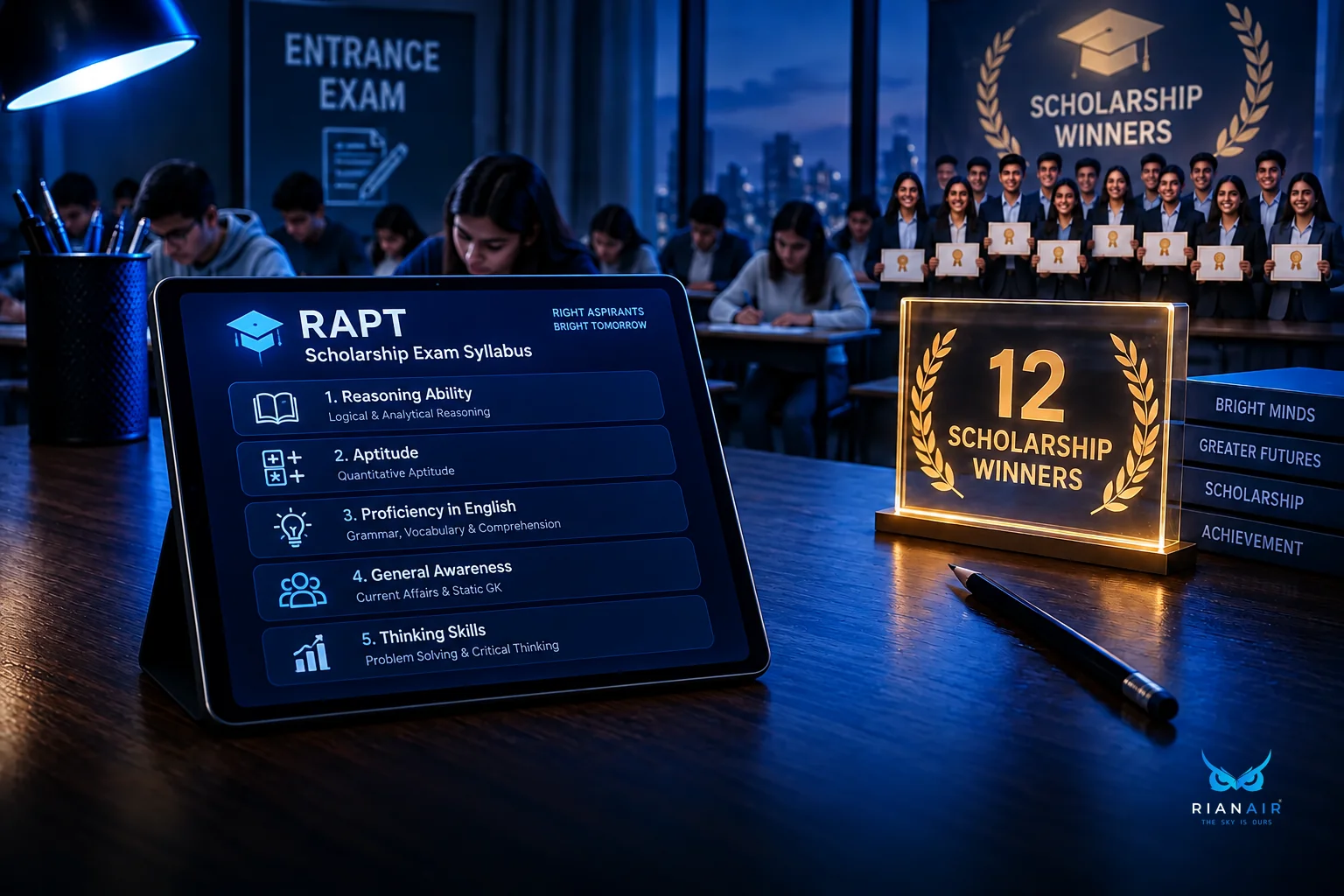
If you want to see where you stand, sign up for a free demo account and take a quick progress check. The free RAPT demo gives you 500 exam-style questions; this is a small share of the full question bank of 20,000+ questions, so treat it as a taste and not the whole bank.
Frequently asked questions
Can I take Class 1 without doing Class 2 first?
Class 1 is the certificate DGCA requires for a CPL, so it is the one that finally matters. We still advise taking Class 2 first, as the cheaper early filter, and Class 1 before you pay for any training. Doing both early means no costly surprise later.
Can I become a pilot if I wear spectacles?
Wearing spectacles does not automatically rule you out. The examiner checks whether your vision corrects to the required standard, so update your eye prescription and carry a recent report. Colour vision is tested separately, and spectacles cannot fix a colour vision deficiency.
Can colour blindness be treated?
A colour vision problem found on an Ishihara-type test is the finding we ask every student to check first. One of our students was declared permanently unfit by the doctor for colour blindness. This is why we send students to an optometrist before they spend on anything else.
How soon can I retake after being declared temporarily unfit?
It depends on the finding. The CAR gives no single waiting period, so the examiner sets the treatment or tests and the review date. Ask for the review conditions before you leave the centre.
Does my medical need to be valid during type rating training?
Under DGCA's type rating CAR (Section 7, Series B, Part XIX), your licence and medical needs to be current for training and checks on simulators. Both must be current for all training and checks on aeroplanes. The written exams must also be passed and stay valid through the training.
What if my medical expires before my CPL is issued?
A lapsed medical has to be renewed before it can support a licence application. Check the expiry date on your certificate when you start flying hours, and book the renewal early so it is current when your documents go to DGCA.
Can I use any doctor for my DGCA medical?
No. DGCA medicals must be done with DGCA-approved examiners or empanelled Aeromedical Evaluation Centres, and the current lists are on the DGCA website. Preparatory tests can come from NABL-approved labs or NABH-approved hospitals, but the assessment itself needs an approved examiner.
Where can I take a Class 1 medical near Delhi, Mumbai or Kerala?
For Kerala students we recommend IAM Bengaluru or Apollo Chennai. For Delhi students we recommend AFCME or Medanta in Gurugram, and for Mumbai and Maharashtra students we recommend Nanavati, Mumbai. Check DGCA's current empanelment list before you book, and we can help with the slot.
Your next step
Do the medical first, then spend. If you are ready to plan your route, speak to a Rian Air adviser about starting pilot training and get the right order of steps for your situation.
Recommended Resources
Start Your Pilot Journey Try Our Free RAPT Demo Now Home Rian Air