Flight Training In India After Completion Of DGCA Exams
Flight training in India begins only after you clear six DGCA ground exams: Air Navigation, Aviation Meteorology, Air Regulations, Technical General, RTR Part 1 and RTR Part 2. Only after that, and only once you have picked your flying training organisation, should you attempt the technical specific papers for the aircraft you will actually fly. This order saves wasted study time and money.
Key Takeaways
- Exam order matters: clear Air Navigation, Aviation Meteorology, Air Regulations, Technical General, RTR Part 1 and RTR Part 2 before touching an aircraft.
- Technical specific papers wait: single and multi engine technical specific exams should be attempted only after you choose your FTO, because the paper matches the aircraft model that school flies.
- 200 hours, broken into parts: total flight time includes 100 hours as PIC, 50 hours PIC cross country, and 40 hours of simulated instrument time, 20 of which can be on a simulator.
- Recency rule: in the six months before your skill test you need 15 hours PIC, with 5 of those at night including 10 take-offs and 10 landings.
- Khajuraho advantage: a controlled aerodrome lets students complete night rating and instrument rating without leaving the airport.
At a Glance: DGCA Exams and Flight Training Requirements
| Requirement | Detail |
|---|---|
| Ground exams (clear first) | Air Navigation, Aviation Meteorology, Air Regulations, Technical General, RTR Part 1, RTR Part 2 |
| Technical specific exams | Taken after choosing FTO, matched to aircraft model (single/multi engine) |
| Total flight hours | 200 hours |
| PIC hours | 100 hours |
| PIC cross country | 50 hours, each leg over 100 nm straight line between two airports |
| Simulated instrument time | 40 hours, up to 20 on a simulator |
| Recency before skill test | 15 PIC hours in preceding 6 months, 5 at night, 10 takeoffs and 10 landings |
| Ground school fee range | ₹80,000 up to ₹1.25 lakh, taxes extra |
| Accommodation near Khajuraho | ₹15,000 to ₹22,000 per month, including 3 meals a day |
1. Clear the Six DGCA Ground Exams First
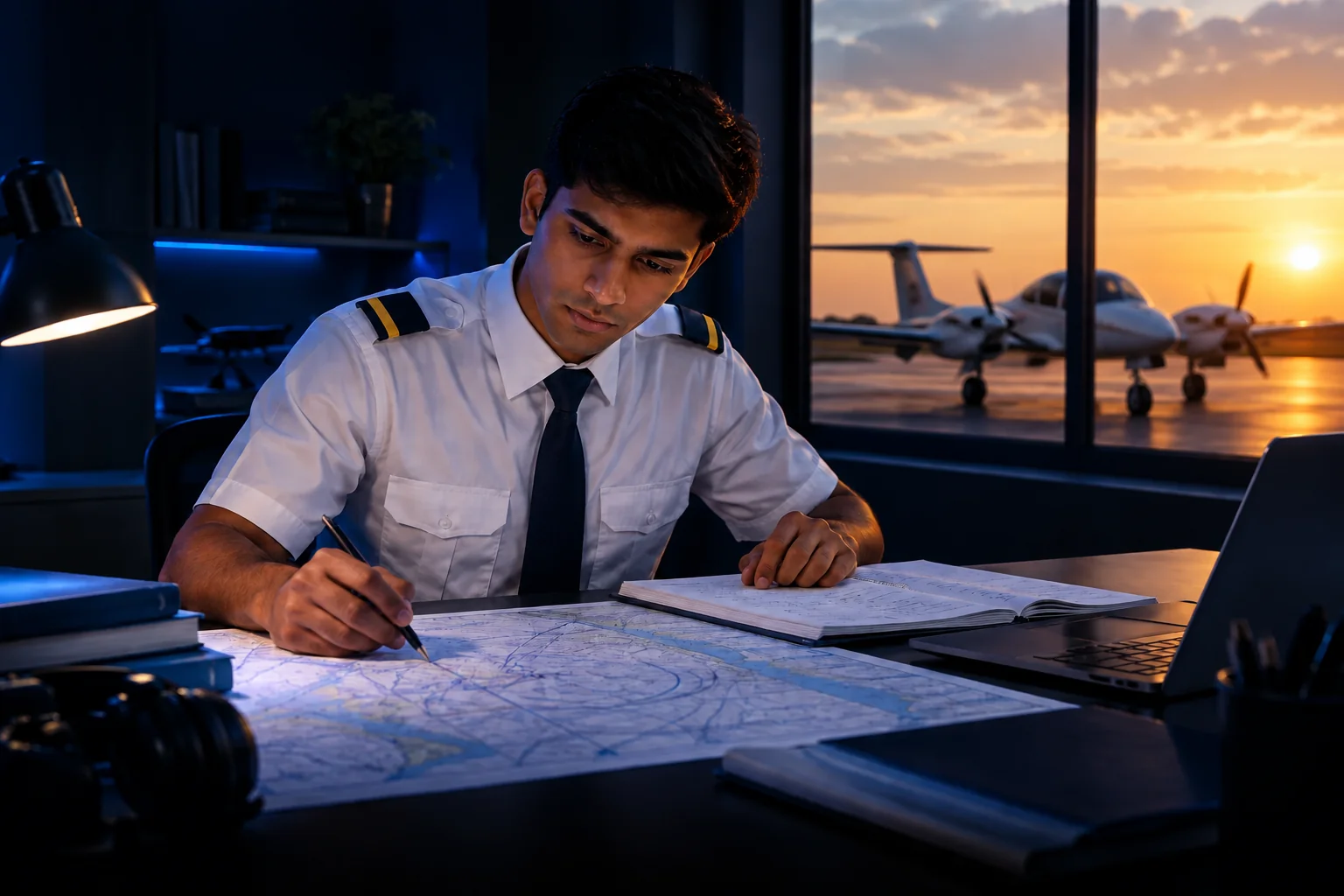
We recommend flight training in India only after you have finished your DGCA ground exams. The six papers are Air Navigation, Aviation Meteorology, Air Regulations, Technical General, RTR Part 1, and RTR Part 2. This sequence is not a formality. It builds the knowledge you will actually use in the cockpit before you spend money on flight hours.
Students who jump into flight training before finishing ground school often struggle to understand instructor briefings. They end up repeating lessons, which costs more in the long run. Clearing ground exams first protects your flight training budget.
If you are still working through this stage, our subject-by-subject breakdown of DGCA ground training walks through what each paper actually covers.
2. Why Technical Specific Exams Wait Until You Pick Your FTO
Technical specific exams for single engine and multi engine aircraft should be attempted only after you choose the flying training organisation where you will fly, and only according to the aircraft model that school actually uses. This is a detail many aspirants miss.
Each FTO flies a different aircraft type. If you study the technical specific paper for one aircraft and your FTO flies another, you waste preparation time. Pick your FTO and aircraft model before you sit this exam, not after.
This single decision point is where a lot of families lose money without realising it. For a wider look at where training budgets leak, read our piece on hidden fees parents miss in pilot training.
3. What the 200 Hours of Flight Training Actually Involve
DGCA flight training requires 200 total hours of actual flight time. This is not a single block of flying. It splits into specific categories, and each one has its own rule.
You need 100 hours as pilot-in-command (PIC), and within that, 50 hours as PIC cross country. A cross country flight only counts if the straight line distance between the two airports is more than 100 nautical miles. Short hops around the training airfield do not count toward this total.
You also need 40 hours of simulated instrument time. Of these, 20 hours can be flown on a simulator rather than in the aircraft. Here is a detail that catches many students off guard: the 20 simulator hours must come after you finish the 200 hours of actual flying, or during the multi engine stage of training. You cannot front-load all your simulator time early and call it done.
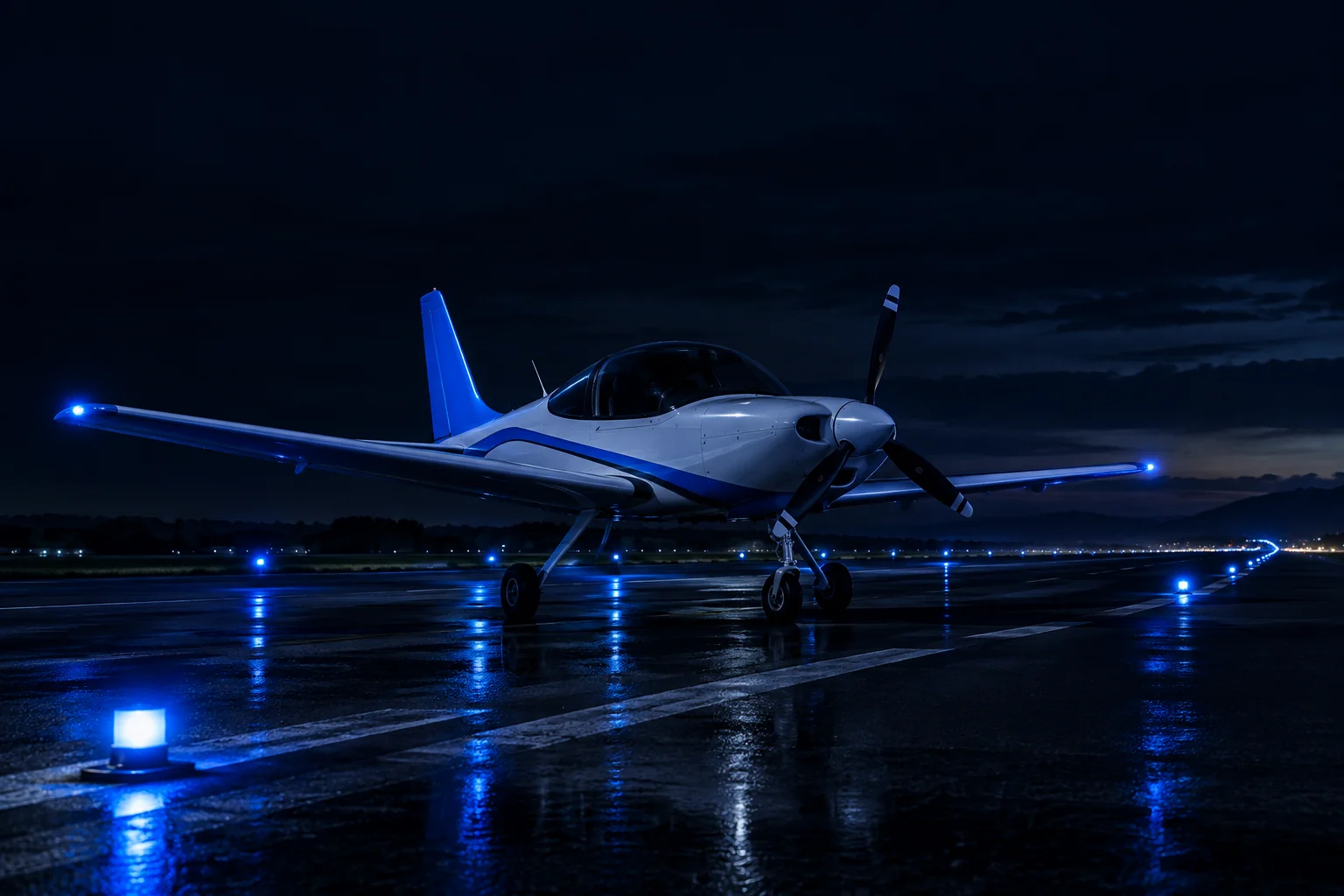
There is also a recency rule tied to your final skill test. In the six months before the submission of the documents to the DGCA, you need 15 hours of PIC time. Five of those hours must be flown at night, with at least 10 take-offs and 10 landings during that night flying. This is where your training airfield's facilities start to matter a lot.
4. Why We Recommend Indian Flying Academy at Khajuraho Airport
We recommend Indian Flying Academy, based at Khajuraho airport, for the flight training stage. Khajuraho is a controlled aerodrome, which matters directly for the night flying and instrument rating hours described above.
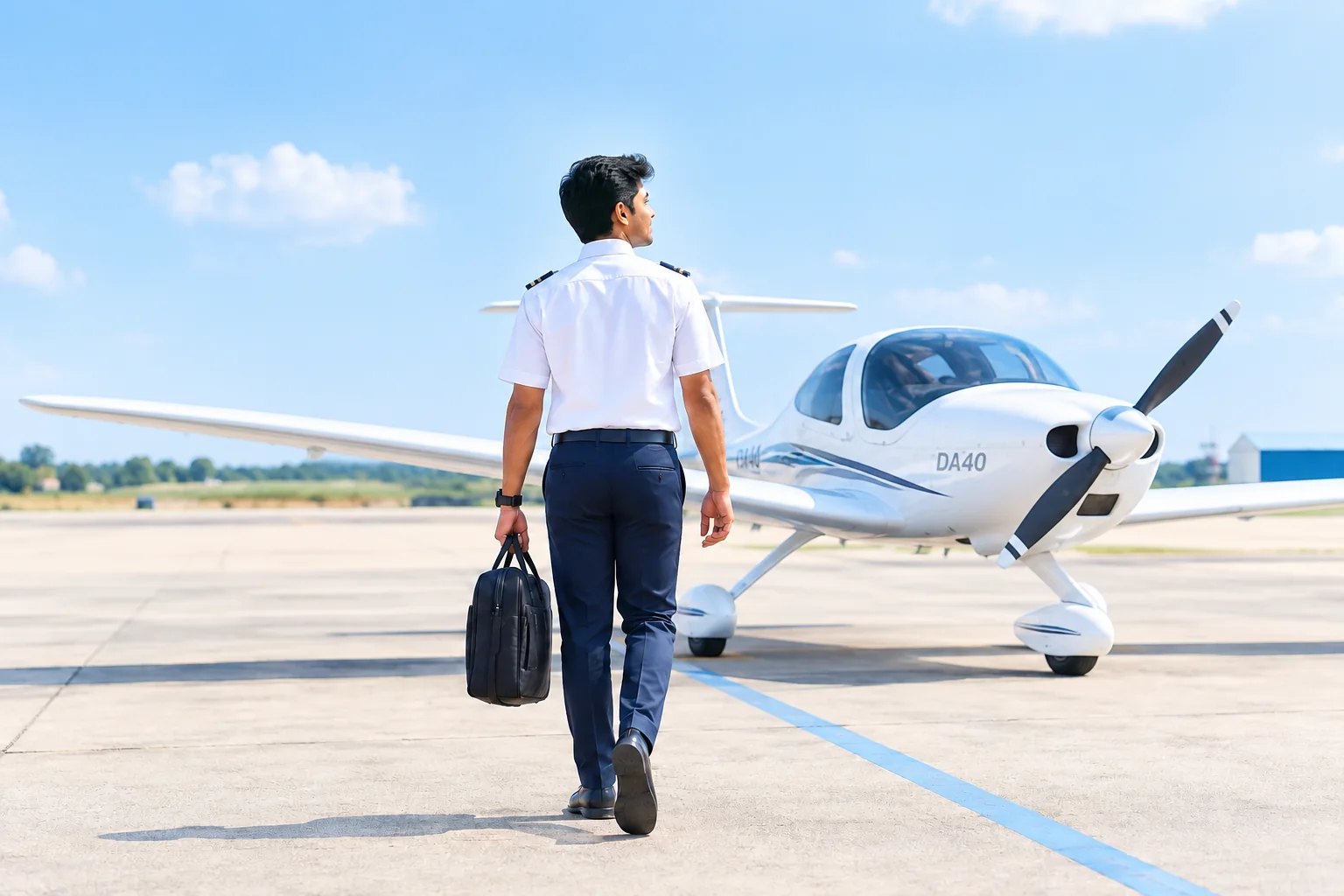
Indian Flying Academy flies a fleet of DA40 and DA42 aircraft, four of the DA40 and one DA42. These are modern, glass-cockpit training aircraft. Many other schools around the country still operate older fleet types like Tecnam or ageing C152s. A modern fleet means fewer unplanned maintenance delays and a training environment closer to what you will meet on a commercial aircraft later.
The academy is owned by Captain Ravi Vikram Singh, an experienced captain running the operation. Rian Air has secured 30 training slots per year out of the academy's total capacity, through an MoU signed in October 2026. That gives our students a reserved seat in the schedule rather than an open waitlist.
Before a student even starts flying at Khajuraho, Rian Air's hybrid simulator gives hands-on cockpit familiarity. Students opting for flight training with Indian Flying Academy get a head start on checklists and procedures before their first actual flight hour, which tends to shorten the early learning curve.
5. Khajuraho's Infrastructure and Connectivity From Delhi, Mumbai and Kochi
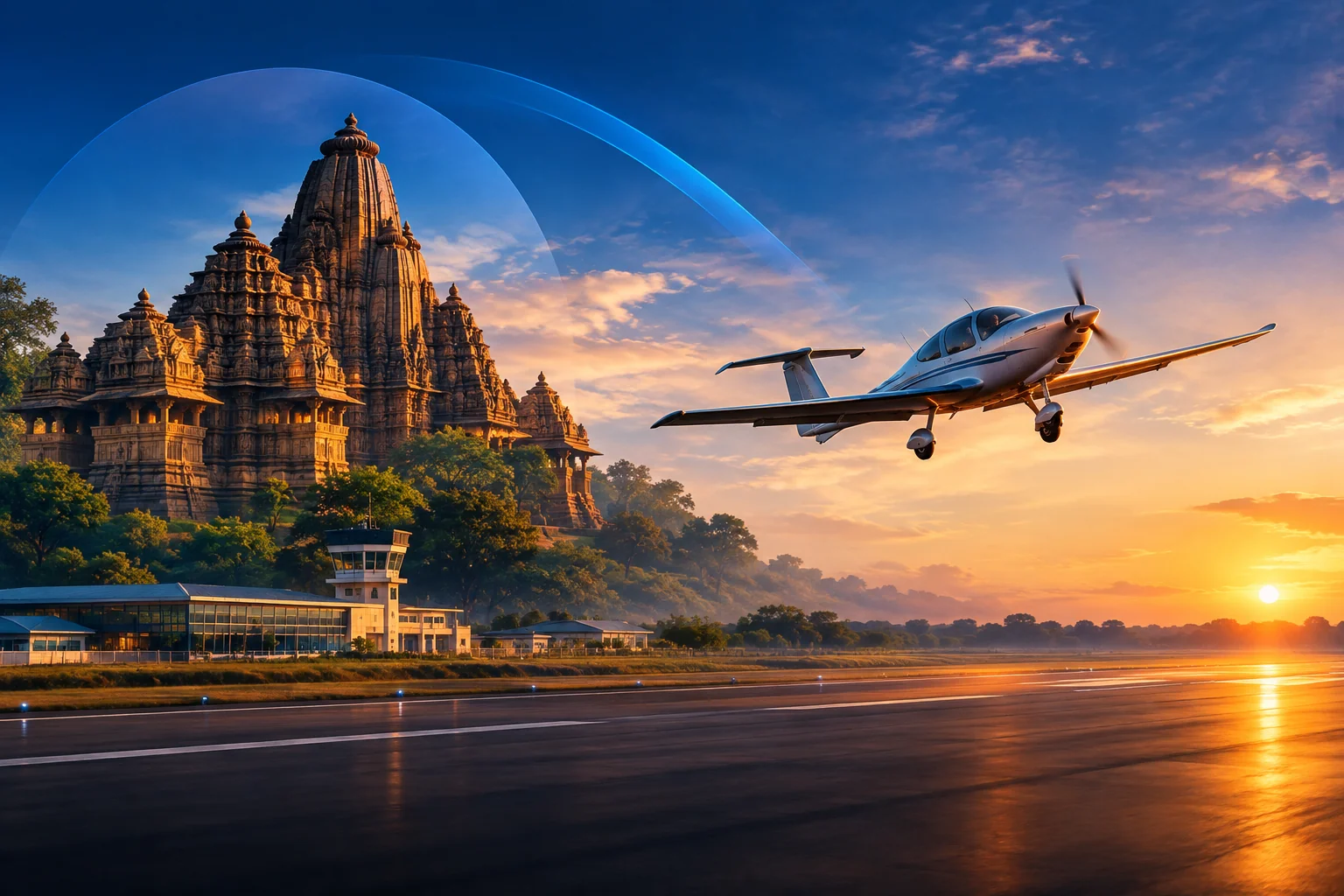
Khajuraho airport works well for flight training because it is a controlled aerodrome with the infrastructure needed for both night rating and instrument rating, so students rarely have to leave the airport to complete those stages.
Connectivity is reasonable for a student base spread across India. Delhi to Khajuraho covers roughly 502 km by air, while Mumbai to Khajuraho runs about 966 km, according to flight distance data from EaseMyTrip. Students from Kochi or other southern cities typically connect through Delhi or Mumbai before the final leg into Khajuraho.
Because training happens within India, there is no license conversion required once you finish your CPL. A licence earned through a DGCA-approved FTO like Indian Flying Academy is already valid for Indian commercial operations, unlike licences earned abroad that may need a conversion process before you can fly for an Indian carrier.
6. Accommodation and Living Costs Near Khajuraho
Accommodation near Khajuraho airport is inexpensive compared to major metro training hubs. Students can expect to pay between ₹15,000 and ₹22,000 per month, which typically includes three meals a day. For a family budgeting a multi-month flight training stint, this keeps the living cost portion of the plan predictable.
That affordability matters because flight training already asks a lot of a household budget. If you are weighing financing options alongside this stage, our guide on education loan eligibility for pilot training in India covers what lenders typically ask for.
7. Ground School and Flight Training Costs in India
Ground school fees in India typically start around ₹80,000 and can go up to ₹1.25 lakh with Rian Air, with taxes extra. The ground training package includes 5 hours of simulator time built in, which gives students early exposure to cockpit instruments before flight training even begins.
Type rating, the stage that qualifies you on a specific commercial aircraft like an A320 or B737, is priced around ₹15 lakhs. Actual simulator hours and flight hours, whether completed in Kerala or abroad, sit within price ranges that vary by location and aircraft; it is worth asking directly for a current breakdown before you commit.
Rian Air also backs its ground exam preparation with a money-back promise: if a student does not clear their DGCA exams, they get their money back, terms and conditions apply. Ask for the full T&C sheet through our enquiry form before you enrol, so you know exactly what is covered.
Two scholarship routes exist as well. The Women Empowerment Program offers DGCA ground training with zero listed fee for eligible candidates, based on merit, with a refundable commitment deposit. There is also a gender-neutral merit-based scholarship. Eligibility and amounts are decided case by case, so reach out through our enquiry form to check if you qualify.
Comparison: Training Path Choices
| Factor | Flight Training in India (Khajuraho) | Flight Training Abroad |
|---|---|---|
| License conversion needed for Indian airlines | No | Often yes, depending on country |
| Accommodation cost per month | ₹15,000 to ₹22,000 with meals | Varies widely, often higher |
| Aircraft fleet (Indian Flying Academy) | DA40 and DA42, modern glass cockpit | Depends on FTO chosen |
| Aerodrome type | Controlled aerodrome | Varies by country |
| Reserved slots via Rian Air MoU | 30 per year | Not applicable |
Rian Air also runs structured CPL pathways outside India, including in Tunisia and Malta, for students who prefer an international route. Our comparison of CPL training in India vs Malta vs Tunisia breaks down how those routes differ on cost and timeline.
FAQs
Which DGCA exams must I clear before flight training?
You must clear Air Navigation, Aviation Meteorology, Air Regulations, Technical General, RTR Part 1 and RTR Part 2 before starting flight training. Technical specific papers for single or multi engine aircraft come later, once you pick your FTO.
Why do technical specific exams come after choosing an FTO?
The technical specific paper matches the exact aircraft model your flying school uses. Studying the wrong aircraft's systems before you know your FTO wastes preparation effort, so this exam should wait until your school and aircraft are confirmed.
How many flight hours does DGCA require for a CPL?
DGCA requires 200 total flight hours, including 100 hours as PIC, 50 hours as PIC cross country over legs longer than 100 nautical miles, and 40 hours of simulated instrument time with up to 20 hours on a simulator.
What is the night flying requirement before the skill test?
In the six months before your skill test, you need 15 hours of PIC time, including 5 hours flown at night with at least 10 take-offs and 10 landings during that night flying.
Can simulator hours replace actual flying hours?
Up to 20 of the 40 required simulated instrument hours can be flown on a simulator instead of an aircraft. These 20 hours must be completed after finishing the 200 hours of actual flying, or during the multi engine training stage.
Why is Khajuraho airport recommended for flight training?
Khajuraho is a controlled aerodrome with the infrastructure needed for night rating and instrument rating, so students complete these stages without travelling to another airport. That saves both time and training cost.
Do I need to convert my licence if I train in India?
No. A CPL earned through a DGCA-approved FTO in India is already valid for flying with Indian carriers, so there is no licence conversion step required, unlike some licences earned abroad.
What does accommodation cost near Khajuraho airport?
Accommodation near Khajuraho typically costs between ₹15,000 and ₹22,000 per month, including three meals a day, which keeps the living cost portion of flight training predictable.
What aircraft does Indian Flying Academy fly?
Indian Flying Academy operates a fleet of DA40 and DA42 aircraft, four DA40s and one DA42, giving students modern, glass-cockpit training equipment at Khajuraho airport.
How much does ground school and type rating cost in India?
Ground school fees with Rian Air typically range from ₹80,000 up to ₹1.25 lakh, taxes extra, with 5 simulator hours included. Type rating is priced around ₹15 lakhs. Ask through our enquiry form for a current breakdown by stage.
Flight training in India after completion of DGCA exams works best when the order is respected: ground exams first, FTO and aircraft model second, then flight hours that build toward your skill test in a structured sequence. Reserved slots at Khajuraho through our MoU with Indian Flying Academy, paired with hands-on simulator prep before you even start flying, is how Rian Air tries to remove the guesswork from this stage.
If you are ready to map out your own ground exam and flight training timeline, start your pilot journey with Rian Air today, or explore our full training pathways first. You can also follow real training updates on our Instagram or watch student journeys on our YouTube channel.