For many aspiring pilots, the first major milestone is not a flight lesson or a DGCA examination.
It is the medical examination.
Every year, students spend months researching pilot training, comparing flight schools, and planning budgets, yet many delay confirming something far more important—whether they are medically fit to become a pilot.
If you are considering pilot training in Kerala, completing your DGCA medical examination should be one of your first priorities.
The good news is that many concerns surrounding aviation medicals are based on myths rather than reality.
Understanding the process early can save significant time, money, and uncertainty later in your aviation journey.
Why Pilot Medical Examinations Matter
Pilots are responsible for making critical decisions while operating aircraft safely.
For that reason, aviation authorities around the world require pilots to meet specific medical standards.
In India, pilot medical standards are regulated by the Directorate General of Civil Aviation (DGCA).
Completing your medical examination early provides clarity before making significant financial commitments toward pilot training.
Benefits of completing your medical early:
Confirms eligibility for pilot training\
Identifies potential medical concerns
Prevents unnecessary expenses
Helps with long-term career planning
Reduces uncertainty for students and parents
💡
One of the most expensive mistakes aspiring pilots make is paying training fees before confirming medical eligibility.
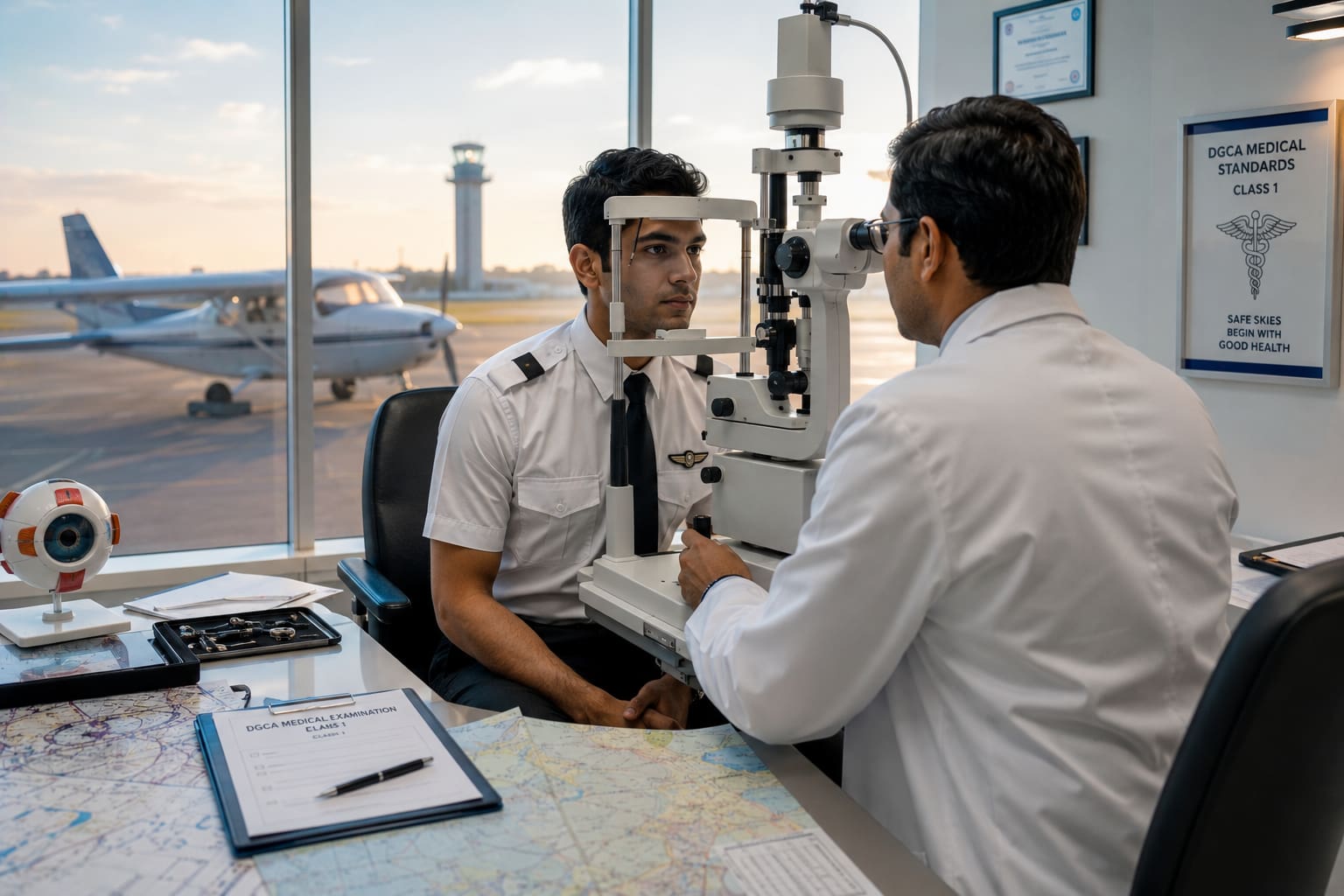
Understanding DGCA Class 2 Medical Examination
For most aspiring pilots, the journey begins with a Class 2 Medical Examination.
This is usually the first aviation medical assessment required for pilot training.
Class 2 Medical is generally required for:
Student Pilot Licence (SPL)
Initial aviation medical assessment
Pilot training eligibility verification
Class 1 medical application
Most students should complete a Class 2 Medical before investing heavily in flight training.
ℹ️
If you are serious about becoming a pilot, your Class 2 Medical should ideally be completed before starting your training journey.
What Is Checked During a Class 2 Medical?
The purpose of the examination is to determine whether a candidate meets the medical standards required for aviation duties.
A Class 2 Medical may include:
Vision assessment
Colour vision testing
Hearing evaluation
Blood pressure assessment
General physician examination
Medical history review
Urine testing
Basic health evaluation
The objective is not perfection.
The objective is fitness to safely perform aviation duties.
Understanding DGCA Class 1 Medical Examination
As pilots progress toward professional flying careers, they will require a Class 1 Medical Examination.
Class 1 Medical standards are more comprehensive because they apply to professional commercial pilots.
Class 1 Medical is generally required for:
Commercial Pilot Licence holders
Airline pilots
Professional flight crew
Advanced licensing requirements
Pilots must maintain valid medical certification throughout their professional careers.
ℹ️
A Class 1 Medical is not usually the first step. Most aspiring pilots begin with a Class 2 Medical Examination.
Can You Become a Pilot If You Wear Glasses?
This is one of the most common questions asked by aspiring pilots.
The answer is often yes.
Many professional pilots around the world wear corrective lenses.
Common vision-related facts:
Wearing spectacles does not automatically disqualify a pilot
Corrective lenses are permitted under specific conditions
Aviation medical standards focus on corrected vision requirements
Individual assessments may vary
💡
Do not assume you are medically ineligible because you wear glasses. Complete an official aviation medical examination before drawing conclusions.
Common Myths About Pilot Medical Examinations
Many students arrive for medical examinations carrying misconceptions.
Let's address some of the most common myths.
Myth 1 – Pilots Cannot Wear Glasses
False. Many airline pilots and commercial pilots wear corrective lenses.
Start your journey
Ready to become a commercial pilot?
Our admissions team can help you map out the right training path — from zero hours to a CPL.
False. The requirement is medical fitness according to aviation standards, not perfection.
Myth 3 – Height Automatically Disqualifies Pilots
False. Aviation authorities evaluate operational suitability rather than relying on myths.
Myth 4 – Medical Examinations Are Designed to Fail Students
False. The purpose of medical examinations is safety and fitness assessment, not rejection.
DGCA Approved Medical Examiners in Kerala
Kerala has DGCA-approved aviation medical examiners authorized to conduct pilot medical assessments.
One example is:
Lt. Col. Dr. Jayadevan G
DGCA-approved authorizations include:
Class 2 Medical Examinations
Class 1 Renewal Medical Examinations
Students should always verify current approvals directly through official DGCA resources before scheduling appointments.
ℹ️
Medical examiner approvals may change over time. Always verify the latest DGCA-approved examiner list before booking.
Where Can You Verify DGCA Approved Medical Examiners?
The DGCA maintains official lists of approved aviation medical examiners and medical centers.
Students should always rely on official sources for the most current information.
Official DGCA resources help students:
Verify examiner approvals
Find medical centers
Confirm appointment eligibility
Access updated aviation medical information
Official DGCA Medical Examiner List can be found on the official DGCA website:
https://www.dgca.gov.in/
Mistakes Aspiring Pilots Should Avoid
Over the years, certain mistakes continue to appear repeatedly among aspiring pilots.
Avoid:
Starting training before completing medicals
Relying on social media rumors
Delaying medical examinations unnecessarily
Ignoring professional medical advice
Assuming myths are facts
Making financial commitments before confirming eligibility
⚠️
Completing your medical examination early can save months of delays and significant financial losses.
Advice to Parents
Parents often worry about whether their child will medically qualify to become a pilot.
That concern is completely understandable.
The best approach is to focus on facts rather than assumptions.
Recommended steps:
Complete the medical early
Use official DGCA resources
Seek professional guidance
Avoid aviation myths
Understand the process thoroughly
The earlier clarity is achieved, the easier the decision-making process becomes.
Quick Answers
What is the first pilot medical examination required in India?
Most aspiring pilots begin with a DGCA Class 2 Medical Examination.
Can I become a pilot if I wear glasses?
Yes. Many pilots wear corrective lenses, provided they meet DGCA visual standards.
Is Class 1 Medical required before pilot training?
Not usually. Most students begin with a Class 2 Medical Examination and progress to Class 1 later.
Where can I find DGCA-approved medical examiners in Kerala?
Students should verify the latest approved medical examiner list directly through official DGCA resources.
When should I complete my pilot medical examination?
Ideally before investing significant money into pilot training or flight school enrollment.
Final Thoughts
Pilot medical examinations are not obstacles.
They are an essential part of aviation safety and professional standards.
Completing your medical examination early provides clarity, confidence, and direction before beginning pilot training.
For aspiring pilots in Kerala, understanding the DGCA medical process is one of the smartest decisions you can make.
The process is often far less intimidating than many students imagine.
If your dream is to become a pilot, start with the fundamentals.
Confirm your eligibility.
Understand the process.
And begin your aviation journey with confidence.