DGCA Class 2 Medical in Kerala is often the first official step toward becoming a commercial pilot in India. Before enrolling in flight training or appearing for many aviation-related processes, aspiring pilots must establish their medical fitness through a DGCA-approved medical examination.
Over the years, I have met hundreds of aspiring pilots who delayed their aviation journey simply because they were unsure about the medical process. Many students assume the examination is difficult or fear they may be medically unfit. In reality, most candidates who maintain reasonable health standards successfully complete the process.
If you are planning to become a pilot in Kerala, understanding the DGCA Class 2 Medical process early can save significant time and help you begin your aviation career with confidence.
— Capt. Vikas Vikramdas Nair
What is DGCA Class 2 Medical?
DGCA Class 2 Medical is the initial aviation medical assessment required for aspiring pilots in India.
The examination evaluates whether a candidate meets the basic medical standards required for aviation training.
The medical examination is conducted by DGCA-authorized medical examiners and forms the foundation of a pilot's medical certification journey.
Vision assessment
Hearing assessment
Blood pressure evaluation
General physical examination
Medical history review
Basic health screening
💡
Most aspiring pilots begin their aviation medical journey with a DGCA Class 2 Medical before progressing to DGCA Class 1 Medical.
Why is DGCA Class 2 Medical Important?
The Class 2 Medical examination confirms whether a candidate is medically suitable to pursue pilot training.
Completing the medical process early helps students avoid unnecessary delays later in their training.
First step toward pilot licensing
Required for aviation career progression
Identifies medical concerns early
Helps with DGCA documentation
Builds confidence before training begins
Who Should Apply for DGCA Class 2 Medical?
You should consider applying if you are:
Planning to become a commercial pilot
Studying in Class 10 or Class 12
Exploring aviation as a career
Preparing for CPL training
Applying for pilot training programs
Starting your aviation journey in Kerala
Students can begin the medical process even before completing their higher secondary education.
Many aspiring pilots start their medical certification journey while preparing for entrance examinations and aviation training.
DGCA Approved Medical Examiner in Kerala
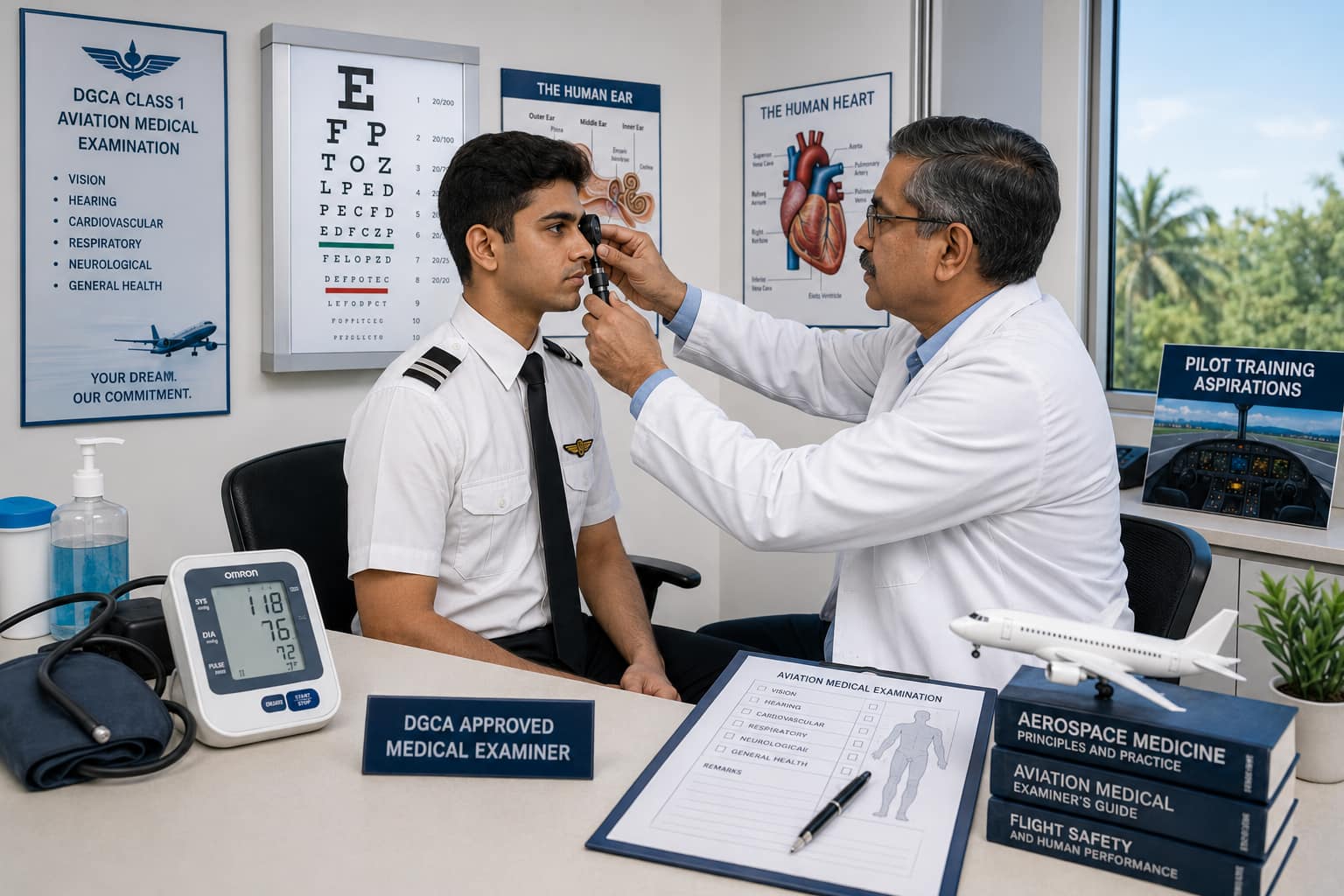
Aspiring pilots looking to complete their DGCA Class 2 Medical in Kerala can consult DGCA-approved aviation medical examiners authorized to conduct aviation medical assessments.
One such examiner is Lt. Col. Jayadevan, a DGCA-approved Class 2 Medical Examiner and DGCA-approved Class 1 Renewal Medical Examiner serving from Kottayam, Thiruvalla, and surrounding regions of Kerala.
Students are advised to contact the examiner directly to confirm appointment availability, documentation requirements, examination schedules, and the latest DGCA procedures before planning their visit.
ℹ️
Always verify the latest DGCA medical examiner approvals and appointment procedures before scheduling a medical examination.
Eligibility for DGCA Class 2 Medical
The eligibility requirements are straightforward.
Interest in pursuing aviation
10th grade original marksheet for EGCA portal
Valid identification documents
Basic medical fitness
Compliance with DGCA medical standards
There is no requirement to complete pilot training before appearing for a Class 2 Medical examination.
DGCA Class 2 Medical Examination Process
The process typically follows a structured sequence.
1Identify a DGCA-authorized Class 2 Medical Examiner.
2Book an appointment.
3Complete the required medical forms.
4Attend the medical examination.
5Undergo necessary assessments.
6Receive examination findings.
7Await DGCA processing and assessment.
Candidates should carry all requested documents and arrive prepared for the examination.
Tests Conducted During DGCA Class 2 Medical
The exact tests may vary based on examiner requirements and individual circumstances.
However, common assessments include:
Vision Assessment
Vision standards are important for pilot licensing.
Examiners assess:
Visual acuity
Colour perception
Corrective lenses (if applicable)
Overall eye health
Hearing Assessment (Audiometry)
Pilots must be able to communicate effectively using aviation radio systems.
Hearing assessments help ensure communication capability.
Blood Pressure Assessment
Blood pressure is evaluated to ensure candidates meet aviation medical standards
General Physical Examination
A complete health assessment is conducted by the medical examiner.
Start your journey
Ready to become a commercial pilot?
Our admissions team can help you map out the right training path — from zero hours to a CPL.
Candidates should provide accurate information regarding previous medical conditions, surgeries, medications, or treatments.
⚠️
Always provide accurate medical information. Concealing medical history can create significant licensing complications later.
Can Pilots Wear Spectacles?
Yes.
Many commercial pilots wear corrective lenses.
The important factor is whether the candidate meets DGCA visual standards with or without correction.
Spectacles are generally acceptable.
Contact lenses may be acceptable.
Vision standards must be satisfied.
Additional assessments may be required in certain cases.
Common Reasons for Concern Among Students
Many students worry unnecessarily before attending the medical examination.
Common concerns include:
Wearing spectacles
Previous minor surgeries
Body weight
Blood pressure
Colour vision concerns
Fitness levels
Most concerns can be addressed through professional medical guidance and proper evaluation.
Difference Between DGCA Class 2 and DGCA Class 1 Medical
One of the most common questions aspiring pilots ask is when they should begin the medical process.
My recommendation is simple:
Apply as early as possible.
After Class 10 results
During Class 11
During Class 12
Before joining pilot training
Before applying for CPL programs
💡
Completing your Class 2 Medical early gives you clarity and allows more time to address any medical observations if required.
How DGCA Class 2 Medical Fits into the Pilot Journey
The medical examination is one part of the larger pilot training pathway.
A typical progression looks like this:
The biggest mistake is postponing the medical examination. Early medical clearance provides confidence and helps students plan their aviation journey effectively.
Frequently Asked Questions
Can I become a pilot if I wear spectacles?
Yes. Many commercial pilots wear corrective lenses and continue flying professionally.
Is DGCA Class 2 Medical difficult?
Most medically healthy candidates successfully complete the examination process.
Is DGCA Class 2 Medical difficult?
Most medically healthy candidates successfully complete the examination process.
Should I do Class 2 Medical before joining pilot training?
Yes. Completing it early is highly recommended.
Can Class 12 students apply for DGCA Class 2 Medical?
Yes. Many aspiring pilots begin the process while still in school.
How long is the medical process?
Processing times can vary depending on individual circumstances and regulatory procedures.
Final Thoughts
DGCA Class 2 Medical in Kerala is not something aspiring pilots should fear. Instead, it should be viewed as the first professional milestone on the journey toward becoming a commercial pilot.
The earlier you complete the process, the earlier you gain clarity regarding your aviation career path. For most students, the examination is straightforward and serves as an important foundation for future pilot licensing requirements.
If your dream is to become a pilot, starting your medical certification journey today is one of the smartest decisions you can make.