CPL Ground Classes in Kerala: Syllabus, Timeline, and Costs Explained
CPL ground classes in Kerala now mean seven DGCA computer-based papers plus one practical radio telephony test. The whole process spans roughly six to ten months. The state's training setup improved sharply after the pandemic, once Thrissur got its first fixed-base flight simulator. That single change let students combine theory with real cockpit practice without leaving Kerala.
Key Takeaways
Seven exams, not six: Air Navigation, Aviation Meteorology, Air Regulations, Technical General, Technical Specific (Single Engine and Multi Engine count as two paper sets), and RTR(A), which has a written part and a spoken practical part.
Pass mark is 70% on most DGCA papers. Each paper never carries negative marking, so guesswork costs nothing if you don't know the answer.
RTR(A) Part 2 is a spoken practical exam. It runs separately from the written papers, and it trips up students who never rehearse live radio calls.
Kerala's ground training setup changed after Covid, when Kerala got its first C172 fixed-base simulator in Thrissur. That closed a gap that once forced students to travel out of state for hands-on practice.
Ground school in Kerala usually takes six to ten months. The exact length depends on batch pace, medical clearance timing, and how many attempts a paper needs.
CPL Ground Classes in Kerala at a Glance
| Exam Paper | Format | Pass Mark | Typical Duration |
|---|---|---|---|
| Air Navigation | Computer-based, objective | 70% | Negative marking applies |
| Aviation Meteorology | Computer-based, objective | 70% | Negative marking applies |
| Air Regulations | Computer-based, objective | 70% | Negative marking applies |
| Technical General | Computer-based, objective | 70% | Negative marking applies |
| Technical Specific (Single/Multi Engine) | Computer-based, objective | 70% | Aircraft category specific |
| RTR(A) Written | Computer-based, objective | 70% | Conducted by WPC wing |
| RTR(A) Practical (Part 2) | Spoken viva, live radio procedure | Pass/Fail on procedure accuracy | One-on-one with examiner |
| Full ground school timeline | All papers combined | — | 6 to 10 months typical |
1. Understand What CPL Ground Classes in Kerala Actually Cover
CPL ground classes in Kerala cover the same six DGCA subjects every Indian aspirant must clear: Air Navigation, Aviation Meteorology, Air Regulations, Technical General, and Technical Specific. This last one splits into single-engine and multi-engine versions. A seventh exam, RTR(A), tests radio telephony procedure separately from the academic papers.
No flying school in India should start actual flight training until a student clears these papers. Students also need a valid DGCA Class 2 medical certificate. Ground school is where that clearance happens. It's also where most training delays quietly begin.
Kerala students preparing for these papers work through dense material. This includes aircraft performance charts, meteorological codes, airspace classification, radio failure procedures, and navigation math done without a calculator for parts of the exam. A structured question bank, rather than loose notes copied from batch to batch, tends to separate students who clear on the first try from those who don't.
Exam Pattern: Marks, Questions, and Time for Each DGCA Paper
Each DGCA ground paper is a computer-based objective test. It needs a 70% pass score. Wrong answers carry no negative marking. Question counts and time limits vary by subject. They follow DGCA's current exam scheme, which academies confirm when booking each attempt.
DGCA revises the exact question count per paper from time to time. Because of this, serious ground schools brief students on the current scheme before every exam window, rather than relying on old notes.
This is one reason a live, updated question bank matters more than static PDFs passed around informally. Rian Air's RAPT platform DGCA question bank tracks the current scheme and flags a student's weak topics automatically, rather than leaving that discovery to exam day.
Why Is RTR(A) Part 2 Different From the Other Six Papers?
RTR(A) Part 2 is a spoken practical exam, not a written test. An examiner runs a live radio telephony scenario. The candidate must respond with correct phrasing, in real time, with no second try mid-call.
Students who only study the RTR syllabus as text tend to freeze under the pressure of a live voice exchange. Mock radio sessions, run again and again before the real exam, build the muscle memory a textbook alone can't give. Rian Air runs structured mock RTR sessions for exactly this reason. Students who go through several rounds of live practice generally clear Part 2 on the first attempt.
2. Map Out How Long CPL Ground School Takes in Kerala
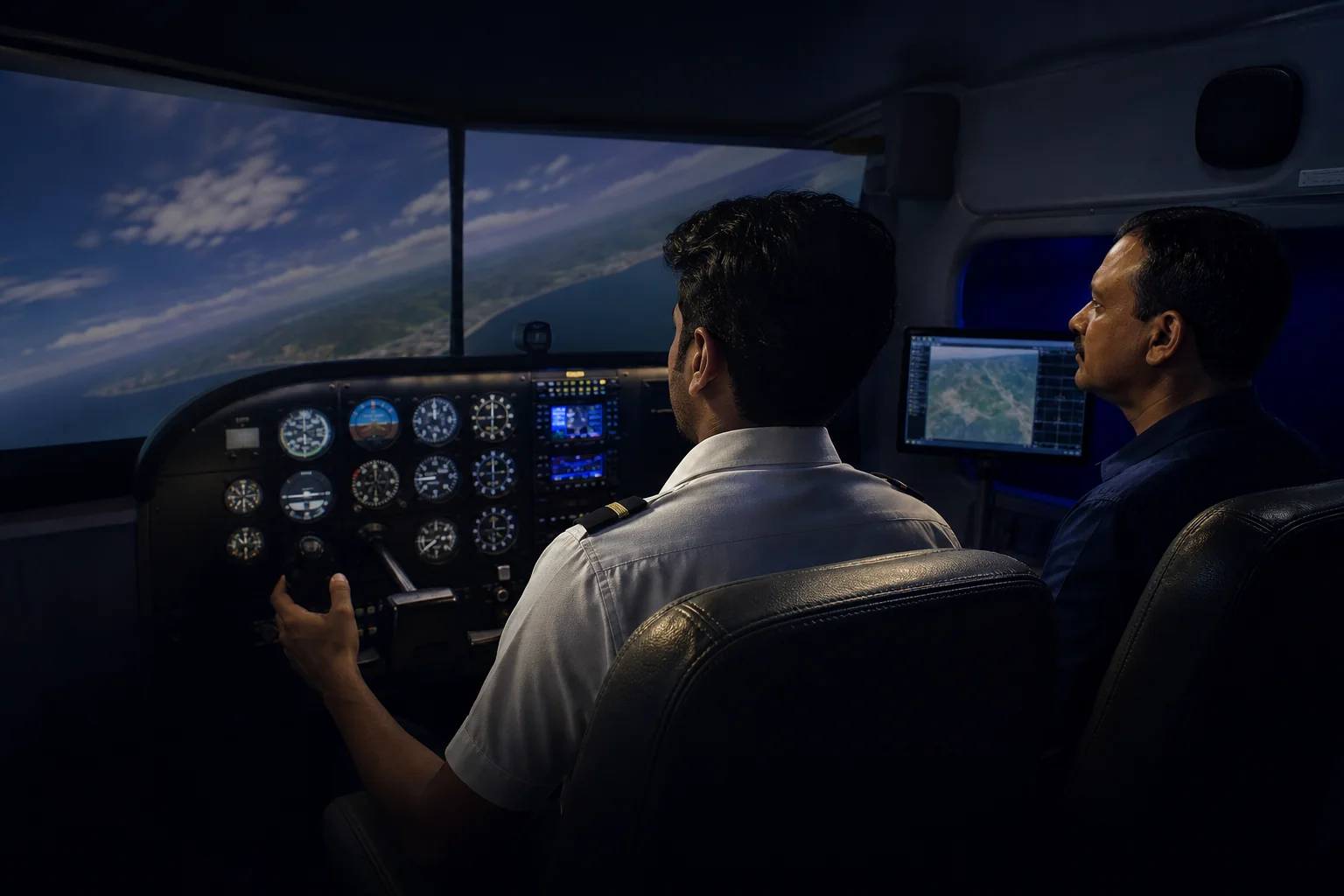
Ground school in Kerala usually takes six to ten months, from enrollment to clearing all seven papers. The range depends on how fast a student's batch moves, how quickly the Class 2 medical is secured, and how many papers need a repeat attempt.
Students with weak fundamentals in Class 12 math or physics often need extra weeks on Technical General and Navigation before attempting the exam. The two most common causes of a slipping timeline are a Class 2 medical booked too late and a paper attempted before the question bank has been fully worked through.
Booking the medical in month one, rather than after tuition begins, is the single easiest way to keep the six-to-ten-month window realistic. For a subject-by-subject look at what's involved, the DGCA CPL exam subjects and syllabus checklist is worth working through before enrollment, not after.
3. Budget Properly for Ground Classes
Ground class budgets in Kerala should cover four line items: tuition fees, study material and question bank access, DGCA exam fees per paper, and the cost of re-attempts if a paper isn't cleared the first time. This article doesn't carry a verified rupee figure for each of those four items, and guessing one would be worse than leaving it blank.
Before enrolling, ask any shortlisted academy for a written quote that breaks out all four separately, rather than one bundled "package fee." Also ask DGCA's own fee schedule for the current per-paper exam fee and re-attempt fee, since these are set by DGCA and can change between exam cycles.
A copyable checklist for that quote request:
- Total tuition fee, and what exactly it includes (classroom hours, mock tests, study material)
- Question bank access: is it a one-time cost or does it renew each term
- DGCA exam fee per paper, confirmed against DGCA's current published rate
- Re-attempt fee per failed paper, and how many attempts the academy's own fee structure allows before an extra charge kicks in
- Whether RTR(A) written and RTR(A) practical are billed as one exam fee or two
Families who only budget for tuition are usually the ones surprised later. Re-attempt costs add up fast when a student fails a paper twice on avoidable mistakes, and one common avoidable mistake is walking into the exam without a single mock test done under exam conditions.
A full breakdown of where costs typically hide, beyond the headline tuition number, is covered in Pilot Training Cost in India Breakdown: Hidden Fees Parents Miss. Families exploring financing, including scholarships for eligible women candidates, can review the Women Empowerment CPL ground training scholarship eligibility criteria directly.
How Has Kerala's Training Infrastructure Changed Since the Pandemic?
Kerala's pilot training setup changed a lot after the pandemic, once Thrissur got the state's first fixed-base C172 simulator. Before that, Kerala students studying ground subjects had almost no local way to turn theory into cockpit practice. They either waited for flight training abroad or traveled out of state.
Covid-era travel limits exposed how thin that gap really was. A student could clear all seven ground papers in Kerala and still have no access to a simulator that matched what they studied on paper. Rian Air's Thrissur facility closed that gap.
It put a fixed-base simulator in the same state where the theory was taught. Navigation math and radio calls could then be rehearsed on equipment that behaves like the real aircraft, not just described in a textbook.
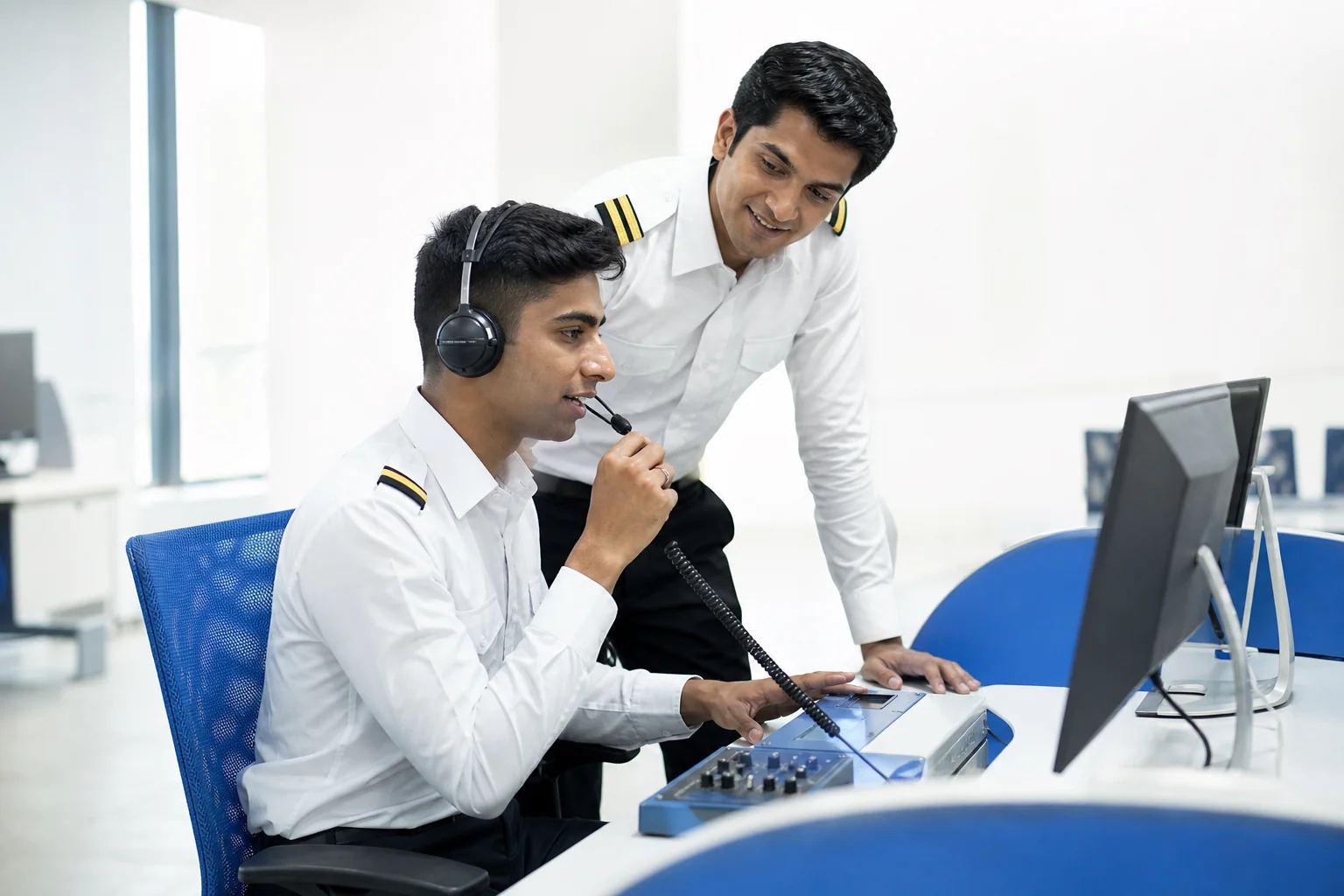
That single facility, paired with more simulator centres Rian Air has since opened elsewhere in India, is why the same ground training standard now travels with a student, whether they start in Thrissur, Delhi, or Mumbai. Read more about what that hands-on training looks like day to day in A Day in the Life: C172 Fixed Base Simulator Training Kerala Students Experience.
This matters for families comparing options. Plenty of ground training in Kerala is still run purely as theory coaching. Some of it happens out of small centres run informally by retired or serving pilots, without a connected simulator or structured digital tracking. That model can teach the syllabus. But it can't show a student or parent what real cockpit readiness looks like before flight training begins.
4. Choose the Right Academy for CPL Ground Classes in Kerala
The right CPL ground class in Kerala should show a current, DGCA-aligned question bank, a working simulator connection, a clear fee structure, and a way for parents to track progress remotely. An academy that can't answer these four points clearly is a red flag worth taking seriously.
Specific things to check before enrolling:
- Question bank size and update frequency: ask when it was last revised against the current DGCA scheme, not just how many questions it claims to have.
- Simulator access, not just a classroom: ask whether ground training connects to actual simulator hours, and where that simulator sits.
- RTR mock test frequency: ask how many live mock radio sessions a student runs before the real Part 2 exam.
- Medical guidance: ask whether the academy helps students book a Class 2 medical early, before tuition fees are paid, not after.
- Parent visibility: ask whether progress is tracked on a dashboard a sponsor can actually see, or only reported verbally.
A checklist built around these criteria is available at Ground Training for Pilots in Kerala: What Every Aspirant Should Know. Instructors' notes on where students commonly go wrong are covered in Instructor Insights: Common Mistakes DGCA Aspirants Make During Ground School.
5. Plan Your Path After Getting the CPL License
After the CPL is issued, the next steps are hour-building, a type rating on an aircraft like the A320 or B737, and airline interview prep. The CPL itself only certifies that a pilot can legally be paid to fly. It doesn't guarantee a cockpit seat on a commercial jet.
Most fresh CPL holders in India spend time building flying hours, often as flight instructors, while saving for or financing a type rating. That single fee is usually the largest remaining cost on the path to a commercial cockpit.
Choosing between type ratings is covered in From Ground School to Cockpit: An A320 Type Rating Preparation Simulator Training Guide. The different career routes after CPL, including instructing and charter flying, are laid out in the pathways comparison after CPL.
Kerala vs Traveling Elsewhere for Ground Classes
Choosing Kerala versus traveling to Delhi, Mumbai, or abroad for ground classes comes down to simulator access, travel cost, and familiarity with local exam centres. Kerala now offers all three where a fixed-base simulator is available locally. That removes the strongest reason families once had to travel.
| Factor | Kerala (Thrissur-based) | Delhi/Mumbai | Abroad (flight phase) |
|---|---|---|---|
| Ground syllabus | Identical DGCA papers | Identical DGCA papers | Not applicable, ground stays in India |
| Simulator access | Available locally post-2020 | Available locally | Not relevant at ground stage |
| Travel and living cost | Lowest for Kerala residents | Higher for out-of-state students | Highest, factored separately |
| Local exam familiarity | High for Kerala students | High for NCR/Mumbai students | Not applicable |
Families weighing this decision can compare all three regions side by side in Pilot Training in Delhi: Where to Start and What It Costs. Those considering training abroad after ground school should review CPL Training in India vs Malta vs Tunisia for Indian Students before committing funds.
FAQs
How many attempts are allowed for DGCA ground papers?
DGCA allows multiple re-attempts for each ground paper. But every failed attempt adds exam fees and time to the overall timeline. Clearing each paper on the first try, through structured question-bank practice, is the cheapest and fastest route through ground school.
Is Kerala's training infrastructure now sufficient for the full ground-to-simulator path?
Yes, if a student enrolls with an academy that runs a local fixed-base simulator. Kerala now supports the full path from ground theory to hands-on cockpit practice, without requiring travel to another state.
What happens after getting a CPL license?
After the CPL license, a pilot moves into hour-building, type rating prep, and airline interview readiness. None of these stages happen automatically. Each needs separate planning, and the type rating cost is usually the next major financial milestone.
Kerala families no longer need to choose between staying close to home and getting real simulator practice. Thrissur's fixed-base facility, and Rian Air's other simulator centres across India, now put the same standard within reach either way.
If you're ready to see exactly where you stand on the seven DGCA papers, and what a realistic timeline looks like for your situation, start your pilot journey with a personal enquiry or explore the full range of training pathways before you commit to any academy. For a closer look at real training days on the simulator floor, follow along on Instagram or watch full walkthroughs on YouTube.