From Ground School to Cockpit: An A320 Type Rating Preparation Simulator Training Guide
An A320 type rating preparation simulator training guide should tell you exactly three things: what to master before the type rating course starts, why fixed-base and AR-VR simulator time changes your odds in a full-motion simulator, and how to pick a training organisation that won't waste your money on retests. This guide covers all three, with the checks you should run before signing any fee agreement.
Key Takeaways
- Pre-type rating prep cuts wasted full-motion hours: Candidates who rehearse cockpit flows on a fixed-base simulator before their type rating course typically need fewer repeat full-motion sessions to reach standard.
- The A320 is the default first type rating in India: IndiGo, Air India, and Air India Express fly large A320-family fleets, which is why most first officer hiring funnels point straight at this aircraft.
- DGCA requires an approved TRTO course: Type rating ground and simulator training must run through a DGCA-approved Type Rating Training Organisation, followed by a skill test before licence endorsement.
- Rian Air is bringing an AR-VR A320 simulator to New Delhi: The plan is to offer cockpit-flow preparation at a fraction of what standalone full-motion simulator hours cost elsewhere.
- Red flags matter as much as green flags: No written syllabus, no simulator access before enrolment, or vague fee breakdowns are reasons to walk away from a training organisation.
A320 Type Rating Preparation At a Glance
Stage | What Happens | Typical Duration | Where It Fits |
|---|---|---|---|
Ground school (systems) | A320 systems, limitations, FMGS logic taught in classroom | 2-3 weeks | DGCA-approved TRTO |
Pre-type rating simulator prep | Fixed-base or AR-VR cockpit flow rehearsal | 1-2 weeks, self-paced | Optional but recommended, e.g. Rian Air prep |
Full-motion simulator sessions | Normal, abnormal and emergency procedures in a Level D device | 8-12 weeks, roughly 40+ hours | TRTO-partnered simulator centre |
DGCA skill test | Examiner-conducted check ride in the simulator | 1 session | DGCA-designated examiner |
Licence endorsement | A320 type rating added to CPL/ATPL | Administrative, days to weeks | DGCA |
Line training (post type rating) | Supervised flying under an airline, converts rating to operational competence | Set by airline, usually 30-70 sectors | Airline operator |
Why the A320 Is Usually the First Type Rating for Indian First Officers
Most Indian first officers get typed on the A320 because most Indian narrowbody seats sit on that airframe. IndiGo alone operates one of the largest A320-family fleets in Asia, and Air India's domestic and Air India Express networks lean heavily on the same aircraft family, which drives hiring demand toward A320-typed candidates first.
That doesn't mean the B737 is irrelevant. Airlines like Air India's mainline fleet and SpiceJet still fly Boeing narrowbodies, so the choice between A320 and B737 depends on which airline you're targeting. If you want the fuller comparison of flight-deck philosophy, hiring volume and cost between the two, that trade-off is covered in depth elsewhere on our site rather than repeated here.
For most cadets finishing CPL training in India, the practical answer is simple: train for the aircraft the majority of your hiring pool flies, and the A320 wins that count today.
1. Build the Right Foundation Before You Ever See a Type Rating Syllabus
Type rating training assumes you already know your Air Regulations, aircraft general systems and instruments cold. It builds on that base rather than re-teaching it. Skipping gaps here shows up as slow progress once ground school moves to A320-specific systems.
Before enrolling in a type rating course, confirm you have a completed CPL, the required flying hours, and ideally your ATPL theory subjects cleared or in progress. Instructors consistently see the same weak spots at this stage: shallow understanding of hydraulics, electrical architecture and autoflight logic, which the A320's fly-by-wire systems demand in far more detail than a Cessna 172 ever required.
If your DGCA ground school left gaps in these areas, it's worth revisiting the fundamentals before committing to an expensive type rating slot. Our DGCA CPL exam subjects and syllabus checklist is a useful reference for confirming you've actually covered what the type rating course assumes.
What DGCA and Airbus Actually Require for A320 Type Rating?
DGCA requires the type rating course to run through an approved Type Rating Training Organisation, combining classroom systems training with full-motion simulator sessions, followed by a DGCA skill test before the rating is endorsed on your licence.
Beyond the TRTO course itself, you'll need a valid Class 1 medical, English language proficiency at the required level, and your CPL or ATPL(A) in good standing. Airbus specifies the systems syllabus content, but DGCA sets the minimum simulator hours, examiner qualifications and skill test standards that every Indian TRTO must follow. None of this is negotiable regardless of which training organisation you pick, so treat any provider who suggests otherwise as a warning sign.
2. Pre-Type Rating Preparation: Why It Matters More Than Students Think
Pre-type rating preparation matters because full-motion simulator time is billed by the hour and does not forgive a candidate who is still learning where the overhead panel switches are. Rehearsing cockpit flows beforehand means those hours go toward refining judgement instead of basic familiarisation.
A full-motion Level D simulator session is expensive to run and even more expensive to repeat. Instructors are trained to move fast through normal procedures, abnormal scenarios and emergency drills, on the assumption that a candidate already knows the flow: where the switch is, what the checklist calls next, how the FMGS should be set before departure.
A candidate walking in cold spends the first several sessions just learning panel layout instead of building the judgement the simulator is actually meant to test. That's lost time and, often, lost money on repeat sessions.
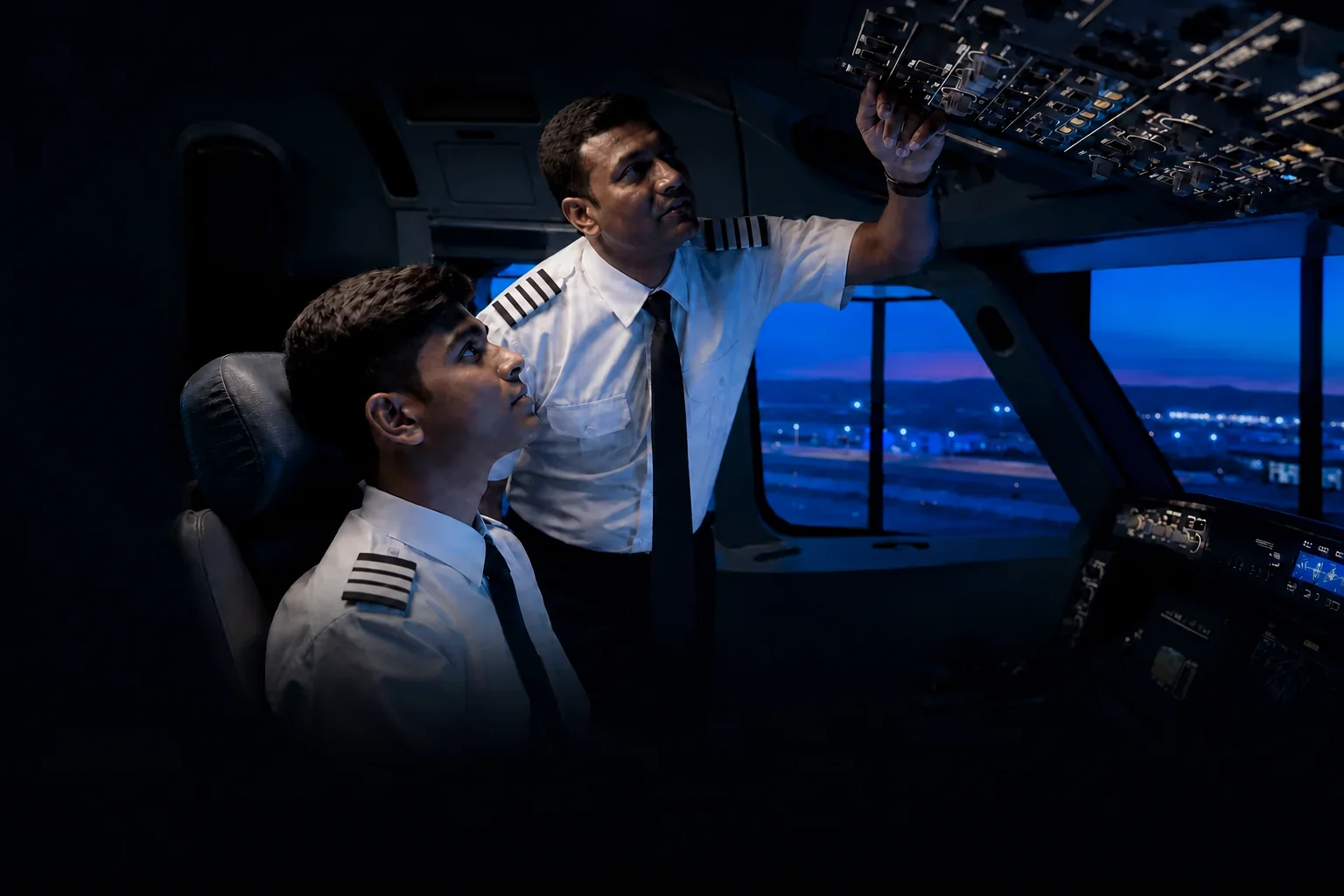
This is the gap pre-type rating preparation closes. Rian Air's approach is to expose candidates to A320 cockpit flows, checklist discipline and callout sequencing on a fixed-base platform before they ever step into a paid full-motion slot, so the expensive hours are spent on skill, not orientation.
3. How Fixed-Base A320 Simulator Training Builds the Flow You Need
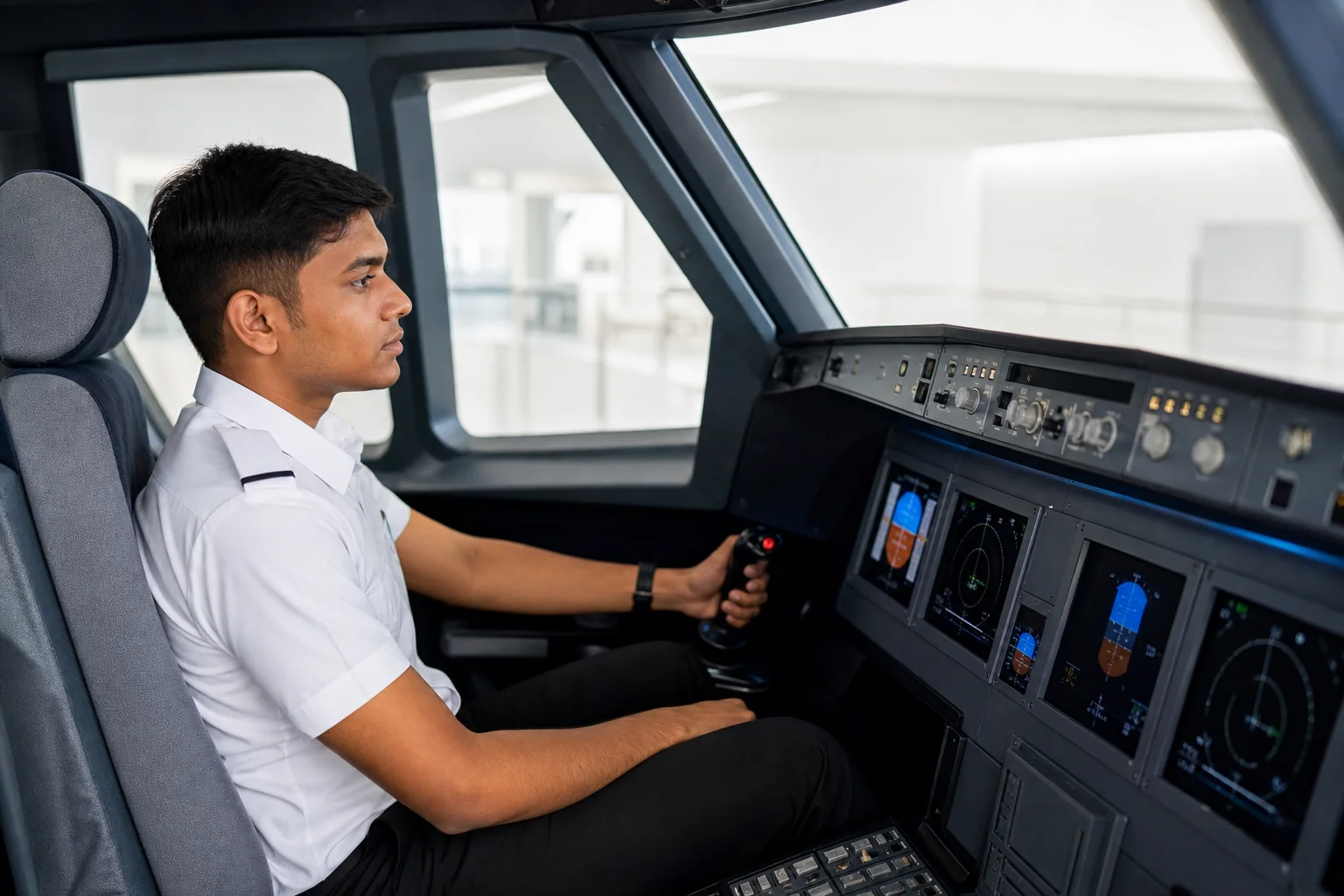
Fixed-base simulator training builds procedural memory: the sequence of switch actions, callouts and FMGS entries that a full-motion session assumes you already have. It doesn't replicate motion cues, but it replicates the flow, and flow is what most candidates are actually short on.
Think of it as rehearsing choreography before the performance. A fixed-base cockpit lets you repeat a before-start flow, an engine-start sequence, or an approach briefing as many times as you need, without the clock pressure of a Level D device that costs significantly more per hour to operate. That repetition is what turns a checklist item into muscle memory, which is exactly what transfers into the full-motion simulator once motion and realistic failure scenarios are added.
We've written in detail about the mechanics of this kind of training in our piece on how fixed-base simulator training actually works, which explains why the absence of motion doesn't reduce its value for procedural learning.
Rian Air's AR-VR A320 Simulator in New Delhi
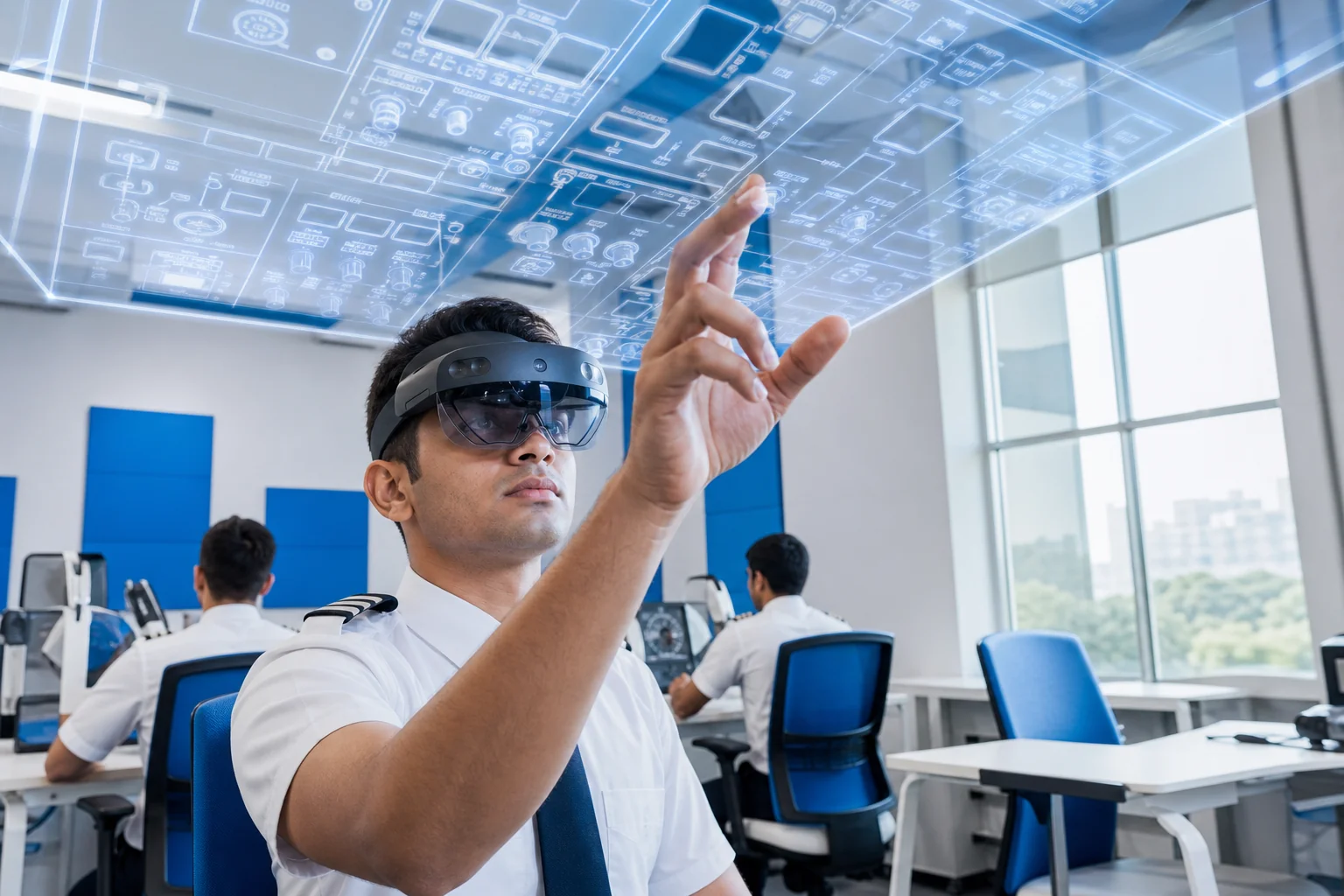
Rian Air is introducing an AR-VR Airbus A320 simulator at its New Delhi training centre. The plan is to let candidates rehearse cockpit flows and panel familiarisation in a virtual A320 environment, at a fraction of the cost typically charged for standalone full-motion simulator preparation.
The intent isn't to replace the full-motion Level D session your TRTO requires for the DGCA skill test. It's to make sure that when you do sit in that simulator, every hour goes toward refining decision-making under realistic failure scenarios, rather than relearning where a switch lives.
4. Choosing a Type Rating Training Organisation: What to Look For, Red Flags to Avoid?
Choose a TRTO with valid DGCA approval, transparent simulator access, named instructors with A320 line experience, and a written fee breakdown that separates ground school, simulator hours and skill test costs. Anything vague on those four points should push you toward another provider.
Verify DGCA approval directly rather than trusting a brochure claim; the DGCA website lists approved organisations and their scope of approval. A TRTO approved only for ground training but not simulator delivery is a different animal from one fully approved end-to-end, and mixing the two without knowing it can cost you months.
Ask specifically about the simulator generation in use. A Level D full-motion device is the certification standard for the skill test; anything less won't satisfy DGCA requirements for that final stage, even if it's useful for earlier preparation. Confirm instructor currency, too. An instructor who hasn't flown the A320 line in years teaches systems knowledge differently from one who flew the aircraft last month.
Red Flags Parents and Candidates Should Watch For
- No written syllabus available before enrolment: A legitimate TRTO can show you a session-by-session breakdown, not just a marketing timeline.
- Vague or bundled fee structures: If retest fees, accommodation, and simulator overtime aren't itemised separately, expect the final bill to be higher than quoted.
- No pre-course simulator familiarisation option: Organisations that push candidates straight into paid full-motion hours without any flow rehearsal are optimising for billable hours, not your pass rate.
- Currency-linked instalments with no cap disclosed: International training partners sometimes leave currency risk entirely on the family; ask how that's handled before signing.
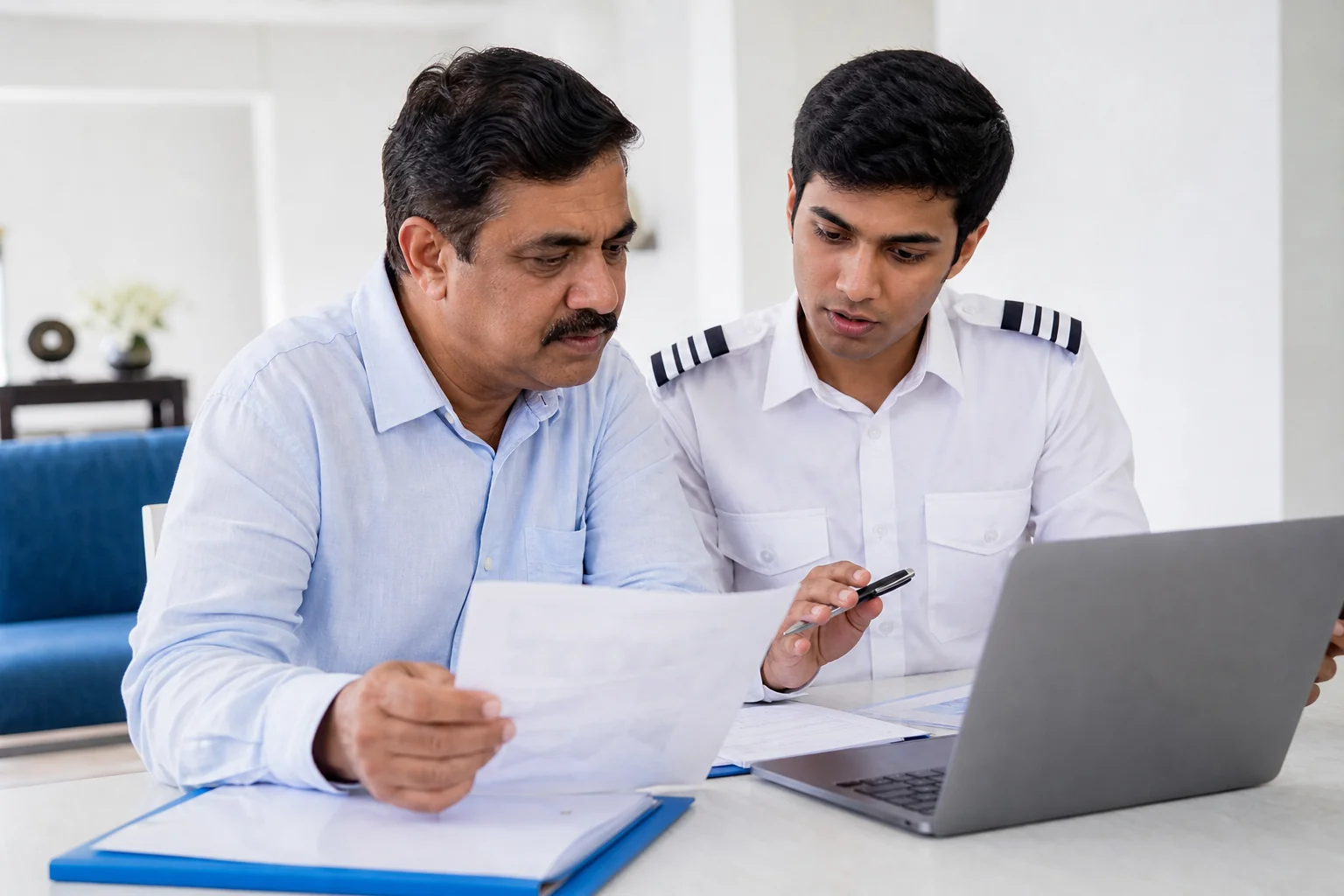
Parents financing this stage should also read our breakdown of the hidden fees in pilot training cost in India, since type rating retests and simulator overtime are exactly the kind of costs that don't appear on the initial quote.
5. Common Mistakes Candidates Make During A320 Type Rating Prep
The most expensive mistake is treating type rating ground school like a repeat of CPL theory instead of a systems-deep specialisation. A320 fly-by-wire logic, flight envelope protections and FMGS behaviour need dedicated study time, not a skim.
Checklist discipline is the second common failure point. Candidates who read checklists as a formality rather than a flow tend to freeze when an examiner introduces an abnormal scenario mid-sequence. Practising the flow, not just memorising the words, is what holds up under pressure.
Underestimating CRM and English proficiency standards is the third. A skill test evaluates communication under workload, not just stick-and-rudder or systems knowledge, and candidates who haven't rehearsed callouts out loud, in English, under time pressure, often lose marks there rather than on technical handling.
If any of these gaps sound familiar from your own ground school experience, it's worth reviewing our instructor insights on common mistakes DGCA aspirants make during ground school, since several of these habits start well before type rating and simply resurface here at a higher cost.
FAQs
How long does A320 type rating training usually take?
A full A320 type rating course, from ground school through the DGCA skill test, typically takes six to eight weeks when simulator slots are available without delay. Delays in simulator access, common at busy TRTOs, can extend that timeline by several weeks.
Is fixed-base simulator preparation enough on its own?
No, fixed-base preparation is not a substitute for the full-motion Level D session your DGCA skill test requires. It's a preparation step that reduces how many full-motion hours you need to reach standard, not a replacement for them.
Can a fresh CPL holder go straight into A320 type rating?
Yes, provided the candidate meets DGCA's licence, medical and hour requirements, though most training organisations recommend building some multi-engine or complex-aircraft exposure first. Airlines also increasingly prefer candidates with prior simulator exposure over one who has none at all.
What drives the cost difference between type rating providers?
Simulator generation, instructor experience, location (India versus abroad) and whether pre-type rating preparation is bundled in all affect price. Providers offering AR-VR or fixed-base preparation before full-motion hours can often bring the total cost down by reducing repeat sessions.
An A320 type rating is one of the largest single investments in a pilot's early career, and the difference between a smooth pass and a costly series of retests usually comes down to preparation done before the expensive simulator clock starts running. Rian Air's fixed-base training in Kerala and the upcoming AR-VR A320 simulator in New Delhi are both built around that principle: put the repetition where it's cheap, so the full-motion hours where it's expensive count for something.
If you're weighing your options for CPL completion and type rating pathways, explore Rian Air's training pathways to see how ground school, simulator preparation and type rating fit together end to end. For a direct conversation about where you stand and what preparation makes sense for your timeline, start your enquiry with Rian Air today. You can also follow ongoing simulator updates, including the New Delhi AR-VR rollout, on Instagram and YouTube.