Pilot Training in Delhi: Where to Start and What It Costs
Pilot training in Delhi starts with a DGCA Class 2 medical, Class 1 medical and eight ground school papers, not with an aircraft. Most aspirants spend eight to twelve months clearing ground exams and simulator hours in the city. Flight training then moves to a location with open airspace. The full path to a Commercial Pilot Licence typically runs between ₹55 lakh and ₹85 lakh.
How to Start: The Step-by-Step Sequence
Get a DGCA Class 2 medical certificate (1-2 weeks, Delhi/NCR clinics). Get DGCA Class 1 medical certificate as well before investing.
Enrol in a Delhi ground school for the eight DGCA papers: Air Navigation, Aviation Meteorology, Air Regulations, Technical General, Technical Specific Single Engine, Technical Specific Multi Engine, RTR Part 1 and RTR Part 2 (6-10 months).
Run simulator hours (DA40/42 hybrid) parallel to ground school to rehearse procedures before real flying.
Move to a flying base with open airspace for CPL flight hours, either within India or abroad (18-24 months).
Sit the DGCA CPL check ride once required flight training and the DGCA-mandated minimum flying hours are complete. Confirm the current minimum hours and check ride format directly with DGCA, since these standards are set and periodically revised by the regulator, not by any individual academy.
Add a type rating (A320/B737) if moving toward airline employment (2-3 months).
Pilot Training in Delhi at a Glance
Stage | Typical Duration | Where It Happens | Approx. Cost Band |
|---|---|---|---|
DGCA Class 2 medical | 1-2 weeks | Delhi/NCR clinics | Low, one-time fee |
Ground school (8 papers) | 6-10 months | Delhi academy | ₹1.5-3 lakh |
Simulator hours (DA40/42 hybrid) | Runs parallel to ground school | Delhi facility | Bundled or per-block |
CPL flight training | 10-14 months | India, Malta, Tunisia, or New Zealand | ₹55-75 lakh |
Type rating (A320/B737) | 2-3 months | India or abroad | ₹15-25 lakh |
Total zero-to-airline-ready | 2-3 years | Combined |
Key Takeaways
Ground school comes first: Eight DGCA computer-based papers (Air Navigation, Meteorology, Air Regulations, Technical General, Technical Specific SE, Technical Specific ME, RTR Part 1 and RTR Part 2) must be cleared before flight training begins.
Simulator hours cut real cost: A DA40/42 hybrid simulator lets a Delhi student rehearse procedures on the ground, reducing repeat aircraft hours later.
Total CPL cost sits between ₹55-75 for a zero-to-CPL path, according to industry cost trackers, with ground school forming the smaller, more predictable slice.
The CPL check ride and minimum flying hours are set by DGCA, not by the academy. Ask any Delhi school to show you where their syllabus maps to current DGCA requirements before you enrol.
Facility safety matters: a 2026 ground report found several Delhi training clusters skipping basic fire exit norms, so verify compliance before paying any fee.
Scholarship and instalment routes exist: a merit-based Women Empowerment Program and a gender-neutral scholarship can lower the ground training entry cost for eligible candidates.
Where Does Pilot Training in Delhi Actually Start?
Where does pilot training in Delhi actually start? It starts with a DGCA Class 2 medical certificate, followed immediately by enrolment in a ground school that teaches the eight papers required for a Commercial Pilot Licence. Everything else, including simulators and flying, waits on that first gate.
A 12th-pass student with Physics and Mathematics can begin the process almost right away. The medical check matters more than most families realise; failing it after paying ground school fees is one of the more painful and avoidable losses in this field, a point covered in detail in our guide to DGCA Class 2 medicals.
[[ASSET:none]]Delhi has grown into a genuine training hub over the past two years. The Ministry of Civil Aviation issued Letters of Intent to 11 new flight training organisations in 2026, a sign that the government is actively expanding capacity rather than leaving it concentrated in one or two legacy academies. Some of that expansion touches the Delhi-NCR belt directly, though the host airports for the new schools have not all been announced yet. Until they are, treat any airport claim from a Delhi academy's marketing as unverified and ask for the specific airfield in writing before enrolling.
Rian Air's Ramphal Chowk facility is one example of what a purpose-built Delhi ground school looks like today: a single building dedicated to moving a student from academics to simulator readiness under one roof, described in more depth in how Rian Air is redefining pilot training at Ramphal Chowk.
Checklist: Documents to Request From Any Delhi Academy
DGCA approval number: ask for the academy's current DGCA approval reference and cross-check it directly with DGCA rather than trusting a brochure or website badge.
Fire safety compliance certificate: request the building's current fire NOC or fire safety compliance certificate, given the 2026 findings on Delhi training clusters skipping fire exit norms.
Ground training syllabus mapped to the eight DGCA papers: Air Navigation, Aviation Meteorology, Air Regulations, Technical General, Technical Specific SE, Technical Specific ME, RTR Part 1 and RTR Part 2.
CPL flight training location and partner: get the exact airfield or country (India, Malta, Tunisia, or New Zealand) in writing, not just "abroad."
Refund policy clause: get the exact wording of any money-back or refund promise, including what happens if a student fails DGCA exams, in writing before paying any fee.
Scholarship terms, if applicable: get eligibility criteria and deposit requirements for any Women Empowerment Program or merit scholarship in writing.
1. Ground School: The First Real Filter
Ground school in Delhi means preparing for eight DGCA papers: Air Navigation, Aviation Meteorology, Air Regulations, Technical General, Technical Specific SE, Technical Specific ME, RTR Part 1 and RTR Part 2. Each paper is a separate computer-based exam whereas RTR Part 2 is a practical exam. A student typically needs six to ten months to clear all eight with consistent study.
Most students who fail on their first attempt share the same pattern: they treat ground school like a school subject to be memorised the week before the exam, rather than a rolling question bank to master. A structured question bank with 20,000-plus practice items, paired with performance tracking, catches weak topics early instead of at the exam counter.
Parents financing this stage often want visibility without hovering over their child. A parent dashboard for tracking pilot training progress solves that by showing exam attempts, mock scores, and simulator hours in one place, so a parent in Delhi can check progress from a phone without a weekly phone call to the academy.
2. Simulator Training Options in Delhi
Delhi's flight training organisations increasingly use hybrid flight simulators to bridge the gap between ground theory and an actual cockpit. A DA40/42 hybrid simulator replicates the instrument panel and flight dynamics of the trainer aircraft students will later fly, without the fuel cost or weather delays of real flight hours.
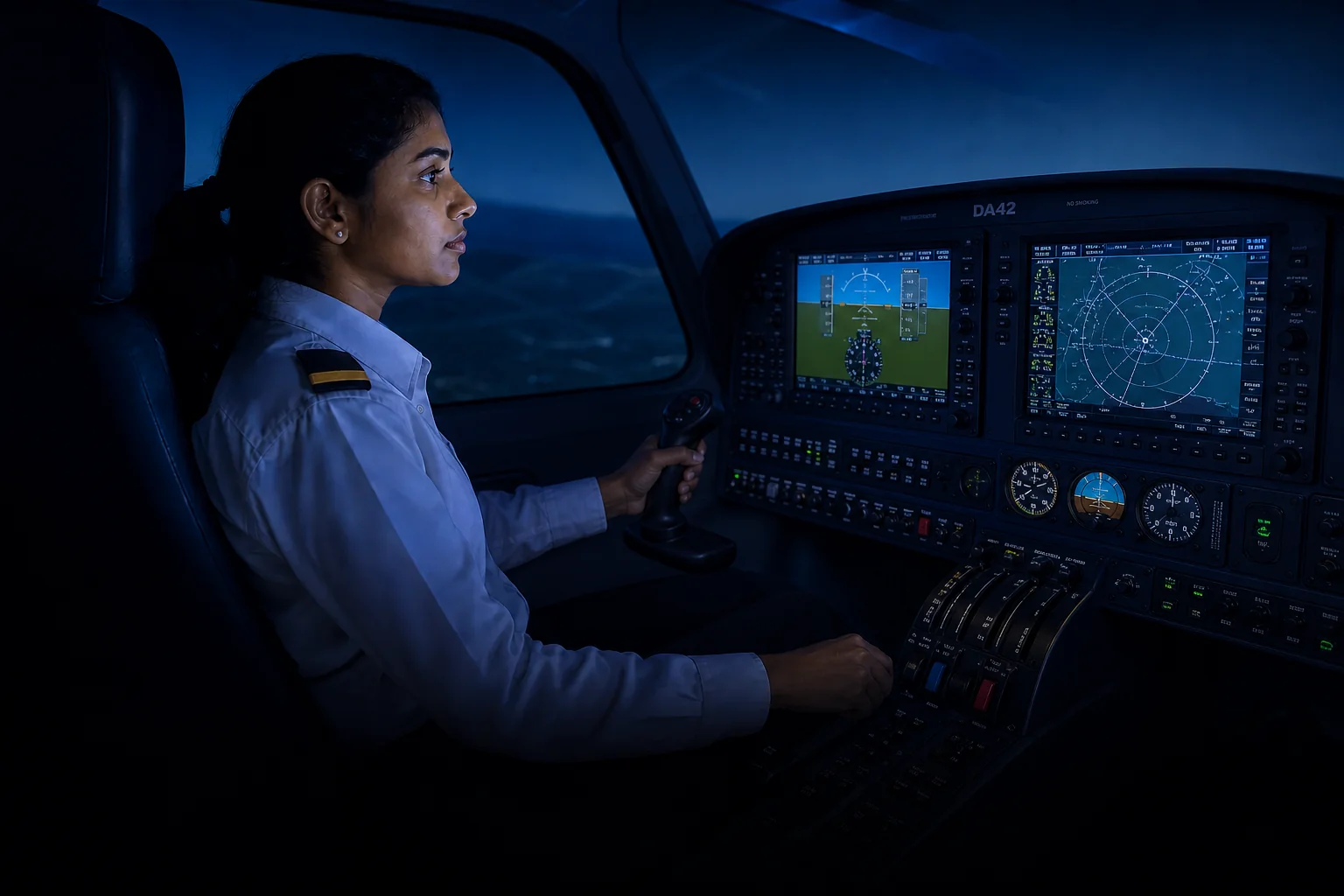
This matters financially. Every hour rehearsed on a simulator is an hour a student does not have to repeat, at a much higher cost, once they are in an actual aircraft. Our detailed explainer on how fixed-base simulator training actually works breaks down why repetition on the ground builds muscle memory that survives the pressure of a real cockpit.
3. Flight Training: Delhi, Rest of India, or Abroad
Most Delhi-based CPL candidates finish their actual flying hours somewhere outside the capital. Delhi's controlled and congested airspace is not ideal for repeated circuit training. Kerala, Maharashtra, Malta, Tunisia, and New Zealand are the common destinations, each chosen for weather reliability and available airspace. This is also where DGCA's minimum flying hours and the CPL check ride itself take place, so confirm which airfield your training partner actually flies from before signing anything.
Location | Typical Advantage | Consideration |
|---|---|---|
India | Rupee costs, no visa hurdles | Fleet availability can cause scheduling delays |
Malta | EASA-aligned training environment | Higher living costs, visa process |
Tunisia | Lower flying costs, consistent weather | Longer travel, currency exposure |
New Zealand | Stable weather windows year-round | Highest overall cost of the four |
This decision affects the final bill more than almost any other choice a family makes. A side-by-side look at CPL training in India vs Malta vs Tunisia is worth reading before signing anything, and so is our note on the hidden costs of pilot training abroad that agents rarely mention upfront.
What Does Pilot Training in Delhi Cost in 2026?
Pilot training in Delhi, from a zero-hour start to a full Commercial Pilot Licence, costs roughly ₹55 lakh to ₹85 lakh. Ground school forms a small, predictable share of that. Flight training abroad or in India forms the bulk. A separate industry cost tracker puts the CPL segment alone near ₹50-65 lakh. That figure lines up closely with the Rian Air numbers once ground school and simulator fees are added.
What pushes a quoted figure higher is rarely the headline number. It is the add-ons. Watch for repeat exam fees. Watch for aircraft downtime charges. Watch for accommodation abroad and currency swings on foreign tuition. Our pilot training cost breakdown walks through exactly where those hidden fees tend to appear, line by line.
Families who cannot pay the full amount upfront have real options beyond loans from a single bank. Instalment plans tied to training milestones are one route. Education loan eligibility through public sector banks is another, and both are used by Delhi families today. Our guide to low income student pilot training options covers the flight instructor pathway as well, which defers the costliest single fee in the entire journey: the type rating.
Is It Safe? What to Check Before You Enrol
Ask for the academy's current fire safety compliance certificate before paying any fee. Ask for its DGCA approval number too. A July 2026 ground report by Rian Air found several private Delhi training clusters ignoring basic fire exit and building bylaw norms. This was true even after the Delhi CM gave institutes a month to fix violations.
A glossy brochure does not equal a compliant building. Walk the facility yourself. Check exits. Check crowding. Ask how many students actually share each classroom and simulator slot before you commit lakhs of rupees to it.
How Rian Air Supports Delhi Aspirants
Rian Air's Ramphal Chowk campus is built around a few specific advantages that address the exact frustrations families run into elsewhere: unclear progress, crowded facilities, and unpredictable costs.
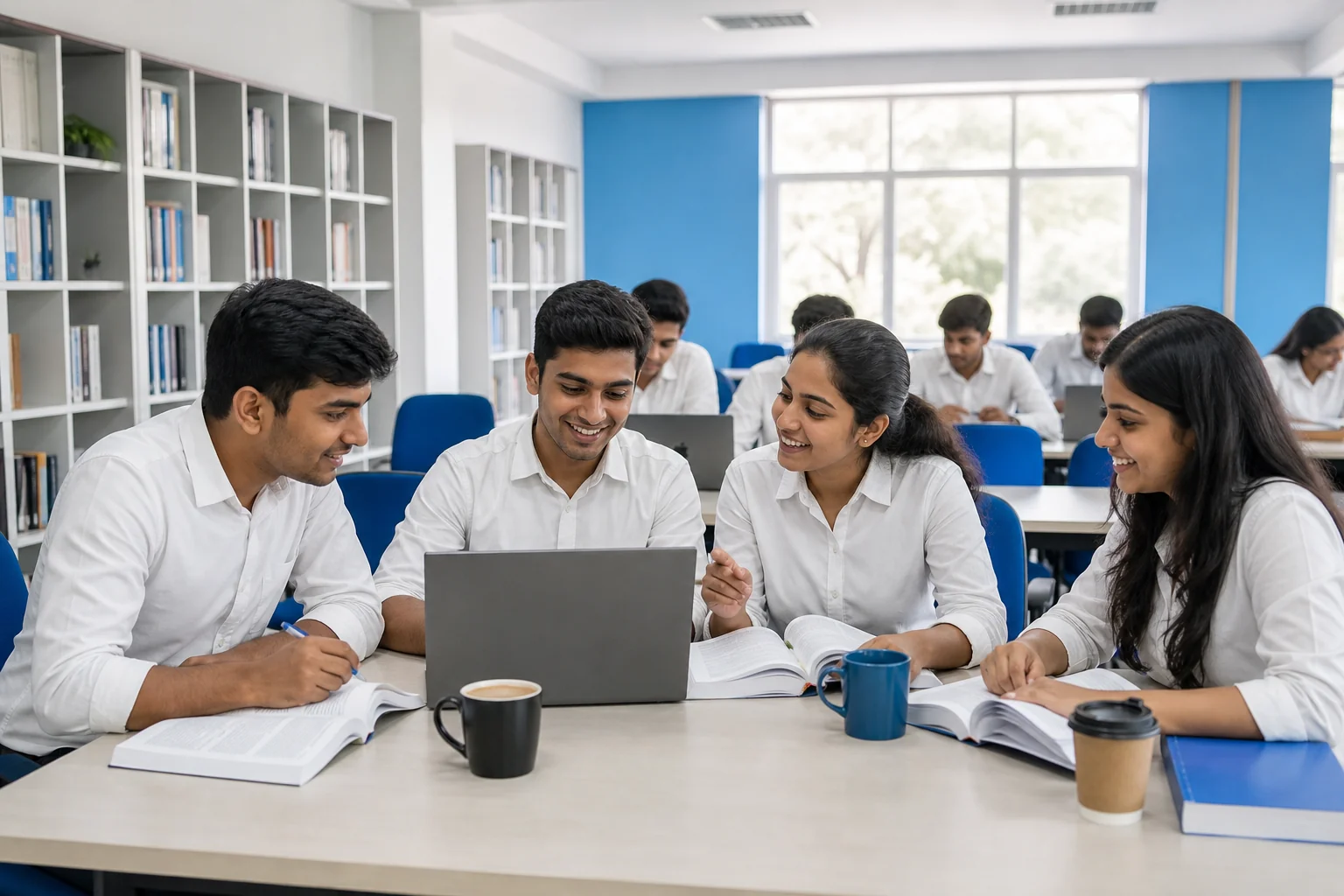
- 24x7 library, capped at 30 seats: the library stays open around the clock and is deliberately kept small, so every seat comes with real desk space and quiet. It is also being expanded into a small in-house cafe, serving tea, coffee, cold coffee, and lime juice, along with light snacks like sandwiches, instant noodles, soup, and french fries, so students preparing for exams can stay fuelled without leaving their seat.
- DA40/42 hybrid flight simulator: gives Delhi students realistic cockpit rehearsal before flight training begins, cutting down on repeat hours later.
- RAPT™ digital platform: integrates the DGCA question bank, simulator performance data, and a digital logbook, so a student's progress is tracked automatically rather than on paper.
- Parent dashboard: lets a parent or sponsor check exam attempts, mock scores, and training milestones remotely, addressing the visibility gap many Delhi families report with other academies.
- Women Empowerment Program: zero-fee DGCA ground training for merit-selected women aspirants, with a refundable commitment deposit; a gender-neutral, merit-based scholarship runs alongside it for other eligible candidates. Details are covered in our Women Empowerment CPL scholarship eligibility guide.
- Money-back promise: if a student does not clear their DGCA exams under Rian Air's ground training, the fee is refunded, subject to terms and conditions available on request.
Read the exact terms of any money-back or scholarship offer before signing. Compare the fee structure against at least one other Delhi academy, a step outlined in our parent's checklist before enrolling.
Salary of a Pilot in India: Why the Investment Makes Sense
A commercial pilot's salary in India varies widely by airline, aircraft type, and seniority, and no fixed figure applies across the board. What is consistent is that a First Officer's pay rises meaningfully once a type rating and airline seniority are added, which is why families weigh the upfront training cost against a multi-decade career rather than a single year's expense.
That long horizon is exactly why the choice between an A320 and a B737 type rating, or between an airline, charter, or instructor pathway after CPL, deserves its own research rather than a rushed decision at graduation.
Frequently Asked Questions
How much does pilot training in Delhi cost in total?
A full path from ground school to CPL typically costs ₹55-85 lakh, with a type rating adding roughly ₹15-25 lakh more if pursued immediately after.
Can I complete all my flight training within Delhi?
No. Ground school and simulator hours are usually completed in Delhi, but actual flying hours generally move to a location with less congested airspace, such as Kerala, Maharashtra, or an overseas training base.
What is the minimum qualification to start pilot training in Delhi?
A student needs to have passed 12th grade with Physics and Mathematics and hold a valid DGCA Class 2 medical certificate before ground school enrolment.
How long does DGCA ground school take in Delhi?
Most students clear the eight required DGCA papers in six to ten months, depending on how consistently they study and how the question bank tracks their weak areas.
What does the DGCA CPL check ride involve?
The check ride and the minimum flying hours required to sit it are set and periodically revised by DGCA, not by any individual academy. Confirm the current requirements directly with DGCA, or with your flight training partner's DGCA-approved syllabus, before assuming any number quoted by a school.
What is the DA40/42 hybrid simulator used for?
It replicates the instrument panel and handling of the trainer aircraft students will later fly, letting them rehearse procedures on the ground before real flight training, which reduces the number of repeated aircraft hours needed later.
Is there a scholarship for women pilots training in Delhi?
Yes. Rian Air runs a merit-based Women Empowerment Program offering zero-fee DGCA ground training, subject to a refundable commitment deposit, alongside a separate gender-neutral merit scholarship.
What happens if I fail my DGCA exams after enrolling?
Under Rian Air's money-back promise, a student who does not clear DGCA exams during ground training is eligible for a refund, subject to terms and conditions available from the academy.
Can parents track a student's training progress remotely?
Yes. A parent dashboard shows exam attempts, mock test scores, simulator hours, and overall milestones, so a parent or sponsor can review progress without visiting the campus.
Is pilot training safe at private academies in Delhi?
Safety varies by facility. A 2026 ground report found some private Delhi training clusters skipping basic norms, so ask for current paperwork and DGCA compliance documents before enrolling anywhere.
Do I need to go abroad to become a commercial pilot after training in Delhi?
No, going abroad is optional. India has enough DGCA-approved flight training organisations and aircraft to complete a full CPL domestically, though some students still choose Malta, Tunisia, or New Zealand for scheduling reasons.
If Delhi is where your training story begins, the next real step is comparing academies with the specifics, not the brochure. Explore the ground school, simulator, and scholarship pathways available at Ramphal Chowk with Explore Pathways, or speak with the team directly to Start Your Pilot Journey. For a closer look at student life inside the academy, including simulator sessions and library routines, follow updates on Instagram or watch full walkthroughs on YouTube.