A Day in the Life: C172 Fixed Base Simulator Training Kerala Students Experience
Capt. Bliss soloed a Cessna 172 in under 10 hours of flight time, half the national average for a first-time student pilot in India. The reason was not natural talent alone. It was structured C172 fixed base simulator training Kerala aspirants complete before they ever taxi a real aircraft, practicing checklists, radio calls, and emergency drills until they become automatic.
Key Takeaways
- Solo hours drop sharply: Capt. Bliss soloed under 10 hours, Capt. Malavika at 12 hours, and Anurodh at 11.2 hours, all well below the typical 15-to-20-hour range.
- Structured sim time is split: Students get 5 hours in the left-hand seat plus additional backseat observer hours watching peers fly the same scenarios.
- Kerala runs an analog panel: The Kerala centre operates the state's first C172 fixed base simulator with round-dial analog instruments, while Delhi runs a glass cockpit hybrid setup, with Maharashtra coming soon.
- Students choose their centre: Kerala-based aspirants can complete their simulator hours in Thrissur's Kerala facility or travel to Delhi if they want glass cockpit exposure early.
- Fewer flight hours, lower avgas bills: Every hour saved before solo is an hour of aircraft rental and fuel a family does not have to pay for.
At a Glance: Kerala Simulator Training Snapshot
| Detail | Kerala Centre | Delhi Centre |
|---|---|---|
| Cockpit type | Analog (round dial), C172 fixed base | Glass cockpit hybrid simulator |
| Typical left-seat sim hours before solo prep | 5 hours | 5 hours |
| Backseat observer hours | Multiple, student's choice | Multiple, student's choice |
| Fastest recorded solo (Capt. Bliss) | Under 10 flight hours | N/A |
| Capt. Malavika's solo hours | 12 hours | N/A |
| Anurodh's solo hours (now flight instructor) | 11.2 hours | N/A |
| Students crossing 15 hours | Kept under the 20-hour ceiling | Kept under the 20-hour ceiling |
| Upcoming third centre | - | Maharashtra (glass cockpit) |
Meet Thrissur's Early Riser: A Student's Morning Before the Sim Bay
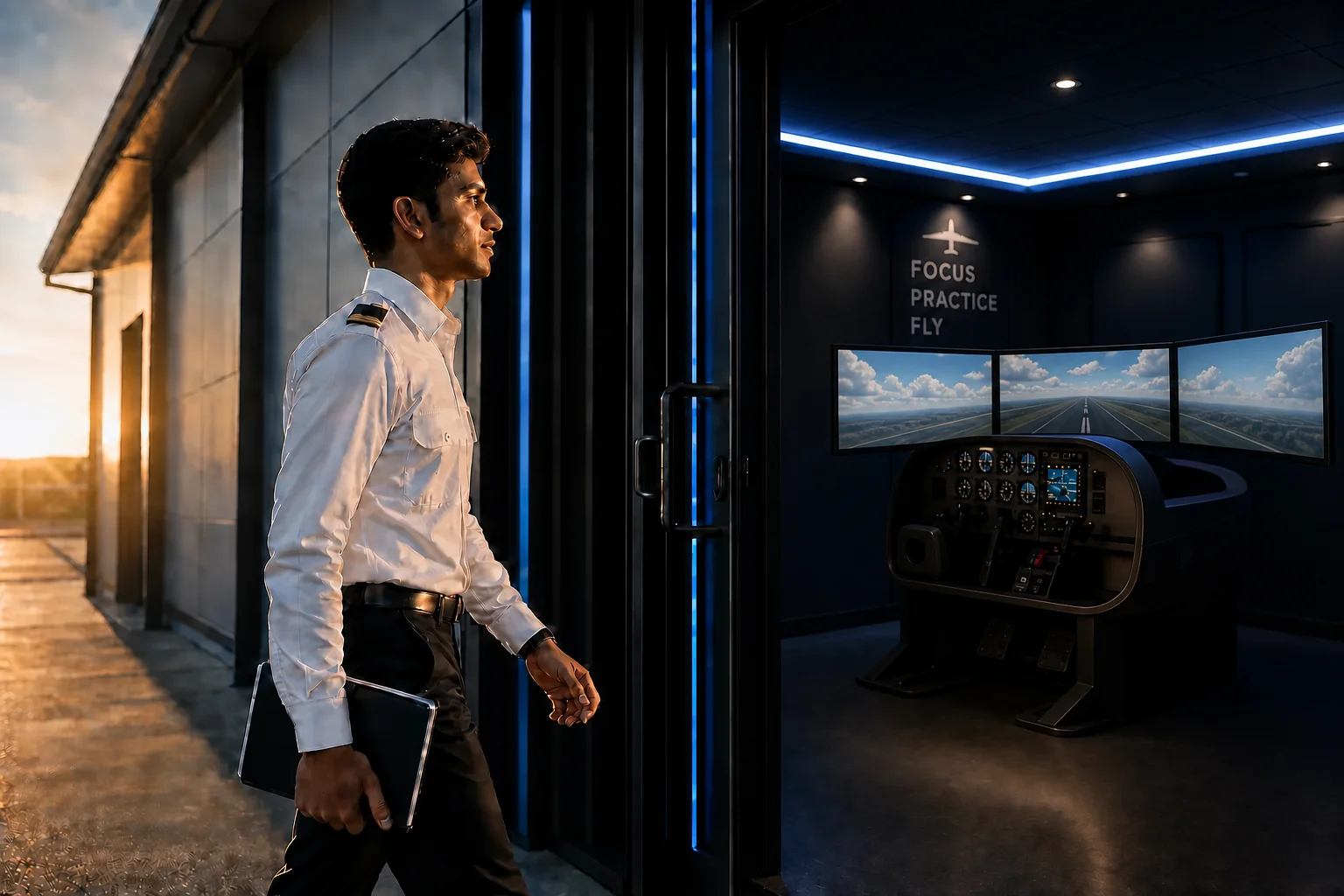
The alarm goes off at 5:30 AM in a Thrissur household that has learned to schedule breakfast around simulator slots. A student preparing for CPL flight training does not walk into the sim bay cold. The morning starts with a review of the previous day's debrief notes, checklist flows repeated out loud, and a quick scan of weather patterns typical for Kerala's monsoon-affected training windows.
By the time the student reaches the academy, the instructor has already pulled up yesterday's performance metrics on the RAPT platform. Every checklist item, every radio call timing, every rough landing flare gets logged. Parents watching from home through the parent dashboard see the same numbers, not a vague progress update. That transparency matters to families across tracking pilot training progress from Thrissur, Kochi, or further afield in the Kerala service area.
Why Does Simulator Time Matter Before Real Flight Hours?
Simulator time matters because it lets a student fail safely, repeatedly, at zero fuel cost, until the correct response to a stall warning or crosswind gust becomes reflex rather than guesswork. That repetition is what shortens the path to a confident first solo.
A real Cessna 172 costs money every minute the engine runs. A fixed base simulator does not. A student can rehearse a rejected takeoff, a go-around, or a radio failure a dozen times in one session, something no flight school can afford to let happen in the air a dozen times.
This is also why fixed base simulator training is treated as a prerequisite step at Rian Air rather than an optional add-on. The muscle memory built here transfers directly into the cockpit, and instructors can see exactly where a student's habits still need correction before real aircraft time is spent fixing them.
Inside the C172 Fixed Base Simulator Session
A typical block runs five hours from the left-hand seat, the same seat the student occupies in the real aircraft. This is not passive screen time. Instructors run full scenarios: pattern work, engine-out procedures, radio failures, and crosswind landings, pausing to correct technique in real time.
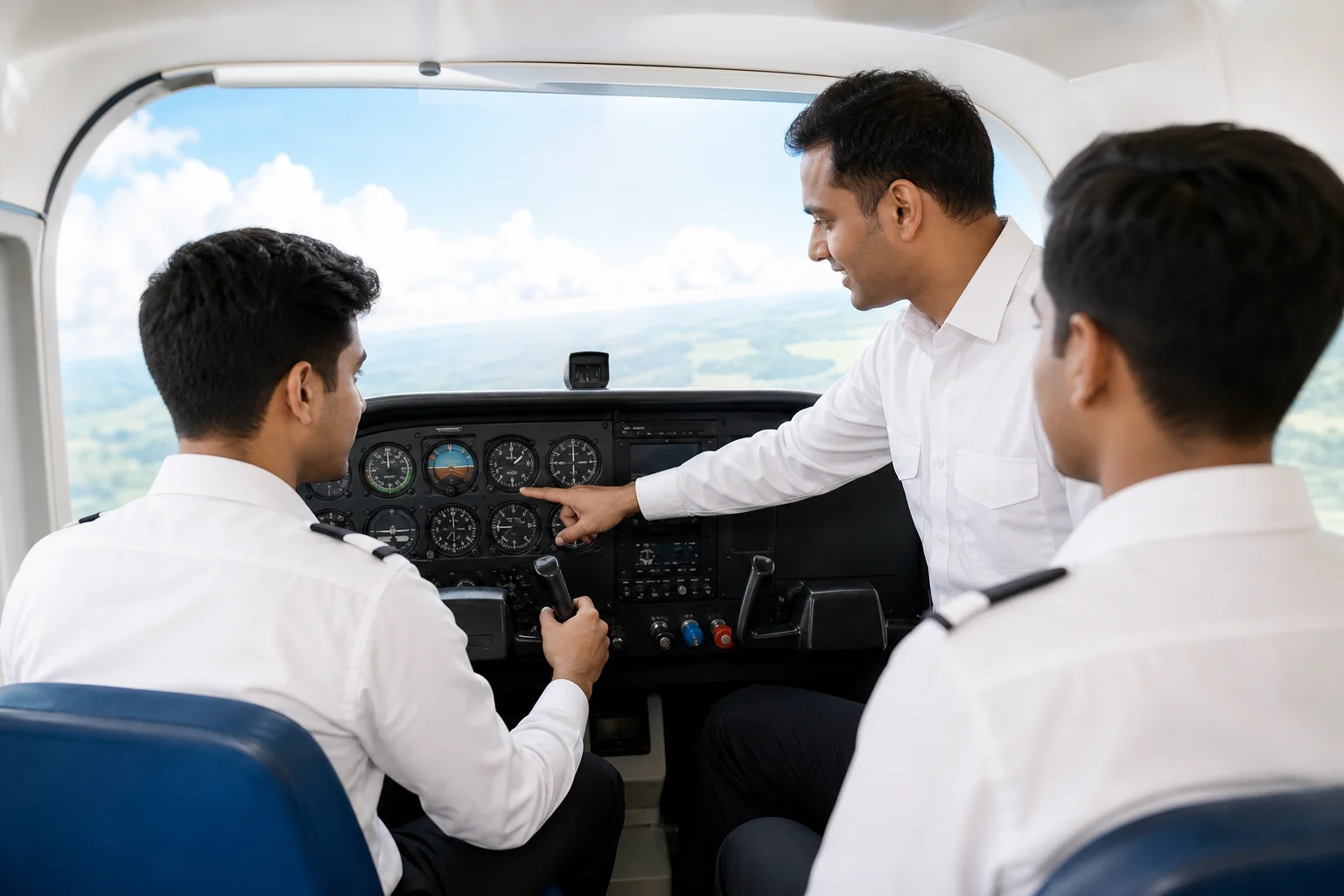
Beyond the five left-seat hours, students get additional backseat observer hours, watching a classmate fly the same scenario from behind. Watching a peer make a mistake and correct it teaches a lesson that sometimes lands harder than making the mistake yourself. Several students choose to log extra observer hours purely because it accelerates their own pattern recognition before their next left-seat block.
The Kerala facility uses an analog panel, round dials, physical gauges, exactly what most first-time Cessna 172 trainees will see in the real aircraft used for early flight training. That matches the equipment, not a simplified version of it.
How Did Capt. Bliss Solo in Under 10 Hours?
Capt. Bliss soloed in under 10 flight hours by completing structured simulator blocks first, arriving at every real flight lesson already fluent in checklists, radio phraseology, and pattern procedures that usually consume a beginner's early hours just to learn.
That gap between typical and exceptional is the real story. Most first-solo students in India take somewhere between 15 and 20 hours, sometimes more, before an instructor signs them off to fly alone. Capt. Bliss cut that nearly in half.
Capt. Malavika, training on the same Kerala programme, soloed at 12 hours. Anurodh soloed at 11.2 hours and has since become a flight instructor himself, now running the same sim briefings he once sat through as a student. Not every student hits single digits. A number of trainees cross the 15-hour mark, but the programme keeps almost all of them under the 20-hour ceiling that many training organisations quietly treat as standard.
The pattern across Bliss, Malavika and Anurodh is not coincidence. Each entered real flight training having already rehearsed the exact failure points, stalls, crosswind drift, radio call timing, dozens of times on the ground.
Simulator Hours vs Solo Hours: What the Numbers Show
The table below lines up recorded solo hours against the structured simulator preparation each student completed beforehand.
| Student | Sim prep completed | Solo hours achieved | Current status |
|---|---|---|---|
| Capt. Bliss | Left-seat + backseat observer blocks | Under 10 hours | CPL pathway, flight training |
| Capt. Malavika | Left-seat + backseat observer blocks | 12 hours | CPL pathway, flight training |
| Anurodh | Left-seat + backseat observer blocks | 11.2 hours | Flight instructor |
| Other Kerala trainees (several students) | Left-seat + backseat observer blocks | 15 to under 20 hours | Flight training, various stages |
None of these students soloed above the 20-hour mark. That consistency, not just the standout cases, is what a parent or sponsor should read closely when comparing training pathways.
Choosing Between Kerala's Analog Sim and Delhi's Glass Cockpit Sim
Kerala's C172 fixed base simulator runs an analog panel with round dial instruments, while the Delhi centre operates a glass cockpit hybrid simulator with digital primary and multi-function displays. A third centre with a similar glass cockpit setup is coming to Maharashtra.
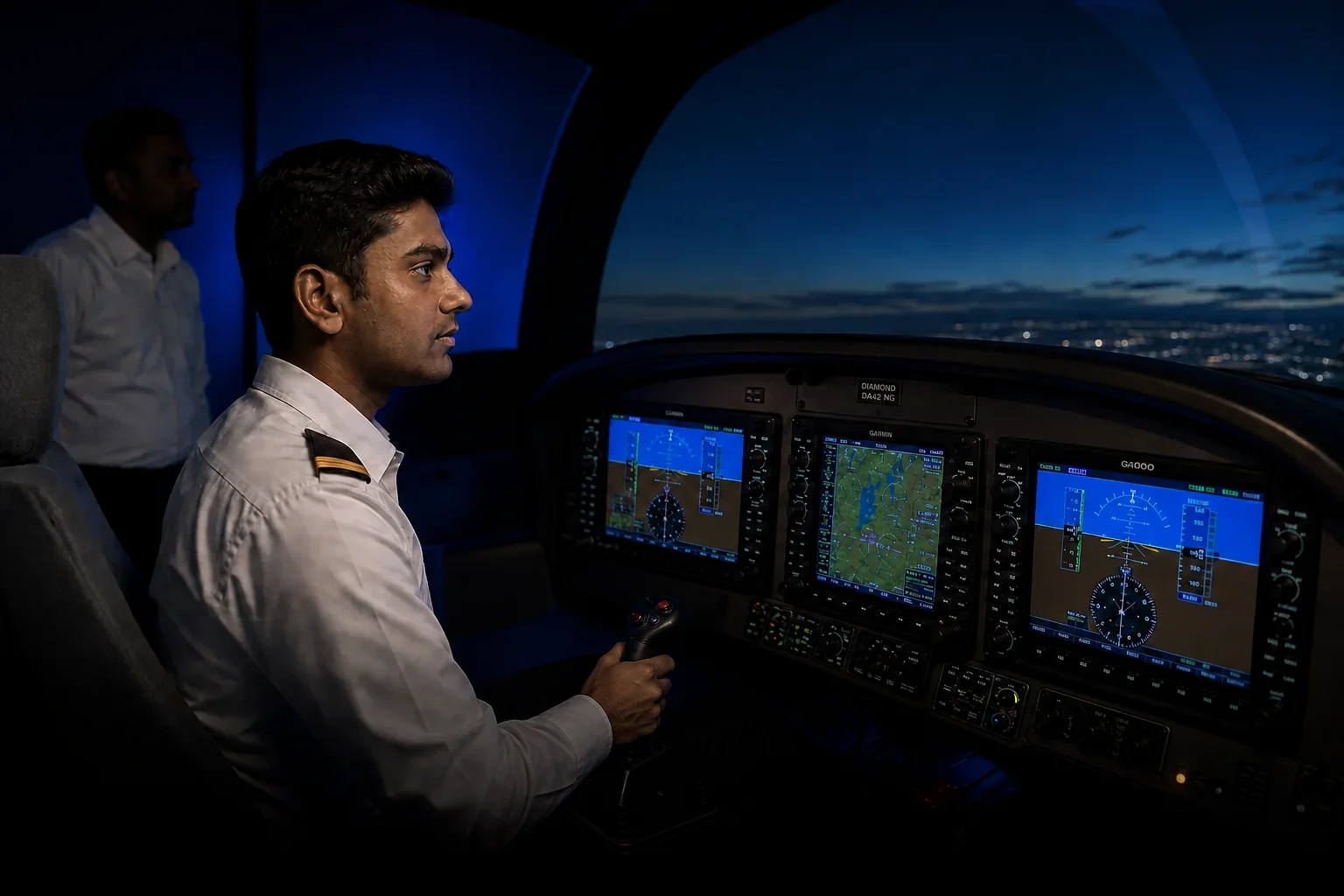
Students based in Kerala are not locked into one centre. A Thrissur-based trainee can complete the full simulator block at the local analog facility, or travel to Delhi if their eventual training aircraft or type rating path leans toward glass cockpit familiarity earlier. Neither choice is wrong. It depends on which aircraft the student expects to fly first in real flight training, and whether early digital-panel exposure fits their broader plan toward an airline-ready pilot career.
Some families choose Kerala simply because it removes travel and accommodation costs from an already long training budget. Others send their child to Delhi specifically to get comfortable with the glass displays used in most modern training and airline fleets before flight hours begin.
How Does This Reduce Training Costs for Kerala Families?
Simulator preparation reduces training costs because every hour a student needs less in the real aircraft to reach solo standard is an hour of fuel, aircraft rental, and instructor time a family does not pay for. Shaving five to ten hours off a solo timeline is a direct, measurable saving.
Real Cessna 172 flight hours are priced per hour of engine time, not per lesson completed. A student who solos at 10 hours instead of 20 has effectively halved the most expensive early stretch of the whole CPL journey. That saving compounds further once the student moves into cross-country and night flying stages, because a confident, sim-trained pilot burns fewer hours repeating lessons that did not stick the first time.
Families researching the full cost picture before enrolling should also read the breakdown of hidden fees parents miss in Indian pilot training, since simulator savings are only one part of managing the total budget responsibly.
Frequently Asked Questions
Is C172 fixed base simulator training recognized toward DGCA requirements?
Fixed base simulator hours build the skills DGCA flight tests expect, but they function as preparation rather than a substitute for logged real aircraft time. Students still complete the DGCA-mandated flight hours; the simulator simply shortens how long solo standard takes to reach.
How many simulator hours should a student complete before solo attempts?
Rian Air structures five hours in the left-hand seat plus additional backseat observer hours, adjusted to each student's pace. Students who complete this block consistently solo between 10 and 20 real flight hours, well inside typical industry timelines.
Can Kerala students complete their entire simulator block without traveling to Delhi?
Yes. The Kerala centre, Thrissur's first C172 fixed base simulator, offers the complete left-seat and observer hour structure locally. Traveling to Delhi is only necessary for students who specifically want early glass cockpit exposure.
What happens if a student needs more than 20 hours to solo?
It happens, and it is not treated as failure. Some students need more repetition on specific skills like crosswind landings, and instructors adjust the backseat observer allocation to give them more exposure before returning to the left seat.
Before enrolling in any pilot training programme, it helps to understand what typically goes wrong during ground school preparation too. Read our instructor-level breakdown of common mistakes DGCA aspirants make during ground school to avoid the same pitfalls before your simulator block even begins.
A Thrissur student who walks into a real Cessna 172 having already rehearsed the failure points on the ground is not lucky. That student was prepared on purpose. If you or your child are weighing where to start, explore the full CPL training pathways Rian Air offers across Kerala, Delhi, and international routes, or reach out to begin your enquiry for the next available C172 fixed base simulator slot in Thrissur. You can also follow real training days on Instagram or watch full sim sessions on YouTube.