RAPT platform DGCA question bank for CPL and ATPL
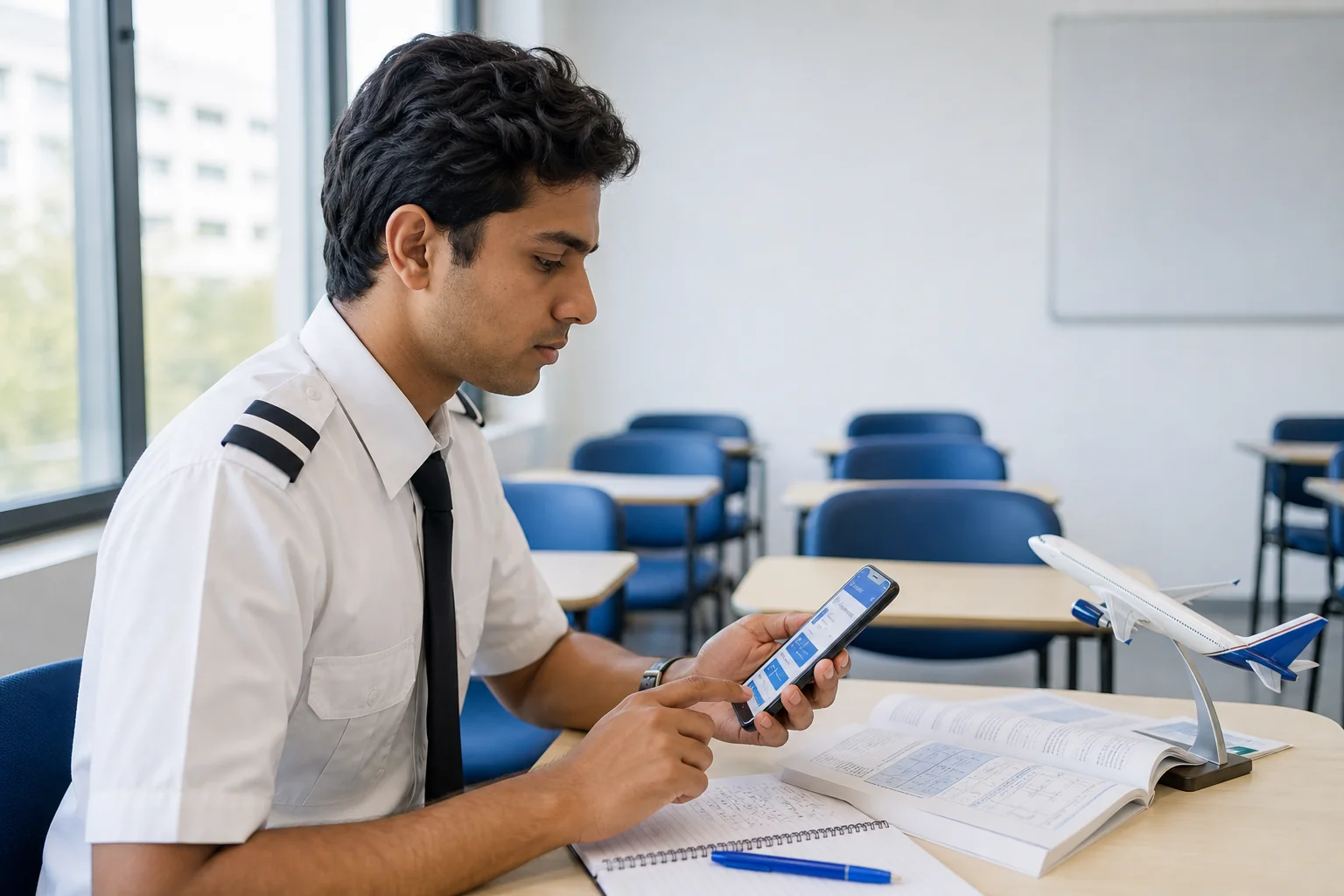
The RAPT platform DGCA question bank for CPL and ATPL works because it treats theory preparation as a data problem, not a memorisation problem. It tracks every question a student attempts, flags weak topics automatically, and pairs that with a digital logbook and parent dashboard so training becomes visible instead of guesswork.
Key Takeaways
- Question bank scale: RAPT runs on a 20,000+ question DGCA-aligned bank covering all seven CPL subjects and ATPL theory, with shuffled questions and options so students don't memorise sequences.
- Weak-topic tracking: Performance analytics isolate exactly which sub-topics a student is failing, building a personalised focus area instead of generic revision.
- Offline access matters: Students can study without internet in hangars, simulators, or remote training locations across Kerala, Delhi and Mumbai.
- Parents get real visibility: The parent dashboard shows flying hours, attendance, fee reminders and consistency data, not just a monthly invoice.
- First Officers can study on the move: Layovers, cab rides and duty gaps become ATPL revision time, which matters for pilots trying to move toward command upgrades.
RAPT at a Glance
| Feature | What It Does | Who Uses It |
|---|---|---|
| Smart question bank | 20,000+ DGCA-aligned CPL and ATPL questions, shuffled with answers and solutions | Students |
| Weak-topic identification | Flags recurring wrong answers and builds a personalised focus list | Students |
| Offline mode | Question bank and test sessions work without an internet connection | Students |
| Digital logbook | Imports DGCA, FAA, EASA and GCAA formats; exports for job applications | Students, First Officers |
| Parent dashboard | Flying hours, attendance, fee reminders, instructor contact | Parents/Sponsors |
| Reminder system | Medical, IR, PPC and CPL renewal alerts plus study schedules | Students, working pilots |
| Study session timers | Structured, trackable revision blocks with progress dashboards | Students |
Why Capt. Vikas Nair Built RAPT
Capt. Vikas Vikramdas Nair went through the same DGCA grind that every Indian aspiring pilot knows: scattered notes, guesswork revision, and no real way to know if he was actually improving. He founded Rian Air and RAPT on one idea. Whatever problems he faced during his own training, no student coming after him should face again.
That is why RAPT is not a generic exam app bolted onto a flying school. It was built by someone who sat through the same Air Regulations lectures and the same anxious weeks before a CPL retest, and decided the fix had to be structural, not cosmetic.
What Makes the RAPT Platform DGCA Question Bank Different for CPL and ATPL
The RAPT platform DGCA question bank for CPL and ATPL is built around 20,000+ questions mapped to the actual DGCA syllabus, with shuffled questions and shuffled answer options so students learn concepts instead of memorising a fixed order. Every answer comes with a worked solution, and an offline mode keeps the bank usable without connectivity.
Most question banks Indian aspirants have relied on for years are static PDFs or recycled question sets shared in WhatsApp groups. They rarely explain why an answer is correct, and they never adapt to what a specific student is getting wrong. RAPT was built to close that gap directly.
- Concept-based learning: questions are tagged to underlying concepts, not just chapter numbers, so a student revising Meteorology sees the actual physics behind a wrong answer.
- Shuffling logic: both questions and options rotate, which stops rote memorisation of answer positions, a habit that hurts students in the real DGCA exam hall.
- Answers with solutions: every question includes a full explanation, so revision time turns into understanding rather than repeated guessing.
- Offline mode: students training in Thrissur, at a simulator base in Kerala, or between flights in Delhi can keep studying without depending on network coverage.
Study Tools Built Around Real Pilot Life
Beyond the question bank, RAPT includes test sessions that mimic real exam conditions, study session timers that build discipline, and progress dashboards that turn scattered effort into a visible trend line. Weak-topic identification then feeds directly into personalised focus areas, so a student's next study session targets exactly what they got wrong last time.
Performance analytics sit underneath all of this, quietly recording subject-wise accuracy over weeks and months. A student preparing for Technical Specific papers can see, in numbers, whether last week's extra revision actually moved the needle. That single feedback loop is often the difference between passing on the first attempt and sitting through a costly retest. For a full subject-wise breakdown of what to study, see this DGCA CPL exam subjects and syllabus checklist.
The Parent Dashboard: Visibility Without Micromanaging
The parent dashboard answers a question every sponsoring parent asks quietly: is my child's training actually on track? It shows flying hours logged, attendance, fee payment reminders, and direct access to the instructor, without requiring a parent to call the academy for updates.

Pilot training in India is not cheap, and most of the cost sits in fees, currency exposure and hidden charges that families rarely see coming. RAPT's dashboard accounts for every payment against a training plan, so parents are not left reconciling invoices months later. If you want the fuller cost picture before enrolling, this breakdown of pilot training costs and hidden fees is worth reading alongside the dashboard features.
Student consistency overview and general reminders round out the picture. A parent does not need to ask if their child studied this week. The dashboard already shows it, along with attendance trends and a connected view of the training journey from ground school onward.
A Digital Logbook Built for a Global Career
Flying hours are the backbone of a pilot's career, and RAPT's digital logbook is built for clean records that hold up under scrutiny years later. It works in portrait format on a phone from any corner of the world, and it can import flying data in DGCA, FAA, EASA and GCAA formats.
Every change made to a logged entry carries a timestamp, so the record stays transparent for airline recruiters and DGCA audits alike. When a job application is due, hours can be attached directly by email in the required export format, instead of a student manually retyping totals from a paper logbook the night before a deadline.
Why RAPT Gives You a Better Story Than a Generic CV
Most pilot resumes list a licence number, a few hobbies, and a hopeful line about being a team player. RAPT changes what a resume can say by attaching real data: study consistency from day one, ground training performance across every DGCA subject, flying progress trends, logbook analytics, and training discipline scores.
An airline interviewer comparing two candidates with similar hours now has one who can show a documented pattern of consistent preparation. That is a materially different pitch than a CV built on adjectives.
Why First Officers in Delhi and Mumbai Are Turning to RAPT for ATPL Prep
First Officers use RAPT because ATPL theory competes with duty rosters, not free evenings, and the platform is built to be studied in short, interrupted bursts rather than long dedicated blocks. That fits the reality of a working pilot far better than a textbook does.
India needs more commanders, and a large number of First Officers stay in the right seat longer than necessary simply because finding structured time for ATPL theory is difficult around flying duty. Based across Delhi, Mumbai and Kerala, many working pilots now use layovers, the cab ride to the airport, or gaps between duties to chip away at weak topics using RAPT's personalised study schedules.

The same weak-topic tracking that helps a fresh CPL student prepare also works for a First Officer revisiting ATPL subjects years after ground school. Instead of restarting from chapter one, the platform points directly at the questions they keep missing, which shortens the road to a command upgrade considerably.
How RAPT Fits Into the Rian Air Training Pathway
RAPT is not a standalone app sitting apart from flight training. It runs through Rian Air's full pathway, from the ground school that prepares students for the DGCA exam, through simulator sessions, into flight training and eventual type rating preparation. If you're mapping out that path from scratch, this guide on becoming a commercial pilot in India after 12th lays out the full sequence.
Because the same platform tracks ground performance, simulator progress and flying hours together, a student's data doesn't reset every time they move to the next stage of training. Parents preparing for the exam phase specifically may also find this parents' guide to passing the DGCA exam on the first attempt useful alongside the dashboard.
Frequently Asked Questions
Is the RAPT question bank aligned to the current DGCA syllabus?
It is. The RAPT platform DGCA question bank for CPL and ATPL is mapped directly to DGCA's current subject list, including Air Navigation, Meteorology, Air Regulations, Technical General, Technical Specific papers and RTR(A), with questions updated to reflect syllabus changes.
Can ATPL theory be studied offline on RAPT?
It can. RAPT's offline mode lets students and First Officers access the question bank, test sessions and saved progress without an active internet connection, which matters during layovers, remote training locations or areas with weak connectivity.
Does RAPT work for First Officers who are already flying, not just fresh students?
Absolutely. Working First Officers use RAPT's personalised study schedules and weak-topic tracking to prepare for ATPL theory around duty rosters, using layovers and gaps between flights instead of dedicated classroom time.
Can parents see flying hours and attendance without contacting the academy?
They can. The parent dashboard displays flying hours, attendance, fee reminders and student consistency directly, and allows direct communication with instructors when a specific question comes up.
According to the DGCA's official portal, licensing standards and exam structures are periodically updated, which is one reason a living question bank matters more than a printed guide. Global logbook standards referenced by bodies like ICAO also explain why multi-format export, covering DGCA, FAA, EASA and GCAA, has become a practical requirement for pilots eyeing international careers.
If you are weighing training pathways or want to see exactly how simulator hours connect to this platform, you can also explore how fixed-base simulator training feeds into the same tracked record.
Whether you are a 12th-pass student building a CPL file from scratch or a First Officer trying to finally clear ATPL theory around a flying roster, RAPT is designed to make that preparation measurable instead of anxious. Check your eligibility for Rian Air's training pathways, or explore pathways to see how ground school, simulator training and RAPT connect end to end. If you'd rather talk it through first, you can talk to a pilot career advisor or schedule an appointment to see the RAPT platform in action. You can also follow real training updates on Instagram or watch walkthroughs on YouTube.