
Real Student Stories: How Hidden Fees in Pilot Training Has Affected Many Families
Hidden fees in pilot training push the real cost 5 to 15% above the number an agent first quotes, and that gap can run into lakhs of rupees. For a middle class or low income family in Delhi, Mumbai, or Thrissur, that surprise bill often means a child has to quit training halfway through. This is how hidden fees in pilot training affects families, told through real student stories.
Key Takeaways
- The gap is real money: Hidden charges typically add 5-15% to the advertised course fee, often several lakh rupees.
- The DGCA clock is a hidden cost trigger: Students get only 6 months after their last flight to finish licensing paperwork. Missing it can mean 20-22 extra flying hours and another 8-10 lakh rupees.
- Agents quote minimums, not averages: Packages are built on the fewest possible hours, not what an average student actually needs.
- Real students paid the price: Abhijeet, Manjeet, Hitesh, and Manisha all had to leave aviation training because of costs nobody mentioned upfront.
- Even founders get caught: Rian Air founder Capt. Vikas lost money to agent fraud twice, once in Ras Al Khaimah and once in Canada, before building a transparent model.
At a Glance: Hidden Fees vs Advertised Fees
Cost Item | Usually Mentioned Upfront? | Typical Impact |
|---|---|---|
Base course fee | Yes | Quoted clearly, often on minimum hours |
Living and visa expenses | Rarely | Can add ₹1-3 lakh depending on country |
Fuel surcharge and landing/approach fees | Rarely | Varies monthly, rarely capped in contracts |
Recurring medical tests and travel to medical centre | No | Adds up to ₹25,000 per year |
iPad, logbooks, epaulettes, uniform, app subscriptions | No | ₹50,000-₹1.5 lakh over the course |
Extra flying hours beyond package minimum | No | Can cost several lakh rupees more |
Missed DGCA 6-month licensing window | No | 20-22 extra hours, roughly ₹8-10 lakh |
Currency markup on foreign payments | No | 2-5% loss on every transaction abroad |
Why Agents Quote the Lowest Fee First
Most training agents earn a commission the moment a student enrolls. That single fact explains almost every hidden fee story you will read below.
An agent wants the enrollment signed quickly. A low headline number does that job better than an honest one. So the quote is built on the fewest flying hours a student could theoretically need, not the hours an average student actually uses.
Real students rarely hit the minimum. Weather delays, aircraft maintenance, or a retest here and there push actual hours higher. Every one of those extra hours is billed later, as a surprise, after the family has already committed money and hope.
Agents look for short-term, quick money. Some even push a student toward flight training before the student's DGCA ground exams are even complete, locking in a commission before the real risk of failure shows up.
What Hidden Fees Actually Look Like
The list is long, and that is exactly the problem. No single hidden fee looks huge on its own, but together they change the entire budget.
- Living expenses, visa expenses, and miscellaneous local costs at the training location
- Fuel surcharges, landing fees, and approach fees that shift with airport traffic
- Recurring medical tests, plus travel costs to reach the medical examiner
- Extra materials: iPad, logbooks, epaulettes, uniforms, shoes, socks, and app subscriptions used during training
- Travel expenses and flight tickets between India and the training country
- License conversion charges, exam fees, and licensing fees
- Type rating fees and instructor rating fees
- Additional flying hours beyond the package minimum
- Currency markup charges on every foreign payment
None of these get a line item in the first brochure. Together, they usually total 5-15% of the entire course fee. For a course priced around ₹40-50 lakh, that is easily ₹2-7 lakh that no one warned the family about.
Parents planning a budget should read a full cost breakdown before signing anything. Our own guide on pilot training cost in India and the hidden fees parents miss lists these charges item by item.
How the 6-Month DGCA Licensing Clock Creates a Second Bill
Does missing the DGCA licensing deadline really cost extra flying hours?
Yes. Once a student completes their last flight, a 6-month clock starts for finishing DGCA licensing paperwork. Miss that window, and the student must fly another 20-22 hours to stay current, adding roughly ₹8-10 lakh in fresh cost.
Most people assume flying alone makes a pilot. It does not. Procedures, paperwork, planning, and post-flying documentation are just as important as the hours in the air.
Agents rarely explain this deadline clearly. A student who is not told about the 6-month rule has no reason to prioritise paperwork over flying. By the time the deadline is missed, the extra cost is unavoidable, and it lands on the family, not the agent.
This single planning gap is one of the most expensive hidden fees in the entire pilot training journey. It is also one of the easiest to prevent, if someone tells the student about it early enough. Our parents' guide on passing DGCA exams in the first attempt covers how to plan around this exact deadline.
Real Families, Real Cost: Abhijeet, Manjeet, Hitesh and Manisha
These are not hypothetical numbers. These are students Rian Air has worked with directly, some of them rescued mid-training after an agent's promises fell apart.
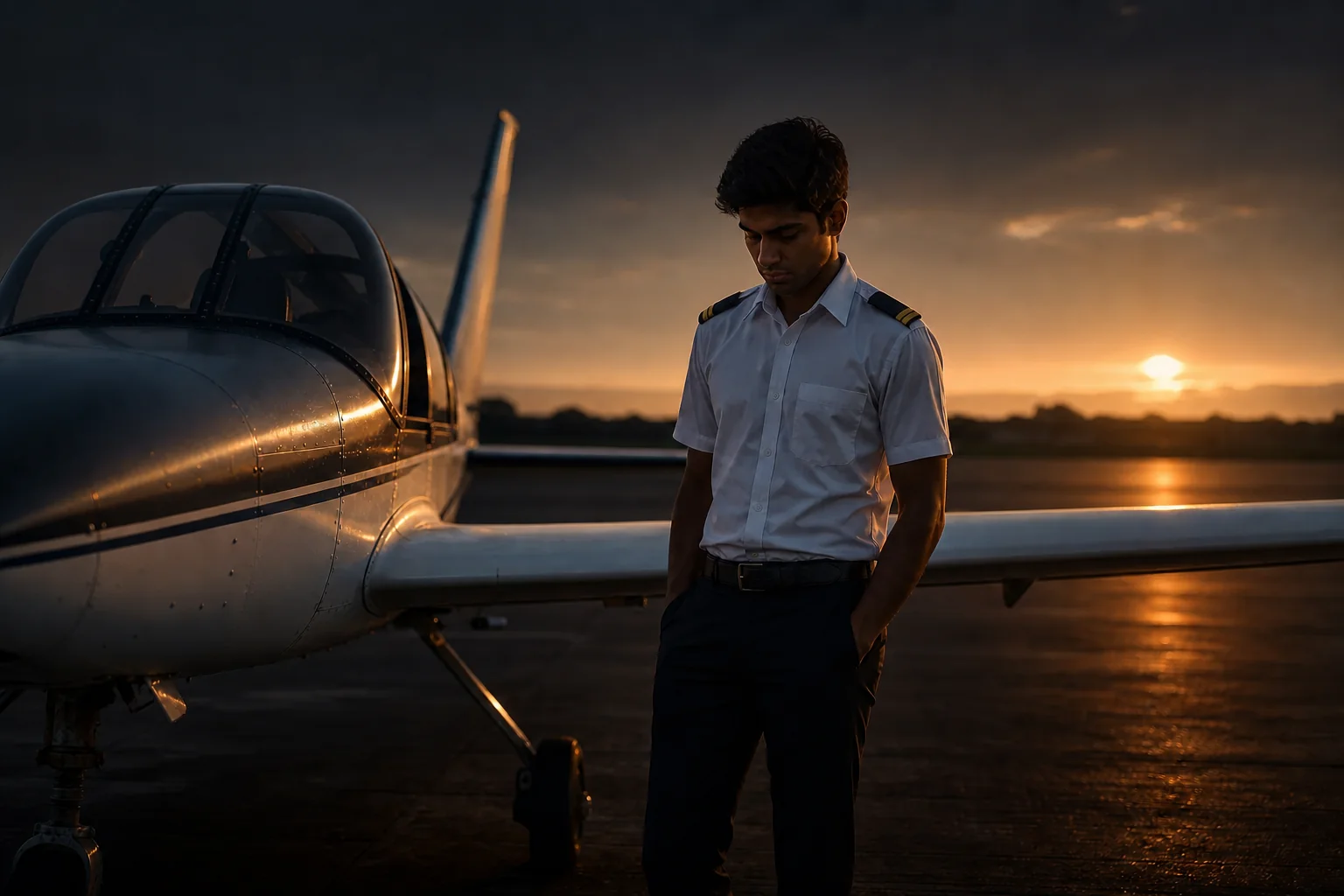
Abhijeet came from a modest farmer family. His family stretched every available rupee to afford the advertised course fee. When the hidden charges surfaced mid-training, there was nothing left to stretch further.
Manjeet came from a lower middle class household. His family had budgeted carefully around the number an agent gave them. That budget broke the moment recurring medical fees, travel costs, and extra flying hours arrived unannounced.
Ritesh and Anisha faced a similar pattern. Both had cleared major training milestones before the true cost of finishing the course became clear. Both had to step away from aviation, not because they lacked flying skill, but because the fee structure was never honest from day one.
Every one of these stories follows the same shape: a low quoted fee, a family that plans around that number, and a mid-course surprise that the family simply cannot absorb.
Capt. Vikas's Own Story With Hidden Fees
Has Rian Air's own founder faced hidden training fees?
Yes. Rian Air founder Capt. Vikas lost money to hidden and fraudulent charges twice: once in Ras Al Khaimah between 2007 and 2009, and again a decade later during recency flying in Canada.
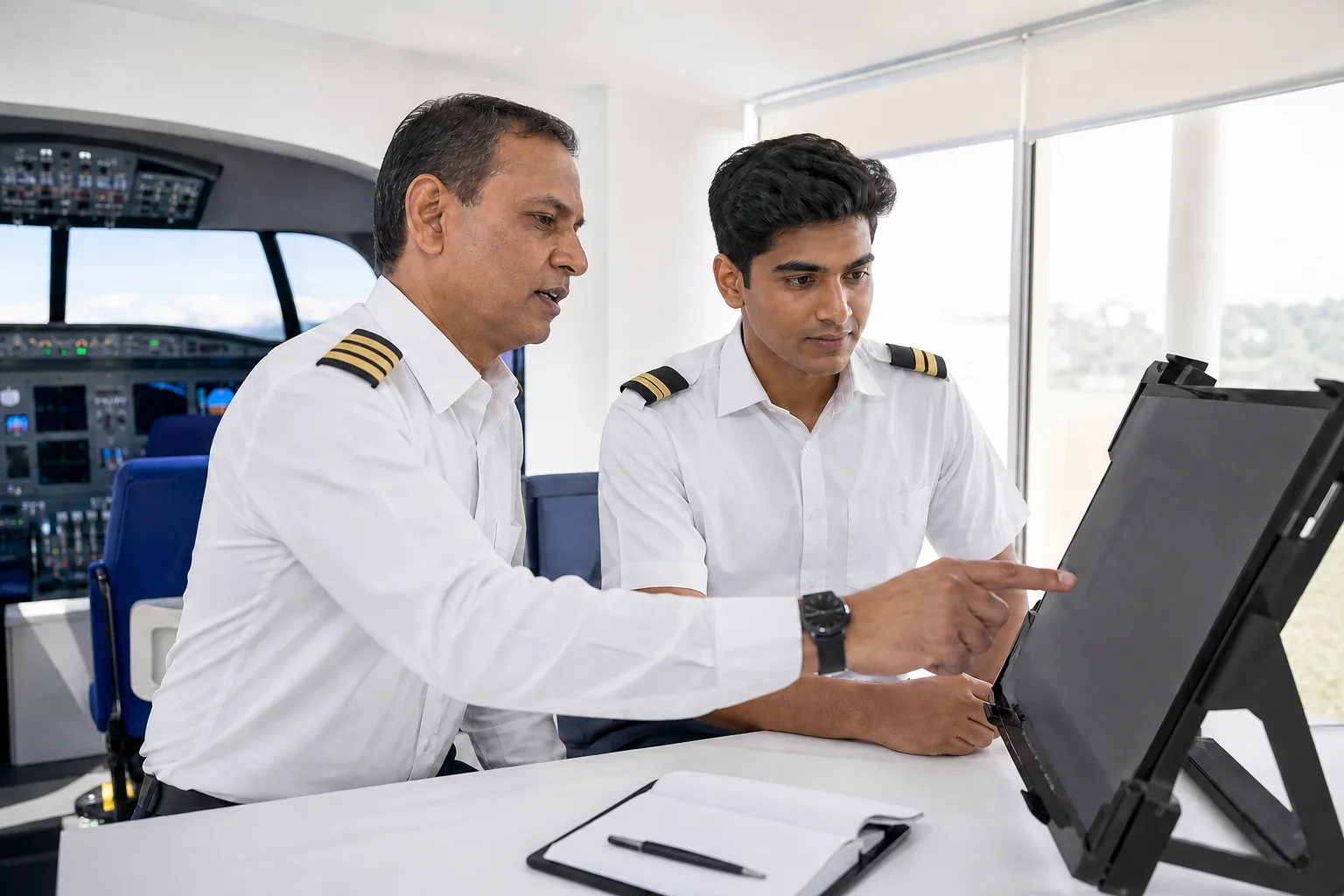
Between 2007 and 2009, Capt. Vikas trained at Indian Aviation Academy, a flight school in Ras Al Khaimah run by a fraudulent Indian couple. The pattern was familiar: promises made upfront, costs that kept appearing later.
Ten years ago, he faced it again. An agent whose company based in Dwarka Sector 10 in Delhi, an ex-Jet Airways pilot, arranged his recency flying in Canada. Paperwork was delayed repeatedly and never delivered within 6 months of time. He was cheated of a few lakh rupees in that process alone. The flight school is still based in Langley, British Columbia, Canada. He lost one of his houses in Navi Mumbai due to this process.
Eventually, Capt. Vikas had to redo his flying at a school near Hyderabad, losing an estimated ₹30 lakh+ across both incidents. He built Rian Air's transparent, technology-tracked model directly out of that experience.
How Hidden Fees in Pilot Training Affects Families Financially and Emotionally
Money is only part of the damage. A middle class family that takes an education loan against an advertised fee has no room left when a mid-course bill arrives.
Many families borrow against fixed collateral or a relative's income. When hidden charges appear, there is no second loan available. The student is forced to pause or quit, often after years of study and thousands of flying hours already invested.
The emotional cost compounds the financial one. A student who quits mid-training does not just lose money they end up losing the house they pledged as a collateral for an education loan. They lose years of preparation, confidence, and a career path they had already committed to publicly. Families in Delhi, Maharashtra and Kerala considering training abroad in Malta, Tunisia, or New Zealand face this risk even more sharply, since currency markup and travel costs are hardest to predict across borders. Our comparison of CPL training in India versus Malta versus Tunisia breaks down these country-specific cost differences.
Questions to Ask Before You Sign Up
A few direct questions, asked before enrollment, can prevent most of the surprises described above.
- Ask for the average flying hours past students needed, not just the contractual minimum.
- Ask for a complete written fee breakdown covering medical tests, uniforms, materials, and travel.
- Ask how the academy plans around the DGCA 6-month licensing window.
- Ask about currency markup charges if any part of training happens abroad.
- Ask to see a real digital logbook or tracking system, not just a brochure promise.
A school that answers all five clearly, in writing, is behaving very differently from an agent chasing a quick commission.
How Rian Air Prevents These Hidden Fee Surprises
Rian Air built its RAPT™ platform partly as a direct response to stories like Abhijeet's and Capt. Vikas's own experience. Every student's fee breakdown, flying hours, and DGCA timeline sit on one dashboard, visible to both student and parent.
Parents can track real progress instead of trusting a brochure. Our guide on the parent dashboard for tracking pilot training progress explains exactly what visibility parents get and how it prevents mid-course cost shocks.
Rian Air also offers a money-back promise: if Rian Air fails to get a student through the DGCA exams, the student gets their money back, terms and conditions apply. Ask for the T&C sheet directly before enrolling, so you know exactly what is covered.
FAQ
What is the top 10 pilot training institute in India with fees that are actually transparent?
No public ranking guarantees fee transparency. Instead of chasing a "top 10" list, ask each shortlisted academy for a written, itemised fee sheet covering medical tests, materials, and average flying hours before comparing prices.
Is cheap pilot training actually cheaper in the end?
Usually not. A low headline fee often excludes recurring medical costs, extra flying hours, and licensing charges, which can push the final bill close to or above a mid-priced, transparent program.
How do I identify the best pilot training academy abroad for my budget?
Look for an academy that publishes average hours instead of minimums, gives parents digital progress tracking, and explains the DGCA 6-month licensing rule clearly before you enroll, not after.
If your family is comparing pilot training options and wants a fee structure with no surprise bills mid-course, start your enquiry with Rian Air and ask for a full written cost breakdown. You can also explore Rian Air's training pathways across India, Malta, Tunisia, and New Zealand before deciding where to fly. For real student updates and behind-the-scenes training footage, follow Rian Air on Instagram or subscribe to Rian Air on YouTube.