Money-Back Promise Explained: Hidden Costs of Pilot Training Abroad Parents Should Know
A rejected US student visa can cost an Indian family ₹1.5 to ₹2 lakh before a single flying hour is logged, and no agent refunds that. The hidden costs of pilot training abroad parents should know start long before departure: visa fees, currency swings, accommodation markups, and commission-driven country picks. A clear fee structure and a written money-back promise on DGCA outcomes are the only real protection against them.
Key Takeaways
- Visa rejection is a sunk cost: USA and Canada student pilot visa refusals can burn ₹1-2 lakh in application, medical, and biometric fees before training even begins.
- Money-back promise has a specific scope: Rian Air's promise applies if the student is not taken through DGCA exams successfully; it is not a blanket refund on dissatisfaction, and terms and conditions apply.
- Tunisia, Malta, and New Zealand each hide different charges: currency conversion, accommodation, weather delays, and insurance top-ups rarely appear in the headline fee.
- Agents are commission-driven: a country recommendation from an overseas education agent often reflects their payout, not the student's aptitude or budget fit.
- Digital tracking closes the trust gap: tools like the RAPT parent dashboard and digital logbook let parents verify hours and progress directly, instead of relying on an agent's word.
At a Glance: Hidden Cost Snapshot
| Cost Category | Where It Hits | Typical Trigger | Avoidable? |
|---|---|---|---|
| Visa application and biometric fees | USA, Canada | Rejection or reapplication | Partially, with realistic profile screening |
| Currency conversion loss | Tunisia, Malta, New Zealand | INR-to-EUR/USD/NZD swings on instalments | Yes, with fixed-rate contracts |
| Accommodation markup | Malta, New Zealand | Agent-arranged housing above market rate | Yes, with independent verification |
| Weather and aircraft-availability delays | New Zealand, Tunisia | Extended stay beyond quoted timeline | Partially |
| Skill test retest fees | All countries, including India | Underprepared first attempt | Yes, with structured ground school |
| Agent commission built into package price | All overseas packages | Bundled quote without itemised breakdown | Yes, by demanding an itemised fee sheet |
Parents in Delhi, Mumbai, and Thrissur ask the same question every admission season: is pilot training abroad actually cheaper once every cost is counted? Often, it is not. The headline tuition figure from an overseas flying school looks attractive next to India's numbers, until the extra charges arrive one by one.
Why Visa Rejection Is the First Hidden Cost Nobody Warns You About
Visa rejection costs money immediately because application fees, medical exams, and biometric appointments are non-refundable, and a refused USA or Canada student visa can waste ₹1-2 lakh before training starts. That loss lands on the family, not the agent who recommended the country.
USA and Canada have become the least preferred destinations among Indian pilot aspirants for exactly this reason. Visa officers scrutinise financial documentation, ties to India, and the intent to return, and student pilot visas face additional scrutiny because of the aviation training category itself. A rejection does not just cost the application fee. It often means a second SEVIS or biometric payment, a redone medical, and sometimes a forfeited seat deposit at the flying school abroad.
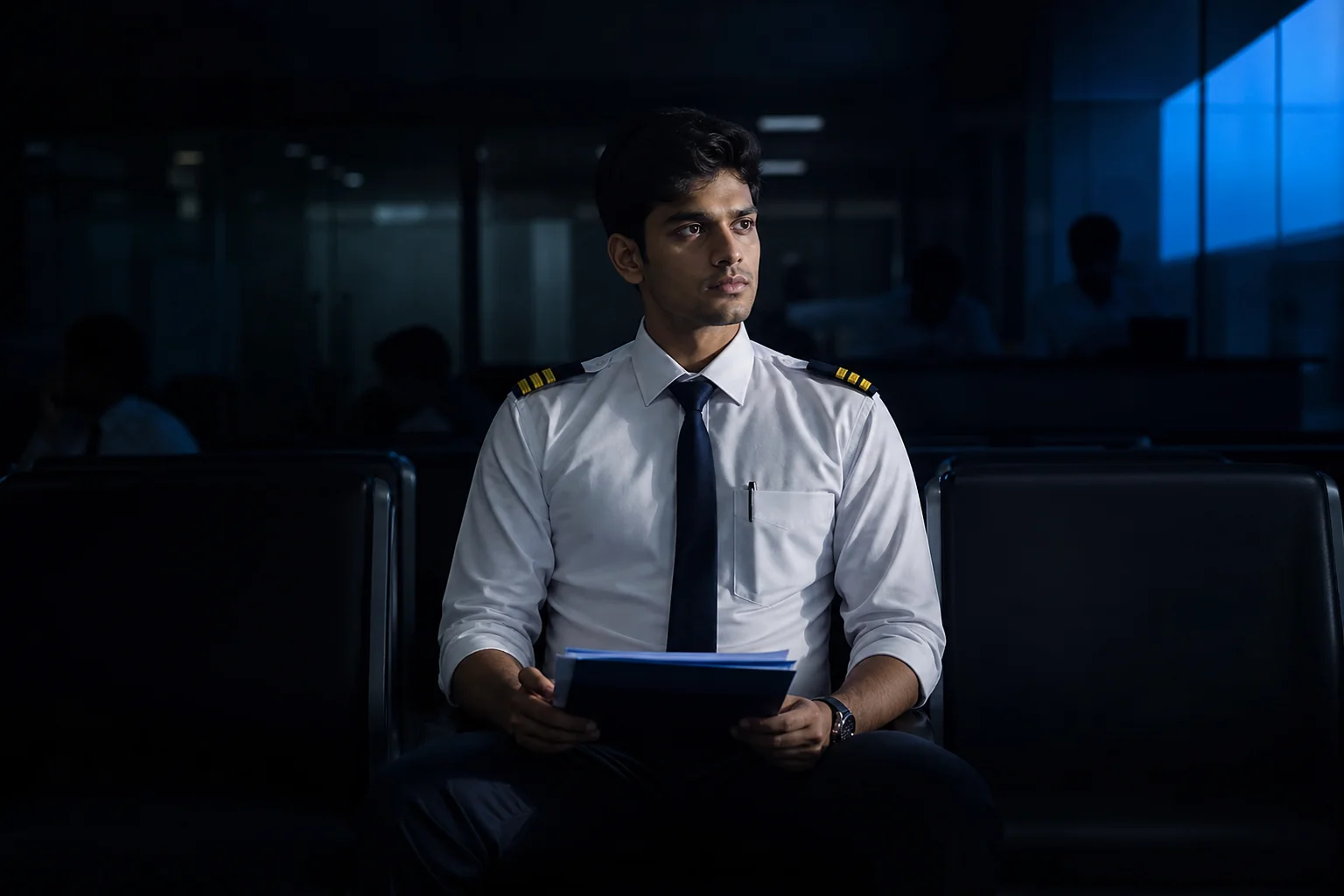
Families rarely budget for this because agents present visa approval as a formality. It is not. A 2024 US Department of State breakdown of F-1 refusal patterns showed that non-immigrant intent concerns remain the single largest refusal driver, and vocational aviation training applicants sit squarely in that risk band.
What Should a Family Check Before Paying Any Overseas Deposit?
Check whether the flying school's deposit is refundable if the visa is rejected, and get that clause in writing, not verbally from the agent. Ask for the school's own historical visa approval rate for Indian applicants, not the agent's estimate.
How Agents Push Countries and Programs for Commission, Not Fit
Overseas education agents in India typically earn a percentage commission from the flying school they represent, which means their country recommendation can reflect payout size rather than a student's academic profile, budget, or visa risk. That incentive rarely gets disclosed to the family signing the cheque.
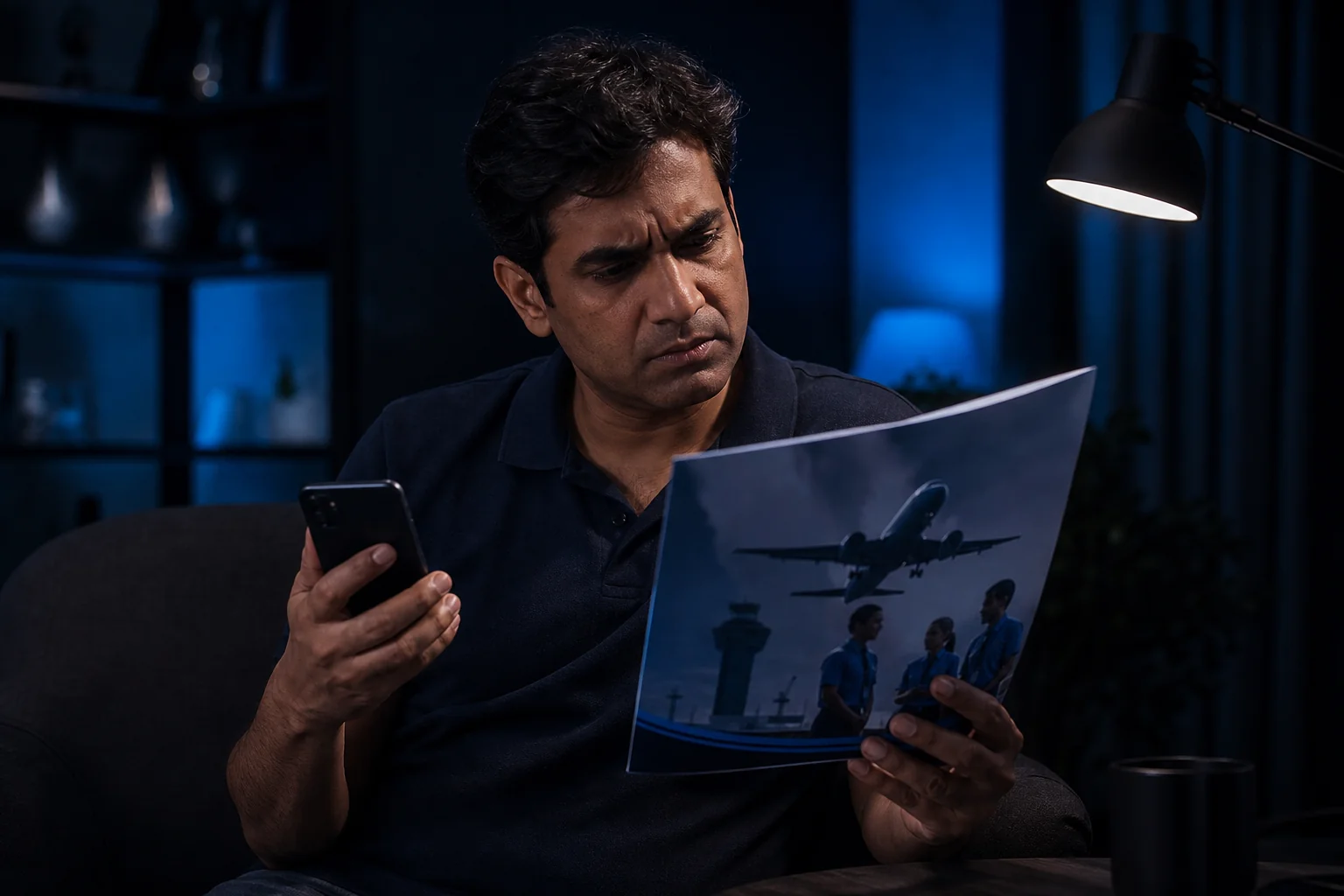
A common pattern: the agent bundles tuition, accommodation, and "support services" into one lump quote. The bundle hides the markup. Nobody can tell how much of the total is the flying school's actual fee and how much is the agent's cut, because the invoice is never itemised.
Pressure tactics compound this. "Only two seats left this batch" or "the fee goes up next month" pushes a family to sign before they compare. A serious flying school does not need urgency tactics to fill a batch that meets DGCA and regulatory training standards.
A quote a family cannot itemise line by line is a quote they cannot verify. That single rule catches most hidden-cost problems before money changes hands.
CPL Training in Malta vs New Zealand vs Tunisia: Where Hidden Charges Actually Appear
Malta, New Zealand, and Tunisia each attract Indian CPL aspirants, and each carries a distinct hidden-cost pattern tied to its cost of living, aircraft fleet, and regulatory conversion path. Tunisia's charges cluster around currency swings and aircraft downtime; Malta's around living cost and EASA-to-DGCA conversion paperwork; New Zealand's around visa extensions and weather delays.
Country | Common Hidden Charge | Approximate Trigger Point | Currency Exposure |
|---|---|---|---|
Tunisia | Procedural delay by the authority extends stay | Rule changes by the DGAC usually prolongs | EUR/TND swings on instalments |
Malta | High daily living cost, EASA license conversion fee | Accommodation and meals not in tuition quote | EUR |
New Zealand | Visa extension and travel insurance renewal | Weather-related training delays | NZD |
Read a deeper comparison of the three pathways, including regulatory trade-offs, in how to become a commercial pilot in India after 12th, which lays out the domestic-versus-overseas decision from the start.
Does Currency Risk Really Add Up to a Meaningful Sum?
Yes, because CPL programs are paid in instalments over 12 to 18 months, and a 5-8% currency swing on a EUR or NZD-denominated fee can add lakhs of rupees to the final bill. A fixed-rate contract at the time of enrolment removes this risk.
What Does Rian Air's Money-Back Promise Actually Cover?
Rian Air's money-back promise means that if Rian Air fails to get a student through the DGCA exams, the student gets their money back, subject to terms and conditions that are shared as a written T&C sheet before enrolment. It is scoped to exam outcomes, not general satisfaction.
This distinction matters because most overseas packages advertise vague "satisfaction guarantees" that are unenforceable in practice. A promise tied to a specific, measurable outcome (clearing DGCA exams) gives a family something concrete to hold the academy accountable for. Ask any institute, in India or abroad, for their T&C sheet before signing. If they cannot produce one in writing, that itself is the answer.
For a full breakdown of where fees typically inflate beyond the brochure number, read Pilot Training Cost in India Breakdown: Hidden Fees Parents Miss, which itemises retest fees, currency clauses, and accommodation gaps in domestic programs too.
How the RAPT Platform and Parent Dashboard Close the Information Gap
The RAPT parent dashboard closes the information gap by giving parents direct, real-time visibility into ground school scores, simulator hours, and flight training progress, instead of relying on periodic updates filtered through an agent or overseas coordinator. That removes the single biggest lever agents use to manage expectations.
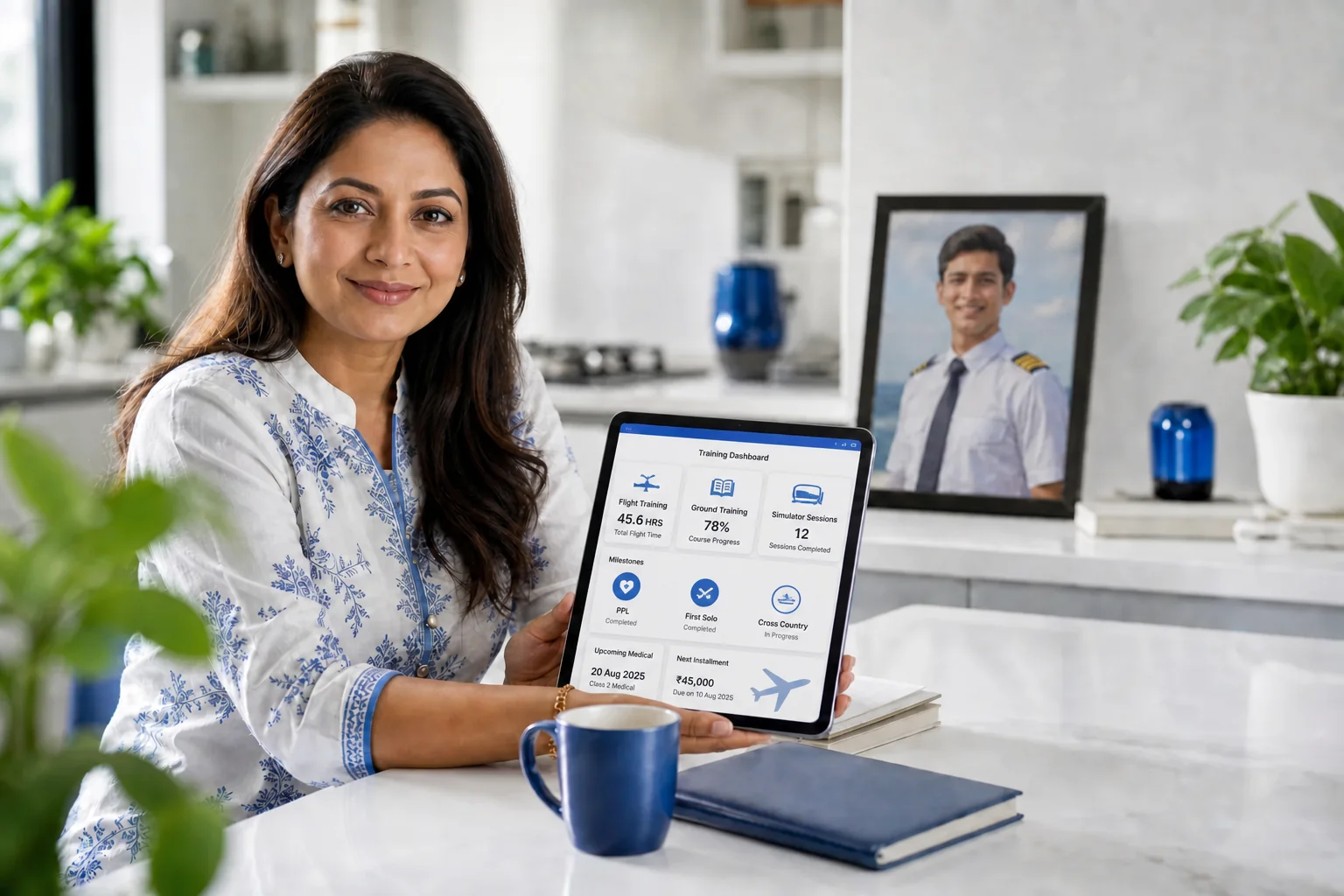
Overseas programs are hard to audit from India. A parent in Thrissur or Mumbai or Delhi cannot walk into a Tunisia flight school to check whether the promised aircraft is actually available this week. A digital logbook that records every logged hour, every mock exam score, and every simulator session gives that same visibility without a flight ticket.
See how this actually functions day to day in 5 Questions Parents Should Ask About the Parent Dashboard for Tracking Pilot Training Progress, and how simulator hours feed into flight-readiness in How Fixed-Base Simulator Training Actually Works.
Top 10 Pilot Training Institute in India With Fees: What to Actually Compare
Comparing the top pilot training institutes in India by fees only works if each quote is itemised into ground school, simulator hours, flight training, and type rating preparation separately, since a lower headline figure often excludes items a higher quote already includes. Compare minutest of charges like travel expenses for medical tests, travel for exam etc.
Ask for a subject-wise ground school fee, not a lump "DGCA package" number.
Check whether simulator hours are included or billed as an add-on per session.
Confirm which flight training location the to understand travel expenses.
Request the retest fee schedule in case a DGCA skill test is failed.
Get the money-back or refund clause in writing, with the exact conditions attached.
Common preparation gaps that drive retests, and the cost that follows, are covered in Instructor Insights: Common Mistakes DGCA Aspirants Make During Ground School.
A Practical Checklist Before Signing Any Overseas Training Contract
- Request an itemised fee sheet, not a bundled package quote.
- Ask for the flying school's visa approval history for Indian students specifically.
- Get the refund and money-back terms in writing before any deposit is paid.
- Confirm currency terms: is the instalment fixed in INR, or floating in EUR/USD/NZD?
- Verify accommodation cost independently, outside the agent's arranged listing.
- Ask what happens to fees already paid if the visa is rejected.
Frequently Asked Questions
Is Pilot Training in India Cheaper Than Abroad?
Pilot training in India is usually cheaper once visa risk, currency exposure, and accommodation costs abroad are counted, even though some overseas per-hour flying rates look lower on paper. The full comparison depends on the student's specific program and location choice.
What Happens If a Student Pilot Visa Gets Rejected?
If a student pilot visa is rejected, the application, biometric, and medical fees are typically non-refundable, and any seat deposit paid to the overseas flying school is refundable only if that was agreed in writing beforehand. This is why a written refund clause matters more than a verbal assurance.
Does Rian Air Offer Training in Tunisia, Malta, or New Zealand?
Rian Air guides students through CPL flight training pathways in India, Tunisia, Malta, and New Zealand, matching the student's budget, timeline, and visa profile to the right country instead of defaulting to one destination. Explore the specific pathways in the dedicated comparison guide linked above.
Best Pilot Training Academy in India: What Should Parents Look For?
Parents should look for DGCA-aligned academics, verifiable simulator infrastructure, transparent itemised fees, and a written outcome-based guarantee, rather than judging an academy on advertising alone. A parent dashboard that shows real progress data is a strong signal of genuine transparency.
Rian Air's RAPT platform, C172 fixed-base simulator, Da 40/42 hybrid simulator and structured ground school are built around exactly this kind of transparency, backed by a money-back promise on DGCA outcomes with clear terms and conditions available on request. If your family is comparing India against Tunisia, Malta, or New Zealand, explore the pathways before an agent locks you into a bundled quote you cannot itemise.
Talk to a Rian Air counsellor about your specific visa profile, budget, and timeline, and get the T&C sheet for the money-back promise before you commit a single rupee abroad. Start your pilot journey with a transparent fee breakdown here, follow real training updates on Instagram, or watch simulator and ground school walkthroughs on YouTube.