Ground Classes for Pilots: What Happens Before You Ever Touch an Aircraft?
Ground classes for pilots are the eight DGCA computer-based papers, plus one practical radio test, that every aspirant must clear before touching a training aircraft. They cover navigation, weather, regulation, and aircraft systems, and no flying school in India can legally begin flight training until a student has passed all of them. That single rule shapes almost every decision an aspiring pilot makes in year one.
Key Takeaways
- Eight subjects, one gate: Air Navigation, Aviation Meteorology, Air Regulations, Technical General, Technical Specific (Single Engine and Multi Engine), and RTR Part 1 and Part 2 must all be cleared before flight training starts.
- RTR is two-stage: RTR Part 2, the practical radio communication test, can only be attempted after RTR Part 1 is passed.
- Almost everything is CBT: Seven of the eight papers are computer-based tests taken through a DGCA-approved centre; only RTR Part 2 is a spoken, practical assessment.
- A computer number is mandatory: Every candidate needs a DGCA-issued computer number before they can book any exam slot.
- Technology now tracks the whole process: Question banks, 24x7 digital libraries, and parent dashboards let families in Delhi, Mumbai, or Thrissur follow progress in real time, wherever they are.
Ground Classes for Pilots at a Glance
| DGCA Subject | Format | Prerequisite |
|---|---|---|
| Air Navigation | CBT | None |
| Aviation Meteorology | CBT | None |
| Air Regulations | CBT | None |
| Technical General | CBT | None |
| Technical Specific (Single Engine) | CBT | None |
| Technical Specific (Multi Engine) | CBT | None |
| RTR Part 1 | CBT | None |
| RTR Part 2 | Practical (spoken) | RTR Part 1 cleared |
What Are Ground Classes for Pilots, Exactly?
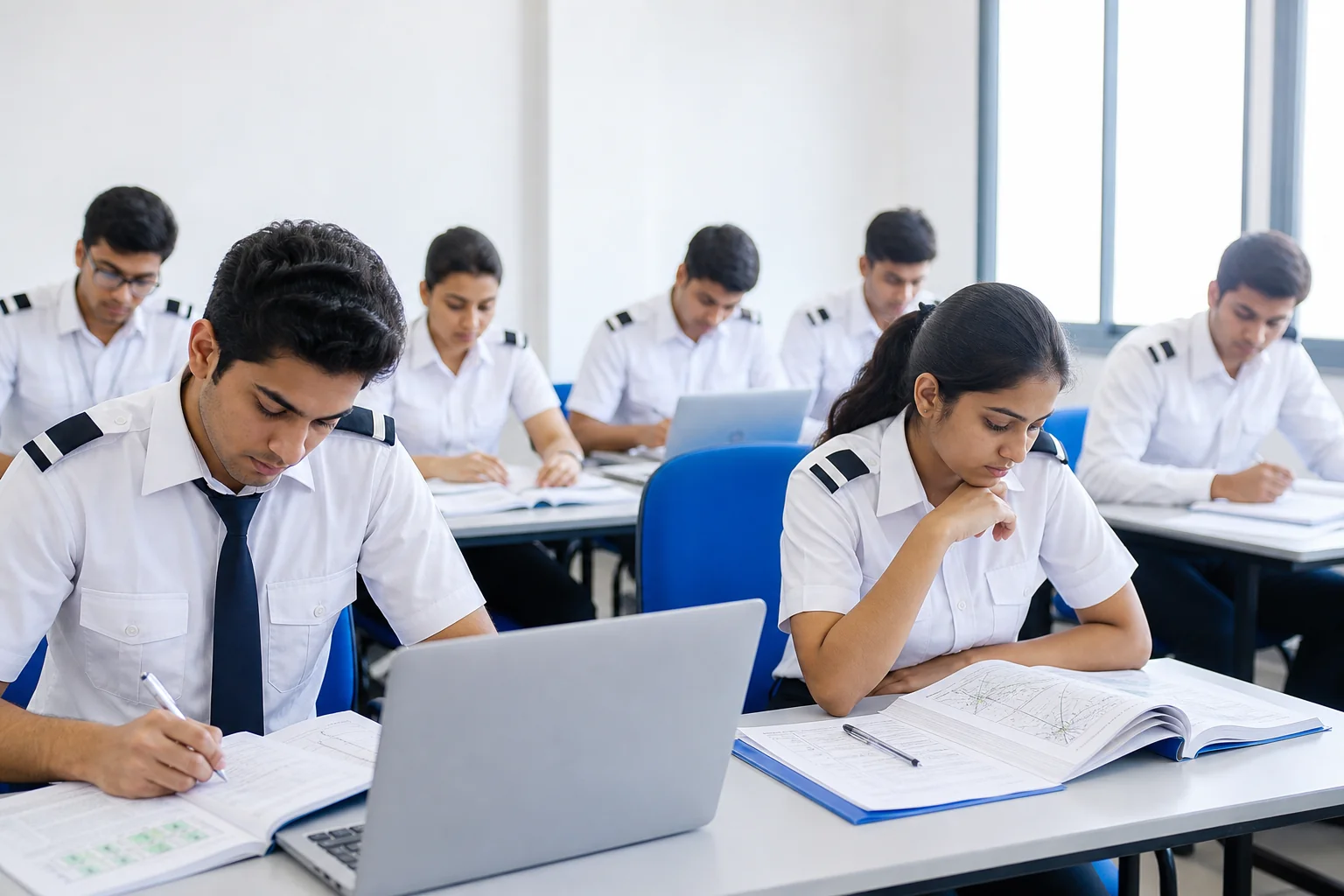
Ground classes for pilots are structured academic sessions, in-person or digital, that prepare a student for the DGCA's written and practical exams before a Commercial Pilot Licence application can move forward. They exist because an aircraft cockpit is not the place to first learn how weather systems form or how airspace is classified.
Think of ground school as the rulebook and the flight deck as the field. A student who understands density altitude, magnetic variation, and the structure of Indian controlled airspace makes better decisions once an instructor hands over the controls. That is why the Directorate General of Civil Aviation treats these papers as a hard gate, not a suggestion.
Classes typically run for several months, mixing lecture-based teaching with question bank practice. A well-run academy pairs every topic with hundreds of DGCA-style questions, because the exams draw from a known pool and pattern recognition genuinely helps. Aspirants in Delhi and Kerala follow the same eight-subject framework, though local batch timings and lab access can differ.
The 8 DGCA Subjects Every Aspirant Must Clear
Every CPL aspirant in India sits eight DGCA papers. Seven are computer-based tests; the eighth is a practical spoken assessment that depends on passing an earlier paper first.
- Air Navigation: charts, dead reckoning, great circle routes, and flight planning calculations.
- Aviation Meteorology: pressure systems, fronts, icing, turbulence, and how weather reports (METAR, TAF) are read in the cockpit.
- Air Regulations: the rules governing Indian and international airspace, licensing, and operator responsibilities.
- Technical General: airframes, engines, instruments, and systems common across piston aircraft.
- Technical Specific (Single Engine): systems and performance data for the single-engine aircraft type the student will train on, commonly the Cessna 172.
- Technical Specific (Multi Engine): the equivalent systems knowledge for multi-engine aircraft used later in CPL training.
- RTR Part 1: a CBT covering radio telephony procedures, phraseology, and regulation.
- RTR Part 2: the practical spoken communication test, open only once RTR Part 1 has been cleared.
All eight are computer-based in structure or origin, with RTR Part 2 being the single exception where a candidate demonstrates live radio phraseology in front of an examiner. Academies increasingly build a 20,000-plus question bank around these eight papers so a student sees far more variety in practice than they ever will in the real exam.
How Do You Register and Get a Computer Number for DGCA Exams?
A DGCA computer number is a unique identifier issued after document verification, and it is compulsory before any exam slot can be booked. Without it, a candidate cannot appear for a single ground subject, no matter how well prepared they are.
The process starts with an online application through the DGCA's examination portal, along with academic records, medical clearance status, and identity proof. Once approved, the computer number stays with the candidate for every subsequent paper, from Air Navigation through RTR Part 2. Exam centres operate in Delhi, Mumbai, and several other cities, so aspirants training across the Delhi and Kerala service areas can usually book a slot without long travel. We shall discuss about the new rules by the DGCA for issuing a computer number in a dedicated blog.
Why Flight Training Waits Until Every Ground Subject Is Cleared
Flight training in India should not begin until a student has cleared all eight DGCA ground subjects. This is a valuable information, not an academy policy, and it exists so that a student steps into an aircraft already understanding the rules, weather, and systems they will apply in real time.
The sequencing protects more than compliance. A student who starts flying before finishing Technical Specific or Air Regulations risks losing momentum on both sides: flying hours that should build toward a licence get spent instead on catching up academically. Currency lapses too. Flight hours flown without the matching ground clearance can sit unused while a student goes back to finish papers, and that delay adds real cost.
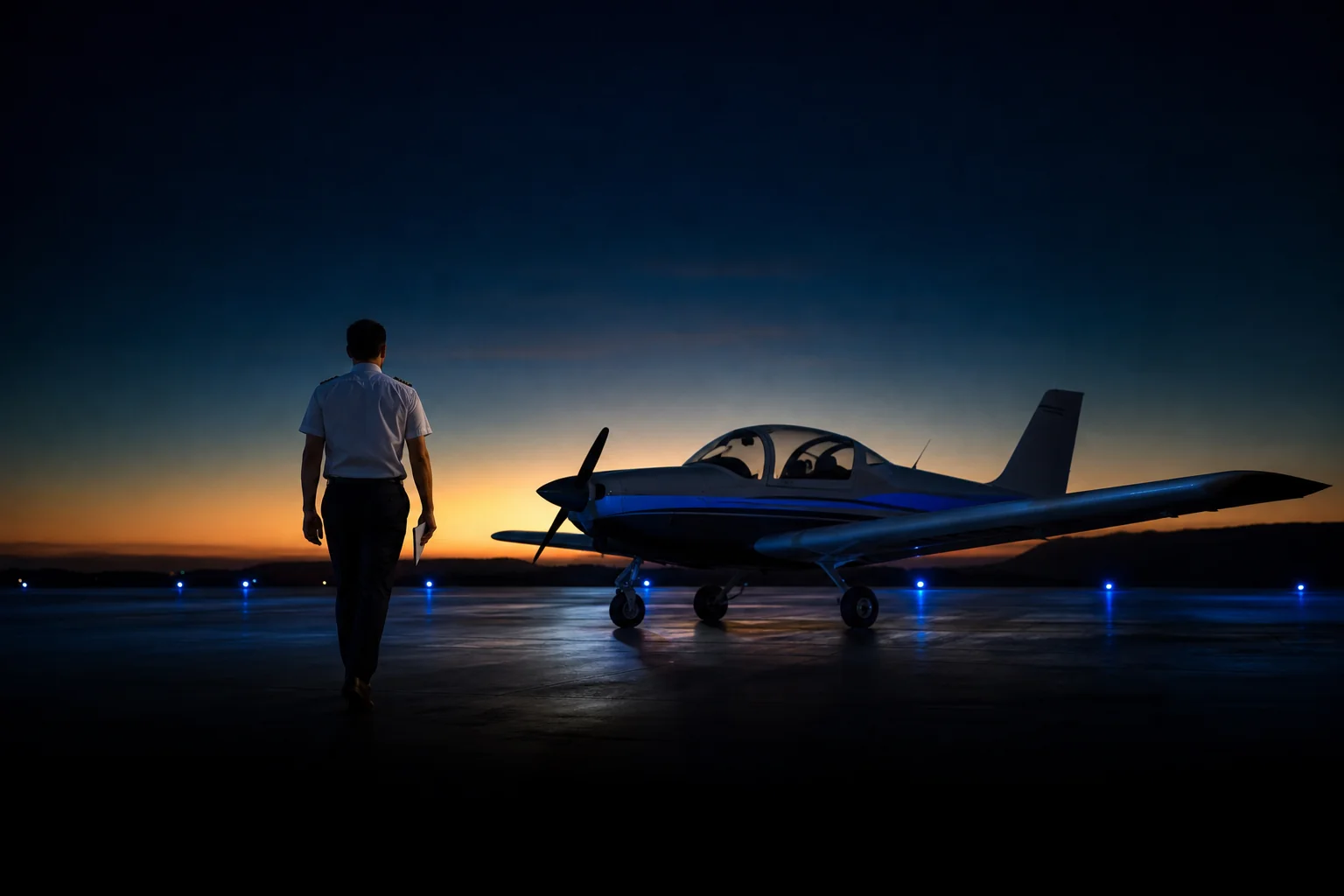
This is also why a structured academy timeline matters more than an aggressive one. Rushing ground school to "get to the cockpit faster" often backfires, producing a student who passes exams on the second or third attempt and loses months in the process. Clearing all eight subjects cleanly, in order, is the fastest real path to the flight line.
How Technology Is Changing Ground Classes for Pilots in India
Ground classes for pilots in India have moved well past the chalk-and-textbook model most parents remember. Digital, AI-enabled classrooms now track which topics a student is weak on, question banks adapt to performance, and simulator time bridges the gap between theory and the cockpit long before a licence check ride.
India's first 24x7 library for pilots is one visible sign of this shift. Instead of ground school being confined to fixed class hours, a student can walk in at any hour, day or night, and drill the same DGCA question bank an instructor assigned that week. For a working student or someone balancing family commitments, that flexibility often decides whether they clear a subject on the first attempt or the third.

Rian Air's own RAPT platform is built around this idea. It houses a question bank of more than 20,000 items mapped to all eight DGCA subjects, and it works for both CPL and ATPL preparation, so a student does not switch tools when they move from Commercial Pilot Licence subjects to Airline Transport Pilot Licence papers later in their career. You can review how the RAPT platform's DGCA question bank is structured for both licence levels.
How Do Parents Track Progress During Ground and Flight Training?
Parents track a student's ground and flight training progress through a digital parent dashboard, which updates attendance, mock test scores, and simulator hours in near real time. This works regardless of whether the parent is in Thrissur, Mumbai, or overseas, because the dashboard is accessible from any browser or device.
That transparency addresses a genuine pain point. Pilot training runs for months, often at a location far from home, and families historically had to rely on phone updates from the academy or the student themselves. A dashboard that shows exam attempts, question bank scores, and simulator session logs removes that guesswork, and it matters just as much once a student moves abroad for advanced flight training.
From Ground School to the Cockpit: Simulator and Flight Training Pathways
Once all eight ground subjects are cleared, training moves to fixed-base simulator sessions before live flight training begins. This sequencing lets a student rehearse checklists, radio calls, and emergency procedures in a controlled environment, which makes the transition to an actual aircraft noticeably smoother.
Kerala's first C172 fixed-base simulator gives students hands-on exposure to the exact aircraft type covered in their Technical Specific Single Engine paper, closing the loop between theory and practice. You can read more on how fixed-base simulator training actually works before a student ever sits in a real cockpit.
From there, many Rian Air students move into flight training partners abroad. One of these is the Aviator Institute in Tunisia, an Airbus Flight Training Network school. Rian Air holds a five-year exclusive partnership with the Aviator Institute, which gives its students a direct, structured pathway into CPL flight training and later type-rating preparation without navigating an unfamiliar school on their own.
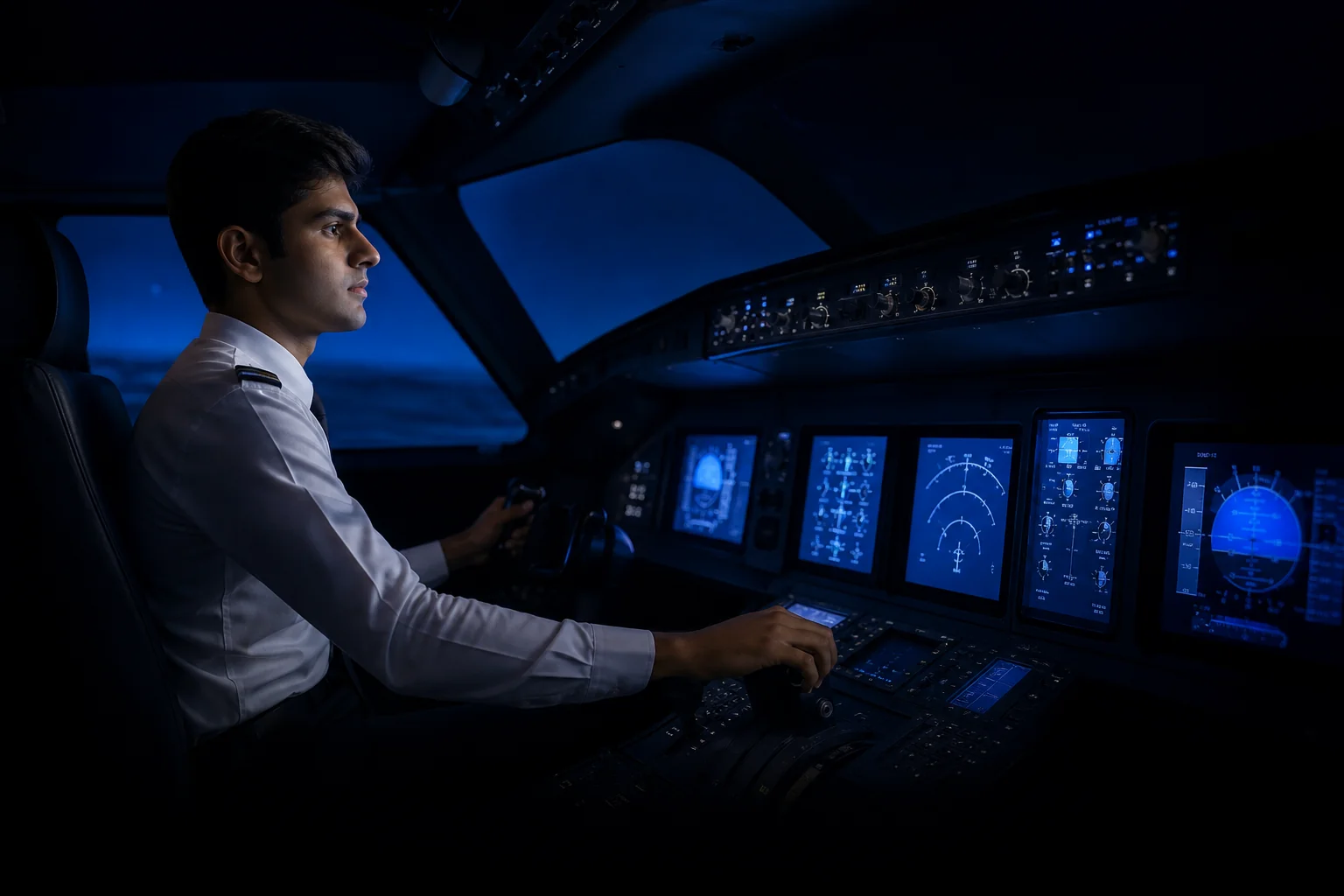
For students weighing India-based flight training against options in Malta or Tunisia, it helps to compare timelines, aircraft availability, and costs directly, something covered in detail in CPL training in India vs Malta vs Tunisia. Later, once CPL is complete, students preparing for a type rating can review A320 type rating preparation on a simulator to understand what that next stage actually involves.
Common Mistakes Aspirants Make During Ground Classes
Most repeat attempts at DGCA exams trace back to a handful of avoidable habits, not a lack of ability. Recognising them early saves months.
- Skipping the question bank in favour of notes alone: DGCA papers draw from a known question pool, and students who only read textbooks miss the pattern recognition that repeated practice builds.
- Treating RTR Part 1 as an afterthought: because RTR Part 2 depends on it, delaying RTR Part 1 pushes back the practical test and the whole flight training start date.
- Studying subjects in isolation: Air Navigation and Technical Specific overlap heavily on performance calculations, and treating them as unrelated wastes revision time.
- Underestimating Technical Specific for multi-engine systems: students often assume single-engine knowledge transfers directly, then struggle with the added systems complexity.
A closer look at these patterns, and how instructors correct them, is available in Instructor Insights: Common Mistakes DGCA Aspirants Make During Ground School.
Frequently Asked Questions
What are ground classes for pilots in India?
Ground classes for pilots are structured lessons that prepare a student for the eight DGCA papers required before a Commercial Pilot Licence: navigation, meteorology, regulations, technical systems, and radio telephony. They must be completed before flight training begins.
How many DGCA subjects does a CPL aspirant need to clear?
A CPL aspirant must clear eight DGCA subjects: Air Navigation, Aviation Meteorology, Air Regulations, Technical General, Technical Specific Single Engine, Technical Specific Multi Engine, RTR Part 1, and RTR Part 2.
Is RTR Part 2 a written exam?
No, RTR Part 2 is a practical, spoken radio communication assessment, unlike the other seven subjects which are computer-based tests. It can only be attempted after a candidate has cleared RTR Part 1.
Can I start flight training before clearing all ground subjects?
Yes, we recommend every ground subject to be cleared before flight training starts. Beginning flight hours earlier risks wasted training time and does not shorten the licensing timeline.
What is a DGCA computer number and why do I need one?
A DGCA computer number is a unique identifier issued after document verification, and it is required to book any DGCA ground exam. Without it, a candidate cannot appear for even the first subject.
How long does it take to clear all DGCA ground subjects?
Most students clear all eight DGCA subjects over several months of structured study, though the exact timeline depends on how consistently a student uses question bank practice and how quickly they clear each attempt.
What is the RAPT platform and how does it help with DGCA exams?
RAPT is Rian Air's proprietary platform with a question bank of more than 20,000 items covering all eight DGCA subjects, usable for both CPL and ATPL preparation. It tracks weak topics and adapts practice accordingly.
How does a 24x7 library for pilots help with ground school?
A 24x7 library lets students access DGCA study material and question banks at any hour, which helps those balancing other commitments or preparing for a specific paper outside regular class hours.
Can parents track ground school and flight training progress remotely?
Yes, a digital parent dashboard shows exam attempts, question bank scores, and simulator hours in near real time, accessible from anywhere, whether the student is training in India or abroad.
What happens after all ground subjects are cleared?
Once all eight subjects are cleared, students typically move to fixed-base simulator training before starting live flight training, either in India or with an international partner school.
Is the Aviator Institute in Tunisia connected to Rian Air?
Yes, Rian Air holds a five-year exclusive partnership with the Aviator Institute in Tunisia, an Airbus Flight Training Network school, giving its ground school graduates a structured flight training pathway abroad.
How to pass DGCA exams in the first attempt?
Passing DGCA exams on the first attempt comes down to consistent question bank practice across all eight subjects, clearing RTR Part 1 early since RTR Part 2 depends on it, and using mock tests that mirror the real exam format rather than relying on notes alone.
Clearing all eight DGCA ground subjects is the real starting line for a pilot career, not a formality before the interesting part begins. With a structured question bank, a 24x7 library, and simulator sessions built into the timeline, ground classes for pilots stop feeling like a bottleneck and start functioning as the foundation they were always meant to be. If you are ready to begin that process with a transparent, technology-backed academy, start your pilot journey with Rian Air today, or explore the full training pathways from ground school through type rating. For a closer look at student life along the way, follow Rian Air on Instagram or subscribe on YouTube.