
DGCA Online Ground Training for Pilots: A Subject-by-Subject Breakdown
DGCA online ground training for pilots is live, instructor-led coaching for the six DGCA CPL theory papers, delivered over video instead of a physical classroom, so a student in Delhi, Mumbai or Thrissur can attend the same class without relocating. It works as well as offline classes for students who stick to a fixed daily schedule and use a structured question bank.
Key Takeaways
- Six papers, one passing bar: Air Navigation, Aviation Meteorology, Air Regulations, Technical General, Technical Specific and RTR(A), each needing a 70% pass mark.
- Technical General is the heaviest paper: 100 questions across four modules, completed in about 3 hours, and the one most first-timers underestimate.
- Online does not mean unsupervised: a good online batch still has live doubt-clearing, attendance tracking and mock tests, not just recorded videos.
- Cost gap is real but narrow: online ground school usually saves on commuting, hostel or PG rent, not on the tuition fee itself.
- Most first-attempt failures are avoidable: skipped mock tests and ignoring DGCA circular amendments cause more repeat papers than difficult content.
At a Glance: DGCA Ground Training Snapshot
Subject | Approx. Questions | Duration | Passing Mark |
|---|---|---|---|
Air Navigation | ~100 MCQs | 3 hours | 70% |
Aviation Meteorology | ~50 MCQs | 2 hours | 70% |
Air Regulations | ~100 MCQs | 2 hours | 70% |
Technical General | ~100 MCQs | 3 hours | 70% |
Technical Specific | ~50 MCQs | 2 hours | 70% |
RTR(A) | Oral + practical | Session-based | Pass/Fail |
Online ground school | Live batches, remote | Fixed daily slots | — |
Offline ground school | In-person classroom | Fixed daily slots | — |

What Does DGCA Online Ground Training Actually Cover?
DGCA online ground training is the theory phase every CPL aspirant must clear before touching a training aircraft. It runs through six computer-based papers set by the Directorate General of Civil Aviation, delivered here through live video classes instead of a physical room.
A 12th-pass student with Physics and Maths can start this stage right after a DGCA medical clearance. The syllabus itself does not change because the delivery is online; the content, question banks and passing bar stay identical to what a classroom student studies. What changes is how the student accesses instructors, doubt-clearing sessions and revision material.
For students weighing city-specific options, our guides on ground training for pilots in Delhi and ground training for pilots in Kerala lay out the local classroom options side by side, which is useful context before deciding whether to go fully online.
1. Air Navigation: The Subject Most Students Underestimate
Air Navigation tests a student's ability to plan a flight route using charts, timings and fuel calculations, not just memorised facts. Most sources put the paper at around 100 multiple-choice questions with a 70% pass requirement, and students who skip manual chart-plotting practice tend to struggle most here.
The difficulty is rarely conceptual. It is mental arithmetic under time pressure, converting between true and magnetic headings, and reading topographic charts fast enough to answer every question in the allotted window.
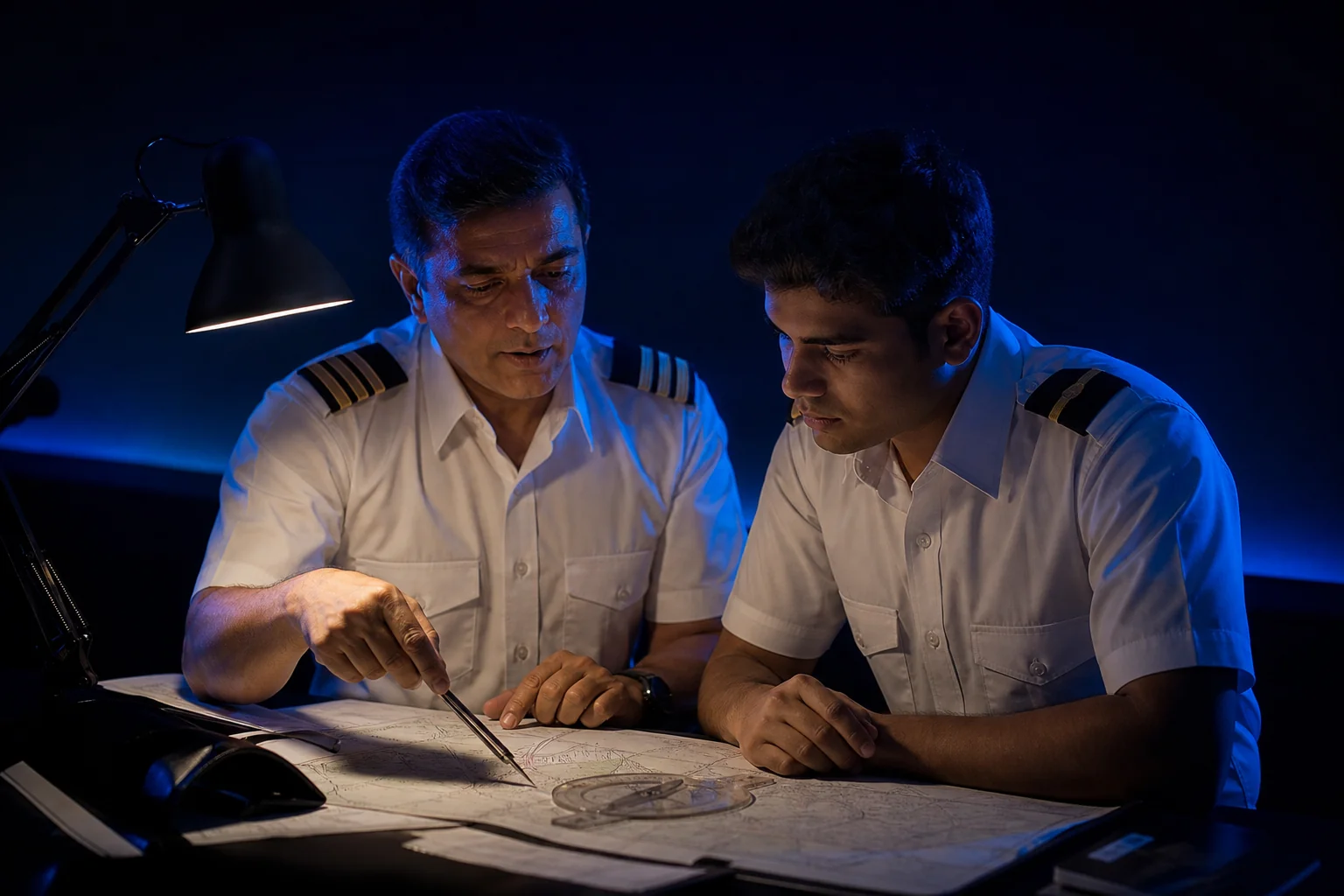
Students who practise timed navigation drills weekly, not just before the exam, report far fewer repeat attempts on this specific paper. A structured question bank with worked navigation problems, like the one inside Rian Air's RAPT platform question bank, helps because it forces repetition on the calculation types that actually appear.
2. Aviation Meteorology: Reading the Sky Before You Fly It
Aviation Meteorology checks whether a student can decode weather reports like METAR and TAF and understand how pressure systems affect flight safety. The paper typically runs around 50 questions in about 120 minutes, again with a 70% passing bar.
Students usually find this subject more approachable than Navigation because it rewards understanding over speed. The trap is treating it as "easy" and under-revising it; weather charts and cloud classification questions still need repeated practice to stick.
3. Air Regulations: The Rulebook You Must Know Cold
Air Regulations tests a student's knowledge of DGCA rules, licensing procedures and airspace classifications, largely through rote memory rather than calculation. The paper is generally around 100 questions in roughly 120 minutes, with the same 70% passing threshold as every other subject.
This is the one paper where outdated study material actively hurts a student. DGCA issues circulars and amendments regularly, and a question bank that hasn't been refreshed can teach a rule that no longer applies.
Ask any ground school, online or offline, how recently their Air Regulations material was last updated. If the answer is vague, that is a red flag worth acting on before enrolling.
4. Technical General: Aerodynamics, Airframes, Engines, Electricity
Technical General is DGCA's heaviest ground paper, built around four modules: Principles of Flight, Airframes and Systems, Piston and Jet Engines, and Basic Electricity. The exam consists of 100 questions completed in three hours.
Because it blends four distinct subject areas into one paper, students often prepare each module in isolation and then struggle to switch between them under exam conditions. Basic Electricity, in particular, catches non-engineering background students off guard since it needs a working grasp of circuits and instruments most 12th-pass students haven't studied before.
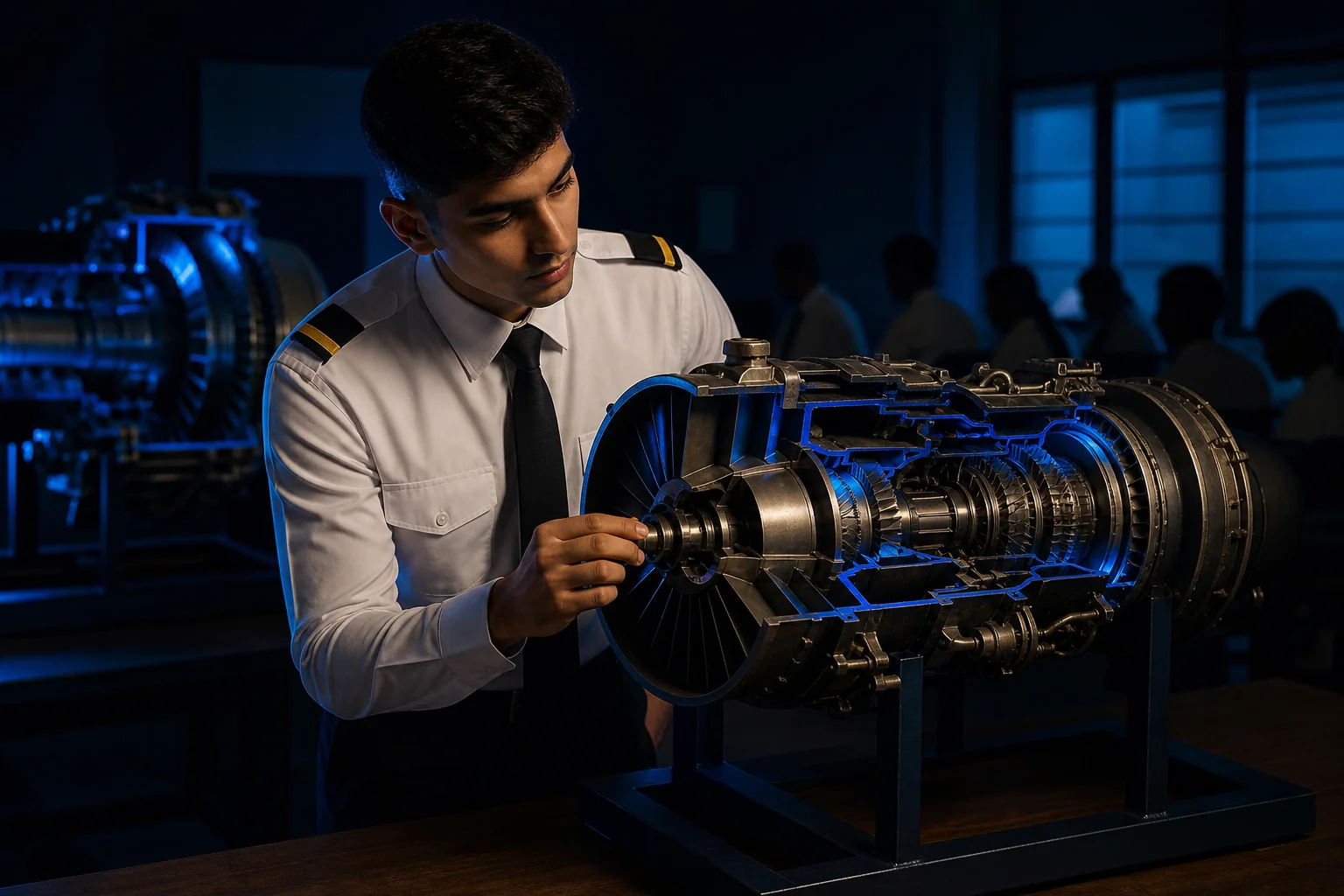
Ground schools with dedicated instructors per module, rather than one generalist covering all four, tend to produce stronger first-attempt results on this paper specifically.
5. Technical Specific: Aircraft-Type Focused Systems
Technical Specific narrows the Technical General syllabus down to the systems, limitations and procedures of the specific aircraft type a student trains on, whether a Cessna 172 or a similar single-engine trainer. It builds directly on Technical General, so weak fundamentals there tend to resurface here.
Students who treat Technical Specific as a fresh start, instead of an extension of what they already learned, often waste revision time relearning basics that Technical General already covered.
6. RTR(A): The Practical Radio Telephony Test
RTR(A), the Restricted Radio Telephony Test, checks whether a student can communicate with air traffic control using correct phraseology under pressure. Unlike the other five papers, it includes an oral and practical component conducted by WPC, not a written MCQ format alone.
Students who only memorise phraseology scripts without practising live mock radio calls tend to freeze during the actual session. Regular voice drills with an instructor, well before the exam date, fix this more reliably than reading transcripts alone.
Online Ground School vs Offline Ground School: Side-by-Side Comparison
Online and offline DGCA ground school cover the same syllabus and the same six papers; the real differences sit in cost, discipline, and how quickly a student can get a doubt cleared. Neither format is universally better. The right choice depends on how self-directed a student already is.
| Factor | Online Ground School | Offline Ground School |
|---|---|---|
| Location dependency | None; attend from any city | Must relocate or commute daily |
| Living cost impact | No hostel/PG rent needed | Adds hostel, food, travel costs |
| Doubt-clearing speed | Live sessions, but scheduled slots | Immediate, in-person, between classes |
| Peer environment | Smaller, screen-based batches | Physical classroom, more informal peer study |
| Study discipline needed | Higher; self-tracking required | Structure imposed by attendance |
| Simulator/lab access | Requires a separate visit or hybrid model | Often co-located with the facility |
| Best suited for | Working students, distant cities, disciplined self-starters | Students who need external structure and in-person accountability |
Our detailed piece on online ground classes for CPL and ATPL goes deeper into batch sizes and live-instructor formats if this comparison leaves you leaning toward the online route.
How to Choose Between Online and Offline Ground Training
Choosing between the two formats comes down to honestly assessing your own study habits, not picking whichever sounds more modern or more traditional. A student who has never studied independently for six to eight months should weigh offline more seriously, or choose a hybrid model that blends both.
Look for a few concrete selection markers before enrolling in either format:
- Batch size: smaller batches, online or offline, mean faster doubt resolution per student.
- Mock test frequency: weekly full-length mocks matter more than the delivery format itself.
- Material update cadence: ask when Air Regulations content was last revised for DGCA amendments.
- Instructor specialisation: one instructor per Technical General module beats a single generalist teaching all four.
- Progress visibility: parents and sponsors should be able to track attendance and mock scores, not just take a student's word for it.
A red flag in either format is a school that cannot show you a real question bank sample or recent mock test data before you pay. Vague promises about "covering everything" without a syllabus breakdown are worth walking away from.
Common Mistakes First-Time DGCA Aspirants Make
Most repeat attempts trace back to a handful of avoidable habits rather than genuinely difficult content. Recognising these early saves months of delay.
- Treating mock tests as optional: students who sit for full-length mocks under real time limits consistently score higher on the actual paper.
- Studying Technical General module by module in isolation: the real exam mixes all four modules, so isolated revision leaves gaps.
- Ignoring DGCA circular updates: Air Regulations changes quietly; outdated notes cost marks on updated rules.
- Under-revising "easy" subjects: Meteorology feels manageable, which is exactly why students under-study it and lose easy marks.
- No fixed daily schedule for online students: without classroom structure, procrastination creeps in fast.
For a closer look at these patterns from an instructor's point of view, see Instructor Insights: Common Mistakes DGCA Aspirants Make During Ground School.
How to Pass the DGCA Exam in Your First Attempt
Passing on the first attempt depends more on structured revision and mock discipline than on raw intelligence or memory. Students who follow a fixed weekly mock schedule, revise weak subjects daily rather than in a final rush, and stay current on DGCA amendments clear papers faster than those who cram.
Build your schedule around three habits: a daily question bank session, at least one full-length mock test per subject per week, and a running log of topics you got wrong so you never revise blind. A digital logbook or tracking dashboard, like the parent dashboard tools built into Rian Air's ecosystem, makes this visible to both the student and whoever is sponsoring the training.
Read our companion guide on how to pass the DGCA exam in your first attempt for a week-by-week revision structure aimed specifically at first-time aspirants.
Frequently Asked Questions
How many subjects are there in DGCA CPL ground training?
There are six DGCA CPL ground subjects: Air Navigation, Aviation Meteorology, Air Regulations, Technical General, Technical Specific, and RTR(A), each requiring a 70% passing mark to clear.
Is online ground training as effective as offline classroom training?
Yes, when the online batch includes live instructor sessions, regular mock tests and fast doubt-clearing, not just recorded lecture videos with no interaction.
Which DGCA subject is the hardest for first-time students?
Technical General is generally the hardest, since it combines four modules, Principles of Flight, Airframes and Systems, Engines, and Basic Electricity, into a single 100-question paper.
How long does DGCA online ground training take to complete?
Most students complete all six papers in roughly six to ten months, depending on how many subjects they attempt in parallel and how quickly they clear each attempt.
Do I need to relocate for online ground training?
No. Online ground training lets a student in any city, including Delhi, Mumbai or Thrissur, attend live classes without relocating, though simulator and flight training later usually require travel to a specific facility.
What is the passing mark for DGCA CPL exams?
Every DGCA CPL ground paper requires a 70% passing mark, and there is no way to average a low score in one subject against a high score in another.
Can a 12th-pass student start DGCA ground training immediately?
Yes, provided the student studied Physics and Mathematics in 12th grade and has cleared the required DGCA medical assessment; see our guide on DGCA Class 2 medicals before ground training for the medical prerequisites.
Is offline ground school more expensive than online?
Tuition fees are usually similar, but offline students typically pay extra for hostel, food and daily commuting, which online students avoid entirely.
How many questions does the Technical General exam have?
As of September 2026, the Technical General exam consists of 100 questions completed in three hours, covering all four core modules together.
What is the biggest reason students fail a DGCA paper on the first attempt?
Skipping full-length, timed mock tests is the most common and most avoidable cause of first-attempt failure, more than the actual difficulty of the syllabus itself.
If you are ready to start structured, live DGCA online ground training with weekly mock tests and a trackable study schedule, start your enquiry with Rian Air today. Want to compare every route from ground school to airline cockpit first? explore the full training pathways. You can also follow real classroom moments on Instagram or watch subject breakdowns on YouTube.