Back to blog
Training
cpl-training-india
pilot-training-india
pilot-training
Technical General for CPL Pilots in India: DGCA Guide
Capt. Vikas Vikramdas Nair15 July 20267 min read · 1,257 words
In this article
In this article
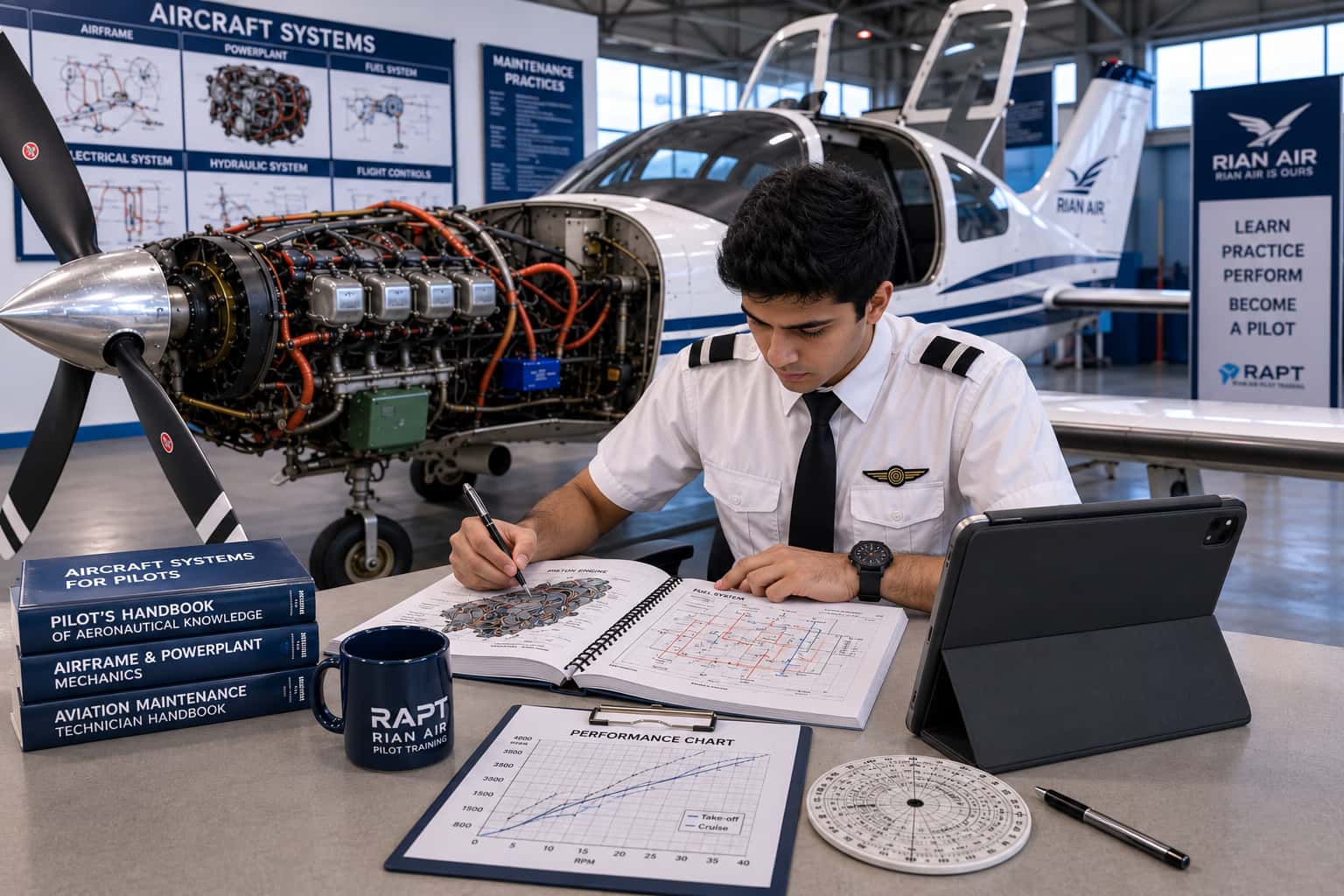
Technical General for CPL Pilots is one of the most practical subjects in commercial pilot training. While Navigation, Meteorology, and Air Regulations teach pilots how to operate safely within the aviation system, Technical General explains how the aircraft itself functions. Over the years, I have interacted with many aspiring pilots who initially viewed Technical General as a subject that required extensive memorization. However, students who understand the logic behind aircraft systems often find the subject far easier than expected. For aspiring Commercial Pilot Licence (CPL) holders in India, Technical General provides the foundation required to understand aircraft operations, system failures, performance limitations, and flight safety. — Capt. Vikas Vikramdas Nair
Technical General is the study of aircraft systems, aerodynamics, engines, instruments, and operational principles. The subject helps pilots understand:
A pilot does not need to be an engineer, but every professional pilot must understand the aircraft they operate.
Every decision a pilot makes is influenced by aircraft performance and system capability. Understanding Technical General allows pilots to:
Students beginning their aviation journey should also read How to Become a Pilot After 12th Commerce in India, which explains the complete CPL pathway and where Technical General fits within pilot training.
The foundation of Technical General begins with understanding how aircraft fly. Four forces act upon an aircraft during flight.
Lift is generated by airflow over the wings and allows the aircraft to overcome weight.
Weight is the force of gravity acting on the aircraft.
Thrust is produced by the engine and propeller or jet engine system.
A stall occurs when the wing exceeds its critical angle of attack, resulting in a loss of lift.
Many students incorrectly believe a stall occurs due to low airspeed alone. In reality, stalls are caused by excessive angle of attack.
Aircraft structures are designed to withstand aerodynamic loads while remaining lightweight and efficient.
The fuselage forms the main body of the aircraft.
Wings generate lift and often contain fuel tanks.
The empennage provides stability and control.
The landing gear supports the aircraft during ground operations.
Flight controls enable pilots to maneuver the aircraft.
Understanding these systems is essential for both flight performance and aircraft handling.
Technical General places significant emphasis on aircraft engines because they provide the power necessary for flight.
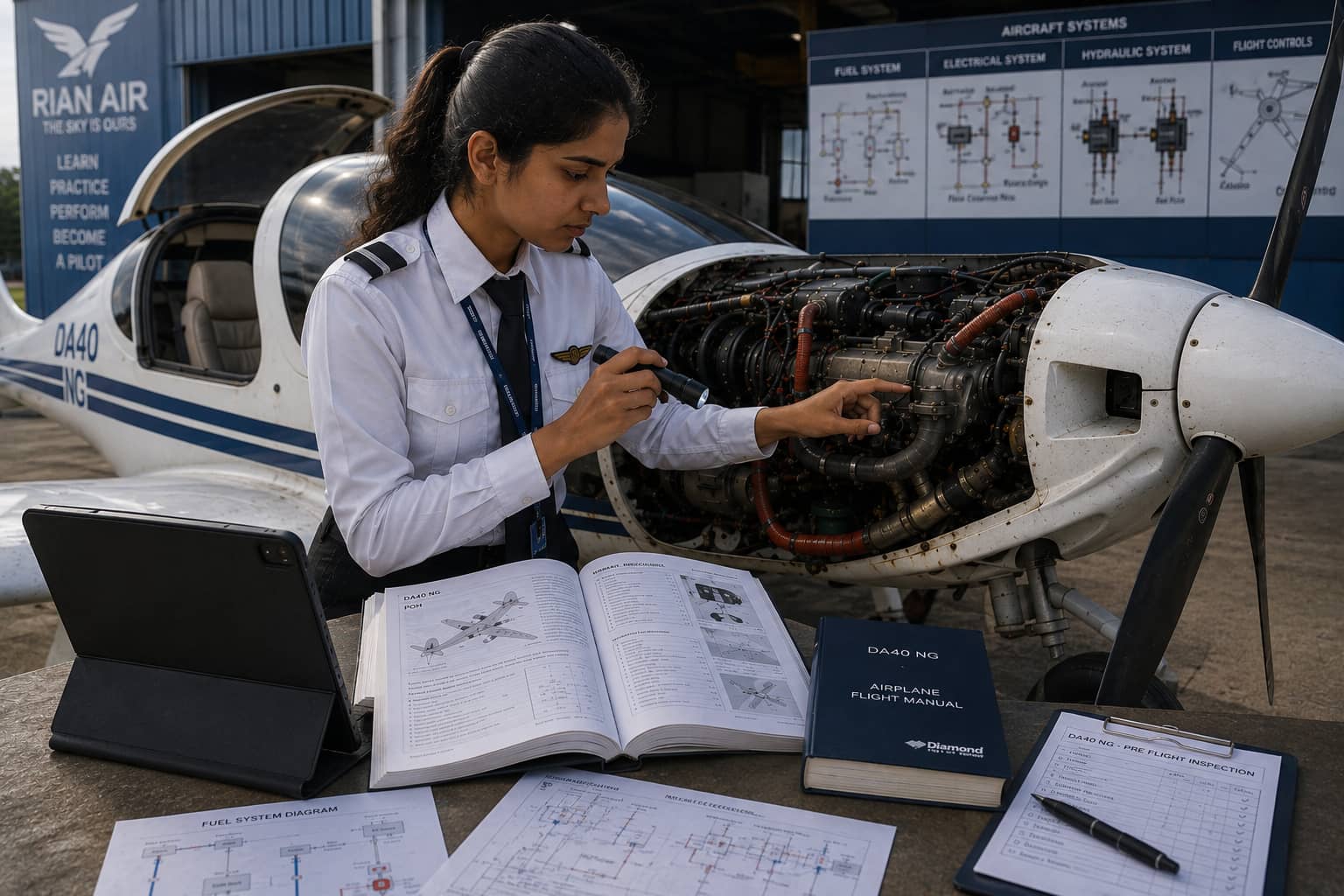
Most training aircraft used for CPL training operate with piston engines.
Modern commercial aircraft primarily use gas turbine engines.
Understanding these sections helps students visualize how modern aircraft engines generate thrust.
Propellers convert engine power into thrust. Students must understand:
Start your journey
Our admissions team can help you map out the right training path — from zero hours to a CPL.
Talk to us todayPropeller efficiency directly affects aircraft performance.
Aircraft fuel systems store, manage, and deliver fuel to the engine safely and efficiently.
Fuel-related issues remain one of the most preventable causes of aviation incidents
Electrical systems provide power for aircraft instruments, avionics, lighting, and various aircraft systems.
Pilots must understand how electrical failures affect aircraft operations.
Hydraulic systems use fluid pressure to operate high-force aircraft components.
Hydraulic systems are commonly found in larger aircraft and airline operations.
Understanding flight instruments is an essential part of Technical General. Students should also read Instrument Navigation for CPL Pilots in India: DGCA Complete Guide for detailed instrument operation and IFR concepts.
Weather can significantly impact aircraft performance. Pilots must understand systems designed to protect aircraft from environmental hazards.
Students should also explore Aviation Meteorology for CPL Pilots in India: DGCA Complete Guide, where weather-related hazards are discussed in greater detail.
Modern aircraft operate at altitudes where atmospheric pressure is insufficient for human survival. Pressurization systems maintain a safe cabin environment.
Aircraft performance directly affects operational safety and efficiency.
Performance calculations form an important part of professional flight planning. Students should also study Air Navigation for CPL Pilots in India: DGCA Complete Guide, where flight planning concepts are covered extensively.
Understanding aircraft systems is only one part of safe flight operations. Pilots must also understand how human performance affects aircraft operation.
Students should also refer to Air Regulations for CPL Pilots in India: DGCA Complete Guide, which covers safety regulations and operational requirements.
Students frequently struggle with:
Modern learning platforms such as RAPT allow students to track progress chapter-wise, identify weak areas, and improve their understanding through structured DGCA preparation.
Technical General supports nearly every other CPL subject. Students should also study:
Together, these subjects form the knowledge foundation required for safe commercial flight operations.
This article serves as the parent pillar page for Technical General within the Rian Air DGCA Knowledge Hub. Future detailed guides will include:
Most students find it manageable when they focus on understanding aircraft systems rather than memorizing isolated facts.
It helps pilots understand aircraft operation, system limitations, performance, and safety considerations.
Yes. Technical knowledge remains essential throughout a pilot's career, regardless of aircraft type.
Principles of flight, engines, aircraft systems, performance, and flight instruments form the core of Technical General.
Technical General is where pilots learn how aircraft truly function. A strong understanding of aerodynamics, engines, aircraft systems, performance, and operational limitations not only improves DGCA examination performance but also develops the practical knowledge required for safe and professional flying. The aircraft may become more advanced throughout a pilot's career, but the fundamental principles taught in Technical General remain unchanged.
Rian Air — Pilot Training
Whether you're just exploring or ready to enrol, our team is here to walk you through every step of your aviation journey.