Online Ground Classes for CPL and ATPL
Online ground classes for CPL and ATPL let aspiring and working pilots attend live, instructor-led DGCA theory sessions from home instead of a physical classroom, in small batches of two to twelve students with timings built around each student's day. Rian Air runs these batches with slots as early as 6 am and as late as midnight, so a working first officer, a cabin crew member or a 12th-pass aspirant can all study without relocating.
Key Takeaways
Batch size stays small: most Rian Air online batches run from 2 to 12 students per instructor, which keeps doubt-clearing personal even in a virtual room.
Timings flex around real schedules: early batches run 6 am to 8 am and late batches run 9 pm to midnight for working professionals and airline crew.
RAPT tracks four people at once: the student, the parent, the instructor and the academy admin can all see progress remotely through one platform.
DGCA CPL needs 9 subjects and ATPL needs 3, according to a widely cited breakdown of the current syllabus structure, and the online format covers every one of them without cutting content.
Working airline pilots use online ATPL classes too, with doubt-clearance sessions planned against the monthly roster the airline provides.
At a Glance: Online Ground Classes for CPL and ATPL
The table below summarises the format for a reader deciding whether online ground school fits their situation.
Factor | What Rian Air Offers |
|---|---|
Batch size | 2 to 12 students per instructor |
Earliest slot | 6 am to 8 am |
Latest slot | 9 pm to 12 am |
Who attends | Degree students, working professionals, cabin crew, AME technicians, first officers, aspirants training abroad |
Progress tracking | RAPT platform, visible to student, parent, instructor and admin |
CPL subjects | 9 papers |
ATPL subjects | 3 papers |
Doubt clearance for working pilots | Scheduled against the airline's monthly roster |
Who Actually Studies Online Ground Classes for CPL and ATPL?
The image of ground school as a room full of 18-year-olds is outdated. Rian Air's online batches draw from at least six different situations, and each has a different reason for choosing a screen over a commute.
A student still finishing a degree needs classes that fit around university exams, not the other way round. A working professional switching careers into aviation cannot walk out of a job for a fixed 9-to-5 classroom slot.
Someone already doing flight training abroad, in Malta or Tunisia, needs to keep clearing DGCA papers without flying home. An aspirant who simply does not want to leave their home city, whether for family reasons or cost, gets the same instructor and syllabus without relocating.
Active cabin crew studying toward a CPL fit ground school into days off between rosters. AME technicians already inside the aviation ecosystem often study CPL theory alongside their engineering work, using early morning or late evening slots. And working pilots at airlines and charter operators come back for ATPL theory once they are already flying professionally, which the next section covers in more detail.
Why Ground School Moved Online After Covid
Before 2020, DGCA ground schools ran almost entirely as fixed-seat classrooms. A student picked a city, moved there, and attended whatever hours the academy offered. That model broke the moment classrooms closed, and aviation training had to prove theory instruction could work through a screen.
It worked well enough that most serious aspirants never went back to a rigid schedule. Once instructors and students had already adapted to video calls, recorded lectures and shared question banks, the convenience stuck. A working first officer who once had to request unpaid leave for a ground school block can now attend a doubt-clearing session between two flights.
The shift also changed who could realistically attempt ATPL preparation while still flying. Airline rosters rarely leave room for a fixed weekly classroom slot months in advance. Online ground classes for CPL and ATPL solved that by making the schedule adjust to the pilot, not the reverse. Readers weighing the broader syllabus can check the ATPL preparation guide for commercial pilots in India for how the theory papers sequence after CPL.
How Small Batches and Custom Timings Work
A batch of two to twelve students changes what an online class can do. In a lecture hall of forty, a shy student's doubt goes unasked. In a batch of six, the instructor notices within minutes if someone has stopped following the explanation.
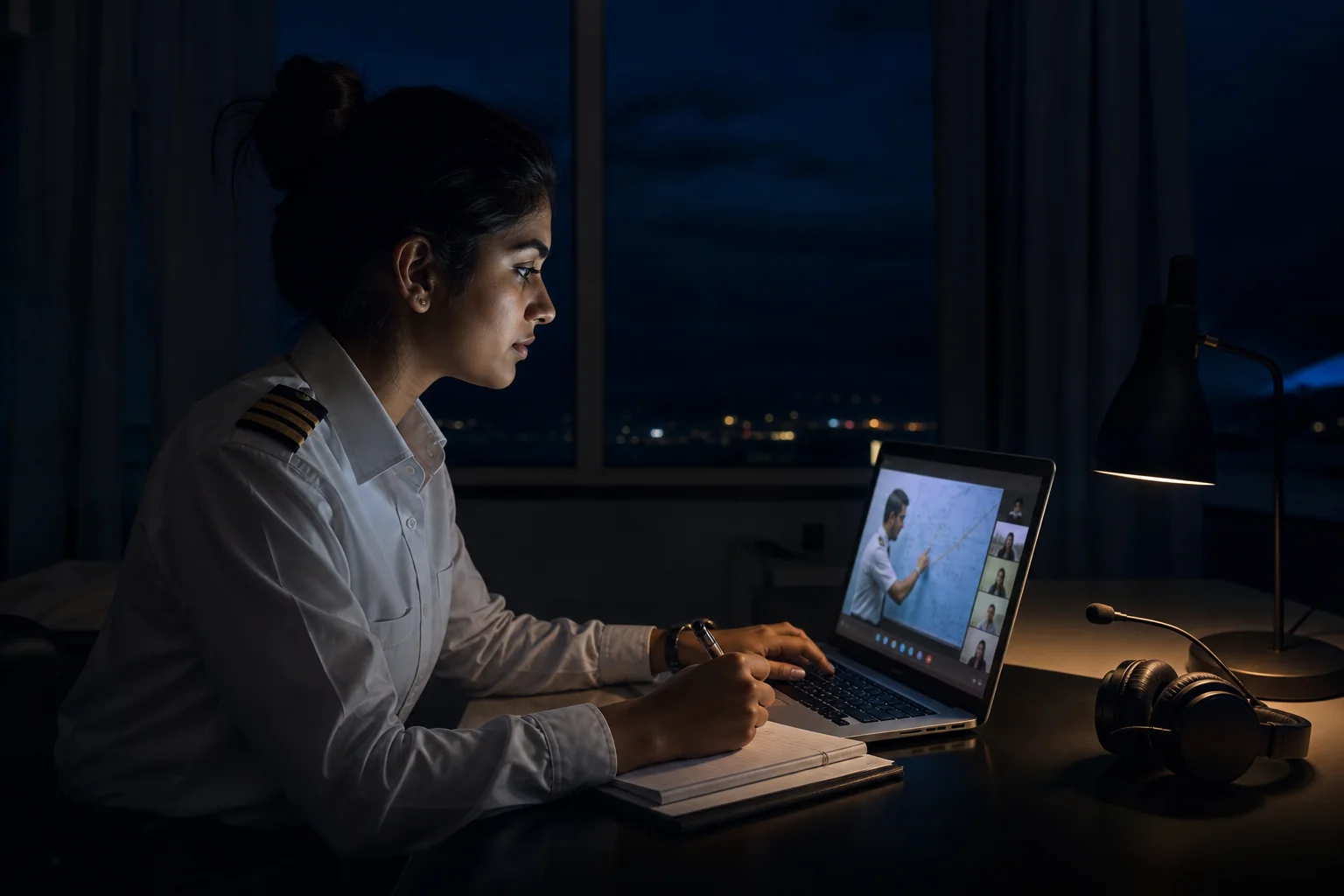
Rian Air runs two ends of the clock deliberately. The 6 am to 8 am slot suits professionals who prefer to study before their day starts, while their mind is fresh and the phone has not yet started ringing. The 9 pm to midnight slot exists for the opposite type of schedule: someone who works through the day, including cabin crew and working pilots, and only has the evening free.
For active first officers, doubt-clearance sessions are planned against the monthly roster the airline provides, not against a fixed weekly calendar. That means a pilot flying a heavy schedule one month and a lighter one the next still gets sessions that land on actual free days, instead of missing class every time a flight clashes with a fixed slot.
How Does RAPT Help Track Progress in Online Classes?
RAPT gives the student, the parent, the instructor and the academy admin a shared, real-time view of exactly where a student stands in their DGCA preparation. It replaces guesswork with a dashboard that shows attempted questions, weak subjects and attendance, all from one login.
For an online batch, that visibility matters more than in a physical classroom, where a parent could at least walk in and ask an instructor directly. With RAPT, a parent sponsoring training from another city sees the same data the instructor sees, without needing to interrupt a class to ask for an update.
That data has already helped a number of young aspiring pilots clear their DGCA CPL exams and helped serving first officers get through their ATPL papers, because both groups can see precisely which subject needs another pass before the exam date, rather than restudying everything blindly.
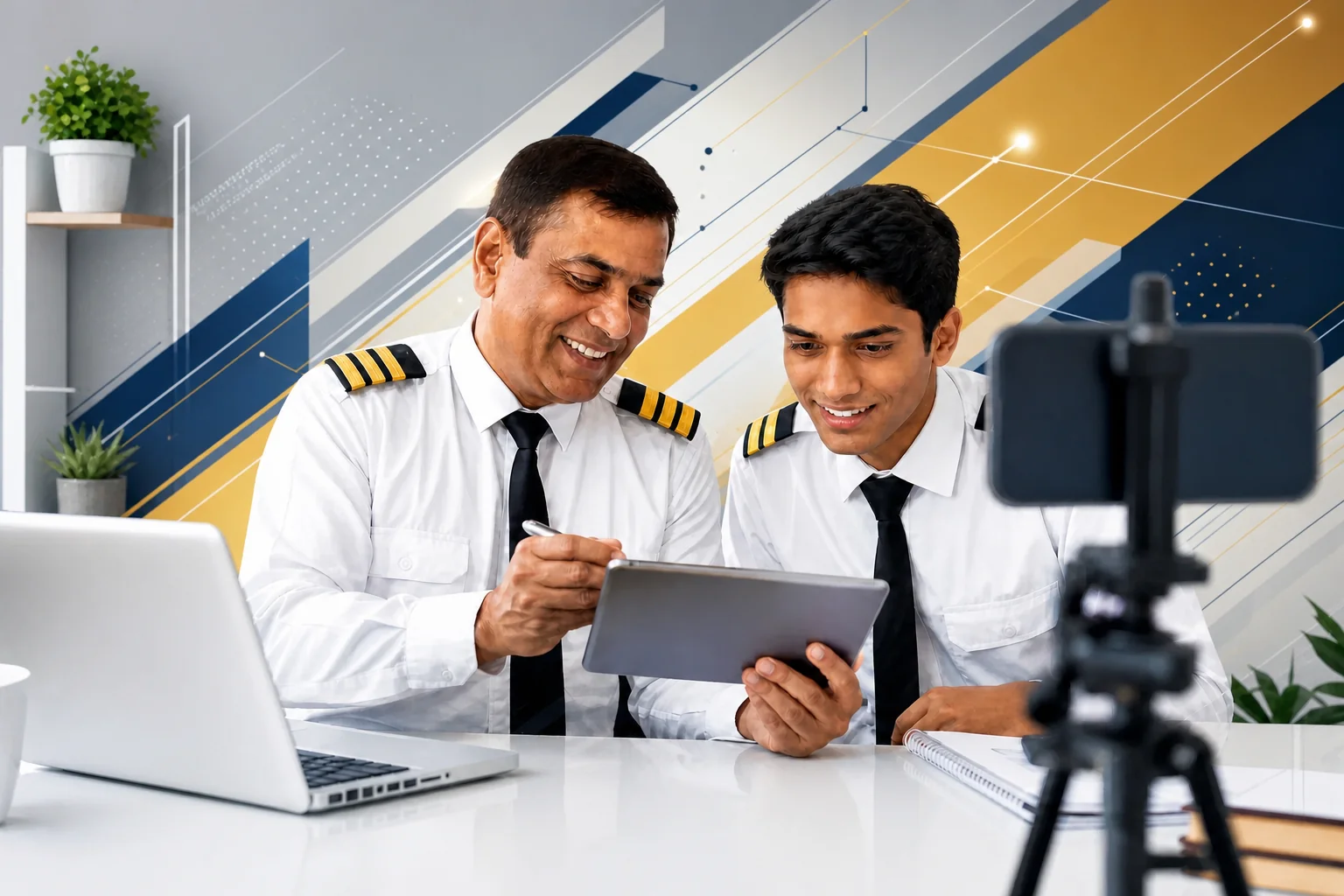
The platform's question bank sits behind that dashboard. Every attempt a student makes feeds back into their weak-topic list, which is the same mechanism behind the RAPT platform's DGCA question bank for CPL and ATPL. Parents wanting to see how this looks in practice can read more about the parent's guide to passing the DGCA exam on the first attempt.
After CPL, What Next? Where Online ATPL Classes Fit In
After a CPL, the next formal academic milestone for most Indian pilots is ATPL theory, which most begin once they are already flying as a first officer rather than immediately after their CPL checkride. ATPL includes 3 subjects studied during CPL, and clearing it early keeps a first officer's command upgrade timeline from stalling later.
Because ATPL students are almost always already employed, the online format is less a convenience here and more the only realistic option. A first officer cannot request a week off flying duty for ground school. Late-night and early-morning slots, plus roster-aligned doubt sessions, are what make it possible to clear ATPL theory without pausing a flying career. For a subject-by-subject view of what those 3 papers cover, see the detailed ATPL preparation breakdown.
What Is Pilot Ground School and How Is It Different Online vs In-Person?
Pilot ground school is the classroom theory phase every DGCA aspirant must clear before touching a training aircraft, covering navigation, meteorology, regulations and aircraft systems. Online and in-person ground school teach identical DGCA-mandated content; the difference is delivery, not the syllabus itself.
Both formats prepare a student for the same set of DGCA computer-based exams. What changes online is flexibility of timing, batch size, and how easily a working student or a student abroad can attend without relocating. For a step-by-step walkthrough of what ground school actually involves before flight training begins, see Ground Classes for Pilots: What Happens Before You Ever Touch an Aircraft.
Delhi, Mumbai and Kerala: Attending Online Ground Classes from Anywhere
Online ground classes remove the need to physically be in Delhi, Mumbai or Thrissur to train with an instructor based there. A student living in Delhi and a student living in Thrissur can sit in the same live batch, ask the same instructor a doubt, and see identical progress data on RAPT.
This matters most for the aspirants who are not in India at all during part of their training. A student already flying at a school in Malta or Tunisia can keep clearing DGCA CPL papers on a laptop between flight lessons, instead of returning to India for months at a stretch just for theory.
Readers comparing those overseas flight training routes can check CPL Training in India vs Malta vs Tunisia for Indian Students for how the ground school piece fits around flight training abroad.

Comparing Online, Offline and Hybrid Ground Classes
Each format suits a different situation, and the right choice usually comes down to schedule flexibility versus in-person structure.
| Format | Best For | Batch Size | Timing Flexibility |
|---|---|---|---|
| Online | Working professionals, cabin crew, students abroad, home-bound aspirants | 2-12 students | Early morning and late-night slots, roster-aligned for pilots |
| Offline (in-person) | Students who prefer physical classroom discipline and local peer groups | Varies by academy | Fixed weekly schedule |
| Hybrid | Students wanting live theory plus occasional in-person doubt sessions | Varies by academy | Mostly fixed, with some flexibility |
Common Mistakes Aspirants Make in Online Ground School
Irregular attendance is the single biggest reason online students fall behind. A recorded lecture sitting unwatched for two weeks compounds quickly across all the subjects.
Staying silent in a small batch is another one. With only two to twelve students per instructor, there is no crowd to hide in, and every unclear concept should get raised in that same session rather than saved up.
Working pilots who skip roster planning altogether, instead of sharing their monthly schedule with the academy in advance, often lose doubt-clearance slots to flight duty. For a longer list of what instructors see repeated year after year, read Instructor Insights: Common Mistakes DGCA Aspirants Make During Ground School.
Frequently Asked Questions
Are online ground classes for CPL and ATPL recognised by DGCA?
Yes. DGCA does not certify the delivery format of ground school; it certifies the exams themselves. Any student, regardless of whether they studied online, offline or in a hybrid batch, sits the same DGCA computer-based papers.
What is the ideal batch size for online CPL ground classes?
A batch of 2 to 12 students per instructor keeps online classes interactive enough for every student to get personal doubt-clearing time, unlike a large lecture-style online session.
Can working airline or charter pilots attend online ATPL classes?
Yes, and many do, since ATPL is usually pursued after a pilot is already flying professionally. Sessions are scheduled around the pilot's monthly roster rather than a fixed weekly calendar.
What time slots are available for online ground classes?
Slots range from as early as 6 am to 8 am for early risers to as late as 9 pm to 12 am for professionals who are only free at night after work or flight duty.
How does RAPT help parents track a student's progress?
RAPT gives parents the same real-time dashboard the instructor and academy admin see, showing attendance, question bank attempts and weak subjects, without needing to interrupt a class for updates.
Can cabin crew or AME technicians join CPL ground classes online?
Yes. Both groups already work aviation schedules that rarely match a fixed classroom slot, so online batches let them study CPL theory around days off or shift patterns.
Can a student training abroad still attend Indian ground classes online?
Yes. A student doing flight training in Malta, Tunisia or elsewhere can join the same live batch as students based in India, using any device with internet access.
After CPL what next, and does that require more ground classes?
After CPL, most pilots move toward a job as a first officer, then begin ATPL theory, which adds four subjects to the nine covered at CPL level, bringing the total to 13 papers.
What is pilot ground school, in simple terms?
Pilot ground school is the classroom theory stage covering navigation, meteorology, regulations and aircraft systems that every DGCA aspirant must clear before starting flight training on an aircraft.
Do online ground classes cost less than in-person classes?
Online ground classes with Rian Air costs less than offline or in-person classes as the fees for online ground classes are Rs. 80,000 and offline classes are Rs. 1,25,000. Taxes are extra
How do online classes handle doubt-clearing compared to a classroom?
Small batch sizes of 2 to 12 students mean doubt-clearing happens live, on video, in the same way it would in a physical room, just scheduled at hours that fit a working student's day.
Whether you are a degree student choosing your first ground school, a working professional starting late, or a first officer finally getting to ATPL theory, the schedule should adapt to your life, not the other way round.
Start your pilot journey with a batch that fits your hours, or explore pathways from ground school through type rating. For a closer look at how students and instructors use the platform day to day, follow updates on Instagram or watch full sessions on YouTube.