
Can a Middle Class Family Afford Pilot Training? Here's the Honest Math
Yes, a middle class family can afford pilot training in India, but almost never in cash. Can middle class family afford pilot training is really a question about financing, not savings. A CPL in India typically runs between ₹55 to ₹75 lakh once ground school, simulator hours and flying are added together, and most families close that gap with an education loan, an installment plan, or both. When planning your finances for commercial pilot training, understanding the long-term repayment structure is just as crucial as securing admission to a top flight school. For instance, if you take an education loan of ₹50 Lakhs at an interest rate of 10% per annum for a repayment tenure of 10 years (120 months), your Equated Monthly Instalment (EMI) will come out to approximately ₹66,075 per month. Over the course of a decade, this means you will repay a total of ₹79,29,044, which includes the original ₹50 Lakhs principal and a total accrued interest of ₹29,29,044. It is highly recommended that parents and aspiring pilots review this timeline together; mapping out these fixed monthly obligations against a freshly graduated pilot’s entry-level salary ensures a smooth, stress-free transition into a flying career.
Key Takeaways
Loan eligibility comes before enrollment: If a family cannot get an education loan approved for the desired amount, they should not sign an enrollment form yet.
The CPL is not the finish line: Type rating and building hours after the license add real cost most agents never mention upfront.
The lowest quote is usually the trap: Agents who quote the smallest figure often leave out simulator hours, retests, and foreign fees.
Overheads can equal a second course fee: Travel, visa, foreign medicals, an iPad, apps, and living costs abroad add up fast.
Families have lost land and homes: Underestimating total cost has forced some students to quit mid-training after major expenses were sunk.
At a Glance: The Real Cost Picture
Stage | Typical Cost (India) | Often Missed By Agents? |
|---|---|---|
DGCA Ground School | ₹1-3 lakh | Rarely |
CPL Flying Hours (≈200 hrs) | ₹55-65 lakh | Sometimes bundled unclearly |
Full CPL Program, India | ₹55-65 lakh (base case) | Yes, base quotes exclude retests |
Living & Travel Abroad | Varies by country, ongoing ₹5-15 lakh | Almost always |
Type Rating (post-CPL) | Separate, high-value add-on ₹15-30 lakh | Yes, frequently left out |
Instructor Pathway (alternative) | Lower entry cost, builds hours | Rarely explained as an option |
A Family in Thrissur, and the Question Nobody Asks First
Picture a father who drives a taxi in Thrissur and a mother who teaches at a government school. Their son has scored well in physics and wants to fly. Suppose this family sits down one evening, phone calculator open, trying to make sense of three different brochures.
One quote reads ₹28 lakh. Another reads ₹52 lakh for what looks like the same training. The father wants to believe the lower number. The mother, more cautious, asks a harder question: what does ₹28 lakh actually include?
That single question is the one most families skip. It is also the one that decides whether a family finishes training with a license, or finishes training with debt and no license, because the fee ran out halfway through flying hours.
Can Middle Class Family Afford Pilot Training Without a Loan?
For most middle class households, no. Full cash payment for a ₹55-65 lakh CPL program is out of reach without selling major assets, and selling land or a home to fund training carries real risk if the training stalls midway.
A salaried father earning ₹60,000 to ₹1,20,000 a month, common across Delhi, Mumbai and Kerala households, cannot set aside ₹40 lakh from savings within a normal working life. That is exactly why education loans exist for this purpose, and why checking loan eligibility has to happen before any enrollment conversation, not after.
What Pilot Training Actually Costs, Stage by Stage
Ground school through DGCA typically costs ₹1 to 3 lakh, a smaller share of the total. The bulk of the spend sits in flying hours, where roughly 200 hours of CPL flying can run ₹55 to 75 lakh at schools like Indian Flying Academy or NZAA, depending on the aircraft and country of training.
A complete CPL program in India often lands between ₹55 and 75 lakh in a base case and these are the fees charged by the FTOs like Indian Flying Academy or upcoming Airmanship Aviation Academy.
Training abroad can look cheaper on paper in some countries, sitting closer to the twenty-seven to thirty-three thousand dollar mark for DGCA-aligned programs, but families still need to add flights, stay, and local exam fees on top before comparing it fairly to an Indian program.
None of these figures include what comes after the license. A student who stops counting at "CPL complete" is only halfway through the real financial plan.
How Does an Education Loan Make Pilot Training Accessible?
An education loan makes pilot training accessible by spreading a large upfront cost into structured repayments, usually against collateral like property or fixed deposits, with a co-applicant's income backing the application. Banks assess the family's repayment capacity, not just the student's ambition, before sanctioning the full amount.
This is the single biggest reason pilot training has opened up to families who could never write a lakh-rupee cheque outright. A bank loan converts a ₹40 lakh wall into a monthly number a household can actually plan around, the same way a home loan turns a house into an EMI instead of a lump sum.
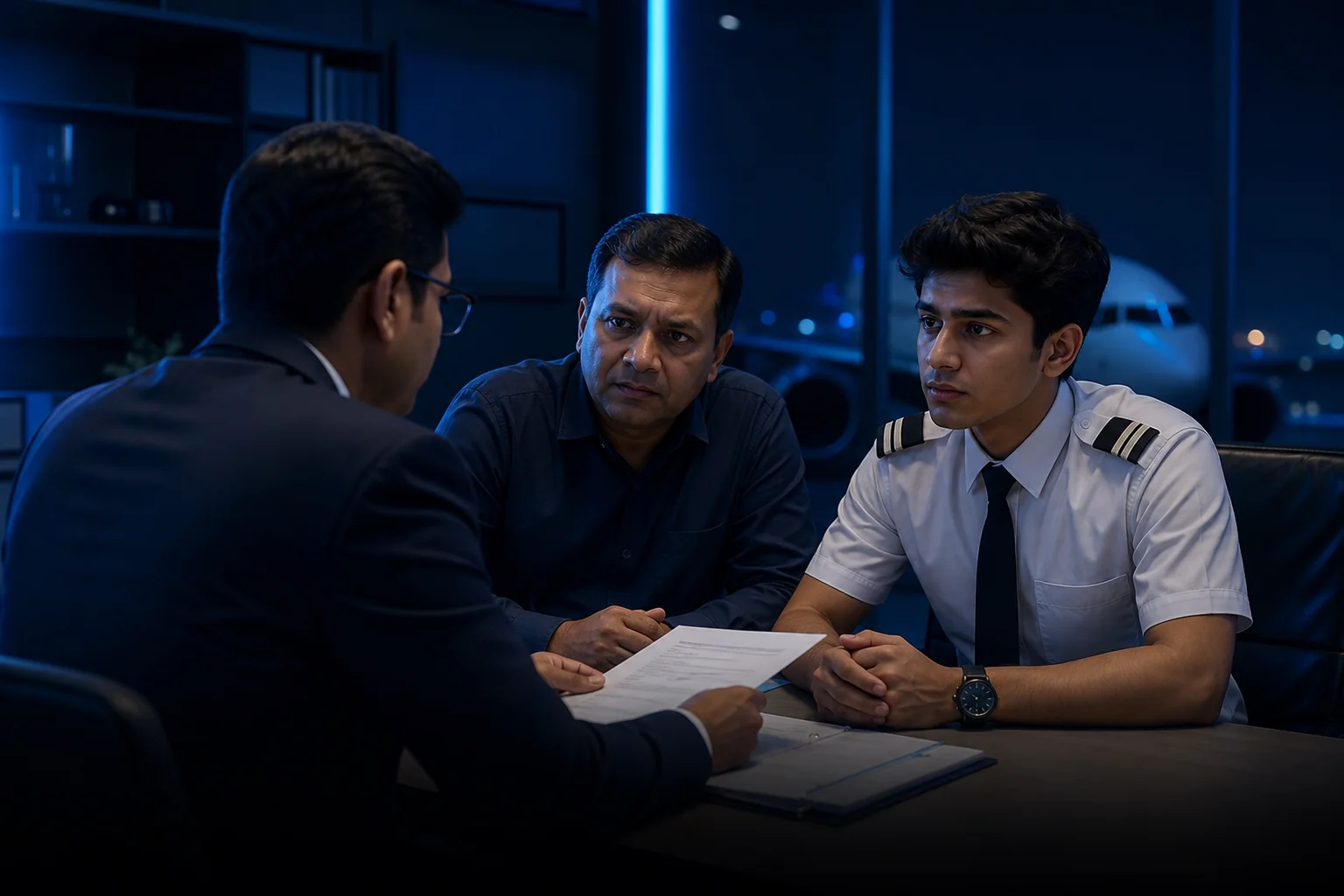
But approval is not automatic. Public sector banks often want collateral for loans above a certain threshold, while NBFCs may lend without collateral at a higher interest rate. A parent's salary slips, a co-applicant, and a clean credit history all factor into what a bank will sanction.
This is exactly why we built a detailed walkthrough on education loan eligibility for pilot training in India, covering documents, collateral norms, and what banks actually check. Families who read this before visiting a bank walk in with fewer surprises. If installments feel more manageable than a lump loan, our installment payment plan case study breaks down how that structure works in practice.
If You Are Not Eligible for a Loan, Do Not Proceed Yet
If a bank declines the loan application, the honest answer is to pause, not to push forward on a private lender's expensive terms or an agent's easy promises. Signing an enrollment form before loan approval is confirmed is one of the most common ways families end up stuck mid-course.
Check eligibility first. That is not caution for caution's sake, it is the difference between quitting training at lakh three and finishing it at lakh seventy-five with a license in hand.
For families where a loan is genuinely out of reach, there are still paths worth exploring before giving up on the idea entirely. Rian Air's low income student options page walks through merit scholarships, the block-hour "pay as you fly" model, and the flight instructor route, which builds hours while earning instead of spending.
The gender-neutral merit scholarship and the Women Empowerment Program, a zero-fee DGCA ground training track for merit-based women aspirants with a refundable commitment deposit, are worth checking too, but treat every scholarship claim with scrutiny. Many so-called scholarships in this industry are simply entrance-exam fee traps dressed up as financial aid.
The Overhead Costs Agents Never Mention
The course fee an agent quotes is rarely the number a family actually pays. Real spending includes flight and visa costs for training abroad, recurring medical renewal fees, retest charges if a DGCA paper is failed once, an iPad and subscription apps for navigation and study, and daily living expenses during months away from home.
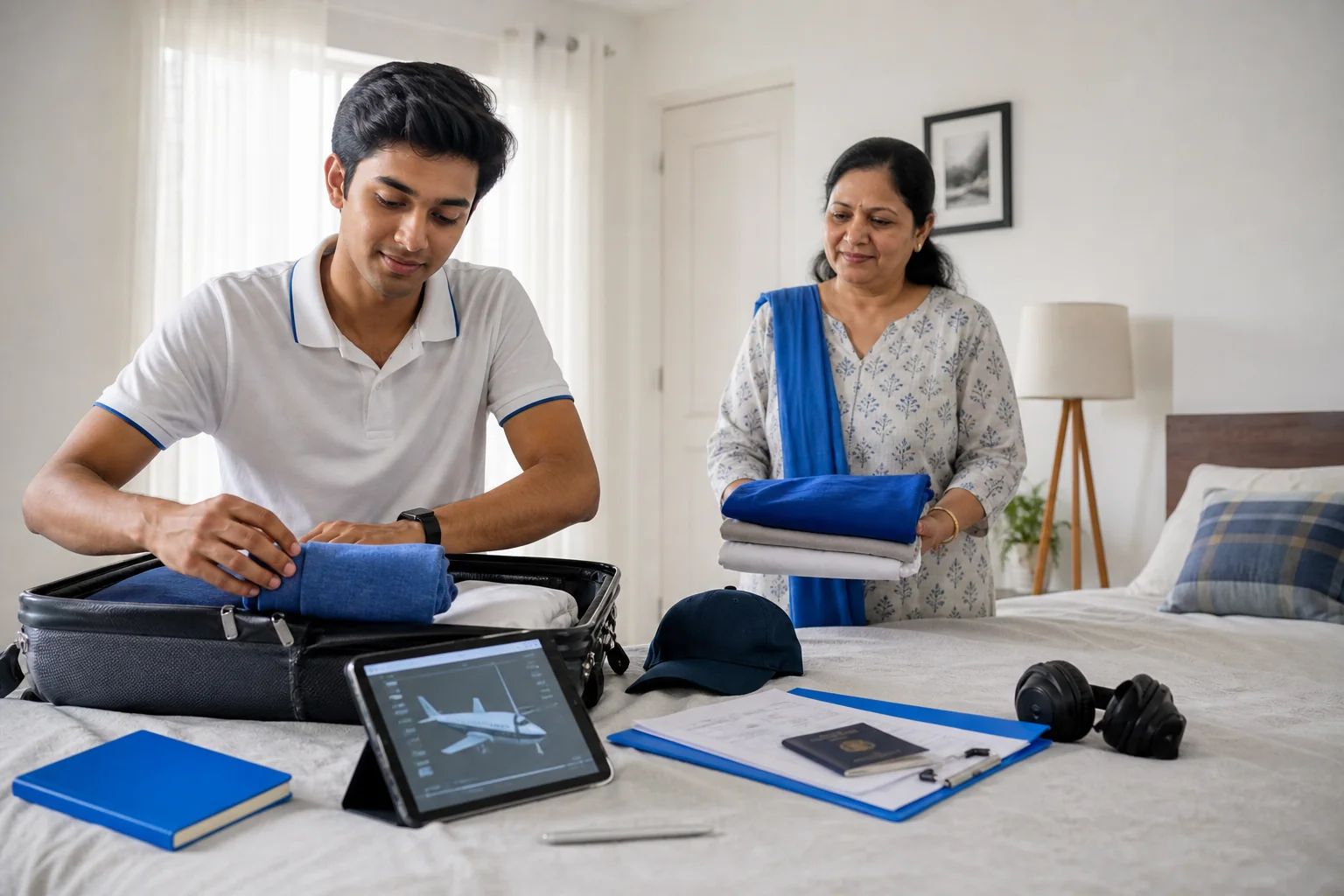
Add to that an airline bond some employers require before hiring a first officer, and the total can climb well past the original brochure figure. Training abroad multiplies this further: local exam fees, foreign medical renewals, and currency exchange losses stack up month after month, well beyond the headline course fee.
This is not a small gap. Some families have had to sell land or a home midway through training because these overheads were never budgeted for, and the student ended up quitting before finishing hours. We have documented several of these situations in how hidden fees affect families, and it is worth reading before comparing any two quotes side by side.
If training abroad is on the table, our breakdown of hidden costs of pilot training abroad lists exactly what parents tend to miss country by country.
CPL Table: What the Lowest Quote Leaves Out vs the Real Total
A side-by-side of what a low agent quote usually includes versus what a realistic total demands makes the gap obvious.
| Line Item | Low Agent Quote | Realistic Total |
|---|---|---|
| Ground School | Included | Included, plus retest fees if needed |
| Flying Hours | Minimum hours only | Buffer hours for weather/aircraft delays |
| Simulator Time | Often excluded | Essential, factored into total |
| Visa & Travel | Excluded | Recurring across the course |
| Foreign Medicals | Excluded | Renewed periodically abroad |
| iPad & Apps | Excluded | One-time plus subscriptions |
| Type Rating | Never included | Separate, high-value cost |
Beyond the CPL: Type Rating and Instructor Pathway Costs
A type rating on an aircraft like the A320 or B737 is a separate, significant cost that sits outside every CPL quote, and it is usually the single largest expense a family faces after the license itself. Skipping this conversation at enrollment time is how many parents get blindsided a year later.
An instructor rating offers an alternative route. Instead of paying for a type rating immediately, a new CPL holder can work as a flight instructor, build flying hours, and earn while working toward an airline seat later. This route carries its own certificate costs, but it avoids the largest single expense upfront, which matters when a family's loan capacity is already stretched.
Choosing between the type rating route and the instructor route is not just a career decision, it is a financing decision, and it deserves the same scrutiny as the original loan application. Comparing A320 vs B737 type rating options is a useful next step once the CPL is closer to completion.
A Practical Decision Checklist Before You Sign Anything
- Get loan pre-approval first: Know the sanctioned amount before signing any academy enrollment form.
- Ask for the full cost in writing: Ground school, flying hours, simulator time, and any add-ons, itemized, not bundled into one round number.
- Ask what happens after CPL: Type rating cost, instructor pathway, and realistic timelines to an airline interview.
- Budget for overheads separately: Visa, travel, foreign medicals, iPad, apps, and living expenses need their own line item, not an afterthought.
- Verify any scholarship claim: Ask for terms in writing and be wary of entrance-fee-based "scholarships."
Our parent's checklist before enrolling covers additional questions worth asking any academy, in Delhi, Mumbai, or Kerala.
Frequently Asked Questions
How do I check education loan eligibility for pilot training?
Eligibility depends on collateral value, a co-applicant's income, and the bank's own aviation lending policy, so the fastest way to know for certain is to ask a lender directly before enrolling anywhere. Most banks want proof of admission and a detailed cost breakdown before sanctioning a loan.
Is pilot training in Kerala cheaper than Delhi or Mumbai?
Ground school fees are broadly similar across Delhi, Mumbai and Kerala, since DGCA syllabus and exam costs don't change by city. The bigger cost swing comes from where flying hours are completed and whether that stage happens in India or abroad.
Why do agents quote such different numbers for the same course?
Agents quote different numbers because some figures include only the legal minimum flying hours and exclude simulator time, retests, and post-CPL costs, while realistic quotes account for buffers and add-ons. Always ask what is excluded, not just what is included.
The family that asks "what is not in this number" before signing anything is the family that finishes training with a license, not a half-paid course and a stalled career.
If your family is weighing loan options, installment plans, or scholarship eligibility for pilot training, the fastest way to get a real answer is to talk to someone who works through this math every week. Start your pilot training enquiry with Rian Air and ask specifically about loan availability and eligibility before you commit to any academy.
You can also explore the different pathways from ground school to airline readiness, follow real student updates on Instagram, or watch training breakdowns on YouTube to see what the full process looks like before you decide.