How to Become a Commercial Pilot in India After 12th
You can start your journey to become a commercial pilot in India right after 12th if you have studied Physics and Mathematics, are at least 16 years old to begin flying and 17 to hold a student pilot license, and pass a DGCA medical exam. The full path from ground school to a Commercial Pilot License (CPL) typically takes 18 to 36 months, followed by type rating before you're airline-ready.
Key Takeaways
Subject requirement: Physics and Mathematics in 12th are mandatory for a regular DGCA CPL; students without these can still qualify through NIOS.
Minimum age: You need to be 18 to hold a CPL, though ground school and simulator training can start at 16 or even earlier.
Total timeline: Ground school, flight training, and DGCA exams together usually take 18 to 36 months, longer if flight training gets delayed due to aircraft or weather availability.
Flying hours needed: DGCA requires a minimum of 200 hours of flight time, including cross-country and instrument hours, before CPL issuance.
Training location matters: India, Tunisia, Malta, and New Zealand each offer different cost, weather, and timeline trade-offs for CPL flight training.
At a Glance: The Pilot Journey After 12th
Stage | What Happens | Typical Duration |
|---|---|---|
Eligibility check & medical | Class 2 medical, subject verification | 2-4 weeks |
Ground school | DGCA subjects: Navigation, Meteorology, Regulations, Technical and RTR | 6-8 months |
Simulator training | Fixed-base sim hours before real aircraft | 1-2 months |
CPL flight training | 200 hours in India or abroad | 18-30 months |
DGCA CPL exams & skill test | Written exams plus flight skill test | 2-3 months |
Type rating | A320 or B737 preparation | 2-3 months |
Airline interview prep | First officer selection process | Ongoing after CPL |
1. Check Your Eligibility Right After 12th
The very first question every 12th-pass student asks is whether they qualify at all. To get a Commercial Pilot License in India, the Directorate General of Civil Aviation (DGCA) requires you to have passed 12th with Physics and Mathematics. If you took Commerce, Arts, or Biology without Maths and Physics, you're not automatically out of the race, but you'll need to clear these subjects through the National Institute of Open Schooling (NIOS) before you can apply for a Student Pilot License.
Age matters too. You can start ground classes and even simulator familiarization at 16, but you must be 17 to hold a Student Pilot License and begin solo flying, and you need to be 18 to actually be issued a CPL. Most students who start right after 12th finish training and hold a CPL by 19 or 20.
Before spending a single rupee on ground school, get your eligibility confirmed in writing. Rian Air's advisors review your 12th marksheet, age, and health background during a free consultation, so you know exactly where you stand. You can check your eligibility in a short call rather than guessing.
2. Clear the Class 1 and Class 2 Medical Exams
Many aspiring pilots skip this step until late in their planning, which is a mistake. A DGCA Class 2 medical certificate is required before you can even apply for a Student Pilot License, and it screens for vision, hearing, cardiac health, and general fitness. Later, before you fly solo and again before CPL issuance, you'll need a Class 1 medical certificate, which is more rigorous.
Common disqualifiers include uncorrected vision beyond certain limits, colour blindness (though some categories are permitted with restrictions), and certain cardiac or psychiatric conditions. The safest move is to get tested by a DGCA-empanelled medical examiner in your city within the first month of deciding to pursue aviation, so any issue surfaces early, while you still have time to explore corrective options or alternative pathways.
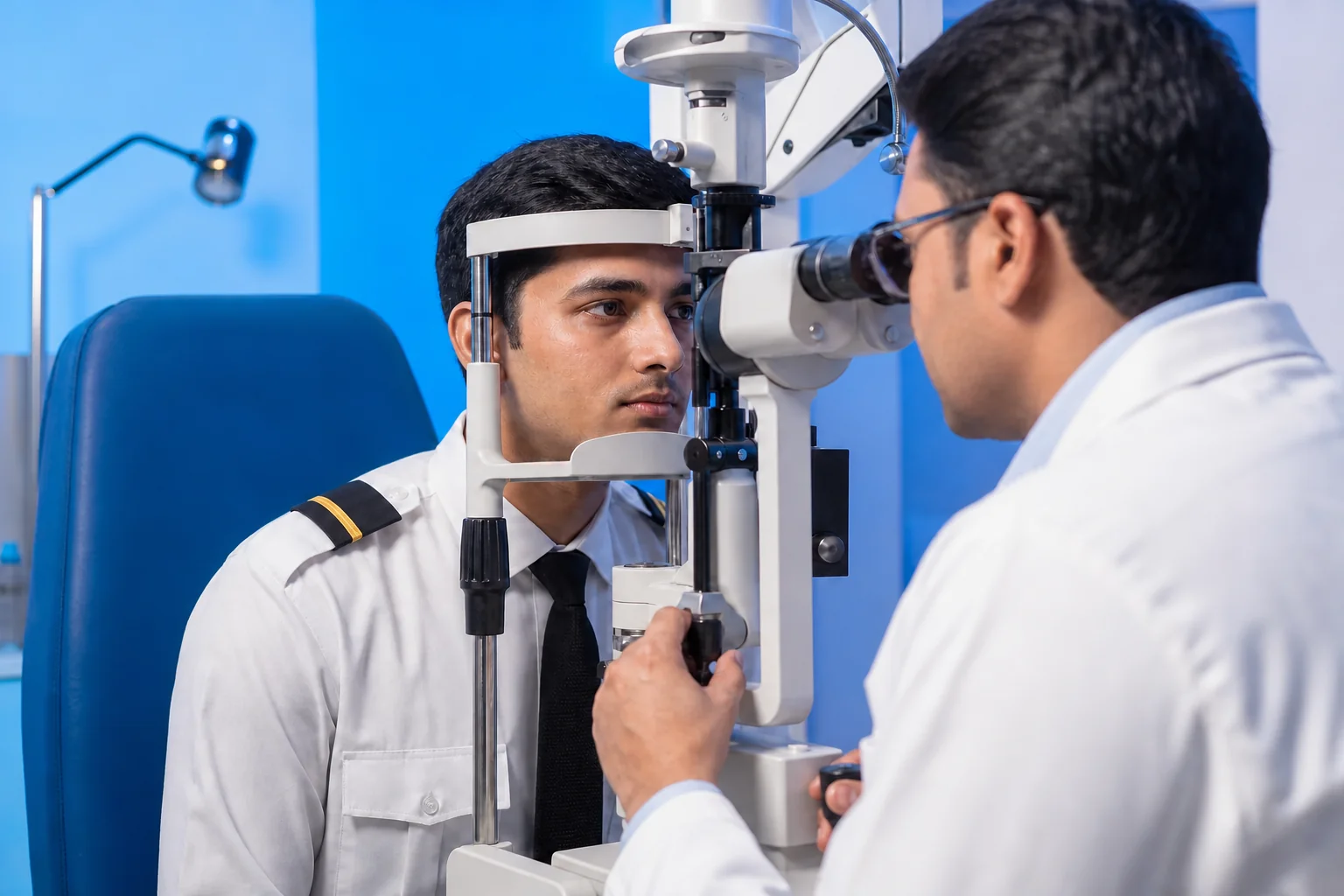
Rian Air walks students through this step as part of onboarding, connecting them with recognised examiners so there are no surprises six months into ground school.
3. Enroll in DGCA-Compliant Ground School
Once eligibility and medical checks are cleared, ground school is where the academic groundwork happens. DGCA's CPL syllabus covers four core papers: Air Navigation, Aviation Meteorology, Air Regulations, and Technical General & Specific (aircraft systems and engines). Each paper demands genuine conceptual understanding, not rote memorisation, because these subjects form the backbone of flight decision-making later.
Ground school usually runs 6 to 8 months for full-time students. The real differentiator between academies isn't the syllabus itself, since DGCA sets that, but how well an academy prepares you to actually pass. Rian Air's ground training uses a question bank of over 20,000 DGCA-style questions integrated into its RAPT™ platform, so students practice against real exam patterns instead of outdated notes photocopied a decade ago.
A structured question-bank approach also reduces one of the most common failure points: walking into the DGCA exam hall having only "read" the material without ever testing recall under timed conditions.
4. Choose Your CPL Flight Training Pathway
This is usually the biggest decision point, and also the biggest cost variable, in the entire journey. Once ground school academics are underway, you need to lock in where you'll complete your 200 hours of flight training. India, Tunisia, Malta, and New Zealand are the four most common destinations for Indian CPL aspirants, each with distinct advantages.
Destination | Weather Reliability | Typical Duration | Key Consideration |
|---|---|---|---|
India | Monsoon disruptions possible | 18-24 months | Aircraft availability can cause delays |
New Zealand | Highly reliable, minimal disruption | 12-30 months | Strong safety culture, English-medium instruction |
Malta | Good year-round flying weather | 18-30 months | EASA-aligned airspace exposure |
Tunisia | Favourable, occasional seasonal gaps | 18-30 months | Cost-competitive with steady slot access |
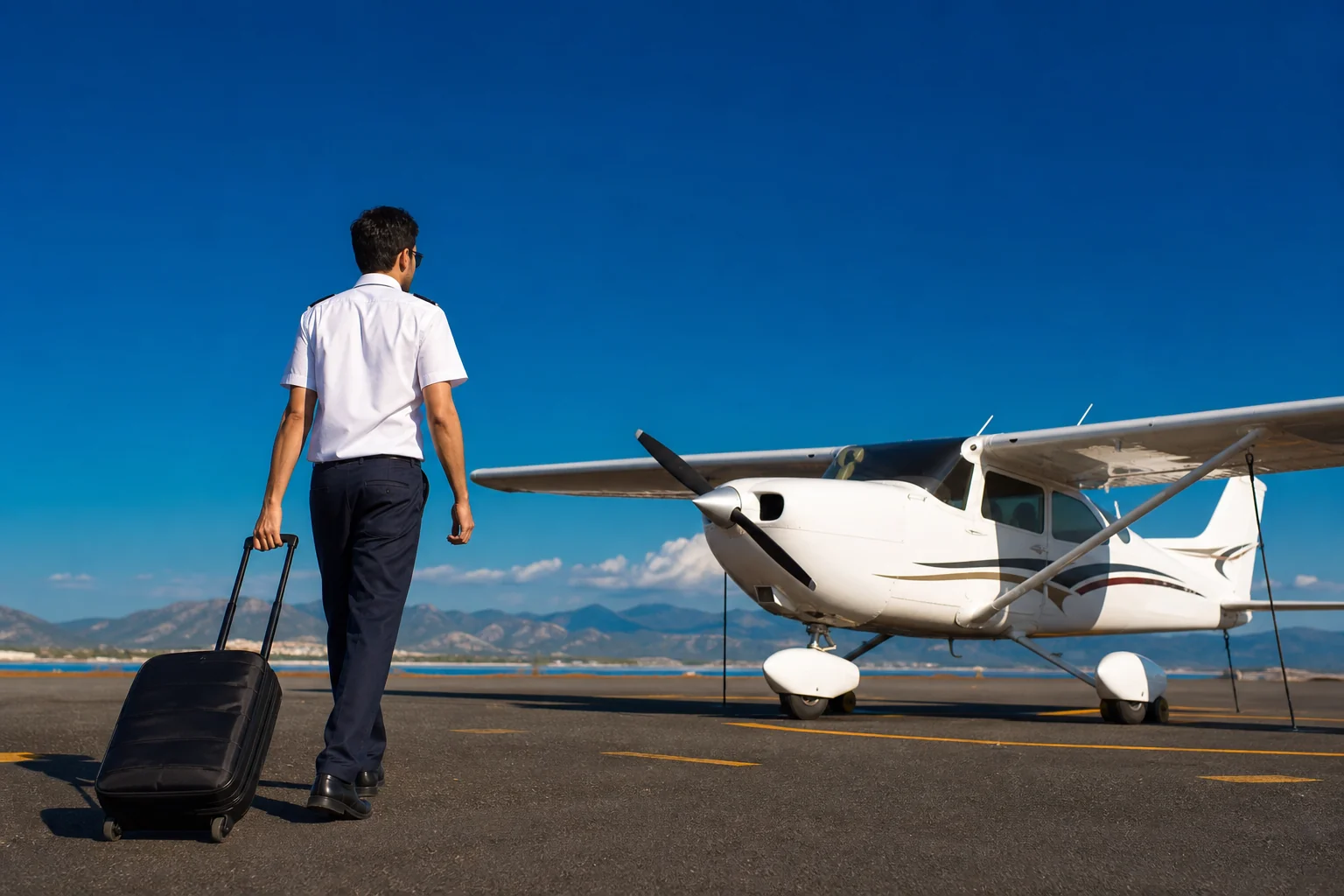
Weather-related and aircraft-availability delays are a real risk in India-based training, where a shortage of serviceable trainer aircraft during peak season can stretch a 10-month program into 16 months. Training abroad often compresses the timeline because flying schools maintain larger, dedicated fleets with fewer weather-related groundings. That said, cost, visa logistics, and being away from home for months are real trade-offs to weigh with your family.
Rian Air runs CPL pathways across all four locations and helps students compare them honestly against their budget and timeline goals rather than pushing one destination. You can explore pathways to see which fits your situation before committing.
5. Build Simulator and Flying Hours
Before students ever touch a real aircraft's controls solo, simulator time builds the muscle memory and procedural discipline that make actual flight training far safer and faster. A fixed-base simulator, like the C172 simulator Rian Air operates in Kerala, lets students rehearse checklists, emergency procedures, and radio communication in a zero-risk environment before those actions carry real consequences at altitude.
Students who log meaningful simulator hours before their first real flight tend to progress through the flight-training syllabus with fewer repeated lessons, which directly reduces training cost and calendar time. It also gives instructors an early, low-stakes way to identify decision-making habits that need correction.
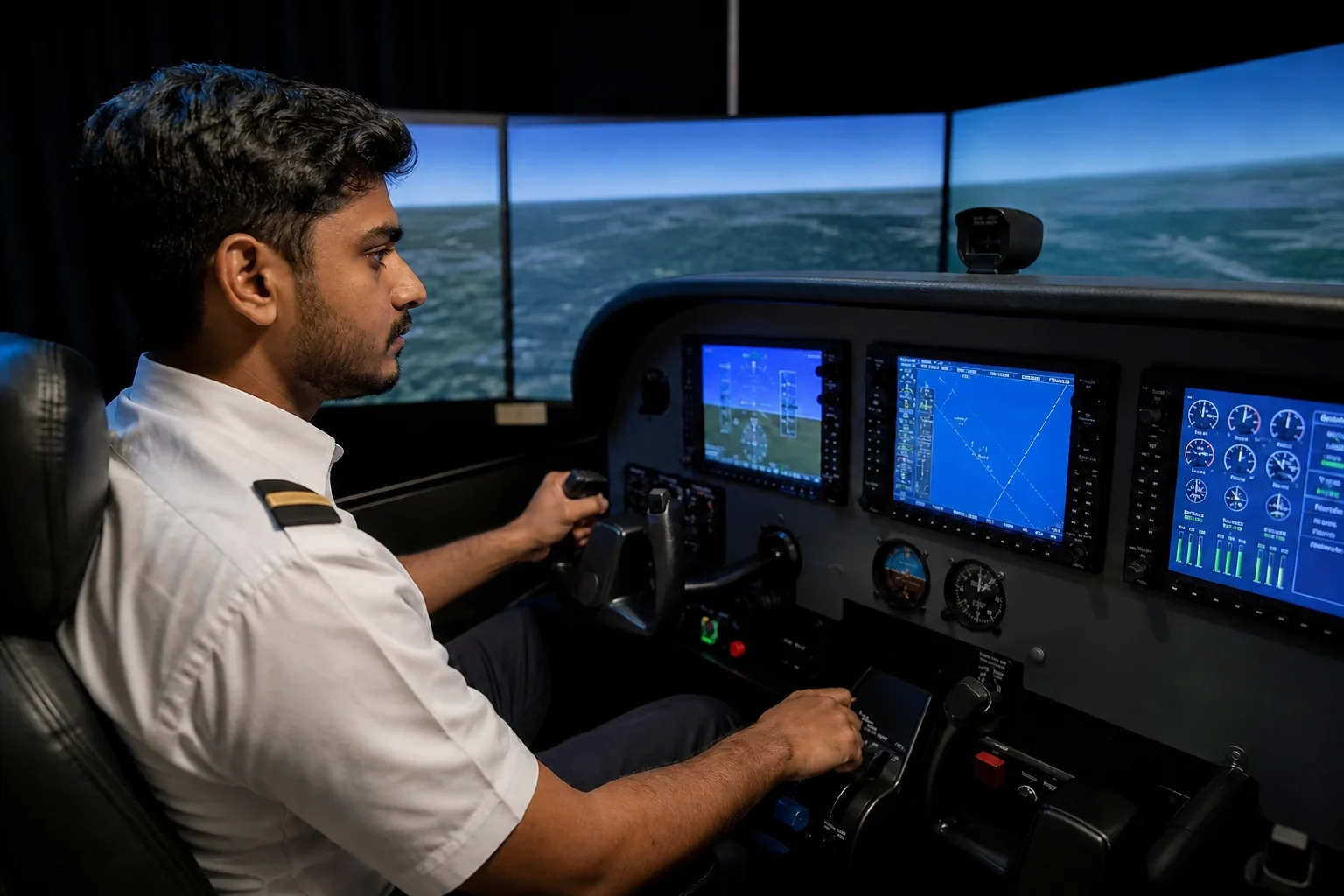
DGCA mandates a minimum of 200 total flight hours for CPL issuance, including specific requirements for cross-country flying, night flying, and instrument time. Simulator hours support this by sharpening procedural readiness, though the regulatory hour count itself comes from actual aircraft time. Getting this sequencing right, sim first, then aircraft, is one of the clearest ways to avoid wasted flight hours later.
6. Clear DGCA CPL Exams and Skill Test
With ground school academics and flight hours progressing, students sit for DGCA's written CPL exams, covering the same four subject areas from ground school, now tested at a professional licensing standard. These exams have a reputation for a lower first-attempt pass rate among students who relied purely on classroom notes rather than structured practice.
A few habits consistently separate first-attempt passers from repeat test-takers:
- Practicing against a large, DGCA-pattern question bank rather than a single textbook
- Reviewing previous attempt analytics to target weak topics specifically
- Taking timed mock exams under real exam-hall conditions, not open-book review sessions
- Getting doubts cleared by instructors within days, not weeks, of a concept feeling unclear
After clearing the written exams, a final flight skill test with a DGCA-approved examiner confirms practical competence. Passing this test is the moment your CPL is formally issued, the credential that legally allows you to be paid to fly.
7. Get Type Rated and Prepare for Airline Interviews
Holding a CPL makes you a licensed commercial pilot, but airlines fly specific aircraft types, most commonly the Airbus A320 or Boeing 737 in the Indian market. A type rating course, combining classroom systems training with simulator sessions on that specific aircraft, is what airlines require before they'll consider you for a first officer role.
Type rating preparation is intensive and simulator-heavy, and choosing between A320 and B737 often depends on which airlines you're targeting and where simulator slots are available. Beyond the technical rating, airline interview panels also assess communication under pressure, crew resource management thinking, and overall professional presentation. Building a track record of consistent, well-documented flight hours and a clean training history matters as much as raw flying skill at this stage.
This is also where having your training data organised pays off. A digital record of every flight hour, sim session, and exam attempt, rather than a stack of paper logbooks, gives interview panels confidence that you're detail-oriented and airline-ready.
How RAPT™ Helps You and Your Parents Stay on Track
Becoming a commercial pilot in India after 12th is a multi-year commitment involving significant family investment, which is exactly why visibility matters so much. Rian Air built its RAPT™ platform to bring DGCA academics, simulator performance, and flight training records into a single digital pilot logbook that students and instructors can track in real time.
Parents financing this journey often feel left in the dark about actual progress versus promised timelines. RAPT™'s parent dashboard changes that by giving sponsors a transparent view of hours logged, exam attempts, and milestones reached, without needing to chase the academy for updates every few weeks.
Rian Air also runs Women Empowerment and Gender-Neutral Merit-Based scholarship programs to widen access for talented students who might otherwise find the financial barrier to entry too steep. If cost or access has been holding you back from even exploring this career, it's worth having a direct conversation about what support is available before ruling it out.
You can follow real training moments and student journeys on Instagram or watch detailed walkthroughs of simulator and flight training on YouTube to get a feel for day-to-day life at a modern flight academy before you enroll.
Frequently Asked Questions
Can Commerce or Arts students become commercial pilots in India?
Yes, but they must first clear Physics and Mathematics through NIOS or an equivalent recognised board before applying for a Student Pilot License. It adds time but doesn't close the door.
How long does the entire process take, from 12th to CPL?
Most students complete ground school, simulator training, flight training, and DGCA exams in 18 to 24 months. Delays from aircraft availability, weather, or repeated exam attempts can extend this timeline.
What is the realistic total cost for CPL training in India?
Costs vary significantly by training location, aircraft fleet, and academy, ranging widely across ground school, flying hours, simulator time, and type rating. It's best to request a detailed, itemised breakdown from any academy you're considering rather than relying on a single headline number.
Is NDA the only path to becoming a pilot in India?
No. The National Defence Academy leads to a career as a military pilot, which is a separate track from the civilian CPL route this guide covers. Most commercial airline pilots in India follow the civilian DGCA pathway described here rather than the defence route.
Do I need to study abroad to get a CPL?
No, CPL training is available within India, but many students choose Tunisia, Malta, or New Zealand for more predictable weather and faster completion timelines. Both routes lead to a DGCA-recognised CPL once conversion formalities, where applicable, are complete.
If you've read this far, you already understand more about the real path to becoming a commercial pilot in India after 12th than most students do when they start. The next step isn't more research, it's a conversation about your specific marksheet, budget, and timeline. Start your pilot journey with a free eligibility review, or schedule an appointment to speak with a pilot career advisor who can map out exactly what your next 24 months could look like.