


Pilot Training Cost in India: Where the Hidden Expenses Actually Come From
Pilot training cost in India at partner flying schools is ₹50 lakh to ₹75 lakh for flight training, and it varies from student to student. That is only the base. Extra flight hours, DGCA exams, medicals, licences, travel, living costs and a type rating all come on top. In Delhi, Rian Air's ground training is ₹80,000, with RTR at ₹20,000.
Key Takeaways
- The headline fee is not the final bill: flight training at partner schools is ₹50 lakh to ₹75 lakh, and extras such as landing fees, parking, night flying, fuel surcharge and admin fees can add lakhs.
- Cheaper schools often cost more later: the extras families most often face are extra flight hours billed at ₹30,000, DGCA exam fees of ₹2,500 or ₹5,000, and travel.
- Type rating is a separate budget: the entry-level A320 type rating through channel partners is ₹15 lakh, and it is not a job assurance.
- Training abroad adds its own layer: visa, foreign exams, licence conversion, foreign medicals and living costs.
- Ask for everything in writing: use the checklist below before you pay any enrolment fee.
Pilot Training Cost in India at a Glance
| Cost item | Amount | What to know |
|---|---|---|
| Flight training at partner flying schools | ₹50 lakh to ₹75 lakh | Varies from student to student |
| Flying rate per hour | ₹27,000 at IFA; 210 euros in Tunisia | Fuel price increases have raised the per-hour cost |
| Delhi ground training (Rian Air) | ₹80,000 | Air Navigation, Meteorology, Regulations and simulator sessions; includes 5 simulator hours |
| RTR (Rian Air) | ₹20,000 | Charged separately from the ₹80,000 package |
| Extra flight hours | Billed at ₹30,000 | Common surprise after choosing a cheaper school |
| DGCA exams | ₹2,500 or ₹5,000 extra | Depends on OLODE or regular attempt, plus travel |
| DGCA medical (India) | ₹5,000 | Paid via BharatKosh; Class 2 fees are paid to the doctor directly |
| A320 type rating (Rian Air) | Entry level ₹15 lakh through channel partners | 50-day programme with 36 to 44 simulator hours |
| Type rating accommodation | 25 euros per person per day, meals included | Usually included in the package |
| Student loan sanction | 1 to 3 months | Depends on paperwork; every document is needed |
What Is the Real Pilot Training Cost in India?
The real pilot training cost in India is the flight-training fee plus everything the quote leaves out. At partner flying schools the flight-training fee is ₹50 lakh to ₹75 lakh. Ground exams, extra hours, licences, medicals, travel, living costs and a type rating are added on top, and they can run into lakhs.
Here is a total-cost view built only from the figures in this article. Start with the flight fee of ₹50 lakh to ₹75 lakh, then add Delhi ground training of ₹80,000, RTR of ₹20,000, one DGCA exam at ₹2,500 or ₹5,000, and one India DGCA medical at ₹5,000. The total depends on which exam fee applies and on the flight fee your school quotes, so add these up with the school's written estimate.
Worked total, low case: ₹50 lakh + ₹80,000 + ₹20,000 + ₹2,500 + ₹5,000. High case: ₹75 lakh + ₹80,000 + ₹20,000 + ₹5,000 + ₹5,000. Add ₹15 lakh to either for the A320 type rating. The flight fee decides most of the total.
Add the entry-level A320 type rating at ₹15 lakh on top of that total. Extra flight hours at ₹30,000 each, travel, living costs and further exam attempts are not in that sum.
Public figures point the same way. A commercial pilot licence (CPL) needs a minimum of 200 flying hours plus theory exams, and The Times of India reported in April 2026 that training used to cost about ₹50 to ₹60 lakh and has become more expensive with costlier jet fuel and a weaker rupee.
Earlier, The Hindu reported in 2024 flight-training fees of ₹80 lakh to ₹1.2 crore, with timelines that can stretch up to four years before an airline job. That is higher than our ₹50 lakh to ₹75 lakh range. The likely reason is that quotes differ because schools bundle different things, and the Hindu figure is described as the fees families borrow against. Our range is for flight training at partner schools and varies by student.
For parents, the useful number is not the lowest quote. It is the total you will have paid by the day your child holds a licence. That total has several parts, and most families only see the first one at enrolment.
Why Does a Cheaper School Often Cost More?
A cheaper school often costs more because the low fee leaves out items that every student ends up paying for. In our experience, the extras students most often face are extra flight hours billed at ₹30,000, DGCA exam fees of ₹2,500 or ₹5,000, and travel expenses.
Take each one in turn. The CPL minimum is 200 hours, but not everyone finishes in exactly 200. Weather, aircraft availability and how fast a student learns all move the number. Every hour beyond the package is billed separately.
DGCA exams are the second leak. Depending on whether the attempt is an OLODE or a regular one, the fee is either ₹2,500 or ₹5,000, and a student who must retake papers pays again. Travel to the exam centre is extra every time.
We are not saying a lower fee is always a trap. Some low quotes are honest and complete. The point is that you cannot tell from the headline number. Our separate post on what cheap pilot training in India can risk goes deeper on this.
Where Do the Hidden Expenses Come From?
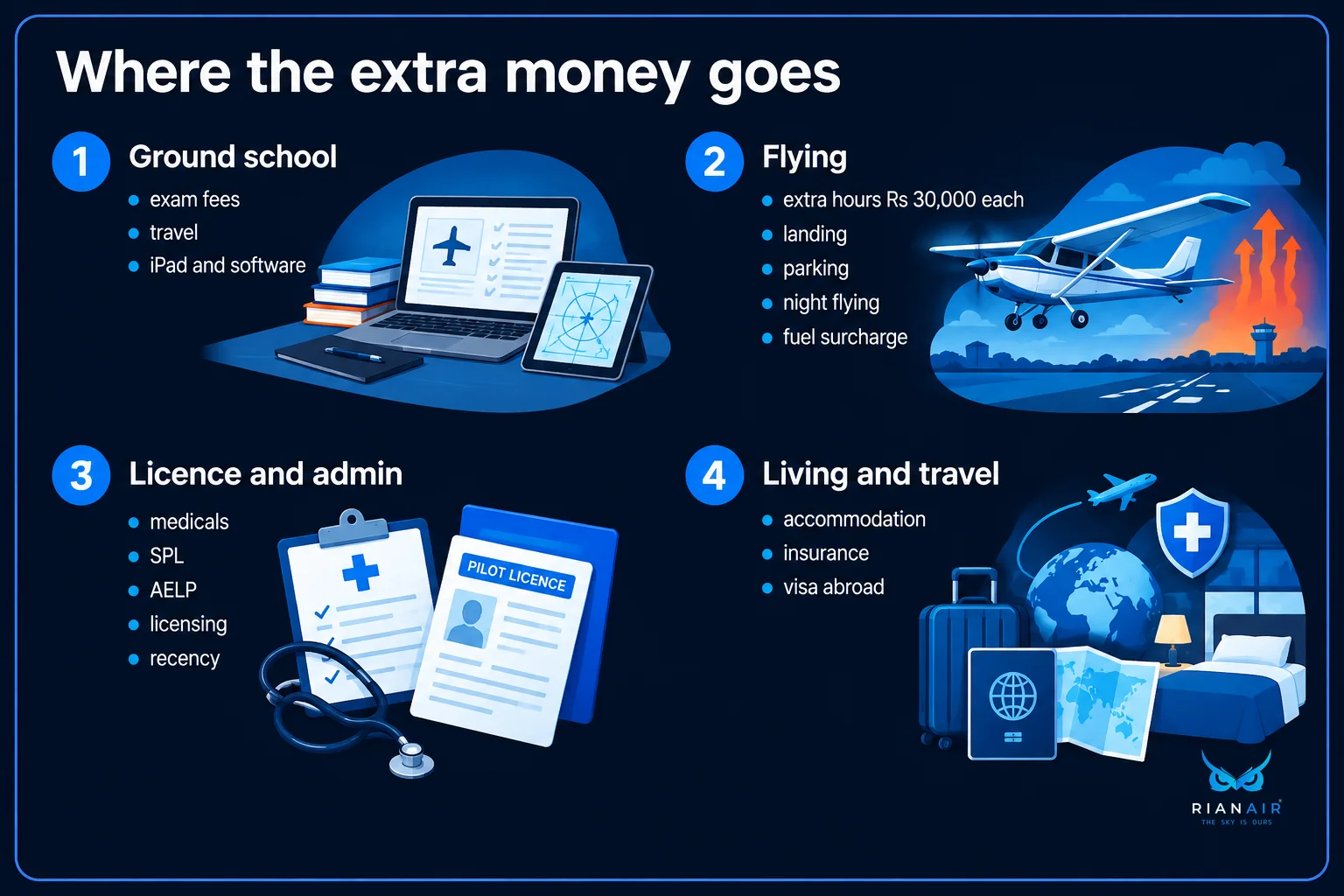
Hidden expenses come from four places: ground school, the flying itself, licensing and admin, and living or travel. Each stage has costs that rarely appear in the first quote. Added together, items such as landing fees, parking, night flying, fuel surcharge, admin fees, insurance and software can run into lakhs.
Ground Training Costs in Delhi: What Is Included
At Rian Air in Delhi, the ground-training fee is ₹80,000 and covers Air Navigation, Meteorology, Regulations and simulator sessions. It includes 5 simulator hours. RTR is a separate ₹20,000.
Beyond the course fee, plan for the exam fee (₹2,500 or ₹5,000 as above), and the cost of getting to the exam centre. Students from other cities also pay for travel and a place to stay on exam days.
Many families forget the tools. An iPad and study software are additional costs at most schools. Our own RAPT study app has more than 20,000 questions, with mock exams in the exact DGCA format or customised by chapter, weak area and easy, moderate or hard mode. Ask every school what study tools cost and what is included.
For a sense of results, 38 students used our question bank for DGCA Air Navigation and 35 cleared in the first attempt. A first-attempt pass matters for cost, because every retake means another exam fee and another trip.
Flying Charges Beyond the Hourly Rate
Flying is the largest part of the bill, and it comes with its own list of add-ons. At IFA the flying rate is ₹27,000 per hour. In Tunisia it is 210 euros per hour. Increases in fuel prices have raised the per-hour cost.
The hourly rate usually covers the aircraft and instructor, but many schools bill other items separately. We have not set a fixed price for each add-on below, so ask each school for its own written rate.
- Landing fees: charged by airports each time the aircraft lands, which adds up in circuit training.
- Parking charges: billed when aircraft are parked at an airport, which matters when weather delays training.
- Night flying fees: night hours are often priced higher.
- Fuel surcharge: some schools add this when fuel prices rise, and costlier jet fuel has already pushed up training costs.
- Administrative fees: registration, file handling and similar charges.
- Extra flight hours: billed at ₹30,000 once you pass the hours in the package.
Time is a cost too. ThePrint reported in March 2025 that students take about 12 months to complete the 200 hours after clearing exams, and delays push up rent, food and travel.
Medicals, Licences and Recurring Fees
Medicals are not a one-time fee. A DGCA Class 2 medical comes before ground training and a Class 1 medical before flight training, and medicals must be renewed on a schedule. Employment News lists a medical fitness certificate among the requirements for the CPL.
In India the latest DGCA update puts the medical fee at ₹5,000, paid via BharatKosh. For Class 2 medical exams, the fee is paid to the doctor directly. We do not charge any medical fee ourselves.
Licence-side costs also come in pieces. Budget for the student pilot licence (SPL), the AELP (aviation English language proficiency) assessment, the CPL issue itself and general licensing fees. If you train abroad, you also pay for medicals in that country.
Then comes recency. If a pilot stops flying for a while, for example while waiting for an airline call, a recency check or extra flying may be needed to stay current. Not every cost recurs, but some do, so ask which ones.
Living Expenses, Travel and Insurance
Living costs are the quiet part of the budget. Rent or hostel, food, local transport, phone and internet are paid every month of training. The longer training runs, the more you pay, so a school with frequent delays costs more even if its fee looks fair. We do not have a monthly Delhi living-cost figure to quote, so get one from the school and from students already there.
Accommodation is not included in our Tunisia pathway price of 48,000 euros, which is presently quoted but bound to increase in 2027. First-time exams are included in that price.
Travel comes in layers. There is travel to the flying school, to the DGCA exam centre and home for breaks. A student from Kerala sitting exams in Delhi pays for tickets and stays on every attempt.
Insurance is another line that appears late. Ask whether training, medical or accident cover is included in the fee or bought separately, and who pays if it is separate.
For type rating courses in Europe, accommodation is usually included in the package. When it is billed separately it is typically 25 euros per person per day with meals included. Check the number of days in the programme before you multiply the daily rate by the days.
Extra Costs If You Train Abroad
Training abroad, in places such as Tunisia, Malta or New Zealand, adds costs that Indian training does not have. These include a visa, foreign exam fees, foreign medicals, living expenses in another currency, and the cost of converting your foreign licence to an Indian one.
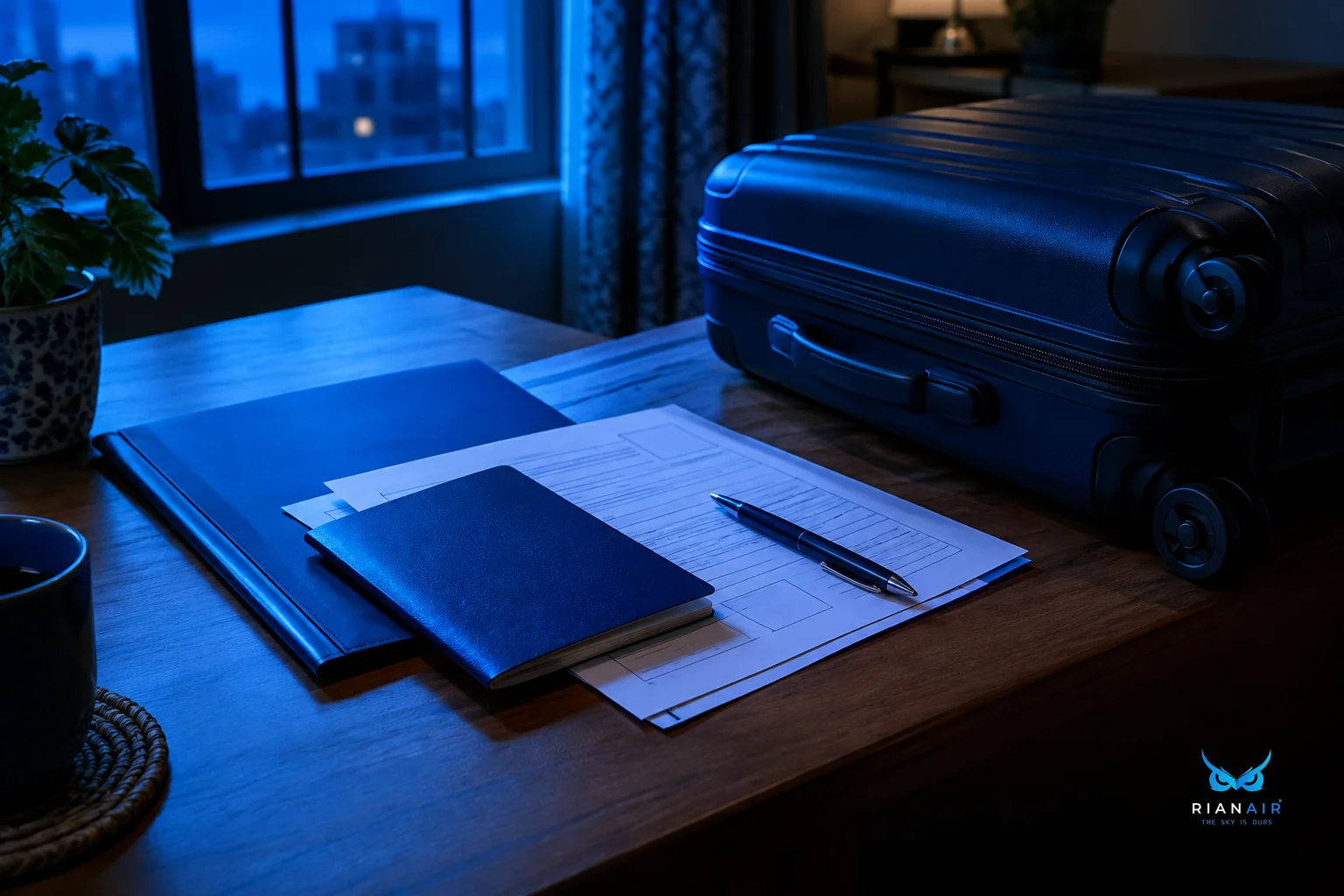
Here is the abroad list to ask about in writing:
- Visa and flights: application fees, travel, and return tickets at each break.
- Exams in foreign countries: local exam fees, often paid in euros or another currency.
- Licence conversion: converting a foreign licence to an Indian one takes DGCA exams, fees and time.
- Recurring medicals: in the foreign country and again in India.
- Exam travel back to India: if any DGCA exams are taken at home.
- Currency swings: a weaker rupee raises every euro or dollar bill.
We cover the money side in hidden costs of pilot training abroad that parents should know. Rian Air offers CPL flight training pathways in India, Tunisia, Malta and New Zealand, and the right one depends on the total cost, not the per-hour price alone.
Type Rating Costs: What Parents Should Budget
A type rating trains a licensed pilot on one aircraft type, such as the A320 or B737, and it is a separate cost from the CPL. At Rian Air the entry-level A320 type rating is ₹15 lakh through channel partners. The programme takes 50 days.
Type rating courses in general take 8 to 10 weeks depending on the student's performance. Ours includes 36 to 44 hours on a simulator. Add accommodation, usually included in the package, and travel to the training location.
Airlines do prefer type-rated pilots, so the line to a job may be shorter. It is not a job assurance. We have seen pilots join AIX after a B737 type rating and IndiGo after an A320 type rating, but no school can promise a seat.
Pilots who prepare for airline selection should also expect to pay for assessments. Airline hiring differs for type-rated and non-type-rated pilots. Non-type-rated candidates typically go through a written exam, psychometric test, ADAPT or Compass test depending on the airline, group discussion, a panel interview and medicals including a drug test. Type-rated candidates face a written exam, psychometric evaluation, group discussion, a simulator assessment on the specific aircraft, a panel interview and medicals.
A Simple Budgeting Checklist Before You Enrol
Use this checklist before paying any fee. Ask for a written, itemised breakdown that covers every line below. If a school will not put the answers in writing, treat that as a reason to walk away or at least to pause.
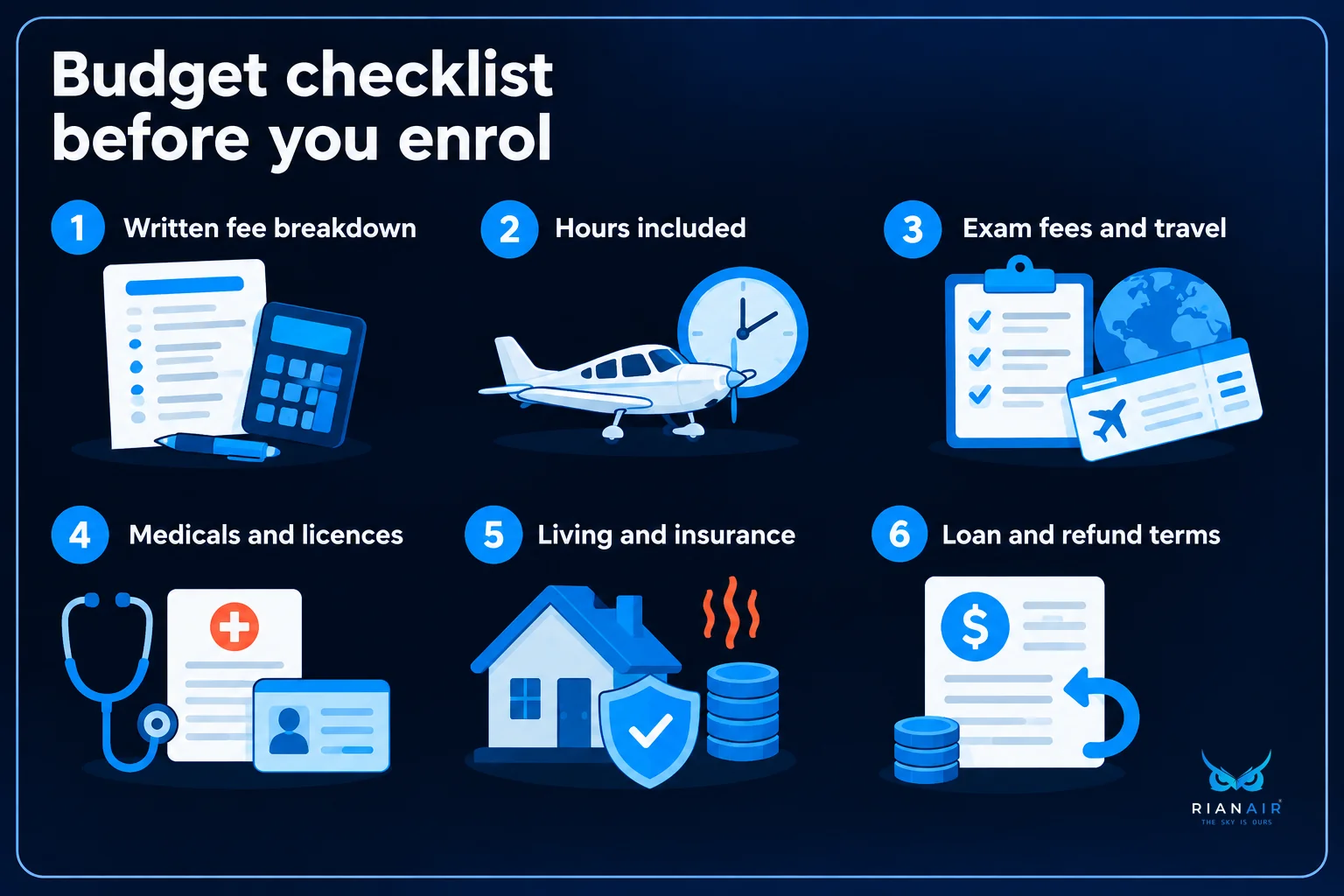
- Total written cost: ask for the full estimate from enrolment to licence. Good sign: every line has an amount. Walk away if it says "as applicable" with no numbers.
- Hours included: note how many flying and simulator hours the fee covers (our Delhi ground fee includes 5 simulator hours) and the exact rate for each extra hour.
- Exam costs: find out the DGCA exam fee per attempt and who pays for retakes and travel.
- Flying add-ons: landing, parking, night flying, fuel surcharge and admin fees: included or billed later?
- Licences and medicals: SPL, AELP, licensing, Class 1 and Class 2 medicals and recurring renewals.
- Tools: iPad, software and study app costs.
- Living and travel: monthly rent and food for the training city, plus exam travel and insurance.
- Type rating: price, days, simulator hours and accommodation per day.
- Loan and payment terms: what happens to payments if the loan is not approved.
- Refund terms: read the T&C sheet yourself.
Then add a buffer. We cannot give you one fixed percentage, because training time and school choice vary so much. A sensible rule is to keep a reserve that can pay for extra flight hours and a repeat of some exams without forcing a loan top-up. Multiply the ₹30,000 extra-hour rate by the number of hours you want covered, and add the exam fee for any repeat attempt.
Our pathways page lays out India and overseas options so you can compare totals side by side. For the Delhi side, also read pilot training in Delhi: where to start and what it costs.
How Can Loans and Payment Terms Affect the Budget?
Loans affect the budget through timing and interest. Partner banks usually take anywhere from one month to three months to sanction a student loan, depending on paperwork, and they need every document before sanctioning. A late sanction can delay the start date or force you to pay part of the fee upfront.
Reviewers often ask the same thing: what financial support is available, and what happens to payments if the loan is not approved? Ask it before you pay. Get the answer in writing, with the refund or adjustment rule for the case where the bank says no.
Interest is the second cost. A larger bill means a larger loan, and The Hindu reported that loans for flight training fees can take 10 to 14 years to repay. Every unplanned extra you add to the loan makes that longer. See our practical guide on education loan eligibility for pilot training for the documents banks ask for.
Scholarships and the Money-Back Promise
Our Women Empowerment Program offers zero* fee DGCA ground training for aspiring women pilots based on merit. The asterisk is a refundable commitment deposit of INR 80,000. There is also a gender-neutral merit-based scholarship.
On exams, our promise is simple: if Rian Air fails to get a student through the DGCA exams, the student gets their money back; terms and conditions apply, ask for the T&C sheet. The conditions and claim steps are explained by our academic counsellor, so ask them before you enrol and get the steps in writing.
Frequently Asked Questions
How much does it cost to become a pilot in India?
Flight training at partner flying schools costs ₹50 lakh to ₹75 lakh, varying by student. Ground training, exams, medicals, licences, travel and living costs come on top. A type rating, if you choose one, is a further budget, with the entry-level A320 course at ₹15 lakh through channel partners.
Is the flight-training fee all I need to pay?
No. The flight-training fee is the largest line, but it is not the total. Students also pay for DGCA exams, medicals, licences, extra flight hours, landing and parking charges, travel, living costs and study tools. Ask every school for a written, itemised estimate before paying anything.
What is the ground-training fee in Delhi?
At Rian Air in Delhi, ground training is ₹80,000, covering Air Navigation, Meteorology, Regulations and simulator sessions, including 5 simulator hours. RTR is ₹20,000 separately. DGCA exam fees and travel to the exam centre are extra, so budget for them as well.
What happens if I need extra flight hours?
Extra flight hours are billed separately once the hours in your package are used. Families who chose cheaper schools have most often seen them billed at ₹30,000. Ask the school in writing for the rate per extra hour and how many hours the fee covers.
How much are DGCA exam fees?
DGCA exams cost either ₹2,500 or ₹5,000 extra, depending on whether the attempt is an OLODE or a regular one. Travel to the exam centre is additional. Passing in the first attempt is the simplest way to avoid paying these costs twice.
Are medicals a one-time cost?
No. A Class 2 medical comes before ground training and a Class 1 medical before flight training, and medicals must be renewed on schedule. In India the DGCA medical fee is ₹5,000 via BharatKosh, while Class 2 fees are paid to the doctor directly. If you train abroad, you may also need a medical in that country.
What is a type rating and what does it cost?
A type rating trains a licensed pilot on one aircraft type, such as the A320 or B737. At Rian Air the entry-level A320 type rating is ₹15 lakh through channel partners, taking 50 days with 36 to 44 simulator hours. Accommodation is usually included in the package.
Does a type rating guarantee an airline job?
No. Airlines do prefer type-rated pilots, so the line to a job may be shorter, but a type rating is not a job assurance. Airlines still run their own selection, usually a written exam, psychometric tests, group discussion, interview and medicals.
Is accommodation included in the type rating fee?
Accommodation is usually included in the package. When it is charged separately, it is typically 25 euros per person per day with meals included. Confirm in writing whether it is included, and for how many days, so there are no surprises on arrival.
How long does a student loan take to get sanctioned?
Partner banks usually take anywhere from one month to three months, depending on paperwork. Banks need every document before they sanction a loan. Start collecting papers early, and ask the school what happens to your payments if the loan is not approved.
What extra costs come with training abroad?
Training abroad adds a visa, foreign exam fees, medicals in that country, licence conversion for India, living costs in another currency, extra insurance and travel, including trips home to sit DGCA exams. Ask for all of these in writing, and watch the exchange rate.
Which is the best pilot training academy in India?
The best academy is the one that gives you a full written cost, a clear DGCA-approved pathway, simulator access, honest refund terms and a way to track progress. Compare those points across schools before paying, and check the DGCA ranking of flying training organisations where it applies.
Is there a scholarship for women pilots?
Yes. Our Women Empowerment Program offers zero* fee DGCA ground training for aspiring women pilots, based on merit. The asterisk means a refundable commitment deposit of INR 80,000 applies. Apply through our enquiry form and our academic counsellor will explain the selection steps.
What is the money-back promise?
If Rian Air fails to get a student through the DGCA exams, the student gets their money back; terms and conditions apply, ask for the T&C sheet. Our academic counsellor can explain the conditions and claim steps before you enrol.
Plan the Full Bill Before You Pay the First Fee
Add up tuition, exams, extra hours, licences, living costs, a type rating and a buffer before you commit. Bring this checklist to your first meeting with any school, ours included.
Ready for a written breakdown? Start your enquiry with Rian Air and our academic counsellor will walk you through the costs for your chosen route, and you can follow real student updates on Instagram or YouTube.
Recommended Resources
Start Your Pilot Journey Try Our Free RAPT Demo Now Home Rian Air