How to Switch Careers to Become a Pilot After Graduation (Even With a Non-Aviation Degree)
You do not need a fresh 12th-pass mark sheet to start flying. The DGCA's minimum qualification for a Commercial Pilot Licence is 10+2 with Physics and Mathematics. That means a graduate in any stream—engineering, commerce, even arts—already clears that bar. You can begin ground school immediately after searching how to become a pilot after graduation.
Key Takeaways
- 10+2 with Physics and Maths is the floor, not a ceiling: a degree in any field does not disqualify you, and most DGCA ground schools accept graduates directly into batches.
- Age is rarely the real obstacle: some airlines hire first officers as old as 41, though most hiring tends to cluster around a 30 to 32 cut-off for fresh entry. Starting at 23 to 27 after graduation still leaves a comfortable runway.
- Ground school costs ₹80,000 to ₹1.25 lakh with Rian Air, taxes extra, and includes 5 hours of simulator time built into the package.
- The full pathway, including type rating, runs near ₹1.5 lakh as a starting reference for packaged components, while flight hours and type rating costs vary by country and aircraft chosen.
- A DGCA Class 2 medical should come before you spend on ground school, not after, since it is the one step that can quietly end a plan early.
At a Glance: Pilot Training After Graduation
| Criteria | Requirement / Range |
|---|---|
| Minimum educational qualification | 10+2 with Physics and Mathematics |
| Minimum age to begin CPL training | 18 years; no DGCA upper age limit |
| Typical airline hiring cut-off (fresh FOs) | Around 30-32 years, though some carriers hire up to 41 |
| Ground school fee range | ₹80,000 to ₹1.25 lakh, taxes extra |
| Simulator hours included in ground package | 5 hours |
| Flight training locations | India, plus international pathways in Tunisia and Malta |
| Phases covered end-to-end | Ground training, simulator, flight training, type rating, airline readiness |
| DGCA pass rate at Rian Air | 97%, with 200+ pilots trained so far |
Is 10+2 Really the Minimum, or Do You Need a Degree?
Yes, 10+2 with Physics and Mathematics is genuinely the floor DGCA sets, not a formality that assumes you will also hold a degree. A B.Com, B.Tech, B.A. or any other graduate qualification sits on top of that floor and never disqualifies you from CPL training.
This matters because a lot of pilot training content online is written for 18-year-olds straight out of school. That can make a 23 or 25-year-old graduate feel like they missed a window. They haven't. The ground school syllabus, the DGCA theory papers, and the simulator and flight training hours are identical whether you walk in at 18 or 28.
If anything, graduates often adapt faster to the six DGCA theory papers because they already have exam discipline and self-study habits from college. The papers are Air Navigation, Aviation Meteorology, Air Regulations, Technical General, Technical Specific and RTR.
Those who struggled with 12th-pass physics can rebuild that foundation during ground school itself. It is covered from first principles, not assumed.
No airline in India requires a college degree to hire a first officer either. Your CPL, your flight hours, and your interview performance carry the weight, not your transcript. If you are weighing whether to finish a degree before starting training at all, read our breakdown on how to become a commercial pilot in India after 12th to see how the same pathway looks for a younger entrant.
Does Age Work Against You After Graduation?
No, age is not the obstacle most graduates assume it is. Airlines in India have hired first officers as old as 41. Fresh-entry hiring tends to cluster around a 30 to 32 cut-off at many carriers, but a 23 to 27-year-old graduate starting training is well inside that window with years to spare.
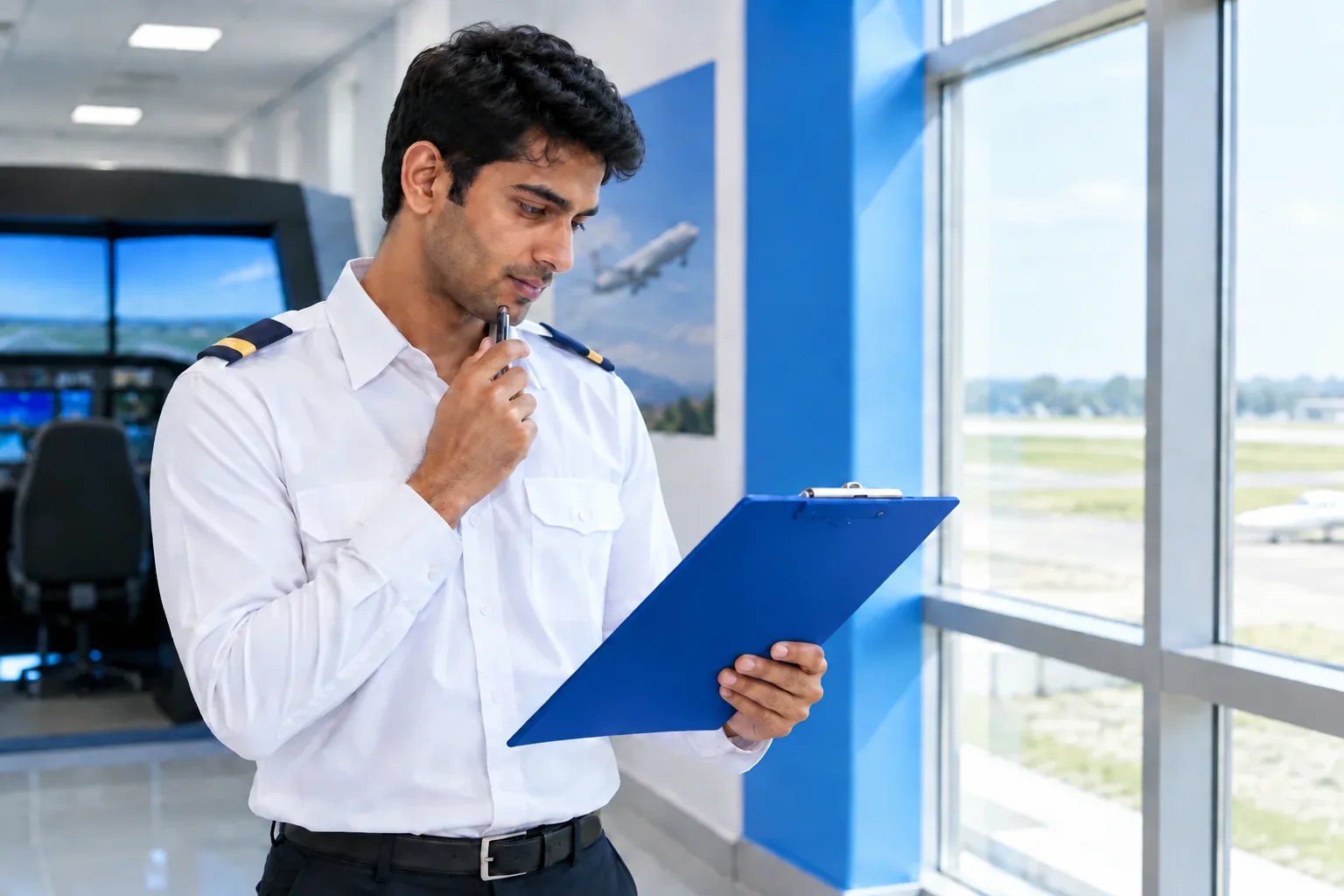
The real constraint is not your birth year. It is how long your training takes and how current your licence stays once you finish. A CPL pathway, from ground school through flight hours, typically spans somewhere between 18 and 30 months. The timeline depends on aircraft availability and how quickly you clear exams.
A graduate who starts at 24 and finishes at 26 or 27 is still comfortably inside most hiring windows.
Where graduates genuinely need to plan carefully is the DGCA Class 1 medical, since certain pre-existing conditions need paperwork that can take months to clear. Get that assessed early, before committing financially to ground school, so you are not surprised midway through training.
A short, blunt recommendation: if you are between 23 and 30 and physically fit, there is no practical reason to wait another year "to think about it." Every year of delay is a year closer to the hiring cut-off some airlines apply.
If you are past 32 and still considering this seriously, it is still possible. Go in with eyes open about which carriers hire older first officers, and plan your training timeline to be as fast as your finances allow.
1. Get Your DGCA Class 2 Medical First
Before you pay a single rupee toward ground school, book a DGCA Class 2 medical. It checks vision, hearing, cardiovascular health, and general fitness. It is the cheapest, fastest way to confirm you are not about to spend lakhs on a path your body cannot complete.
Some conditions, certain cardiac histories or long-term medication use, need additional paperwork and specialist opinions that take weeks or months to process. Doing this check first, rather than after you have already enrolled, protects both your money and your timeline.
2. Choose a Ground School That Works With Your Graduate Schedule
Ground school is where your theory foundation gets built. For a graduate already comfortable with structured study, this is usually the fastest phase to clear. At Rian Air, ground school fees range from ₹80,000 up to ₹1.25 lakh, taxes extra, with the training built around DGCA's six theory papers.
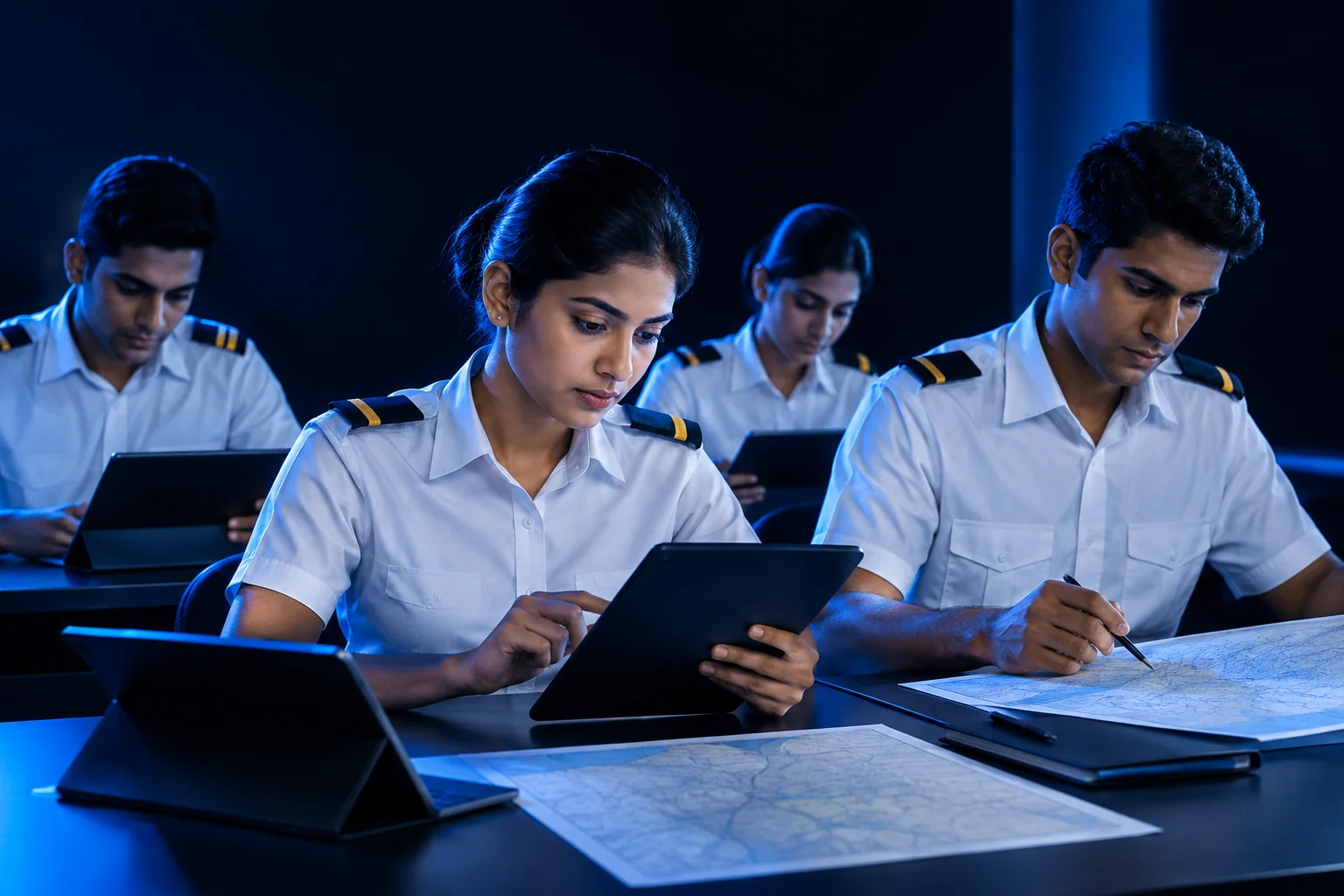
The package includes 5 hours of simulator time, so you are not purely memorising charts and regulations for months before ever sitting at a set of controls. Rian Air's RAPT platform is described as India's first technology-driven pilot training ecosystem.
It pairs classroom work with a 20,000-plus question bank, digital performance analytics, and a digital logbook. A working professional or recent graduate can track progress without losing visibility between sessions.
If you are comparing where to study based on commute and time, Rian Air's own campus sits roughly 1 to 2 minutes from Ramphal Chowk in Delhi. That detail matters more than it sounds once you are juggling exam prep with a day job or a final semester.
For a city-by-city view of where ground training fits your situation, see our guide on pilot training in Delhi: where to start and what it costs.
3. Clock Simulator Hours Early, Not After Ground School Ends
Simulator time should start during ground school, not wait until theory papers are cleared. Rian Air's ground training package includes 5 simulator hours on a C172 fixed-base simulator, described as Kerala's first.
That gives students a real feel for cockpit procedures while concepts like navigation and air regulations are still fresh from the classroom.
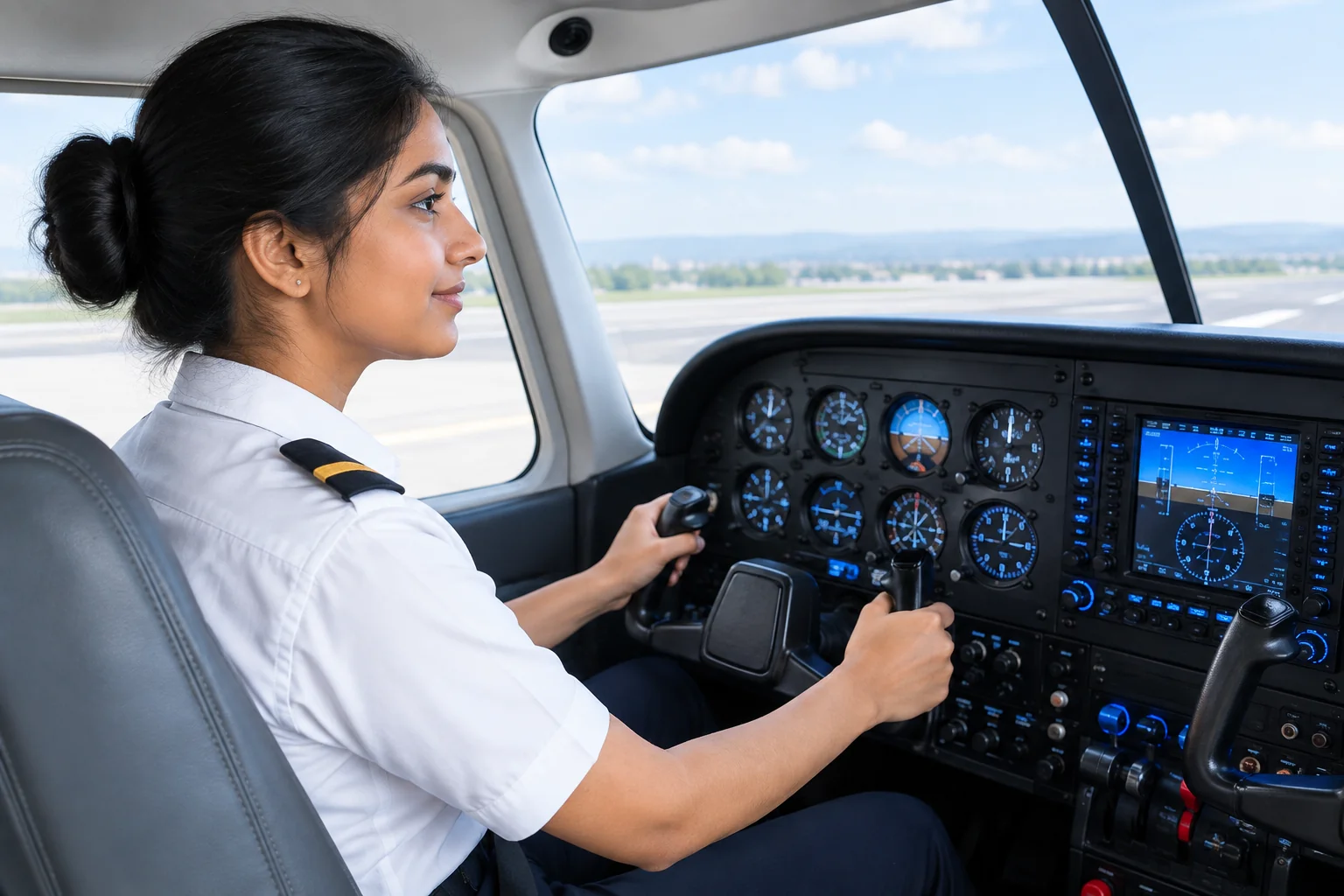
For a graduate who has never touched aviation before, this early exposure does something ground school alone cannot: it turns abstract theory into muscle memory. Reading about checklist discipline is one thing; running through one in a simulator seat, even a fixed-base one, is what makes the theory stick. Our detailed walkthrough on how fixed-base simulator training actually works covers what a session looks like step by step.
4. Pick a Flight Training Pathway: India, Tunisia or Malta
Where you fly matters as much as how much you pay. Rian Air runs structured CPL pathways both within India and internationally, including dedicated programmes in Tunisia and Malta. Graduates can weigh weather reliability, aircraft availability, and total timeline against their budget.
India-based flight training keeps logistics simpler and avoids visa and travel costs, but can face more weather-related scheduling delays depending on season and location. International pathways in Tunisia and Malta often offer more consistent flying weather, which can shorten the total calendar time to finish your 200 required hours. They also add travel and stay costs on top.
If international training is on your shortlist, our guide to pilot training in Tunisia breaks down why it's a preferred route for many Indian students.
There is no universally "better" choice here. A graduate with a tighter calendar and the budget to travel should lean international. A graduate watching every rupee closely should start in India and reassess once flight training is under way.
5. Plan for Type Rating and Airline Readiness
Your CPL is not the finish line; it is the licence that lets you start the next phase. Rian Air's training covers the full arc: ground training, simulator training, flight training, type rating, and airline readiness.
That means graduates don't have to independently stitch together separate providers for each stage.
The type rating decision, typically A320 versus B737, should be made with an eye on which airlines are actively hiring in your target timeline, not on which aircraft looks more appealing. Our comparison on pathways after CPL and their comparison is a useful next read once you're closer to this stage.
What Does Pilot Training Actually Cost After Graduation?
Ground school with Rian Air runs ₹80,000 to ₹1.25 lakh, taxes extra. Packaged components of the broader pathway, including elements tied to type rating, start from a reference figure near ₹1.5 lakh.
Beyond that, flight hours and full CPL completion vary by country and provider. Industry-wide estimates for a complete CPL pathway in India commonly range from roughly ₹55 lakh to over ₹90 lakh once flight hours, exams, and a type rating are all included.
That wide range exists because flight hour costs, aircraft type, and location (India versus Tunisia versus Malta) all move the number significantly. Ask Rian Air directly for a line-by-line quote based on your chosen pathway rather than relying on an industry-wide average.
For families weighing financing, our guide on education loan eligibility for pilot training in India and our piece on low income student pilot training options both cover realistic funding routes.
Graduates who already have some savings or a short work history sometimes have an advantage here over 18-year-olds: a small income or guarantor history can strengthen a loan application. If cost is your biggest hesitation, it is worth asking Rian Air about the Women Empowerment Program or the gender-neutral merit scholarship.
Both have specific eligibility criteria available through Rian Air's enquiry form.
Selection Criteria: What to Look for in a Ground Training Academy as a Career Changer
A graduate switching careers has less room for wasted months than an 18-year-old with no other plans yet. Four things to check before enrolling anywhere:
- Verified pass rate: Rian Air publishes a 97% DGCA pass rate across 200+ trained pilots; ask any academy you're considering for their actual numbers, not a vague claim.
- A genuine money-back structure on DGCA exams: Rian Air offers a money-back promise if a student does not clear the DGCA exams, with specific terms and conditions available on request through the enquiry form. Always get the T&C sheet in writing before assuming what it covers.
- Commute and schedule fit: if you're training while finishing a final semester or holding down a job, a campus that eats two hours a day in traffic will wear you down. Rian Air's Delhi campus sits 1 to 2 minutes from Ramphal Chowk.
- Technology-backed tracking: a platform like RAPT that shows your question bank performance, simulator logs, and digital logbook in one place matters more once you're balancing training against other adult responsibilities.
Red flags to watch for across any provider: vague fee structures with no written breakdown, scholarship claims with no documented eligibility criteria, and academies unwilling to share real pass-rate data. Our checklist on questions to ask before enrolling in a pilot training academy applies just as well to career changers evaluating options solo.
Frequently Asked Questions
Can I become a pilot after graduation with a non-science degree?
Yes. DGCA requires 10+2 with Physics and Mathematics, which you likely already hold regardless of your degree stream. A B.A., B.Com, or any non-science graduate degree does not block CPL eligibility in India.
Is there an age limit to start pilot training after graduation?
No upper age limit exists for starting DGCA training itself. The practical limit is airline hiring preference, where fresh first officer intake often clusters around 30 to 32, though some airlines have hired pilots as old as 41.
How long does pilot training take for a graduate starting at 23 or 24?
Expect roughly 18 to 30 months from ground school through completed flight hours, depending on exam pace and aircraft availability. This timeline is the same for graduates and 12th-pass students alike.
What is the DGCA Class 2 medical and why does it matter first?
The Class 2 medical checks vision, hearing, heart health, and general fitness before you invest in ground school. Clearing it early avoids spending money on training you may not be medically fit to complete.
How much does ground school cost at Rian Air?
Ground school fees range from ₹80,000 to ₹1.25 lakh, taxes extra, and the package includes 5 hours of simulator time built into the course.
Does Rian Air offer training outside India?
Yes. Rian Air runs structured CPL pathways both in India and internationally, including dedicated programmes in Tunisia and Malta, for students who want faster weather windows or a different training environment.
What happens if I fail the DGCA exams after enrolling?
Rian Air offers a money-back promise tied to DGCA exam outcomes, with specific terms and conditions. Ask for the T&C sheet directly through the enquiry form before enrolling so you know exactly what is covered.
Are there scholarships for women or financially constrained graduates?
Rian Air runs a Women Empowerment Program and a gender-neutral merit-based scholarship. Eligibility criteria and amounts are assessed individually; reach out through the enquiry form for details specific to your situation.
Do airlines in India require a college degree to hire pilots?
No. Airlines hire based on your CPL, logged flight hours, type rating, and interview performance. A degree is not a stated requirement for a first officer role at Indian carriers.
What is RAPT and how does it help a graduate juggling training with other commitments?
RAPT is Rian Air's proprietary training ecosystem combining a 20,000-plus DGCA question bank, simulator data, performance analytics, and a digital logbook in one platform. It lets students and parents track progress remotely, useful for anyone training while managing a job or final semester.
Switching into aviation after graduation is not a late start; it is simply a different starting line than the one most pilot-training content assumes. The eligibility is the same, the timeline is the same, and the training phases don't care what your degree says.
Those phases are ground school, simulator, flight hours, type rating, and airline readiness. What matters now is choosing a structured pathway and starting it.
Start your pilot journey with Rian Air to get a clear breakdown of fees, timelines, and eligibility for your specific background, or explore pathways across India, Tunisia, and Malta to see which fits your schedule and budget.
For daily updates from the training floor, follow Rian Air on Instagram or subscribe on YouTube to see what ground school, simulator sessions, and flight training actually look like before you commit.