


DGCA Exam 2026: Subjects, Eligibility, Computer Number and How to Register
The DGCA exam for a Commercial Pilot Licence is a set of computer-based theory papers: Air Navigation, Aviation Meteorology, Air Regulations, Technical General, Technical Specific and RTR. You need a free DGCA computer number, a registration on the Pariksha portal and at least 70% in each paper. Students in Delhi, Kerala and Mumbai sit the same national papers.
Key Takeaways
- Pass mark: you need 70% in every paper, and each paper is marked on its own. A strong Navigation score cannot cover a weak Meteorology score.
- Timeline: Rian Air's ground school runs about 6 months. Most students take 6 to 12 months, and some have cleared in as little as 4 months.
- Attempts: at Rian Air, about 80% of students clear their papers on the first attempt. On the second attempt, nearly everyone passes. Only 1 or 2 students so far have needed a third.
- First step: the computer number costs nothing. Without it you cannot register for any written paper, so create it before you pay for anything else.
- Next window: the October application dates are over. The regular December attempt is the big one this year, so prepare now and watch the official portal for the notice.
DGCA Exam at a Glance
| Item | What you need to know |
|---|---|
| Conducted by | Directorate General of Civil Aviation (DGCA), Government of India |
| CPL theory subjects | Air Navigation, Aviation Meteorology, Air Regulations, Technical General, Technical Specific, plus RTR |
| Pass mark | 70% in each paper, no aggregate |
| Fee per paper | ₹2,500 in a regular session; ₹5,000 in an on-demand (OLODE) session |
| Minimum age and education | 18 years; 10+2 with Physics and Mathematics |
| Computer number | Mandatory, free, created on the DGCA online portal |
| Rian Air ground school | About 6 months for all papers; 80% clear on the first attempt |
| Medical | Class 1 needed for the CPL; we advise clearing a medical before ground training starts |
What Is the DGCA Exam and Who Conducts It?
The DGCA exam is the set of computer-based theory papers that aspiring pilots must clear before getting a Commercial Pilot Licence in India. The Directorate General of Civil Aviation, the national aviation regulator, conducts them through its online Pariksha portal. There is no single entrance test; each subject is a separate paper.
The DGCA is the statutory regulator of civil aviation in India, and it sets the rules for pilot licensing. That matters for your planning. Without DGCA approval, no training or licence counts, so every step below follows its process.
Many students search for a "DGCA entrance exam". It is the same thing. Think of it as a series of subject exams, each passed or failed separately, in a multiple-choice format on a computer at an exam centre.
DGCA Exam Subjects for CPL
The DGCA CPL exam covers Air Navigation, Aviation Meteorology, Air Regulations, Technical General and Technical Specific, plus the Radio Telephony Restricted (RTR) papers. Technical Specific is taken for the aircraft type you train on, single engine or multi engine. Each subject is a separate paper with its own 70% pass mark.
Here is how the subjects sit inside our ground school at Rian Air. These are our programme timings for a student who completes all papers, not DGCA rules.
| Subject | What it covers | Time in Rian Air ground school |
|---|---|---|
| Air Navigation | Charts, plotting, wind triangle, flight planning, instruments | 2 to 2.5 months |
| Air Regulations | Rules of the air, licensing, airspace, procedures | About 1.5 months, taught together with Meteorology |
| Aviation Meteorology | Weather systems, clouds, fronts, forecasts and reports | About 1.5 months, taught together with Regulations |
| RTR (Radio Telephony Restricted) | Radio phraseology and procedures | About 15 days, because part of it is covered during Navigation |
| Technical General | Airframe, engines, systems, instruments, principles of flight | 2 to 2.5 months; optional for students flying abroad |
| Technical Specific | Systems of the specific aircraft, single and multi engine | Covered by our partner flying schools in India |
For a line-by-line view of each paper, read our DGCA ground school syllabus explained for beginners.
Why the subject order matters
We start with Navigation because it is the heaviest and because part of RTR is learned along the way. Regulations and Meteorology run side by side since both are theory and memory heavy. Technical General comes last in most plans.
Students heading to flight schools abroad can treat Technical General as optional, because some of those countries have their own theory route. Confirm this with your chosen flight school before you skip it.
Eligibility for the DGCA Exam
To sit the DGCA CPL papers you must be at least 18 years old and hold 10+2 with Physics and Mathematics. Most training providers also look for about 50% aggregate marks. You also need a DGCA computer number, and you will need a Class 1 medical before the licence itself is issued.
Rule changes have been discussed in the industry, including the Physics and Mathematics requirement. Until DGCA publishes a notice, plan on the current rule. Graduates from any stream already meet the 10+2 bar if their 12th had both subjects, which is why career switchers are common in our batches.
Medical: do it early
A Class 1 medical is the one that counts for the commercial licence, and failing it late is the most painful way to lose a year. We advise students to complete a medical check before they pay for months of ground school. Our guides explain the importance of the DGCA Class 1 medical before flight training in detail.
How Do You Get a DGCA Computer Number?
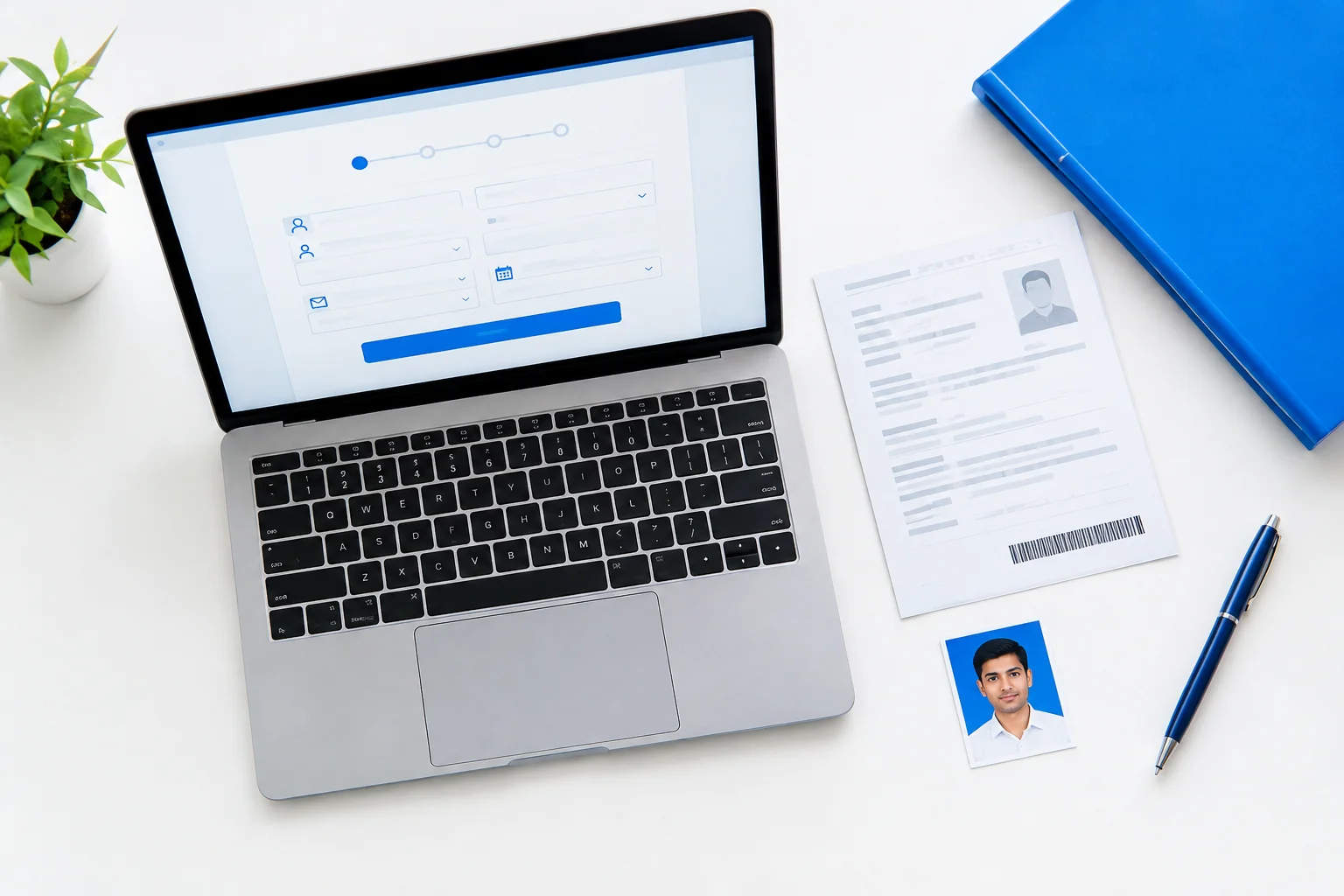
You get a DGCA computer number by creating a candidate profile on the DGCA online portal and uploading your identity, photo and education documents. The number is free and mandatory. Without it you cannot register for any written paper, and it stays with you for every later attempt.
Think of it as a student ID for your whole flying career. Your exam results, attempts and later licence applications all attach to it. The written exams are booked on the Pariksha portal, while oral exams and licence services run through eGCA. Use the same details everywhere.
- Keep documents ready: Class 10 and 12 certificates, a recent photograph, a signature scan and a government ID.
- Match your name exactly: spelling and date of birth must be identical across documents. A mismatch can delay approval.
- Submit the profile: apply for the computer number on the DGCA portal. There is no separate DGCA fee for the number itself.
- Save your credentials: store the number and password safely. Many students lose a session because they forget them.
How Does DGCA Exam Registration Work Through Pariksha?
You log in to the Pariksha portal with your computer number, select the papers for the session, pay the fee online and download your admit card. The portal opens and closes for each session, so register inside that window. Late registration is not possible once the window shuts.
Fees are charged per paper. The regular session costs ₹2,500 per paper, and an on-demand (OLODE) session costs ₹5,000 per paper, based on the latest published fee lists. A failed paper is charged again in full, so failed papers are the biggest avoidable cost.
Regular sessions versus OLODE sessions
Regular sessions are the main scheduled attempts. OLODE (on-demand) sessions are extra windows at a higher fee, useful when you are ready and do not want to wait. We usually tell students to aim for regular sessions and keep OLODE as a backup.
What is open right now
The October application dates are over. The November notice will follow, and the regular December attempt is the most important of the year. We are not listing exact dates here, because they change. Always read the notice board on the official Pariksha portal before you plan travel or leave.
DGCA Exam Pass Mark, Pass Percentage and Attempts
The DGCA pass mark is 70% in each written paper. There is no aggregate, so every paper must clear 70% on its own. Papers are multiple choice on a computer, and each runs for roughly two hours; check your admit card for the exact duration and instructions.
Cleared papers keep their own validity, so you re-sit only what you failed, at the next session. Validity of a passed paper is limited, commonly cited as five years, so confirm the current rule with DGCA before you delay your flight training.
What our pass percentage looks like
These numbers come from our own students. About 80% of Rian Air students clear on the first attempt. On the second attempt, nearly everyone passes. Only 1 or 2 students so far have gone to a third attempt.
Some students have left the programme for reasons unrelated to ability, such as a death in the family, an education loan that fell through after a low credit score, a parent losing a job, or the war in the Middle East. Money and life events end more training journeys than the exam does.
Planning your attempts
Our decision rule is simple. Sit a paper only when your mock scores sit comfortably above 70%, not at it. A student scoring 72% in practice will often land at 66% under exam stress. If you fall below 70% twice in a mock series, move the paper to the next session.
Do not stack every paper into one session just to save time. A failed Navigation paper still costs a full fee and a full wait. Sequence papers the way the ground school does.
How Long Does It Take to Clear the DGCA Exams?
Clearing the DGCA exams takes about 6 months of ground school at Rian Air. Most students take 6 to 12 months in total, depending on attempts and personal time. Some have cleared in as little as 4 months and moved straight into flight training.
One Rian Air student cleared all exams in 4 months, including his medicals and other formalities. He then completed his visa, trained in Tunisia and now holds his CPL. He will convert it to an Indian licence soon. That is a fast case, and we do not promise it, but it shows what focused study and clean paperwork can do.
Our ground school has a library, and revision sessions are allowed, but the focus is on solving questions once the concept is understood. Reading notes for months without solving papers is the most common reason students slip past their planned date. Our article on why DGCA ground classes take too long in India explains the other causes.
Ground Classes in Kerala for the DGCA Exam
Ground classes in Kerala prepare students for the same national DGCA papers taught elsewhere in India. A Kerala student can attend live online classes, revise with an online question bank and practise on a fixed-base simulator in Kerala. The syllabus, pass mark and exam fee are identical to those in Delhi or Mumbai.
Rian Air serves students in Thrissur and across Kerala, along with Delhi and Mumbai. For families in Kerala, the online route means no move to a metro for the six months of theory. Ask us about current batch timings for ground classes in Kerala when you enquire.
Why Kerala students have an edge before flying
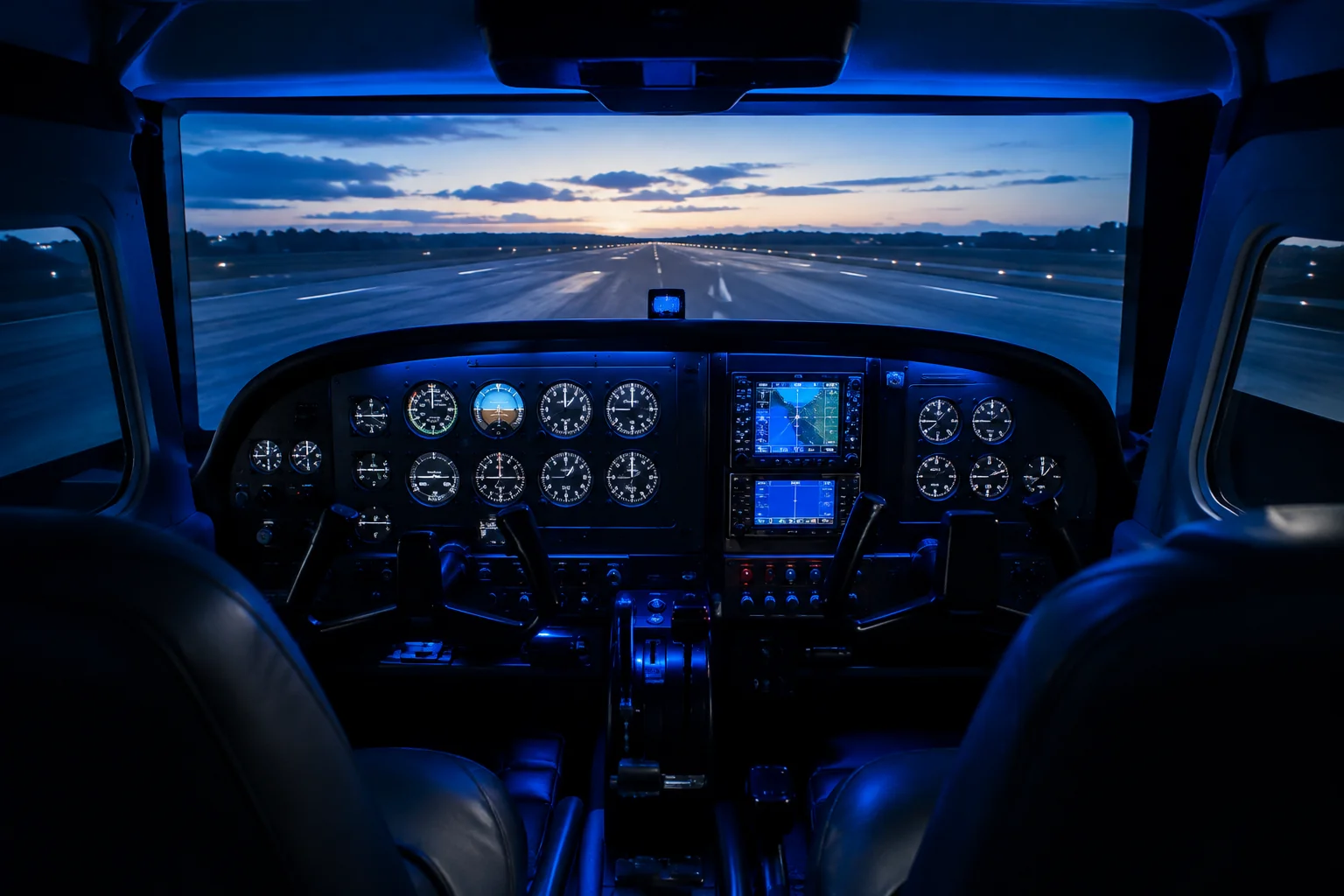
Kerala has the state's first C172 fixed-base simulator at Rian Air. Students can learn instrument scanning, radio calls and basic procedures there before spending on flight hours. Our guide on DGCA CPL training in Kerala: costs, duration and what to expect walks through the full pathway.
Checklist for choosing ground classes in Kerala
- Syllabus match: the course must follow the DGCA syllabus paper by paper, not a generic aviation course.
- Practice volume: ask how many exam-style questions you will solve, and whether weak topics are tracked.
- Written terms: read the refund, attendance and exit terms before paying.
- Next step: find out where Technical Specific and flying will happen after the theory.
RAPT Benefits for Students and Parents at the Ab Initio Stage
RAPT is the Rian Air platform that combines a DGCA question bank of 20,000+ questions, performance analytics and a digital logbook. At the ab initio stage, students see which topics cost them marks, and parents see progress without asking every week. It works on web, Android and iOS.

Benefits for students
- Topic-level feedback: practice sessions show weak chapters, so revision targets real gaps.
- Exam-style practice: questions are aligned to the DGCA papers, which makes the real session feel familiar.
- Digital logbook: your records start from day one and carry into flight training.
- Access to try: about 25% of the CPL demo questions are free. The full CPL bank is included during ground training with us. Others can contact us for pricing.
Benefits for parents and sponsors
- Visibility: a parent dashboard shows attendance and practice progress, so you know where the money is going.
- Early warning: if a paper looks weak, you see it months before the session, not after a failed result.
- Clear terms: our money-back promise says that if Rian Air fails to get a student through the DGCA exams, the student gets their money back. Terms and conditions apply, so ask for the T&C sheet before enrolling.
For ATPL, access is free for the first 100 first officers, and 12 have already joined. Our RAPT DGCA question bank for CPL and ATPL page has the details.
Common Mistakes and a Plan to Pass in the First Attempt
Students most often fail the first attempt because they study too many papers at once, read without solving questions, or never track which topics cost them marks. A better plan is to take papers in sequence, solve questions daily, review errors weekly and sit the session only when mock scores clear 70%.
Our view: do not rush the paper date to match a friend's schedule. A student who sits one session later with a pass beats one who sits early and pays the fee twice. The exception is a student with a firm flight-school start date, who should plan backwards from that date.
- Weeks 1 to 8: Air Navigation, with daily plotting and calculation practice.
- Next 6 weeks: Air Regulations and Meteorology together, using short daily revision.
- Final 2 weeks: RTR phraseology and full mock papers.
- If needed: Technical General, then Technical Specific through your flying school.
This sequence mirrors our six-month ground school, so you can adjust it for your own pace. The pathways overview shows how the theory phase connects with flying options. For deeper tips, see the instructor-led list of common mistakes DGCA aspirants make during ground school.
After the DGCA Exams: What Next?
After clearing the DGCA exams you move to flight training in the country you choose. In India, a CPL costs around ₹60 lakh and a type rating around ₹15 lakh, based on figures we see with students. Abroad, a CPL costs ₹50 to ₹70 lakh plus conversion on return.
Training location changes the cost. A recent student in New Zealand paid ₹70 to ₹75 lakh including miscellaneous expenses. Licence conversion for students returning to India costs ₹3.5 lakh to ₹11 lakh, depending on whether it is only a check or also needs recent flight experience, which can run to about 21 to 22 hours depending on the flight school.
Airline cadet programmes are a separate route. They run 24 to 36 months and fees range from ₹89 lakh to ₹1.5 crore. We arrange the training a student needs to enter a cadet programme at our facility, but we do not refer students to airlines. Always ask the airline itself about bond and repayment terms, not a middleman. Our guide to flight training in India after DGCA exams covers the next stage.
DGCA Exam FAQs
What is the pass mark in the DGCA exam?
The pass mark is 70% in each paper. Every subject is marked on its own, with no aggregate across papers. A high score in Air Navigation cannot make up for a low score in Meteorology, so you must clear all papers separately.
How many papers are in the DGCA CPL exam?
The CPL theory exams include Air Navigation, Aviation Meteorology, Air Regulations, Technical General and Technical Specific, plus RTR. Each is a separate computer-based paper. Students flying abroad may skip Technical General, depending on their flight school's requirements.
How much does the DGCA exam cost?
A regular session costs ₹2,500 per paper, and an on-demand (OLODE) session costs ₹5,000 per paper, based on current published fee lists. Re-attempts are charged in full. The DGCA computer number itself carries no separate fee.
Can I register for several DGCA papers in one session?
Yes, registration and fees are per paper, so you can select several in one session. Sitting many at once raises risk, since each failed paper costs a full fee. We advise taking papers in sequence, starting with Air Navigation, and sitting only when mock scores clear 70%.
What happens if I fail a DGCA paper?
You re-sit only the failed paper at a later session and pay the fee again. Papers you have cleared keep their own validity. At Rian Air, nearly every student passes by the second attempt, and only 1 or 2 have needed a third.
Do I need a Class 1 medical before the DGCA exam?
A Class 1 medical is required for the Commercial Pilot Licence, so you cannot skip it. We advise students to complete a medical check before paying for ground school, so any disqualifying condition is found early rather than after months of study.
Can arts or commerce students become pilots in India?
The current DGCA rule requires 10+2 with Physics and Mathematics. Changes have been discussed, but nothing replaces the current rule until DGCA publishes a notice. Graduates from any stream qualify if their 12th included both subjects.
Is the DGCA exam the same in Kerala as in Delhi?
Yes. The papers, syllabus, 70% pass mark and fees are national. Only your exam centre and your choice of ground classes in Kerala, Delhi or Mumbai differ. Centre options appear during Pariksha registration, so check them before paying.
How long are ground classes in Kerala for DGCA exams?
Our ground school runs about 6 months for students who complete all papers. Most students take 6 to 12 months overall, and some have finished in 4 months. Online live classes let Kerala students attend without relocating to another city.
How long does the DGCA exam take to clear overall?
Plan on 6 to 12 months from enrolment, including your medical and paperwork. Our fastest recorded case took 4 months. Your timeline depends on weekly study hours, the session you target and whether you pass on the first attempt.
What is the Rian Air money-back promise?
If Rian Air fails to get a student through the DGCA exams, the student gets their money back. Terms and conditions apply, including attendance rules and a limit on failed attempts. Ask for the T&C sheet before you enrol.
Is there a scholarship for women pilots at Rian Air?
Our Women Empowerment Program offers zero* fee DGCA ground training for aspiring women pilots, based on merit. A refundable commitment deposit applies. Read the Women Empowerment scholarship eligibility page before applying.
Can RAPT help me pass the DGCA exam?
RAPT gives you 20,000+ DGCA-style questions, topic-level analytics and a digital logbook. It will not replace study, but it shows what to fix. About 25% of the CPL demo questions are free, so you can test it before deciding.
Start Your DGCA Exam Preparation Today
The DGCA exam rewards a clear plan: get your computer number, clear your medical, study in sequence and register for the right session. Whether you are in Delhi, Mumbai or looking for ground classes in Kerala, the next regular December attempt is closer than it feels.
Start your pilot journey with Rian Air to get the T&C sheet, current batch timings and a ground school plan matched to your target session. You can also follow our updates on Instagram and watch exam walkthroughs on our YouTube channel.