



DGCA Ground Training for Pilots in Thane: Fees, Batches and Exams
Students in Mumbai, Navi Mumbai and Thane can now take DGCA ground training for pilots close to home, at Rian Air's new Thane West centre, instead of relocating to another city. The introductory fee is ₹1,00,000 plus GST for Air Navigation, Aviation Meteorology, Air Regulations and RTR Parts 1 and 2, taught in batches of 24 students.
Rian Air is a technology-driven pilot training academy with centres in Delhi and Thrissur and an online ground programme. Thane is the first franchise centre we have allotted. It follows the same training standards, method and DGCA-aligned curriculum as every Rian Air centre, and classes are led by an airline pilot.
What Is DGCA Ground Training?
DGCA ground training is the structured classroom and self-study preparation for the written theory exams that DGCA requires before a Commercial Pilot Licence (CPL) is issued. It covers subject teaching, practice questions and exam booking, and it comes before flight training. Anyone aiming for a CPL in India needs it, whether they plan to fly for an airline or elsewhere.
The full CPL theory paper list has six papers:
- Air Navigation
- Aviation Meteorology
- Air Regulations
- Technical General
- Technical Specific
- RTR(A), the radio telephony exam, in two parts (Part 1 written, Part 2 oral)
The Thane fee covers Air Navigation, Aviation Meteorology, Air Regulations and RTR Parts 1 and 2. The two technical papers are not included and can be cleared during flight training in India. Confirm the exact paper list and syllabus on the DGCA Pariksha portal.
Thane Ground Training Fee at a Glance
| Item | Detail |
|---|---|
| Ground-training fee, Thane | ₹1,00,000 plus GST (introductory) |
| Subjects covered | Air Navigation, Aviation Meteorology, Air Regulations |
| Radio telephony | RTR Part 1 and Part 2 included |
| Batch size | 24 students |
| Study platform | RAPT access during training |
Taxes are extra, and DGCA exam fees are charged separately per paper. The exam-attempts section below lists them.
What the Thane Classes Cover
The theory exams are set under DGCA's licensing rules and booked through the DGCA Pariksha portal. The pass mark is 70% in each subject, so you need to score at least 70% in every paper you sit.
Here is what the Thane classes include:
- Air Navigation, Aviation Meteorology and Air Regulations, taught to the DGCA-aligned curriculum.
- RTR (Parts 1 and 2), the radio telephony exam every pilot needs.
- 24 students per batch, so the instructor can see who is struggling.
- RAPT study access for practice questions, plus a 24x7 library.
- DA40/42 hybrid simulator access for students attending in person.
Thane is a new franchise centre, and the training centre is inaugurated on 20 December 2026. Online ground classes have already started for students who have enrolled, so you do not have to wait to begin. After the inauguration, those students continue with simulator sessions and cover any subjects they missed, and they can use our library to sit and study for their DGCA exams.
Thane batch dates and weekly schedule
In-person classes start on 20 December 2026 and run Monday to Saturday in two batches: a morning batch from 10 am to 1 pm and an afternoon batch from 2 pm to 5 pm. The batches alternate between the classroom and the library.
While one batch is in class, the other studies in the library, so every student is on site from 10 am to 5 pm with a one-hour lunch break. Teaching, learning, revision and RAPT problem-solving are all finished on the same day.
Technical General and Technical Specific
Technical General covers aircraft and engine systems in general. Technical Specific covers the particular training aircraft you will fly. Neither is part of the Thane classes. To prepare, study them alongside flight training, when the aircraft's systems are in front of you, and use RAPT practice questions for revision.
Sit them after the three core papers are cleared, in a regular window where possible, since regular attempts cost half as much as on-demand ones. Confirm paper dates and fees on the Pariksha portal.
Syllabus outline: what each Thane subject covers
- Air Navigation: general navigation, flight planning and navigation instruments.
- Aviation Meteorology: the atmosphere, pressure systems, Indian climatology, METAR/TAF reports and weather hazards.
- Air Regulations: ICAO standards and the Indian rules a pilot operates under.
- RTR (Parts 1 and 2): Part 1 is the written radio-telephony exam and Part 2 is an oral exam.
This outline summarises the DGCA CPL subjects, so check the official syllabus on the DGCA Pariksha portal for exact topics before you start.
Eligibility basics
Section J of DGCA's Aircraft Rules, 1937 rule on the Commercial Pilot's Licence (Aeroplanes) sets the requirements for a CPL applicant:
- Age: not less than 18 years on the date of application.
- Education: Class 10+2 or an equivalent examination with Physics and Mathematics, from a recognised Board or University.
- Medical: a certificate of fitness from an approved Medical Board.
- Knowledge: written exams in Air Regulations, Air Navigation, Meteorology, and Aircraft and Engines, plus a practical signals exam, as per the DGCA syllabus.
- Radio: a current Flight Radio Telephone Operator's Licence.
How DGCA ground training works
Plan on about 4-6 months for a focused student: Navigation, Meteorology, Regulations, RTR and simulator sessions. The range is wider in practice. The fastest students have cleared everything, including all DGCA exams, in 3.5 months, while unfocused students take more than a year.
In our batch observations, two things drive the gap. The first is focus: students who study every week stay with their batch, while those who drift find their batchmates already flying. The second is the exam window. Regular attempts fall in March, June, September and December, and on-demand attempts fill the other months at double the fee.
A student who misses a regular window waits or pays more. In the latest Delhi batch, most students attempted Navigation in the September attempt, and 13 of 21 cleared their exams. That is one batch, not a pass rate across batches. Each passed exam stays valid for 5 years.
Step-by-step timeline: 4-6 months mapped to exam windows
- Month 1: Class 2 medical, join a batch and begin Air Navigation with weekly RAPT practice.
- Month 2: start Aviation Meteorology and Air Regulations, and apply for your computer number on the Pariksha portal.
- Month 3: revise Navigation and book it for the next regular window (March, June, September or December).
- Months 4-5: prepare RTR Parts 1 and 2 and sit the remaining papers, regular where possible.
- Month 6: retake any failed paper after the 42-day cool-off, using an on-demand attempt only if a deadline forces it.
Who Should Choose Ground Classes in Thane?
Ground classes in Thane suit day scholars from Mumbai, Navi Mumbai and Thane who want to study at home and attend a DGCA-aligned classroom each day, and the parents funding them. Students from elsewhere in Maharashtra, Gujarat, Madhya Pradesh and Goa can also relocate. No travel to another city is needed for exams.
A Google reviewer, Elbin S. (5★), describes Rian Air's classes as offering "personalized attention through small batches". Another reviewer, Niranjana B. (5★), calls the classes "highly interactive and engaging".
If you are still comparing cities, our comparison of ground classes in Mumbai, Delhi and Kerala sets out how the centres differ on fees, facilities and exam logistics.
Get Your DGCA Medicals Done Without Leaving Mumbai
Both DGCA medicals can be completed inside Mumbai. The city has many DGCA-approved Class 2 medical examiners, and Nanavati Hospital is authorised by DGCA for Class 1 initial and re-initial medicals, according to news coverage of DGCA's hospital empanelment. Check DGCA's published list of medical examiners for current names. You do not need to leave the city for medical clearance before flight training begins.
Sequence matters. We advise a Class 2 medical before you start ground classes, because a medical problem found late can end a CPL plan after money has been spent. Our guide on the importance of a Class 2 medical before ground training explains why.
The Class 1 medical comes later, before flight training. Booking it in Mumbai means parents only travel for the flying phase, not for paperwork. Keep every certificate in one folder, since DGCA asks for them when you apply for your computer number and licence.
Plan Regular and On-Demand Exam Attempts in Mumbai
A practical advantage of studying in Thane is that students can appear for both the regular attempt and the on-demand (OLODE) attempt in Mumbai, without travelling to a different city. That saves a train or flight, a hotel and, for parents, several days of leave for each sitting.
The fee depends on when you sit the paper. As of November 2026, these are the fees per paper we work with, based on the DGCA fee schedule published on the Pariksha portal. DGCA can revise them, so confirm the current figure on the portal before you pay.
| Attempt | Fee per paper |
|---|---|
| Regular attempt (March, June, September, December) | ₹2,500 |
| On-demand / OLODE attempt (other months) | ₹5,000 |
| RTR Part 1 | ₹2,000 |
| RTR Part 2 | ₹500 |
The regular windows are cheaper by half, so plan your revision to land on one of the four months unless a deadline forces an on-demand sitting.
Total exam fees for the papers Thane covers
| Papers | Regular windows | On-demand |
|---|---|---|
| Air Navigation, Meteorology, Regulations (3 papers) | ₹7,500 | ₹15,000 |
| RTR Part 1 and Part 2 | ₹2,500 | ₹2,500 |
| Total, first attempt | ₹10,000 | ₹17,500 |
Figures are as of November 2026 and apply per attempt. A retake costs the paper fee again.
Worked total cost for a Thane student
| Item | Regular windows | On-demand |
|---|---|---|
| Ground training fee | ₹1,00,000 plus GST | ₹1,00,000 plus GST |
| DGCA exam fees, first attempt | ₹10,000 | ₹17,500 |
| Total before GST and medical | ₹1,10,000 | ₹1,17,500 |
GST applies to the training fee only and is added at the applicable rate. The Class 2 medical fee varies from doctor to doctor, and DGCA does not prescribe a fixed fee, so ask your chosen examiner for the current figure before you book.
Sample month-by-month plan for a Thane student
This is an illustration, not a guarantee. It assumes a student starts online in December and moves into the Thane classroom once it opens, using the regular windows. Rian Air's Delhi batch shows the pattern: most students attempted Navigation in the September window, and 13 of 21 cleared their exams.
- December: Class 2 medical, join the batch, start Navigation on RAPT.
- January: Navigation classes continue, Meteorology begins, computer number application.
- February: Regulations begins and the first full Navigation mock on RAPT.
- March (regular window): sit Air Navigation.
- April-May: Meteorology and Regulations revision, RTR Part 1 preparation.
- June (regular window): sit Meteorology, Regulations and RTR, then plan retakes after the 42-day cool-off.
Register on the DGCA Pariksha portal
Every exam is booked through the DGCA examination system. The DGCA eligibility requirements state that application windows, tentative exam dates and the computer number application are published on the DGCA Pariksha portal. Check it for the current schedule before you pick a month, since dates can shift between sessions.
Use the Classrooms, 24x7 Library and DA40/42 Hybrid Simulator
The Thane centre sits at Rian Air Building, Opposite Shree Bhagyalakshmi Bungalow, Anand Park, Thane West, Maharashtra 400601. Classes run in a dedicated classroom, with a library and a simulator room on the same site.

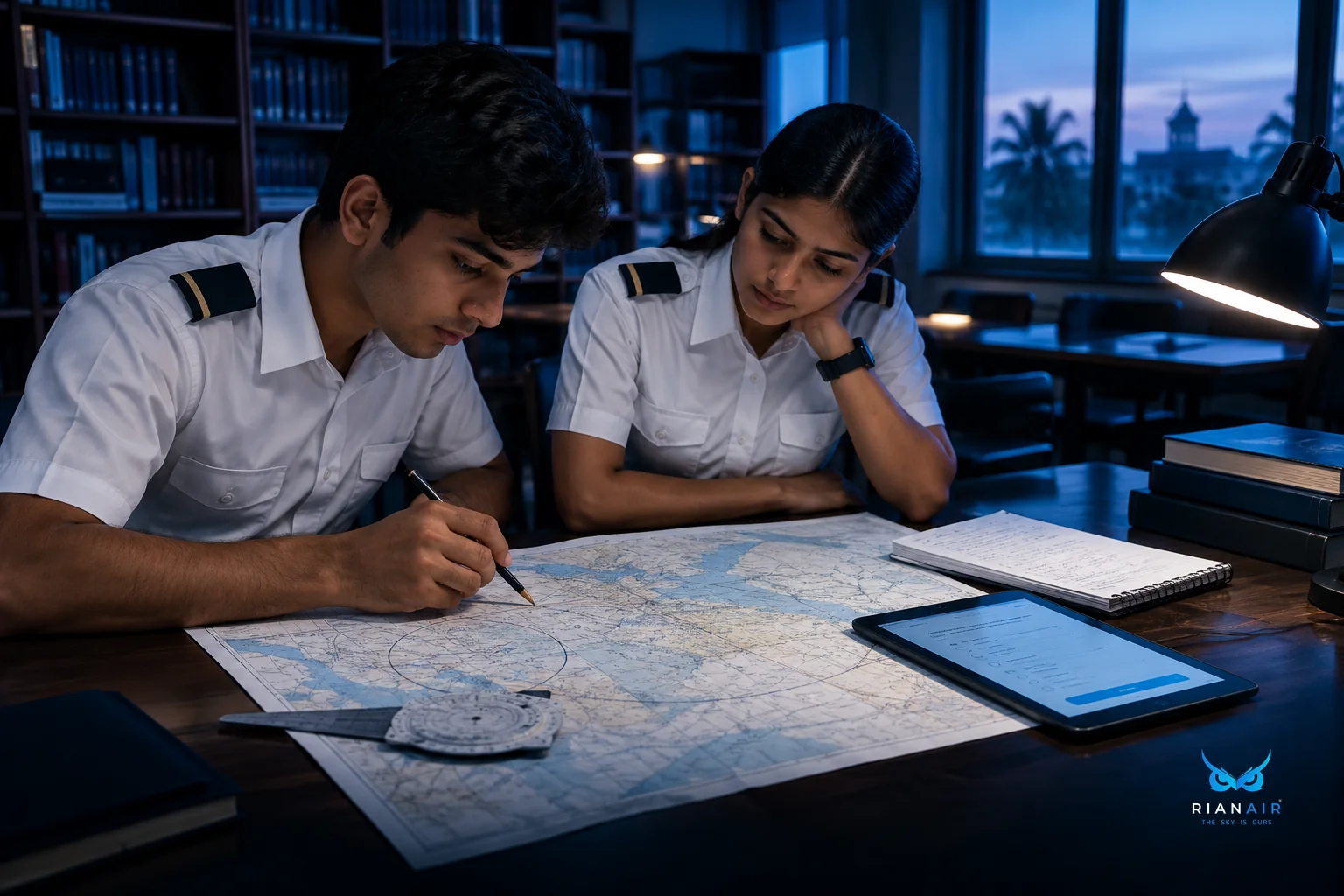
The 24x7 library holds navigation, meteorology and regulation material. Ground school is mostly self-study between classes, so students can read there late in the evening or early in the morning.
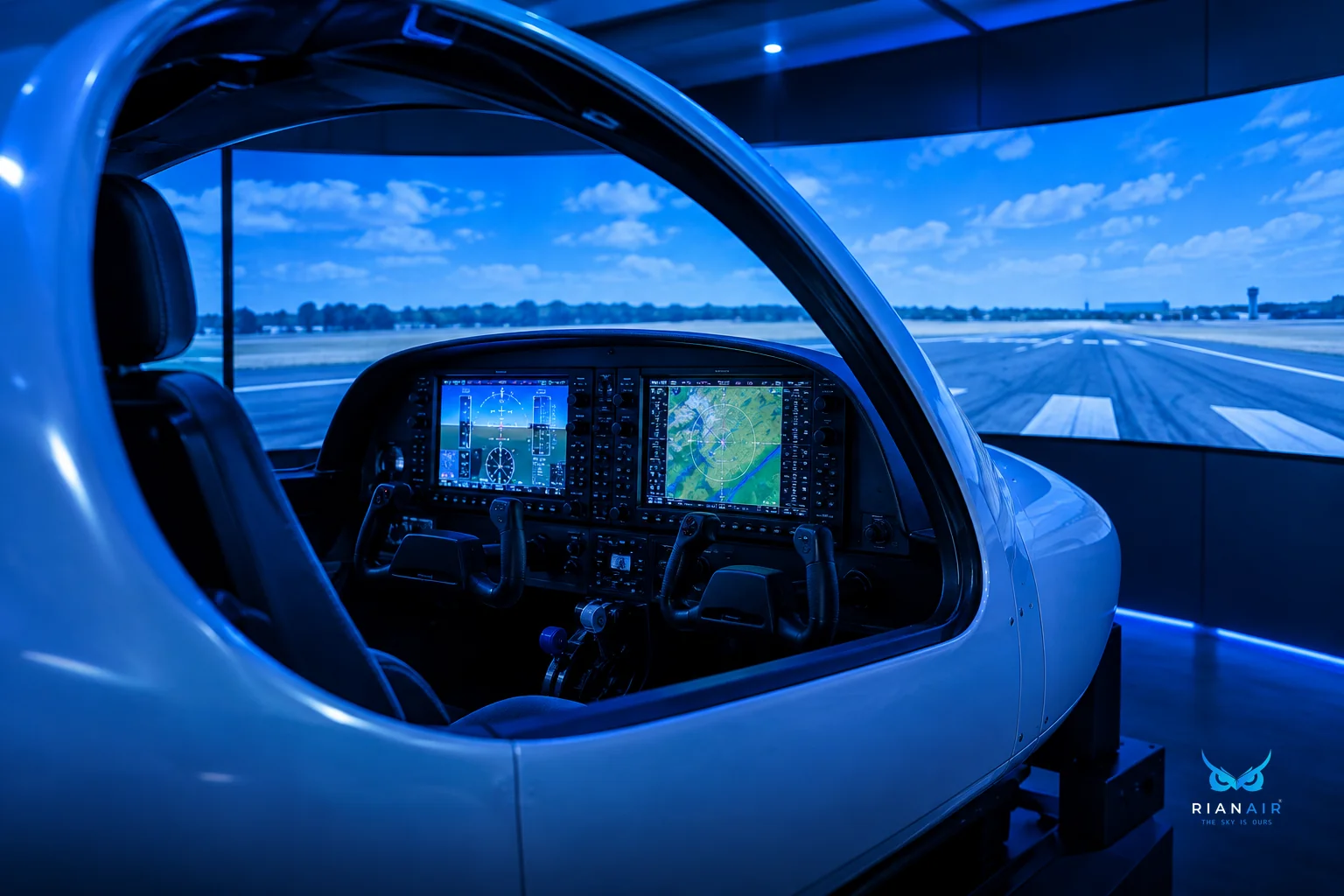
The DA40/42 hybrid simulator uses an original G1000 glass cockpit with a canopy set-up and a wraparound display. Students see the same instruments they will meet in a modern glass-cockpit trainer, which makes navigation and instrument theory easier to picture.
DGCA's September 2025 ranking system for approved flying training organisations awards 5 points for a dedicated ground school and approved simulators, 3 for the ground school and 2 for the simulators. That is a useful checklist when you compare any academy.
Reviewers of Rian Air praise the academy's simulators, infrastructure and dedicated study facilities. Our guide to what each ground subject prepares you for shows how simulator time ties back to the theory papers.
Study With RAPT From the First Week
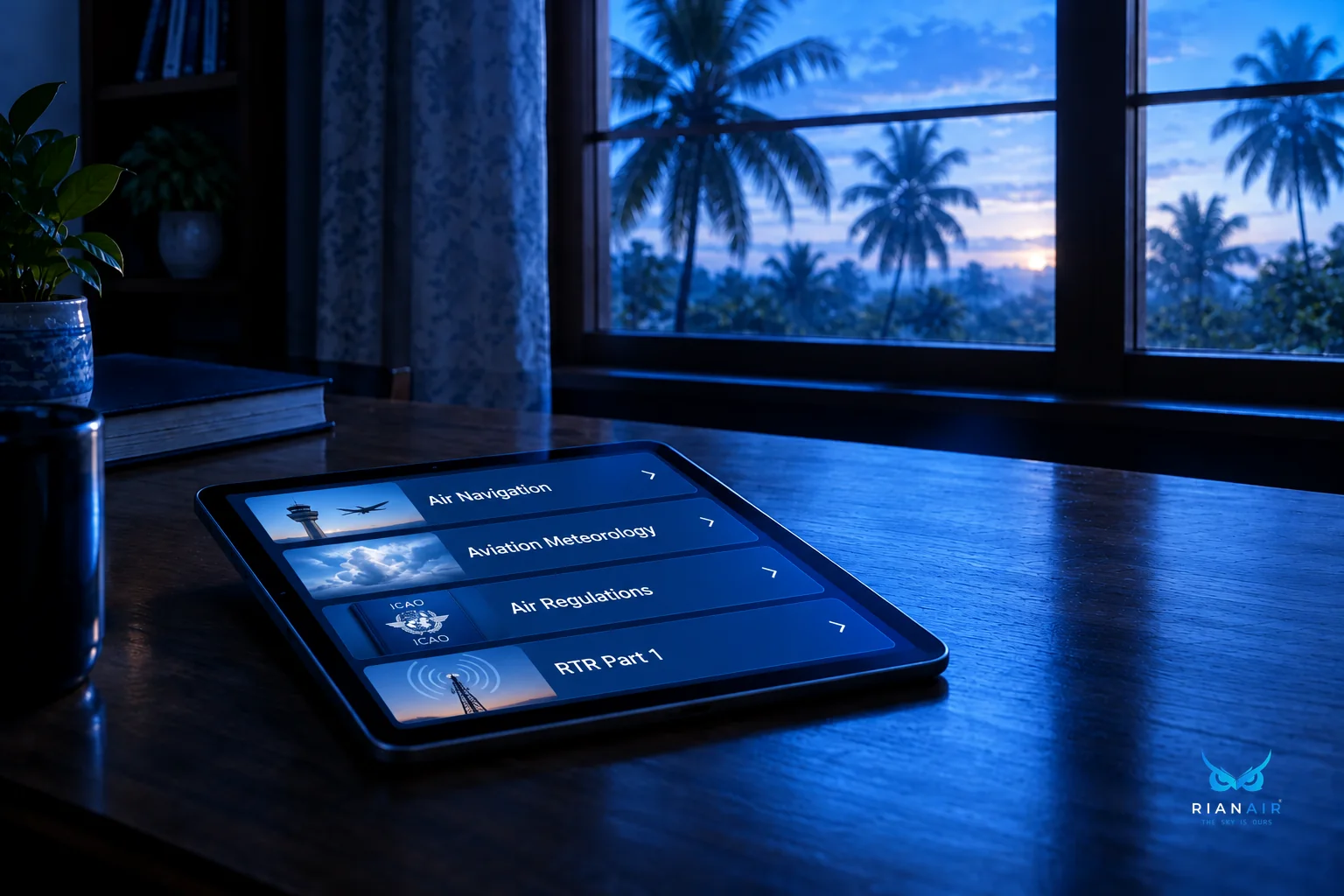
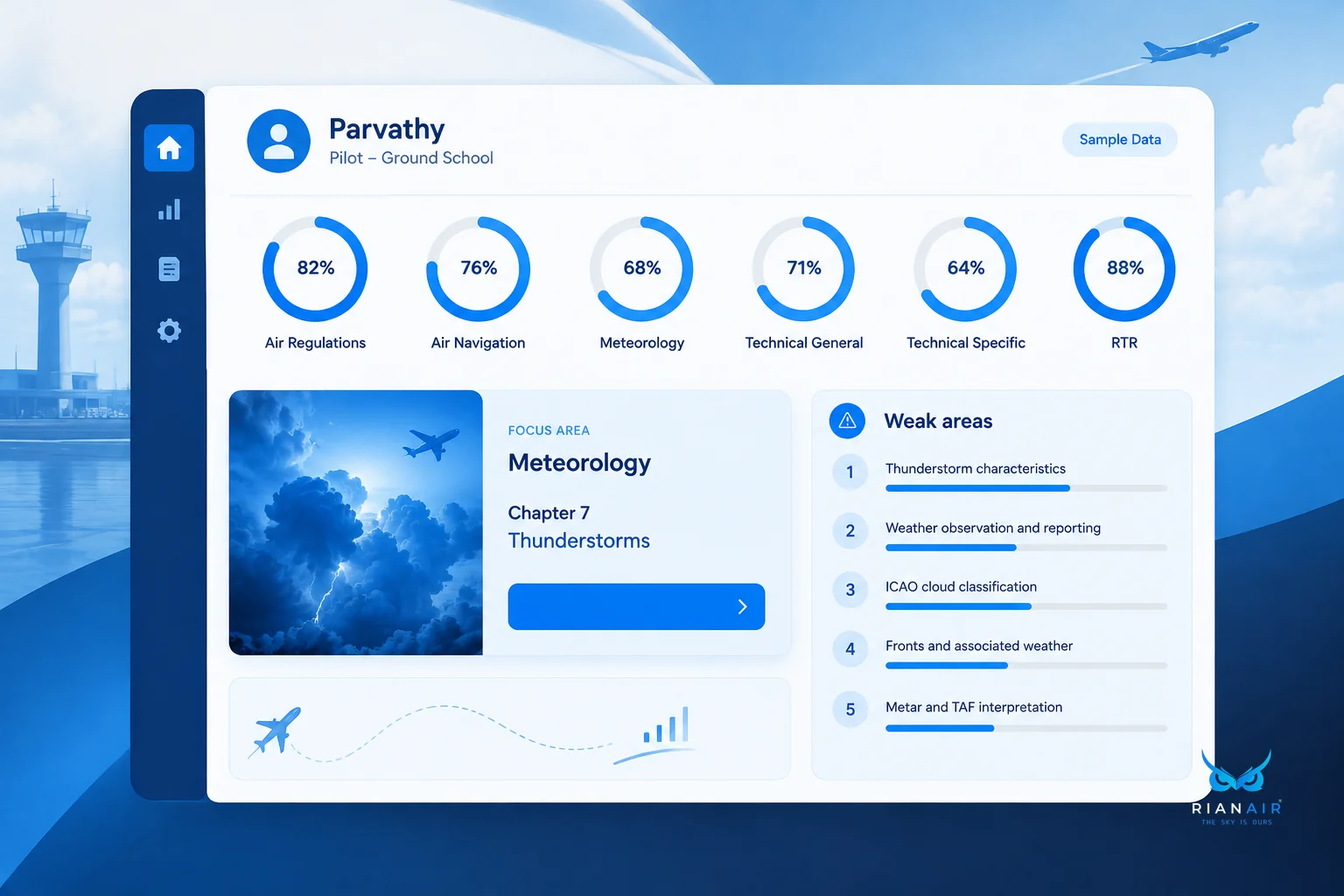
RAPT is Rian Air's pilot career platform, available on web, Android and iOS. It holds a question bank of over 20,000 questions, including 4,440 Air Law and Air Regulations questions, with answers and explanations. Thane students get RAPT access as part of ground training.
The free demo is a smaller slice: 500 exam-style questions for CPL and ATPL subjects. It is not the full bank, so treat it as a progress check. Attempt it, see which topics you miss, and decide how much classroom help you need. You can try the free RAPT demo before you commit to any batch.
Students describe the app in their own words. Sachu (5★) wrote that "the app is simple to use, informative, and great for aviation students". Mihir F. (5★) wrote, "The app is really good, there are a lot of questions in it."
The best way to use it is a loop: read a chapter in class, answer practice questions that night, and revisit the explanations for every miss. Do this weekly, not in the last month before an attempt.
Relocating From Maharashtra, Gujarat, Madhya Pradesh or Goa
Easy relocation is available for students from all over Maharashtra, Gujarat, Madhya Pradesh and Goa. Many start with online ground training from home, then move to Thane for in-person classes and simulator sessions. Families can test the teaching before they commit to a move.
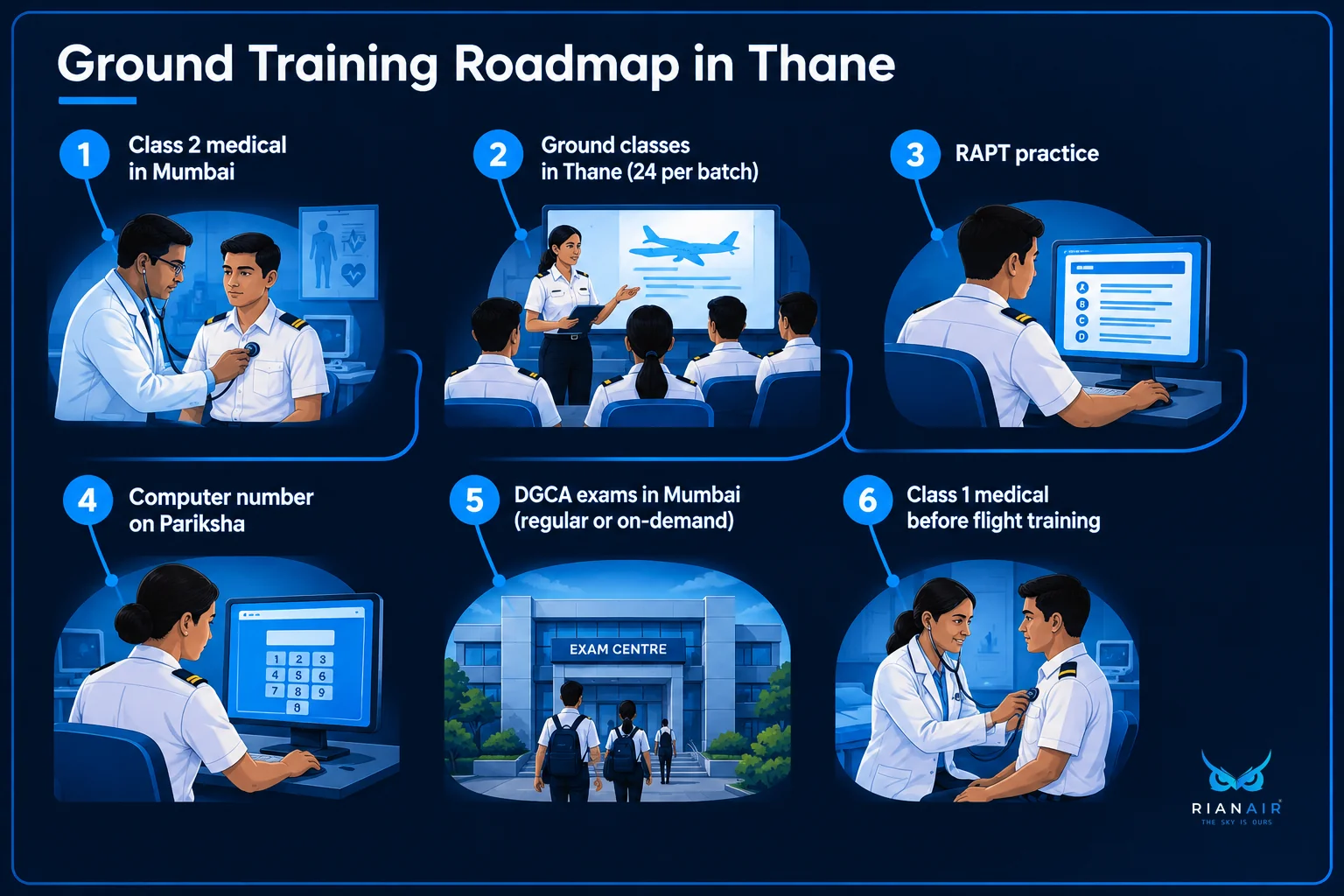
The order of steps is the same for every student:
- Class 2 medical at a DGCA-approved examiner in Mumbai.
- Enquire and attend a demo class if you want to see the teaching first.
- Join a 24-student batch in Thane, online or in person.
- Practise on RAPT every week alongside classes.
- Apply for your computer number on the DGCA Pariksha portal.
- Sit the DGCA exams in Mumbai, regular or on-demand.
- Class 1 medical at Nanavati Hospital before flight training.
Call the admissions team on +91 737 787 7273, email [email protected], or use the enquiry form to confirm the current introductory fee and the technical-paper schedule. You can also follow our study tips on Instagram and watch classroom walkthroughs on YouTube.
Frequently Asked Questions
Do I need to clear every exam before flight training begins?
We recommend clearing all exams before flight training begins. In India, some exams can be cleared alongside flight training, so it is possible to overlap, but finishing theory first leaves your flying schedule free of exam dates and revision, and keeps your plan simple.
Can I begin online and move to the Thane classroom later?
Yes. Online ground classes are already running for enrolled students. Once the centre is inaugurated, they continue with simulator sessions and any subjects they missed, and can study in our library.
When should I apply for a computer number?
Apply on the DGCA Pariksha portal once your documents are ready, because every DGCA pilot exam is booked against that number. DGCA publishes the application window and tentative exam dates on its website and on pariksha.dgca.gov.in, so check the schedule before you plan a sitting.
What happens if I fail a paper?
Under the current DGCA rule you retake the failed paper after a 42-day cool-off period. That is the rule as of now, and DGCA may remove it in future. Use the six weeks to revise one subject using RAPT's practice questions rather than rereading everything.
How long does a passed DGCA exam stay valid?
Every passed DGCA exam stays valid for 5 years. That gives you time to finish flight training and apply for your licence without sitting the paper again, though you should plan the remaining steps so none of your passed papers expires before you submit your documents.
How many flying hours does a CPL need?
A CPL in India needs not less than 200 hours of flight time as a pilot of an aeroplane, under Section J of DGCA's Aircraft Rules, 1937. That total must include at least 100 hours as Pilot-in-Command, 20 hours of cross-country flying as Pilot-in-Command, 10 hours of instrument time (no more than 5 on an approved simulator) and 5 hours of night flying.
Those hours are flown at an approved flying school, so ground classes and simulator sessions in Thane do not replace them. Plan the flying phase separately from classroom study.
Is RTR a separate exam from the three theory papers?
RTR has its own Part 1 written exam and Part 2 oral exam, each with its own fee, which is why the cost table lists it separately.
Is the Thane fee different from other Rian Air centres?
Our introductory fee is ₹1,00,000 in both Delhi and Thane, including RTR, and ₹1,25,000 in Kerala, all plus taxes. Delhi and Thane are introductory prices, so confirm the current figure with the team before you pay, and ask what each fee covers.
When do Thane batches start?
Classes at the Thane centre start on 20 December 2026, Monday to Saturday, in a 10 am to 1 pm batch and a 2 pm to 5 pm batch. Online ground classes have already started for enrolled students. To confirm your batch, call +91 737 787 7273 or email [email protected].
Recommended Resources
Start Your Pilot Journey Try Our Free RAPT Demo Now Home Rian Air