Is pilot training a good option in India now?
Is pilot training a good option in 2026? Yes, if you treat the license as the start of a working career, not the finish line. Most unemployed pilots aren't victims of a bad market. They took long breaks, stopped studying, or let their currency lapse. Discipline after the CPL decides who flies and who doesn't.
Key Takeaways
- Unemployment is mostly behavioural: long breaks, expired currency, and skipped paperwork sideline more pilots than any hiring slowdown.
- Momentum matters: clearing the ATPL exam right after your CPL, while ground school knowledge is fresh, saves months of re-study later.
- Bridge pathways exist: ground instructor, flight instructor, charter (NSOP) operations, and air ambulance work all keep you flying and earning while you wait for an airline seat.
- Demand is real but selective: the article's own figures point to hundreds of thousands of pilot vacancies by the mid-2030s, but airlines are choosing candidates who stayed current, not just those who hold a license.
- The clock never stops: a foreign CPL or an idle logbook loses value fast if you're not actively flying, studying, or working in aviation.
Pilot Training Snapshot: Facts at a Glance
| Question | Practical Answer |
|---|---|
| Is pilot training worth it in 2026? | Yes, for candidates who stay current and treat licensing as ongoing, not one-time |
| Biggest cause of pilot unemployment | Career breaks longer than 6-12 months without flying or study |
| Best pathway while waiting for airline hiring | Ground instructor or flight instructor roles |
| When to clear ATPL | Immediately after CPL, while ground school subjects are fresh |
| Alternative flying roles besides airlines | Charter operations (NSOP), air ambulance, corporate flying |
| Typical time from ground school start to CPL | 18-24 months depending on training location |
| Global pilot demand forecast (2034) | Hundreds of thousands of new pilots projected by industry outlooks |
Is Pilot Training a Good Option in 2026?
Yes, pilot training remains a good option, but the definition of "good" has changed. It's not just about clearing the CPL anymore. It's about proving you're airline-ready long after your last exam.
Long-range industry forecasts still point to a large hiring wave. CAE's Aviation Talent Outlook estimates demand for roughly 300,000 new pilots by 2034. Boeing's outlook projects a need for over 2 million new aviation personnel worldwide over the coming decade.
If you want to check these figures directly, search "CAE Aviation Talent Forecast" and "Boeing Pilot and Technician Outlook" for their current published editions. Airline hiring in the US has also picked up pace this year, with graduate placements running well ahead of last year's numbers.
The paradox is real. Demand is high on paper, yet many freshly licensed pilots struggle to land their first job. That gap isn't a market failure. It's a filtering process, and the pilots who fall through are usually the ones who stopped acting like professionals the day they got their license.
In Delhi, Mumbai, and Thrissur, where Rian Air runs its ground and simulator training, the same pattern shows up locally. Students who kept flying, studying, or teaching between their CPL and their first interview get hired faster than those who waited at home for a call.
Why Are Trained Pilots Still Unemployed?
Trained pilots stay unemployed mainly because they stop being pilots between exams and interviews. A gap year, a "let me relax first" break, or an outdated logbook signals to recruiters that the candidate isn't serious about the profession anymore.
The most common pattern goes like this: a student finishes their CPL abroad, comes home, and treats the license like a college degree they can frame and revisit later. That attitude is the single biggest mistake in Indian pilot training today.
Aviation doesn't work like a degree. A B.Com or B.Tech certificate doesn't expire. A pilot's currency does. Recency requirements, medical renewals, and simulator checks all have shelf lives. A break of six to twelve months without flying or study is the point at which recruiters start asking hard questions. Miss your renewal windows, and you're not "a pilot who took a break." You're not current, and airlines treat that as a red flag.
Becoming a pilot isn't really about flying. It's about paperwork, currency, and staying visibly active in the industry between checkpoints.
Other frequent causes include DGCA CBT scores low enough to limit which airlines will interview you, since some carriers use ground-exam performance as a shortlisting filter, not just a pass/fail bar. Check the current DGCA CBT passing and cutoff criteria directly with your training academy before you sit the exam, since requirements can change between exam cycles.
Poor English proficiency scores and a habit of skipping recurrent simulator sessions because "I'll do it before the interview" add to the same problem. Interviews often come with two weeks' notice, not two months.
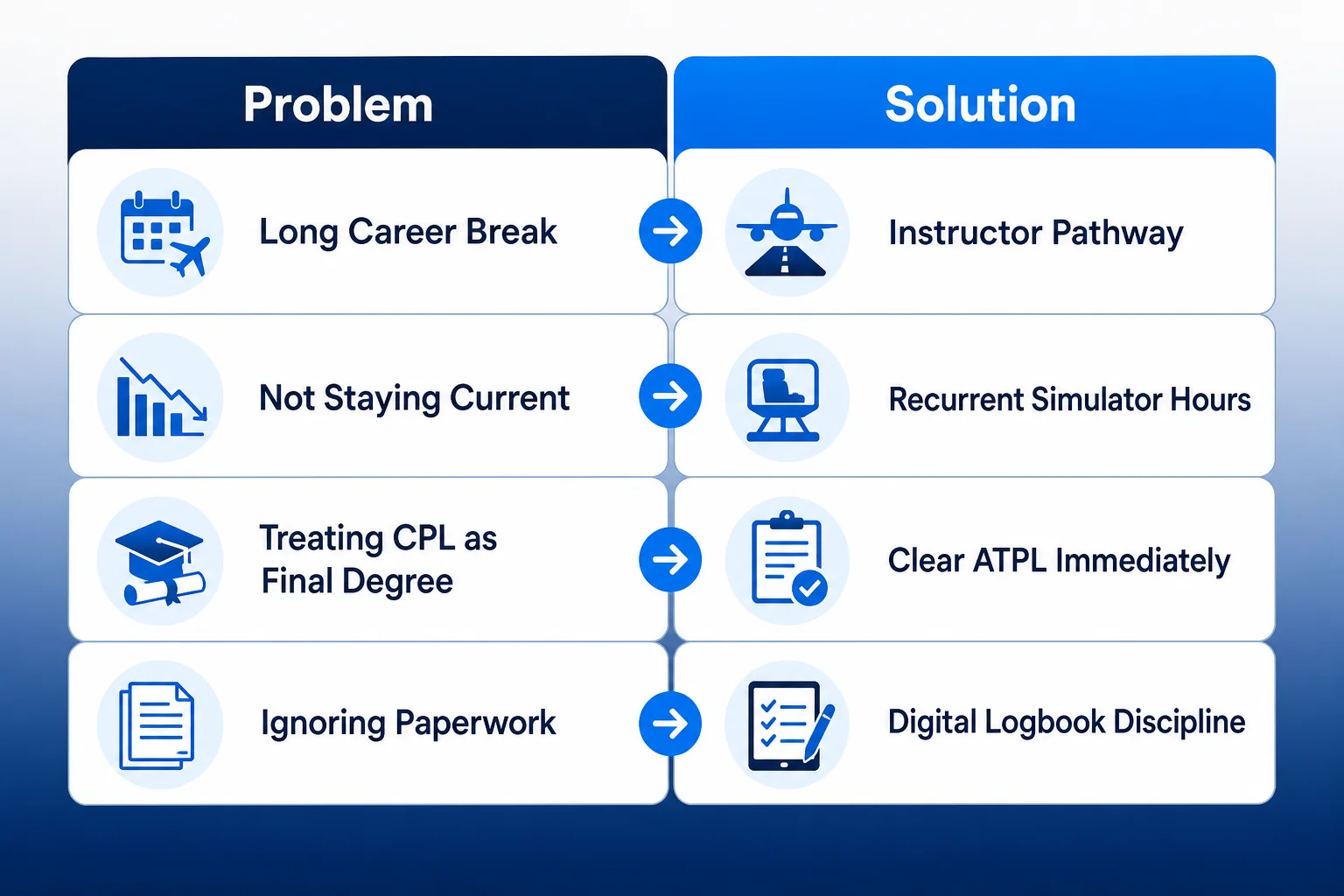
Problem vs Solution: The Real Issues Behind Unemployed Pilots
Here is the direct mapping between what actually causes unemployment after training and what fixes it.
| Problem | Why It Hurts Employability | Solution |
|---|---|---|
| Long break after CPL | Currency lapses, recruiters see a gap they can't explain | Take a ground or flight instructor role immediately |
| Treating CPL like a finished degree | No further study means falling behind on regulation changes | Enroll for ATPL modules right after CPL |
| Not staying current on flying hours | Lapsed recency requires re-checks, costing time and money | Log recurrent hours monthly, even in a simulator |
| Ignoring paperwork and logbook discipline | Incomplete records slow down license validation and job applications | Maintain a digital logbook updated after every flight |
| Foreign license complacency | A foreign CPL alone doesn't guarantee an Indian airline seat | Complete DGCA validation and stay active in Indian aviation circles |
| No backup flying role while waiting | Zero flying hours between CPL and airline hiring looks worse than a lower-hour active pilot | Take charter, NSOP, or instructor work to keep flying |
Pathways That Keep You Employable After CPL
The pathways below keep a pilot flying, earning, and visible to recruiters instead of sitting idle after the CPL is issued. If you want the actual pay ranges and fee offsets for each of these roles, ask your training academy directly for their current instructor stipend and charter starting-pay figures, since these vary by academy and by year.
Ground Instructor
A ground instructor role at a DGCA-approved academy keeps you close to regulation updates, exam patterns, and syllabus changes. It also builds teaching credibility, something airlines value in a first officer who may later train juniors. It also gives you a paid reason to stay in aviation instead of an unexplained gap on your record.
Flight Instructor
Becoming a flight instructor is the most direct way to build flying hours without paying for them. Many low-income aspirants use this route specifically to skip the type rating fee early and still log the hours airlines want to see. Read more about this on our page comparing airline pilot, charter pilot, and flight instructor pathways, which lays out the trade-offs of this bridge role in more depth.
Charter Operations (NSOP)
Non-Scheduled Operator Permit (NSOP) charter companies fly smaller aircraft on demand, often for corporate or private clients. These roles need pilots who can adapt fast and hold current licenses. They're a realistic stepping stone toward a scheduled airline seat, and they pay you to keep flying instead of leaving your logbook idle.
Air Ambulance Operations
Air ambulance flying demands sharp discipline and constant readiness, since missions are unscheduled. It's demanding work, but it keeps flying hours climbing and exposes pilots to high-pressure decision-making that airlines respect.
Airline Pilot
This is the destination role most aspirants train for. But airlines rarely hire straight from ground school. They hire pilots who show a continuous, documented record of flying, studying, and staying current between their CPL and the interview date.
Why You Should Clear ATPL Right After CPL
Clearing the ATPL exam immediately after CPL is one of the smartest moves a new pilot can make. It's not mandatory for a first job. But it removes a future obstacle before it becomes one.
Ground school knowledge fades fast once flying starts. Waiting a year or two to attempt ATPL papers means re-learning subjects you already studied once. Clearing them right after CPL, while the material is fresh, is far more efficient than restarting from scratch later.
Airlines also favor candidates who already hold ATPL theory credits, since it shortens the time to command upgrade later in their career. It signals that a candidate treats their license as a career, not a checkbox. For a full breakdown of subjects and structure, see our guide on becoming a commercial pilot in India after 12th.

Do's and Don'ts After Getting Your CPL
These practical rules separate pilots who get hired from pilots who wait indefinitely for a callback.
- Do keep a digital logbook updated after every flight or simulator session.
- Do clear ATPL papers within months of your CPL, not years later.
- Do take a ground or flight instructor role instead of sitting idle.
- Do renew your medical and recency checks before they lapse, not after.
- Don't assume a foreign license alone guarantees an Indian airline seat.
- Don't treat your CPL as a finished qualification like a college degree.
- Don't take extended breaks "to relax" before job hunting begins.
- Don't ignore paperwork, validations, or renewal deadlines until an interview is scheduled.
How Rian Air's RAPT Platform Keeps You Airline-Ready
Rian Air's RAPT™ platform tracks academics, simulator hours, and logbook entries in one place. A student's progress never depends on memory or scattered paperwork. Parents get visibility through a dedicated dashboard, and students get a running record that recruiters can actually verify.
That structure matters most after the CPL, when discipline naturally slips without a syllabus or exam deadline to follow. A digital record of continuous activity, whether ground teaching, simulator recurrency, or charter hours, is what turns "unemployed pilot" into "pilot between roles." Explore how the different post-CPL career intelligence tools can support this stage of training.
For families in Delhi weighing where to start this process, our detailed Delhi pilot training cost and location guide covers ground school options across the city and the wider service area, including Mumbai and Thrissur.
Frequently Asked Questions
Is pilot training still a good option in India?
Yes. Airline expansion and global fleet growth mean genuine demand for new pilots exists. But only candidates who stay current, keep flying, and clear exams promptly actually convert that demand into a job offer.
Why do so many licensed pilots remain unemployed?
Most unemployed pilots stopped flying, studying, or networking after their CPL. Lapsed currency and long unexplained breaks, not a lack of jobs, are the leading causes recruiters cite.
What happens if I take a break right after getting my CPL?
Your recency and confidence both drop. A break longer than six to twelve months usually means re-checks, refresher simulator sessions, and a harder time explaining the gap to recruiters.
Should I clear ATPL immediately after CPL?
Yes. Ground school material fades quickly once flight training begins. Attempting ATPL papers soon after CPL is far more efficient than restarting preparation years later.
What is the ground instructor pathway?
It's a role teaching ground school subjects at a DGCA-approved academy. It keeps you close to regulation changes and syllabus updates while you wait for an airline opening, and it pays you to stay active rather than idle.
How does the flight instructor pathway help unemployed pilots?
Flight instructing builds paid flying hours without the cost of a type rating, keeping your license active and your logbook growing while you search for an airline role. Ask your academy for its current instructor stipend structure so you can weigh it against a type rating fee.
What is charter operation (NSOP) flying?
NSOP stands for Non-Scheduled Operator Permit, covering charter and on-demand flights. These roles need current, adaptable pilots and often serve as a stepping stone to scheduled airline jobs.
Can air ambulance work help my pilot career?
Yes. Air ambulance flying builds flying hours under real pressure and unscheduled conditions, both of which airlines value when reviewing a candidate's flying history.
Does a foreign CPL guarantee an airline job in India?
No. A foreign license alone doesn't guarantee hiring. DGCA validation, staying current, and remaining visibly active in Indian aviation matter more than where the license was issued. Check DGCA's licence conversion and validation requirements before assuming your foreign CPL transfers automatically.
Is treating a CPL like a college degree a mistake?
Yes. Unlike a degree, a pilot license needs ongoing recency, medical renewals, and continued flying to stay valid and employable. Framing it and moving on isn't an option.
How often should a pilot fly to stay current?
Recruiters generally treat a gap of six to twelve months without flying, teaching, or simulator activity as a warning sign, not a neutral pause. Confirm the exact recency-hour and validity-period requirements for your license category with DGCA or your training academy, since these are tied to specific rules that can change.
What role does paperwork play in pilot employability?
A significant one. Updated logbooks, valid medicals, and current licenses are what recruiters verify first. Missing or outdated paperwork can disqualify an otherwise skilled pilot.
Are DGCA exam scores linked to future employability?
Yes. Some carriers screen candidates partly on DGCA CBT ground-exam performance, not just pass/fail status, when shortlisting for interviews. Confirm the current passing and cutoff criteria with your academy or DGCA before your exam window.
What's the fastest way back into flying after a career break?
Book recurrent simulator sessions immediately, renew any lapsed medicals, and take an instructor or charter role to rebuild both currency and a visible activity record.
Is pilot training worth it for a low-income family given this employment risk?
It can be, if the training plan includes a bridge pathway like flight instructing to offset costs and build hours. Our low-income student pathway guide breaks down realistic options.
Pilot training is still a genuinely good option in 2026, provided you treat the license as day one of a career, not the end of one. Airlines aren't short of demand. They're short of patience for pilots who went quiet after their CPL. Stay current, clear your ATPL early, and pick up a ground or flight instructor role while you wait for that first interview call.
If you're ready to build a training plan that keeps you employable from the first day, start your pilot journey with Rian Air or explore the pathways from ground school to airline cockpit. You can also follow real training moments on Instagram or watch detailed walkthroughs on YouTube.