Inside India's First Library for Pilots in India: What It Offers Students
India's first library for pilots in India is not a reading room with aviation posters on the wall. It is a hybrid study system from Rian Air: physical, BYOD-enabled study spaces in Delhi and Thane, wired directly into RAPT, a digital question bank and logbook platform.
Students bring their own laptop or tablet, log into RAPT on-site, and study the same DGCA material they would at home, but inside a dedicated academic space built for it.
Worth being clear upfront: this is Rian Air's own branded study ecosystem for its enrolled pilot training students, not a public library anyone can walk into. If you are searching for a general reading room at an airport or in your city, this is a different thing entirely — it is a study space built specifically for people going through Rian Air's DGCA ground school, simulator and flight training pathway.
Key Takeaways
- Two locations today: Physical library spaces are open to aspiring pilots in Delhi and Thane, with the Delhi space close to Ramphal Chowk.
- BYOD, not shared terminals: Students bring their own device and log into RAPT; the library provides the desk, the quiet, and the Wi-Fi.
- The real content lives online: RAPT carries a 20,000+ question DGCA bank, a digital logbook, and performance analytics, accessible from the physical space or from home.
- Built around a 97% DGCA pass rate: Rian Air cites this figure across more than 200 trained pilots as the outcome this study system is meant to protect.
- Scholarships plug into the same system: Women Empowerment Program and merit-scholarship students get the same library and question bank access as fee-paying students.
At a Glance: Rian Air's Library for Pilots
| Feature | Detail |
|---|---|
| Physical locations | Delhi (near Ramphal Chowk) and Thane |
| Access policy | Bring Your Own Device (BYOD) for RAPT login |
| Online question bank | 20,000+ DGCA-aligned questions on RAPT |
| Simulator hours in ground package | 5 hours included |
| Commute from Ramphal Chowk to campus | 1-2 minutes |
| Ground school starting fee | ₹80,000, rising up to ₹1.25 lakh with Rian Air, taxes extra |
| DGCA pass rate cited | 97%, across 200+ trained pilots |
| Scholarships | Women Empowerment Program and gender-neutral merit scholarship, eligibility on enquiry |
What Is India's First Library for Pilots?
Rian Air's library for pilots is a combined physical and digital study system built specifically for DGCA ground school aspirants, not a general reading hall. It pairs quiet physical desks in Delhi and Thane with RAPT's online question bank, so revision happens the same way whether a student is on campus or at home.
Most flying academies in India give students a textbook list and a classroom timetable. Revision after class hours is left to the student: a physical book, maybe a WhatsApp group with recycled question papers passed down from older batches. That gap is where a lot of repeat DGCA attempts come from.
Rian Air built the library to close that gap. The idea is simple: give students a dedicated place to study, and give that place the same digital backbone the classroom already uses. That backbone is RAPT, which Rian Air describes as India's first technology-driven pilot training ecosystem.
RAPT already runs the ground training, the question bank, the digital logbook and the parent dashboard. The library extends it into physical space, so a student who wants a quiet desk away from home does not have to choose between studying with RAPT and studying somewhere calm. For a deeper look at how that question bank is structured subject by subject, see the DGCA online ground training breakdown.
How Does the Physical Library Space Work in Delhi and Thane?
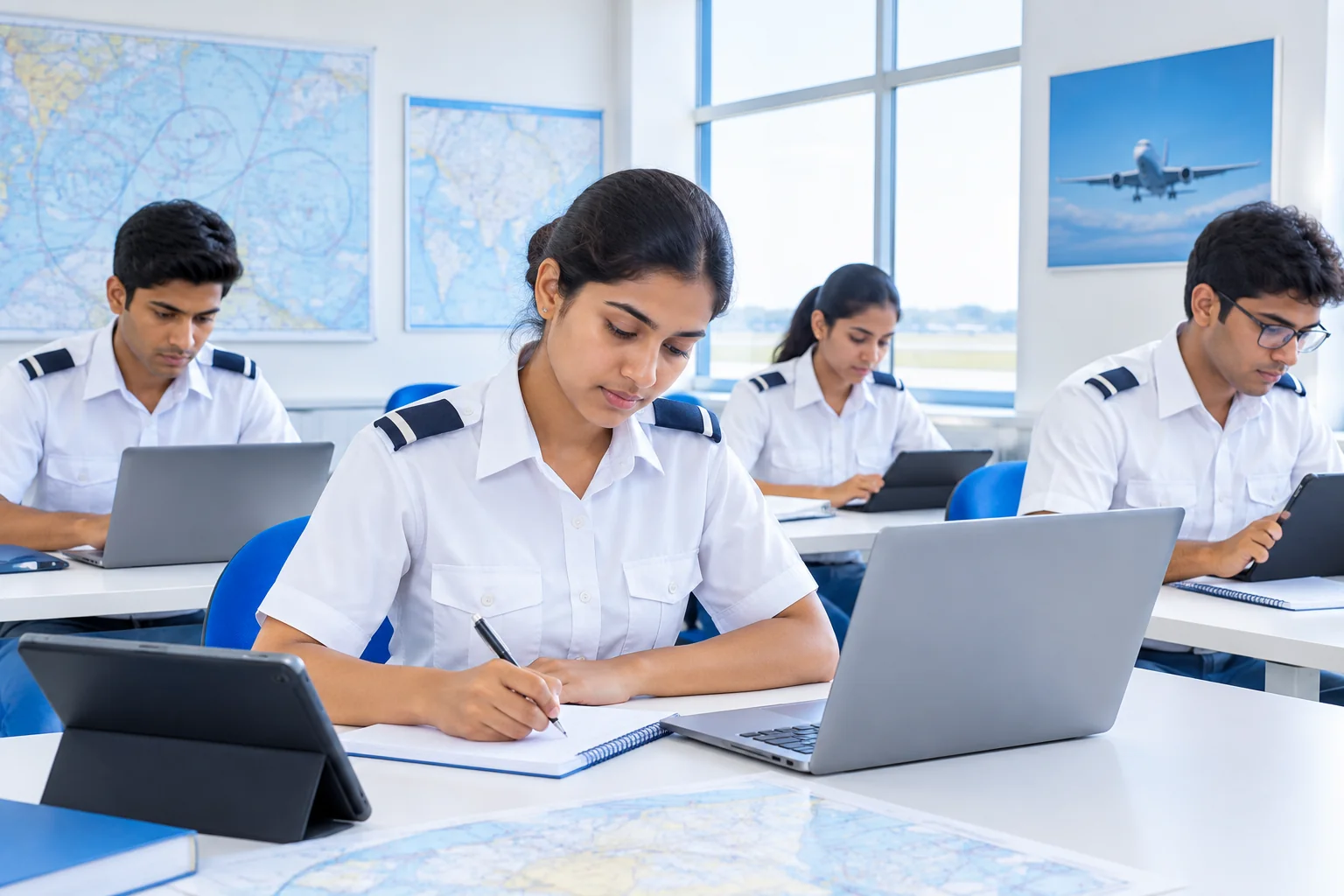
The physical library works on a Bring Your Own Device policy: students carry their own laptop or tablet, connect to the space's Wi-Fi, and log into RAPT just as they would at home. Rian Air does not hand out shared terminals; the space itself is the resource, not the hardware.
A shared-terminal reading room means queueing for a machine, or studying on whatever software someone else left open. BYOD means a student's progress, bookmarks and attempted questions inside RAPT stay personal and continuous, whether they are at the library, at home, or on a train.
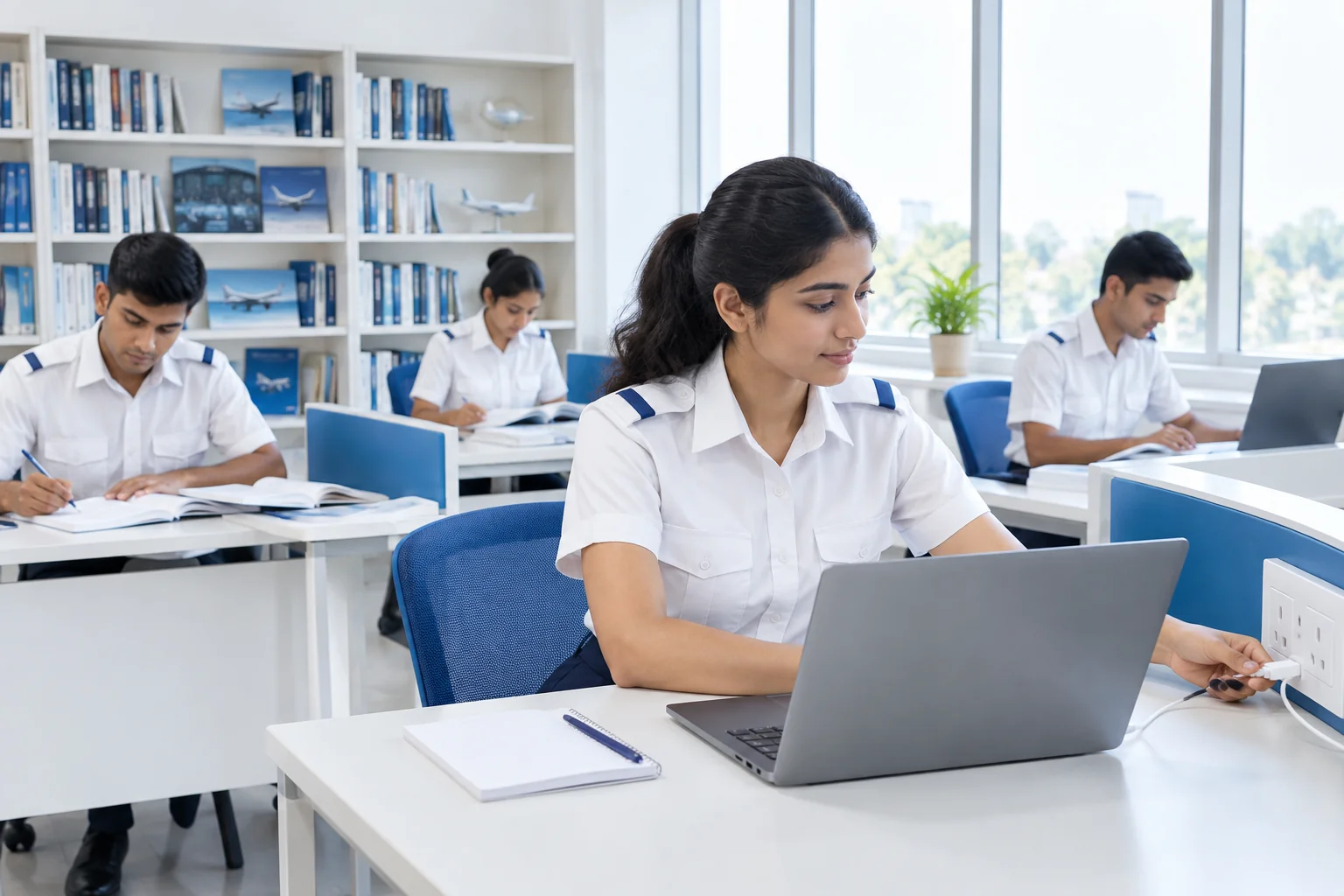
The Delhi library sits a 1-2 minute commute from Ramphal Chowk to Rian Air's own campus, which keeps the gap between ground class, simulator slot and library revision small enough that a student can realistically use all three in one afternoon. Students based further out in Delhi can read the full local picture in the beginner's roadmap to ground training in Delhi.
The Thane library serves students training in and around Mumbai, giving Maharashtra-based aspirants the same BYOD setup without needing to travel to Delhi or Kerala for structured revision time. Rian Air's service area spans Delhi, Mumbai and Thrissur, and the library network is built to follow where its students actually are.
Operating hours and seating capacity can vary by batch and by location, so the library is not a drop-in-anytime public facility. The most reliable way to check current timings or whether seats are available for your batch before you travel is to use the enquiry form to start your pilot journey; enrolled students can also raise this directly with their batch coordinator, who holds the day-to-day schedule for each location.
What Is Inside the RAPT Online Library?
RAPT's online library centres on a DGCA-aligned question bank of more than 20,000 questions, covering every ground school subject a CPL aspirant has to clear. That is the content a student accesses from either library location, or from any device at home.
Alongside the question bank sit two more pieces: a digital logbook that tracks flying and simulator hours as they accumulate, and performance analytics that flag which subjects a student is weak in before an exam, not after a failed attempt. Parents get visibility into the same data through the parent dashboard, which several families use to track progress without waiting for a phone call home.
Ground training packages include 5 simulator hours as part of the course, so the library's analytics and the simulator schedule are meant to work together: a student who is weak on a specific technical subject can see it flagged before their next simulator slot, rather than discovering the gap mid-session.
The academy's own C172 fixed-base simulator, described as Kerala's first, is where much of that practical correction happens; you can read a full walkthrough in a day in the life of C172 simulator training in Kerala.
None of this is unique to a sit-down desk. A student revising from a hostel room in Thrissur or a kitchen table in Mumbai touches the same question bank as someone sitting in the Thane library. The physical space adds a quiet, structured environment; it does not gate the content behind a location.
How Does This Compare to a Traditional Academy Reading Room?
A traditional ground training reading room gives students a shared space and a shelf of textbooks, with revision largely self-directed and disconnected from the classroom's digital tools, if the academy has any. Rian Air's library ties the physical space directly to the same question bank and analytics used in class.
That is a structural difference, not a quality judgement on any particular institute. Many ground training facilities across Delhi, Mumbai and Kerala run perfectly capable classroom instruction; the gap most commonly sits in revision support after hours, when a student is on their own with whatever notes they took that day.
Rian Air's answer is to make the after-hours study session look like the classroom session: same question bank, same analytics, same logbook, just without an instructor standing at the front. Students weighing their options city by city can compare the ground school landscape in the Mumbai vs Delhi vs Kerala ground classes comparison.
Why Does a Curated Library Help You Pass the DGCA Exam on the First Attempt?
A curated library helps because repeat DGCA failures usually come from unstructured revision, not from weak classroom teaching. A question bank with analytics shows a student exactly which subject needs more time, instead of leaving them to re-read the same chapter they already understood.
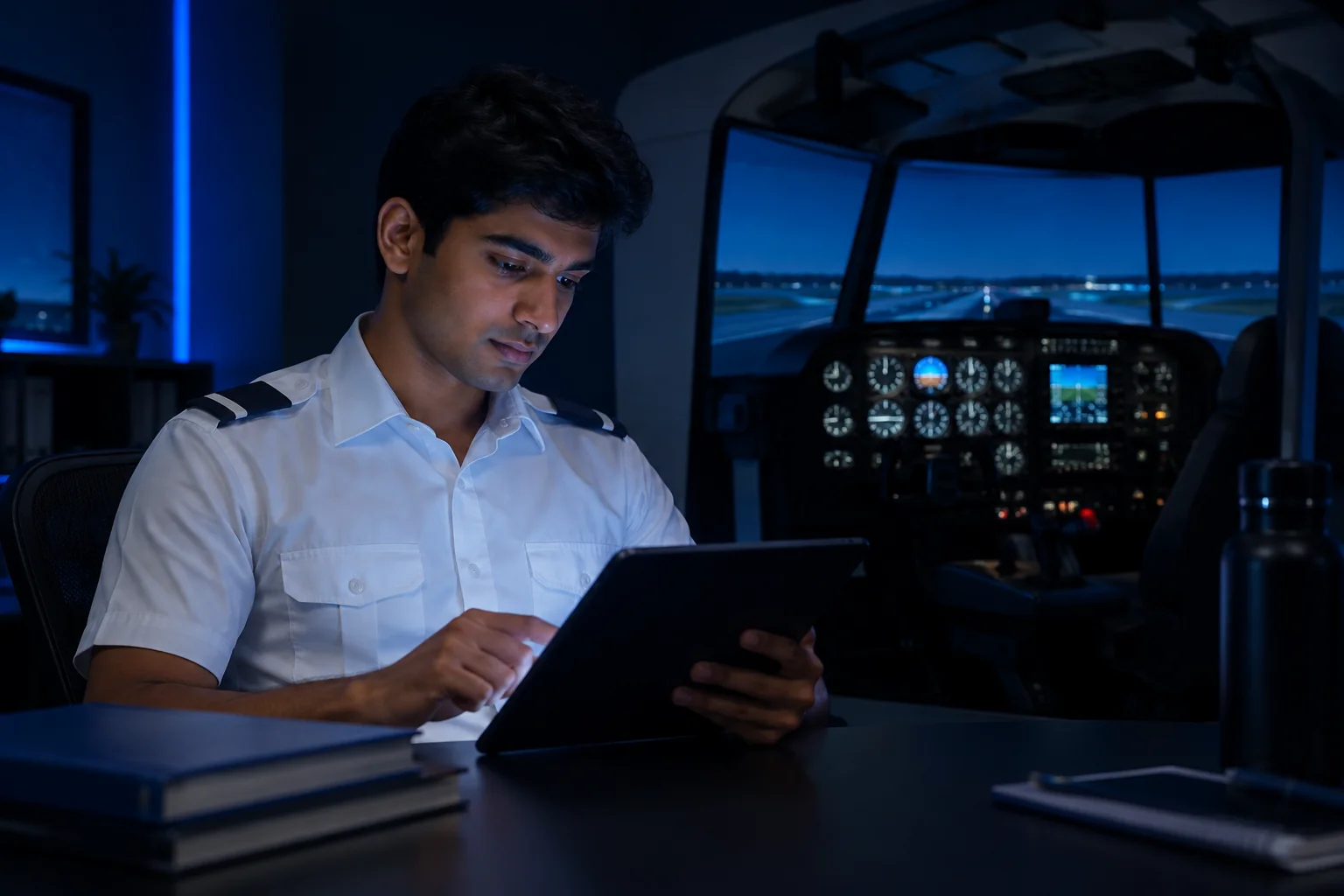
Rian Air cites a 97% DGCA pass rate across its 200+ trained pilots, a figure the academy attributes directly to this structured revision model rather than to the classroom hours alone. A student who clears ground school on the first attempt saves months of delay and avoids paying to re-sit a paper.
The common mistakes that push students into repeat attempts tend to repeat themselves too: skipping weak subjects, cramming the question bank without understanding the regulation behind it, and losing track of how many practice hours they have actually logged. A closer look at these patterns is in the parents' guide to passing DGCA on the first attempt.
Rian Air also backs this with a money-back promise tied to the DGCA exam outcome, with specific terms and conditions available on request. The structured library and question bank exist, in part, to make that promise sustainable rather than a marketing line; the exact conditions are worth checking before you enrol, through the enquiry form.
Who Can Use the Library: Students, Scholars and Sponsored Candidates?
Every enrolled Rian Air student can use the library and RAPT question bank, including those on the Women Empowerment Program and the gender-neutral merit scholarship. Access does not change based on how the fee was financed.
The Women Empowerment Program offers near-zero fee DGCA ground training for aspiring women pilots, based on merit, with a refundable commitment deposit. Specific eligibility and amounts are confirmed case by case; aspirants should ask through the enquiry form rather than assume a fixed figure. The same applies to the merit-based scholarship, which is open to all genders.
Parents sponsoring a student's training get their own layer of visibility through the parent dashboard, which surfaces the same question bank progress and logbook data the library is built around. Families weighing the full cost of the pathway, including ground school, simulator hours and flight training, can start with the pilot training cost breakdown for hidden fees parents miss.
For aspirants set on training abroad for part of the CPL pathway, the library and RAPT access travel with them. Rian Air runs structured CPL pathways both within India and internationally, including Tunisia and Malta, and RAPT's online question bank works the same way from either country.
Frequently Asked Questions
Where is the physical library for pilots located?
Rian Air runs physical library spaces for aspiring pilots in Delhi and Thane. The Delhi location sits roughly 1-2 minutes from Rian Air's own campus near Ramphal Chowk.
What does BYOD mean for the RAPT library?
BYOD means students bring their own laptop or tablet to log into RAPT; the library provides desks, Wi-Fi and a quiet study environment rather than shared computers.
Is the RAPT question bank only available inside the physical library?
No, the RAPT question bank is accessible from any device with an internet connection, at home or elsewhere; the physical library simply offers a dedicated, distraction-free space to use it.
How many questions are in the RAPT question bank?
RAPT's DGCA-aligned question bank contains more than 20,000 questions covering every ground school subject a CPL aspirant needs to clear.
Does the library help with simulator preparation too?
Yes, performance analytics inside RAPT flag weak subjects before simulator sessions, and ground training packages include 5 simulator hours that connect directly to that revision data.
What is Rian Air's DGCA pass rate?
Rian Air reports a 97% DGCA pass rate across more than 200 trained pilots, which the academy attributes partly to its structured library and question bank model.
Can scholarship students use the library and RAPT for free?
Yes, students on the Women Empowerment Program and the merit-based scholarship get the same library and RAPT access as fee-paying students; specific eligibility is confirmed on enquiry.
Does the library work for students training abroad?
Yes, RAPT and the question bank are accessible from any location, including Tunisia and Malta, where Rian Air runs structured international CPL pathways alongside its India-based training.
Is there a cost to use the physical library space?
Library and RAPT access are part of the enrolled training package; exact inclusions depend on the course a student has signed up for, so it's best to confirm details through the enquiry form.
How does the library connect to the money-back DGCA promise?
Rian Air's money-back promise applies if a student does not clear their DGCA exams, subject to specific terms and conditions; the library's structured revision model is designed to support that outcome directly.
Can parents track library and question bank usage?
Yes, the parent dashboard shows progress data drawn from the same RAPT system the library runs on, giving sponsors visibility into revision activity alongside simulator and flight training progress.
How can I check current library hours or seat availability before visiting?
Hours and seating can vary by location and batch, so check directly rather than assume. Use the enquiry form to ask for current timings and seat availability for the Delhi or Thane location nearest you, or speak to your batch coordinator if you are already enrolled.
Students comparing full training pathways, including Tunisia and Malta routes alongside the India-based ground school and library system, can read the detailed breakdown in CPL training in India vs Malta vs Tunisia.
A library is only useful if it changes what happens before exam day. If you are evaluating ground schools in Delhi, Mumbai or Kerala and want to see how a BYOD study space, a 20,000-question bank and a digital logbook fit into one pathway, start your pilot journey with Rian Air or explore the available pathways first. You can also follow day-to-day library and simulator updates on Instagram or watch training walkthroughs on YouTube.