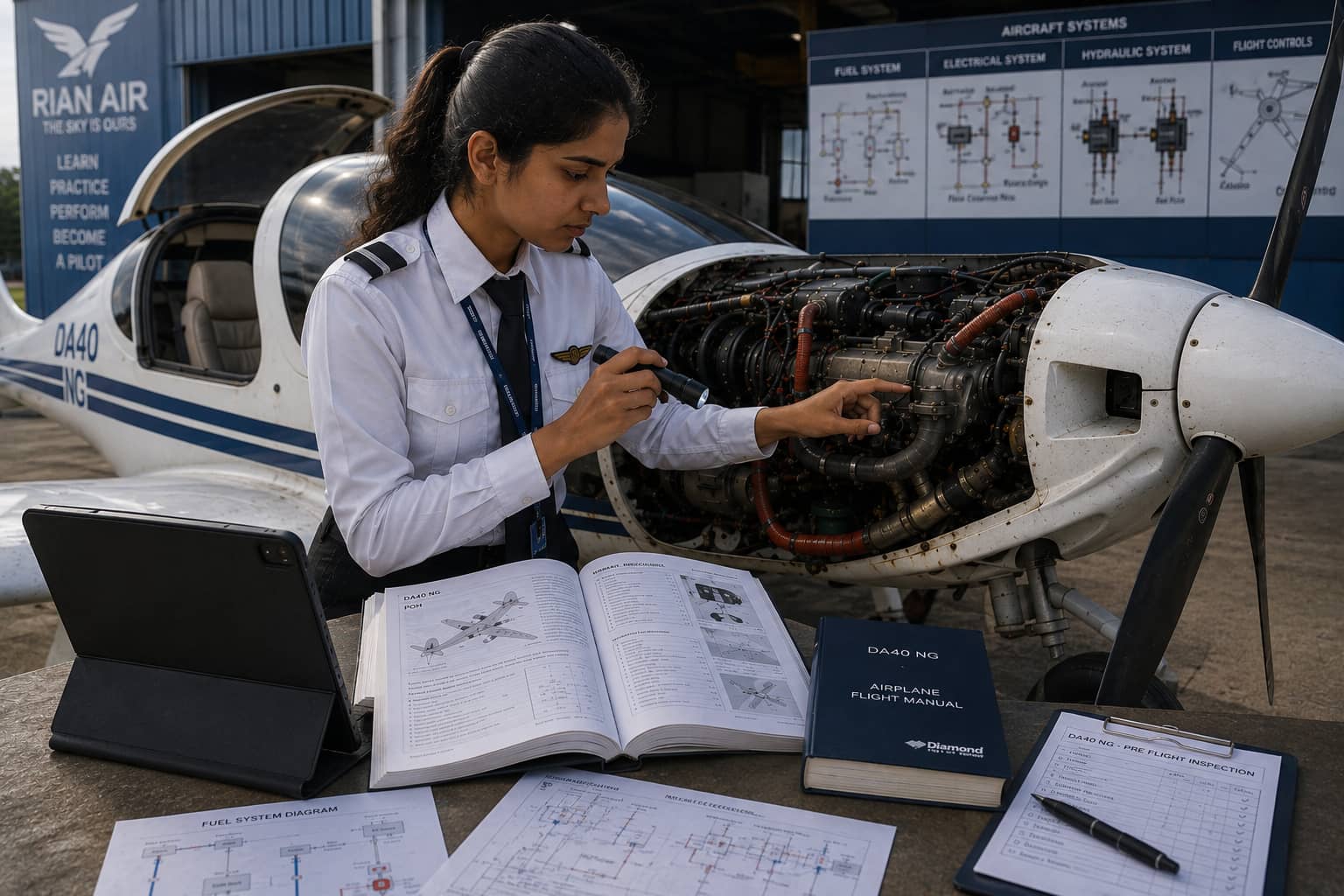
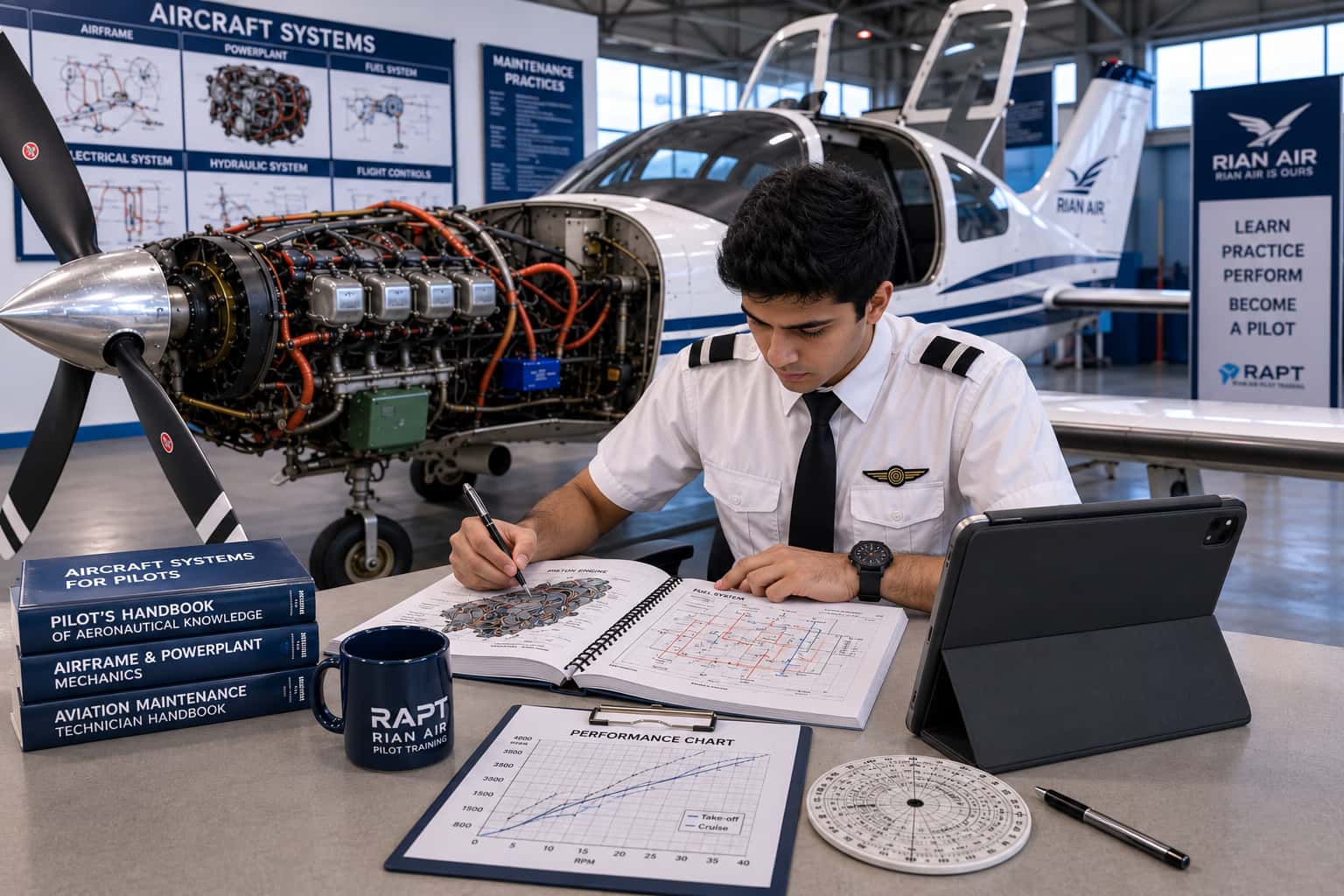
Technical Specific for CPL Pilots is the subject that transforms general aviation knowledge into aircraft-specific expertise. While Technical General teaches how aircraft systems work in principle, Technical Specific focuses on the exact aircraft a pilot flies during training and examinations.
Over the years, I have noticed that many CPL students underestimate Technical Specific because they believe it is simply an extension of Technical General. In reality, Technical Specific requires a much deeper understanding of the aircraft, including limitations, operating procedures, system configurations, emergency actions, and performance data.
For aspiring Commercial Pilot Licence (CPL) holders in India, Technical Specific is one of the most practical subjects because it directly relates to the aircraft they will operate during flight training.
— Capt. Vikas Vikramdas Nair
What is Technical Specific?
Technical Specific is the study of a particular aircraft type used during flight training.
Unlike Technical General, which covers universal aviation concepts, Technical Specific focuses on aircraft-specific information.
Students learn:
Aircraft limitations
Aircraft systems
Aircraft performance
Operating procedures
Emergency procedures
Aircraft documentation
Weight and balance data
Aircraft checklists
💡
Technical Specific teaches pilots how their aircraft actually operates rather than how aircraft operate in general.
Why Technical Specific is Important for CPL Pilots
A pilot may understand aerodynamics and aircraft systems perfectly, but safe aircraft operation requires detailed knowledge of the specific aircraft being flown.
Technical Specific helps pilots:
Operate aircraft safely
Understand limitations
Manage emergencies
Improve decision making
Enhance situational awareness
Reduce operational errors
Students beginning their aviation journey should also read How to Become a Pilot After 12th Commerce in India, which explains the complete CPL pathway and subject structure.
Difference Between Technical General and Technical Specific
Technical General
Focuses on universal aviation principles applicable to most aircraft.
Aerodynamics
Engines
Flight Controls
Aircraft systems
Performance fundamentals
Technical Specific
Focuses on a specific aircraft model used during training.
Aircraft limitations
Aircraft checklist procedures
System operation
Emergency actions
Aircraft performance charts
⚠️
One of the most common mistakes students make is preparing Technical Specific like Technical General. The examination focuses on the actual aircraft rather than generic aviation knowledge.
Aircraft Documentation
Every aircraft is supported by official documentation that pilots must understand thoroughly.
Pilot Operating Handbook (POH)
The POH is the primary source of aircraft-specific information.
Aircraft Flight Manual (AFM)
Provides certified operational information and limitations.
Aircraft Checklists
Standard operating procedures are derived from approved aircraft checklists.
Pre-flight inspection
Engine start
Taxi
Before take-off
Cruise
Descent
Landing
Emergency procedures
Aircraft Limitations
Every aircraft has operational limitations that pilots must never exceed.
Speed Limitations
VNE
VNO
VA
VX
VY
VSO
VS1
Weight Limitations
Maximum Take-off Weight
Maximum Landing Weight
Baggage Limits
Fuel Limits
Operating Limitations
Crosswind limits
Load factor limits
Maneuvering restrictions
Environmental limitations
🚨
Limitations are not recommendations. Exceeding certified limitations can compromise aircraft safety and legality.
Aircraft Systems
Students must understand how each aircraft system operates within their training aircraft.
Fuel System
Students should understand:
Fuel tank arrangement
Fuel quantity
Fuel selector operation
Fuel pumps
Fuel drainage procedures
Electrical System
Start your journey
Ready to become a commercial pilot?
Our admissions team can help you map out the right training path — from zero hours to a CPL.
Performance calculations help pilots determine whether an aircraft can safely complete a flight.
Take-off Performance
Calculates runway requirements under existing conditions.
Landing Performance
Determines required landing distance.
Cruise Performance
Assesses fuel consumption and operational efficiency.
Performance calculations are heavily influenced by weather conditions. Students should also study Aviation Meteorology for CPL Pilots in India: DGCA Complete Guide.
Weight and Balance
Weight and balance calculations are essential for safe aircraft operations.
Basic Concepts
Datum
Arm
Moment
Centre of Gravity
Empty Weight
Useful load
Why Weight and Balance Matters
Stability
Performance
Fuel Efficiency
Flight safety
Normal Operating Procedures
Pilots must understand the standard operating procedures for their aircraft.
1Pre-flight inspection
2Engine start
3Taxi procedures
4Before take-off checks
5Climb procedures
6Cruise procedures
7Descent procedures
8Landing procedures
9Shutdown procedures
Emergency Procedures
Emergency procedures form one of the most important sections of Technical Specific.
Common Emergencies
Engine failure after take-off
Engine fire
Electrical failure
Radio failure
Alternator failure
Fuel system malfunction
Students should understand both memory actions and checklist actions for emergency situations.
Aircraft Avionics
Modern training aircraft increasingly use advanced avionics and glass cockpit systems.
Common Avionics Systems
GPS
VOR Receivers
Communication Radios
Transpomders
Electronic Flight Displays
Common Challenges Faced by CPL Students
Students frequently struggle with:
Aircraft limitations
Performance charts
Weight and balance calculations
Emergency procedures
Fuel system diagrams
Aircraft-specific terminology
Checklist memorization
How to Study Technical Specific Effectively
1Read the POH repeatedly.
2Understand systems rather than memorizing them.
3Practice performance calculations.
4Learn limitations thoroughly.
5Study aircraft diagrams.
6Practice weight and balance exercises.
7Revise emergency procedures regularly.
Modern learning platforms such as RAPT help students organize study material, track progress, and identify weak areas during DGCA preparation.
Related Technical Specific Articles
This article serves as the parent pillar page for Technical Specific within the Rian Air DGCA Knowledge Hub.
Future detailed guides will include:
Aircraft Limitations Explained (Coming Soon)
Weight and Balance Explained (Coming Soon)
Performance Calculations Explained (Coming Soon)
Aircraft Fuel Systems Explained (Coming Soon)
Aircraft Electrical Systems Explained (Coming Soon)
Emergency Procedures Guide (Coming Soon)
Pilot Operating Handbook Guide (Coming Soon)
Aircraft Checklists Explained (Coming Soon)
Frequently Asked Questions
Is Technical Specific difficult for CPL students?
Most students find it manageable when they study directly from the aircraft's Pilot Operating Handbook and understand systems logically.
What is the main difference between Technical General and Technical Specific?
Technical General covers general aviation concepts, while Technical Specific focuses on a particular aircraft type.
Is the POH important for DGCA exams?
Yes. The Pilot Operating Handbook is one of the most important resources for Technical Specific preparation.
Do airline pilots use Technical Specific knowledge?
Absolutely. Every aircraft type requires pilots to understand aircraft-specific systems, limitations, and procedures.
Final Thoughts
Technical Specific is where aviation theory becomes aircraft knowledge.
A pilot who understands aircraft limitations, systems, procedures, and performance is far better prepared to operate safely and professionally. While many students focus heavily on DGCA examinations, the true value of Technical Specific lies in developing the aircraft-specific knowledge that will remain essential throughout a pilot's career.
Mastering Technical Specific not only improves examination performance but also builds the confidence required for real-world flight operations.