Is DGCA RTR hard? This is one of the most common questions asked by aspiring pilots in India. The Restricted Radio Telephony (RTR) examination has developed a reputation for being difficult, largely because of low pass rates, communication-based assessments, and the pressure associated with aviation phraseology and real-time decision making.
Over the years, I have met students who were terrified of the RTR examination even before they attempted it. Interestingly, many of these students later discovered that RTR was not difficult because of the syllabus—it was difficult because of poor preparation strategies and lack of practical communication practice.
The reality is that the new DGCA RTR examination is very manageable if students understand the exam pattern, know what examiners expect, and prepare systematically.
— Capt. Vikas Vikramdas Nair
RTR stands for Restricted Radio Telephony Operator's Licence.
The licence demonstrates that a pilot can communicate safely and professionally using standard aviation radio communication procedures.
RTR is an important requirement for commercial pilot licensing and professional aviation operations.
The examination evaluates:
Aviation communication skills
Standard phraseology
ATC procedures
Emergency communications
Operational decision making
Radio discipline
💡
The RTR examination is not designed to fail students. It is designed to ensure that future pilots can communicate safely in real-world flight operations.
Has the RTR Exam Pattern Changed?
Yes.
The RTR examination process has evolved significantly compared to the traditional format many pilots are familiar with.
Students now encounter a more structured assessment process that focuses on both theoretical understanding and practical communication skills.
The objective is to better evaluate operational readiness rather than simple memorization.
Current Focus Areas
Aviation phraseology
Communication procedures
Operational scenarios
Emergency handling
Air Traffic Control interactions
Real-world decision making
As the examination process continues to evolve, students should always verify the latest requirements directly from DGCA notifications and official examination circulars.
Why Do Students Think RTR is Difficult?
There are several reasons why RTR has developed a reputation for being one of the most challenging milestones in pilot training.
Communication Pressure
Most DGCA subjects involve written examinations.
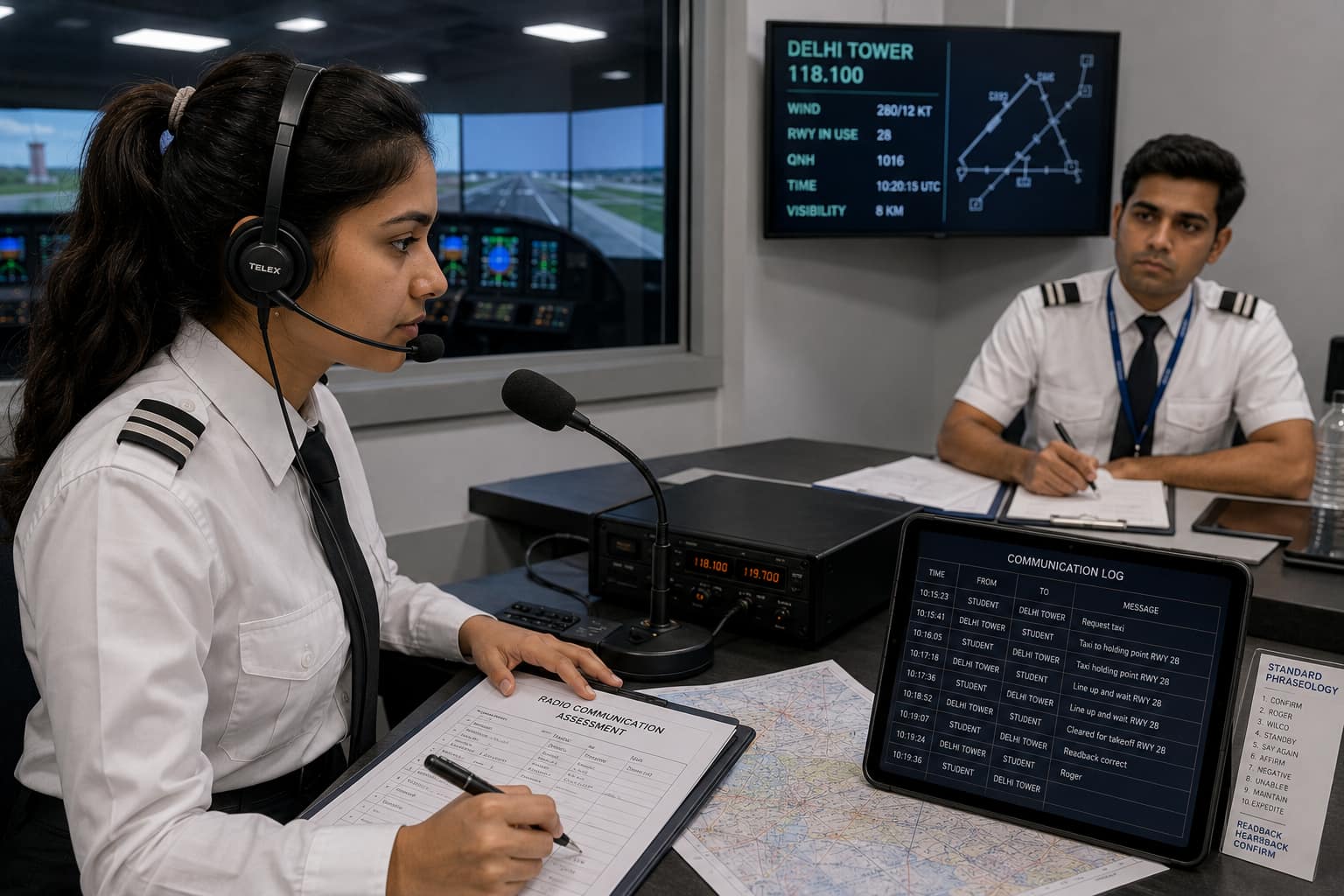
RTR is different because students must demonstrate communication skills under pressure.
Fear of Making Mistakes
Many students worry about using incorrect phraseology or missing critical information.
Lack of Practical Practice
Students often spend months reading theory but very little time actually speaking aviation communications aloud.
Examination Anxiety
Even well-prepared students can struggle if they become nervous during assessments.
⚠️
The biggest obstacle in RTR is often confidence rather than knowledge.
How Difficult is RTR Compared to DGCA Subjects?
Most students find RTR very different from subjects such as:
Air Navigation
Air Regulations
Aviation Meteorology
Radio Navigation
Instrument Navigation
Technical General
Technical Specific
DGCA subjects primarily test knowledge.
RTR tests communication and application.
This difference often creates the perception that RTR is harder.
What Skills Are Tested in RTR?
Examiners are generally assessing whether a candidate can communicate safely and professionally.
Clear communication
Standard phraseology
Situational awareness
Proper read-backs
ATC interaction
Emergency communication procedures
Confidence under pressure
Common Topics Covered in RTR
Departure Communications
Start-up requests
Taxi clearances
Departure clearances
Take-off clearances
En-Route Communications
Start your journey
Ready to become a commercial pilot?
Our admissions team can help you map out the right training path — from zero hours to a CPL.
Emergency communication procedures are among the most important areas of RTR preparation.
The Most Common Mistakes RTR Candidates Make
Students frequently lose marks due to avoidable errors.
Speaking too quickly
Incorrect phraseology
Failing to read back instructions
Overcomplicating responses
Lack of confidence
Memorizing scripts instead of understanding procedures
Poor listening skills
How to Prepare for RTR Successfully
Learn Standard Phraseology
Focus on ICAO-standard communication procedures.
Practice Daily
Spend at least 15–20 minutes each day speaking aviation communications aloud.
Listen to Real ATC Communications
Exposure to real-world communications improves confidence and familiarity.
Practice Emergency Scenarios
Students should regularly rehearse abnormal and emergency communication situations.
Conduct Mock Assessments
Simulated examinations help reduce anxiety and improve performance.
💡
Students who actively speak and practice communication generally perform much better than students who only read theory.
How Long Does RTR Preparation Take?
Preparation timelines vary depending on the student's communication skills and aviation knowledge.
Strong English communication skills: 2–4 weeks
Average students: 4–8 weeks
Students requiring additional confidence building: 2–3 months
Consistency is usually more important than study duration.
Can You Clear RTR on the First Attempt?
Yes.
Many students successfully clear RTR on their first attempt.
Successful candidates usually:
Understand phraseology
Practice consistently
Stay calm during assessments
Understand aviation procedures
Build confidence through mock scenarios
RTR Success Roadmap for CPL Students
1Complete DGCA ground school subjects.
2Learn ICAO phraseology.
3Understand ATC procedures.
4Practice daily communication exercises.
5Conduct mock radio sessions.
6Study emergency procedures thoroughly.
7Focus on confidence and clarity.
8Stay updated with current DGCA requirements.
Modern training platforms such as RAPT help students strengthen aviation knowledge, operational understanding, and procedural awareness, all of which contribute positively to RTR preparation.
Related RTR Articles
This article serves as the parent pillar page for the RTR and Aviation Communications section of the Rian Air DGCA Knowledge Hub.
Future detailed guides will include:
DGCA RTR Part 1 Guide (Coming Soon)
DGCA RTR Part 2 Guide (Coming Soon)
ICAO Phraseology Explained (Coming Soon)
MAYDAY vs PAN PAN (Coming Soon)
Radio Failure Procedures (Coming Soon)
DGCA RTR Registration Process (Coming Soon)
DGCA RTR Fees and Exam Schedule (Coming Soon)
RTR Mock Assessment Guide (Coming Soon)
Frequently Asked Questions
Is DGCA RTR hard?
RTR is challenging for students who do not practice communication. For students who understand aviation procedures and practice regularly, it is very manageable.
What is the hardest part of RTR?
Most candidates find real-time communication and confidence management more challenging than the actual syllabus.
Can I clear RTR without flight training?
Basic preparation can begin before flight training, but practical exposure significantly improves understanding.
How many attempts are usually required?
Many students clear RTR on the first attempt when they prepare systematically and practice consistently.
Final Thoughts
So, is DGCA RTR hard?
The honest answer is that RTR is different rather than difficult.
Unlike traditional DGCA examinations that focus on theoretical knowledge, RTR evaluates how effectively a future pilot can communicate in operational environments. Students who combine strong aviation knowledge with regular communication practice usually perform very well.
The key to success is simple: understand the procedures, practice consistently, communicate clearly, and focus on confidence rather than perfection.