Best ATPL App for Pilots in India: Flexibility That Comes With It
An ATPL app for pilots in India earns its place on a busy student's phone only if it maps directly to the DGCA's three ATPL theory papers and two oral exams, not a generic EASA question bank. Look for DGCA-aligned content, offline access, performance analytics, and ideally a link to your ground school and logbook data, the way the RAPT™ platform ties academics, simulator hours and progress tracking together.
Key Takeaways
- Exam match matters most: The DGCA ATPL theory stage covers three papers, Air Navigation, Radio Aids & Instruments, and Aviation Meteorology, plus two mandatory oral exams before the theory stage is complete.
- Generic EASA apps need a filter: Several popular ATPL apps are built around the EASA 14-subject syllabus, so an Indian CPL holder must check that DGCA-specific papers and formats are actually covered before relying on one.
- Analytics beat raw question count: A large question bank helps little if the app cannot show which subject is weak and by how much, ahead of the exam date.
- Offline mode is non-negotiable during simulator blocks: Connectivity drops inside training centres and hostels make offline-capable apps far more usable than web-only tools.
- An app is one part of a larger system: The strongest setups connect the question bank to ground school attendance, simulator data and a digital logbook, so parents and instructors see the same picture the student does.
ATPL App for Pilots in India: At a Glance
| What to check | Why it matters | Good sign |
|---|---|---|
| DGCA syllabus alignment | ATPL theory in India has three papers, not the EASA 14 | App lists Air Navigation, Radio Aids & Instruments, Meteorology by name |
| Oral exam prep | Two oral exams follow the written papers | App includes an oral-exam question set, not just MCQs |
| Offline access | Sim centres and hostels have patchy Wi-Fi | Downloadable question packs, works in airplane mode |
| Analytics depth | Raw scores don't show which topic is weak | Subject-wise heatmaps and attempt history |
| Ecosystem integration | A standalone quiz app can't see attendance or sim hours | Links to ground school records and digital logbook |
| Parent visibility | Sponsors want progress proof, not promises | Dashboard or report a parent can view directly |
| Cost relative to training | App fees are a small line item against total CPL/ATPL spend | Transparent pricing, no forced annual lock-in |
What Is the ATPL Exam Structure in India?
The DGCA ATPL theory stage has three written papers: Air Navigation, Radio Aids & Instruments, and Aviation Meteorology, followed by two mandatory oral exams before a candidate holds a complete ATPL theory pass. Air Navigation is the heaviest paper, with long-range navigation problems and time-distance-speed calculations under a strict clock.
Radio Aids & Instruments tests avionics and navigation systems knowledge, while Aviation Meteorology covers weather theory relevant to airline operations. This structure differs from the EASA ATPL(A) framework, which spreads content across fourteen subjects. That gap matters more than most first-time buyers realise.
An app built for EASA candidates in Europe or the Gulf may carry thousands of well-written questions that never appear in a DGCA paper. Before subscribing to any ATPL app for pilots in India, confirm it labels content by DGCA paper name, not just by generic aviation topic tags. If you're still working through CPL theory, the six-subject stage is covered in our guide to ATPL preparation in India.
Why Pilots in Delhi, Mumbai and Kerala Are Moving Exam Prep to Apps
Pilots training across Delhi, Mumbai and Thrissur increasingly study between simulator slots, not in fixed classroom hours. An app that fits fifteen minutes of revision into a commute or a break between sessions works better than a bound textbook.
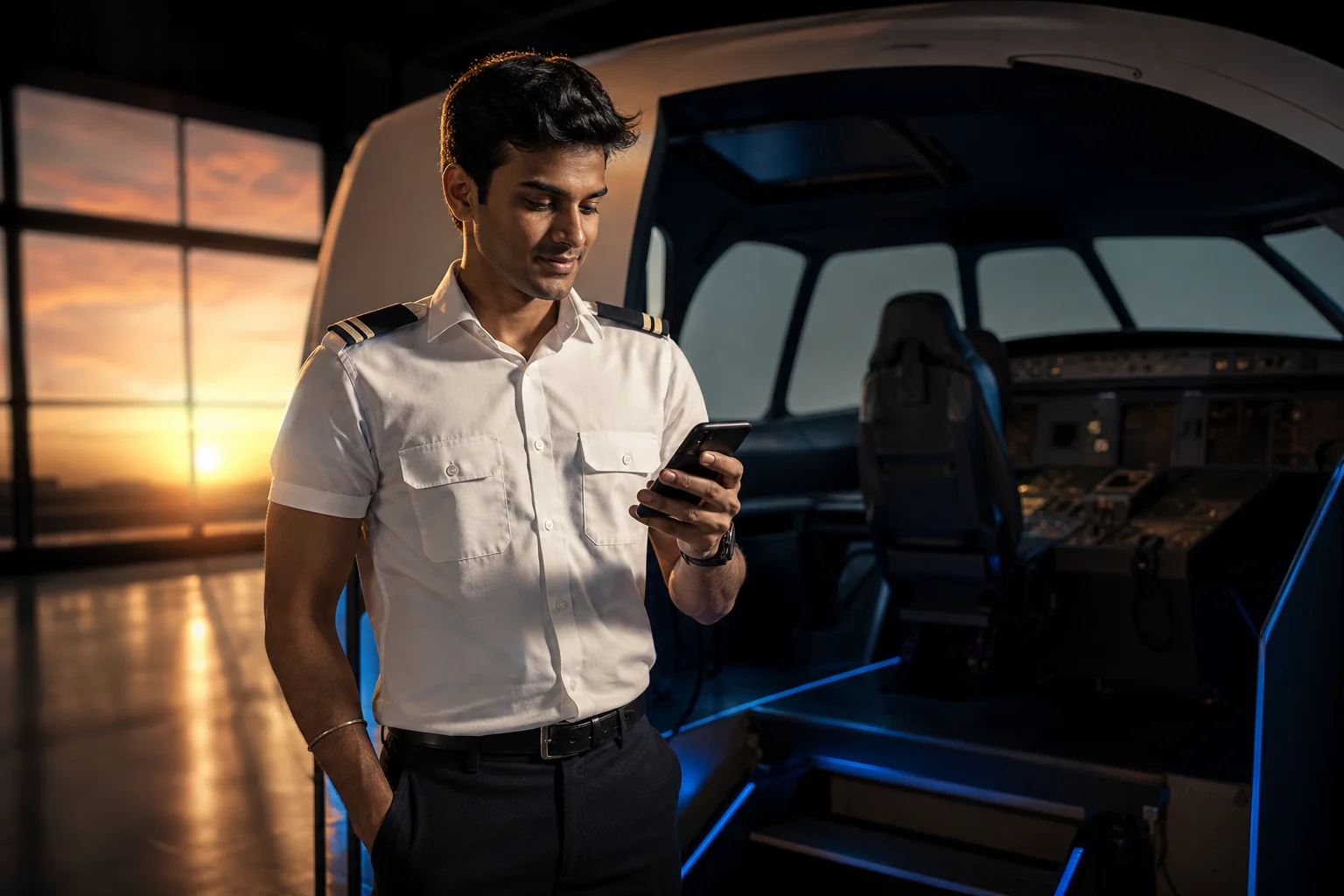
Sim-heavy weeks leave little room for structured study. A cadet doing back-to-back circuits in Delhi or fixed-base sessions in Kerala often has ten spare minutes, not sixty. A mobile-first ATPL app turns that gap into a focused quiz round on a weak subject, rather than wasted scrolling time.
This shift also affects parents. Sponsors in Mumbai or Thrissur who are paying training fees want proof of consistent study, not just a pass or fail months later. Some platforms address this directly through a shared dashboard, a feature we cover in our breakdown of the RAPT DGCA question bank.
1. Question Bank Depth and DGCA Alignment
A deep question bank only helps if it's tagged correctly against DGCA papers, with filters for subject, difficulty and attempt history, not a flat undifferentiated list of thousands of items.
RAPT's ground training module runs on a question bank of over 20,000 items mapped to the DGCA CPL and ATPL syllabus, letting a student drill a single weak topic inside Air Navigation instead of cycling through unrelated content. That kind of filtering saves hours over a normal revision cycle.
Compare that with apps built primarily for the EASA market. Aviation Exam and Infinite ATPL both maintain large, well-regarded EASA question banks, but their content is written against the EASA ATPL(A) syllabus rather than DGCA papers. An Indian CPL holder using either would need to cross-check every question against the DGCA syllabus manually, which defeats the purpose of app-based prep.
2. Performance Analytics That Actually Predict Exam Readiness
Useful analytics show a subject-by-subject accuracy trend over time, not just a single overall percentage after each quiz. A student needs to know if Radio Aids scores are flat or improving before deciding how to spend the next study week.
Attempt history matters as much as the score itself. A 70% average built from ten attempts on the same easy question set tells you far less than a 70% average across a rotating, randomised bank. Look for apps that track how many unique questions a student has actually seen.
This is also where a parent dashboard earns its keep. Instead of asking a student "how's the studying going," a sponsor can check a weak-subject report directly. We've written more on how that visibility works in practice in our piece on the best pilot career intelligence app for aspiring pilots in India.
3. Offline Access and Mobile-First Design
Offline access decides whether an app gets used every day or only when Wi-Fi cooperates. Simulator bays, hostel blocks and some training campuses in India still have inconsistent connectivity, so a question bank that needs a live connection for every quiz loses value fast.
Fly-Up markets itself around full offline functionality for ATPL and type-rating prep, letting students continue quizzes without a connection once content is downloaded. LearnATPL takes the opposite approach: it runs as a free, browser-based tool covering the EASA syllabus, with no install required, which suits a laptop-first study routine but assumes steady internet access.
Neither approach is wrong on its own. The right choice depends on where you study most: a hostel room with patchy signal favours an offline-capable app, while a home setup with reliable broadband can work fine with a web tool.
4. Integration With Ground School and Digital Logbook
The strongest ATPL apps connect exam prep to the rest of a student's training record: attendance, simulator hours, and flight logs, rather than sitting as an isolated quiz tool on a phone.
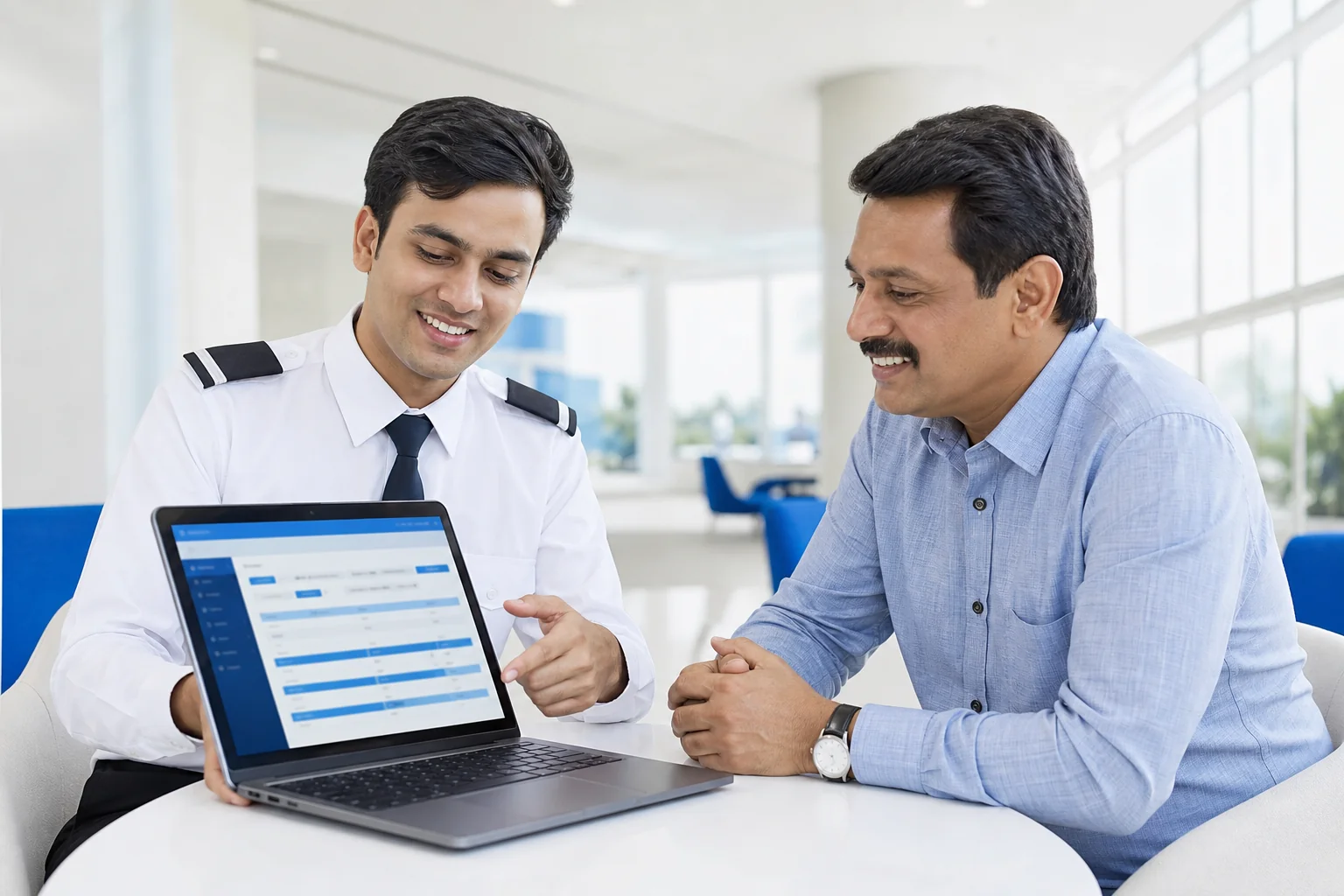
RAPT was built around this integration from the start, linking DGCA academics with simulator session data and a digital logbook so a student's exam readiness and flying progress live in one place. A parent checking the dashboard sees both sides of the picture: theory scores and cockpit hours, not just one.
Standalone quiz apps, including many of the EASA-focused ones on this list, are not designed to pull in simulator or flight data at all. That's a reasonable trade-off if all you need is exam drilling, but it means a second system is required to track the rest of training.
If you're comparing full training pathways rather than apps alone, our guide on becoming a commercial pilot in India after 12th lays out where ground school, simulator time and app-based study fit together.
Comparing ATPL App Types Available to Indian Pilots
The apps used by Indian pilots fall into a few clear categories, each with a different trade-off.
| App type | Example | Syllabus fit for DGCA | Offline mode | Best for |
|---|---|---|---|---|
| Integrated training platform | RAPT | Built directly around DGCA CPL/ATPL papers | Yes, within the ecosystem | Students who want exam prep linked to sim data and logbook |
| India-focused mock test app | TryFly | Positions itself around DGCA CPL and ATPL Regulations papers with a Pariksha-style interface | Limited, app-dependent | Targeted paper-by-paper mock practice |
| EASA-focused question bank | Aviation Exam, Infinite ATPL | Built for the EASA 14-subject syllabus | Varies by app | Pilots also pursuing EASA licences |
| Offline-first quiz app | Fly-Up | Covers ATPL and type-rating question sets offline | Yes | Low-connectivity study environments |
| Free web-based tool | LearnATPL | Covers the EASA ATPL(A) syllabus, no install needed | No, browser-based | Laptop-first EASA candidates with steady internet |
| General ATPL question database | ATPL Student App, Fasttrack ATPL | Broad aviation question databases, not DGCA-specific by design | Varies | General theory revision alongside a DGCA-specific source |
How Much Does an ATPL App Cost as Part of Overall Training?
An ATPL app's subscription or bundled fee is a small fraction of total pilot training cost, which runs into lakhs of rupees once ground school, simulator hours, flight training and type rating are added up. Treat the app as a study tool line item, not a major budget decision on its own.
Most exam prep apps price through tiered plans, single-paper packs, or ecosystem access included with ground school enrolment. Rather than quote a figure that shifts by provider and plan, ask each option for its current pricing sheet before comparing.
For families mapping out the full cost picture, from ground school fees to simulator blocks to flight training abroad, our detailed pilot training cost breakdown for India covers where the larger costs actually sit, and where an app-based system like RAPT is typically bundled rather than billed separately.
Common Mistakes Aspirants Make When Choosing an Exam App
The single biggest mistake is picking an app built for the EASA syllabus and assuming it covers DGCA ATPL papers automatically. The two frameworks overlap in subject names but differ in depth, format and passing criteria.

A second common error is ignoring analytics entirely and judging an app purely on the number of questions advertised. Ten thousand unfiltered questions with no weak-subject tracking is less useful than three thousand well-tagged questions with a clear readiness report.
Third, many students skip oral-exam preparation altogether, assuming the written papers are the whole test. The two DGCA oral exams that follow the ATPL theory stage carry real weight, and an app that only drills MCQs leaves that gap unaddressed.
Finally, some aspirants pick an app in isolation from their ground school, missing the value of a system where instructors and parents can see the same progress data. Our note on online ground classes for CPL and ATPL covers how live instruction and app-based revision work best together.
Frequently Asked Questions
How many exams does ATPL have in India?
The DGCA ATPL theory stage has three written papers, Air Navigation, Radio Aids & Instruments, and Aviation Meteorology, plus two mandatory oral exams that follow the written stage before the ATPL theory is considered complete.
Is a DGCA-specific ATPL app better than an EASA one?
Yes, for Indian candidates. A DGCA-specific app maps questions directly to the three ATPL papers used in India, while EASA apps are built around a fourteen-subject syllabus that doesn't match the DGCA exam format or content.
Can I use an ATPL app instead of ground classes?
No. An app supports revision and self-testing but doesn't replace structured, instructor-led ground classes that walk through the syllabus in sequence and clarify concepts a quiz app can't explain on its own.
Do ATPL apps prepare candidates for the oral exams too?
Some do, but many focus only on multiple-choice practice for the written papers. Check specifically for oral-exam question sets before assuming an app covers the full ATPL theory stage.
Is offline access necessary for an ATPL app?
It's highly useful, especially during simulator training blocks or in hostel accommodation where Wi-Fi is unreliable. An offline-capable app keeps daily revision consistent regardless of connectivity.
What is the RAPT platform used for?
RAPT is Rian Air's own platform linking DGCA-aligned ground training content, a large question bank, simulator session data, and a digital logbook, so students and parents see academic and flying progress in one place.
How big is a good ATPL question bank?
Size matters less than tagging quality, but a well-organised bank in the range of several thousand DGCA-mapped questions, filterable by subject and difficulty, gives a student enough variety to avoid memorising specific answers.
Are free ATPL apps good enough for DGCA exam prep?
Free tools like LearnATPL can help with general EASA theory revision, but candidates preparing specifically for DGCA papers should confirm the content maps to Indian exam formats before relying on a free option alone.
Can parents track progress through an ATPL app?
Some platforms, including RAPT, offer a parent dashboard showing quiz performance, weak subjects and simulator hours, giving sponsors visibility without needing to ask the student directly. Our beginner's roadmap for ground training in Delhi touches on how this visibility fits into the wider training timeline.
Does an ATPL app work the same in Delhi, Mumbai and Kerala?
Yes, the DGCA syllabus and exam format are national, so a well-built ATPL app works identically across Delhi, Mumbai, Thrissur or any other Indian city. Local differences come from ground school scheduling and simulator access, not app content.
Choosing an ATPL app for pilots in India comes down to one test: does it match the DGCA's three theory papers and two oral exams, and does it show you exactly where you stand before exam day arrives? A tool that does both, and connects to your ground school and simulator record, saves far more time than a generic question bank ever will.
If you're weighing ground school options alongside exam prep tools, start your pilot journey with Rian Air to see how the RAPT platform fits into a full DGCA training pathway, or explore pathways across India, Malta, Tunisia and New Zealand. For day-to-day updates on training and simulator sessions, follow along on Instagram or subscribe on YouTube.