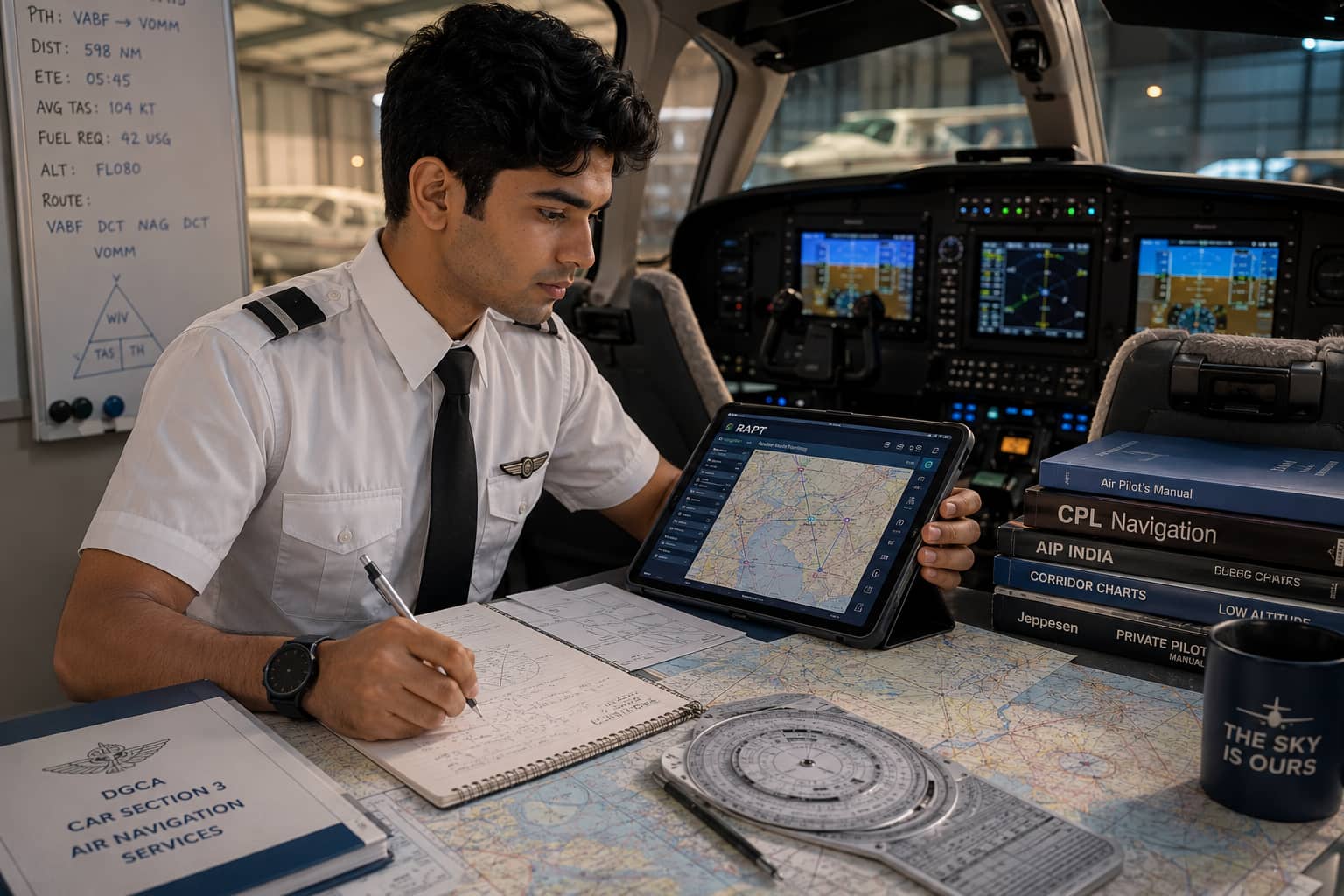
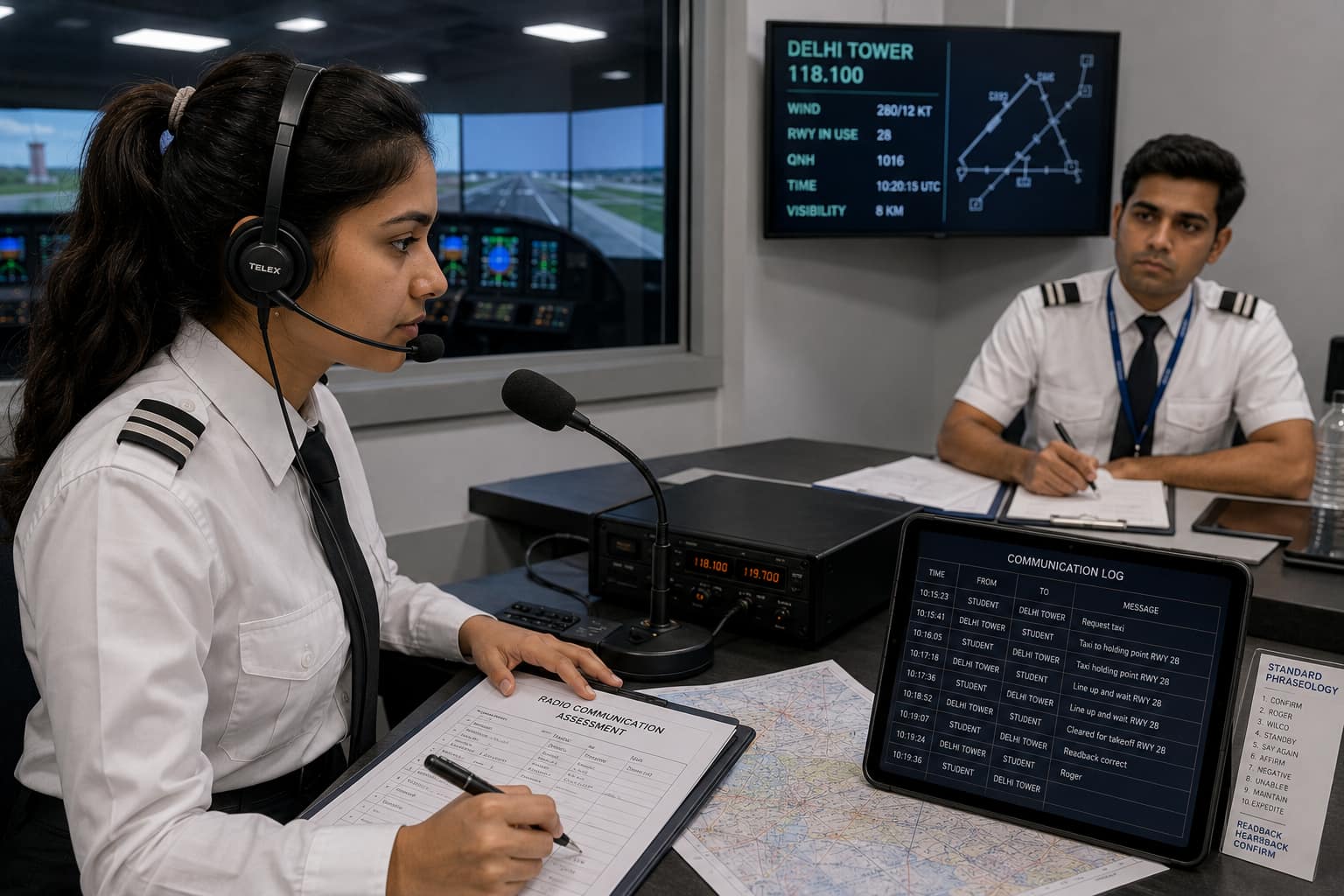
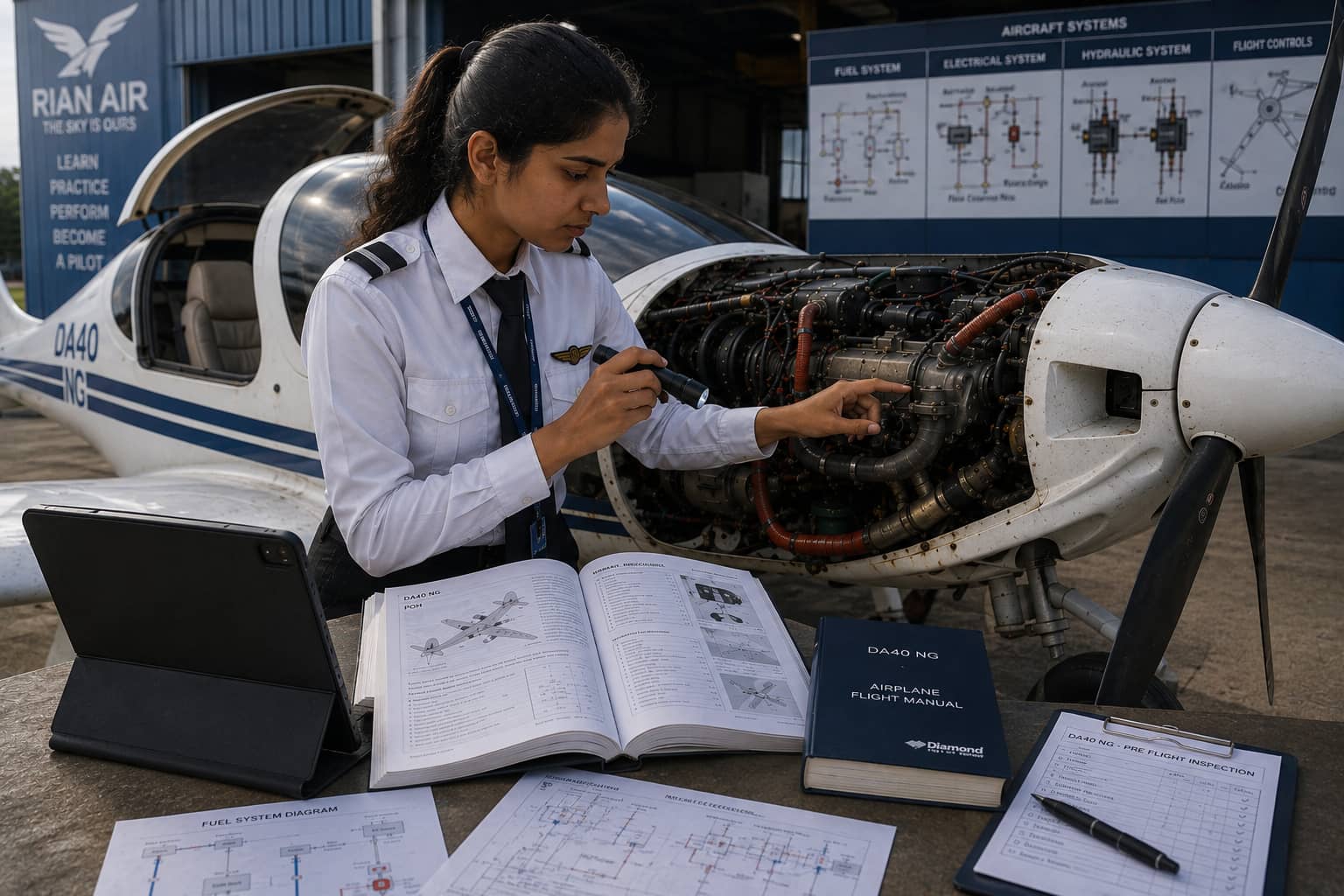
If there is one DGCA subject that consistently challenges aspiring pilots, it is Air Navigation.
Over the years, I have met students who were confident in Aviation Regulations and Meteorology but became nervous the moment navigation calculations appeared on the board. The reason is simple. Air Navigation is one of the first subjects that requires students to apply mathematics, logic, geography, weather, and aviation principles together.
The good news is that Air Navigation is not a difficult subject when approached systematically. In fact, once students understand the foundations, it often becomes one of the most enjoyable and practical subjects in CPL training.
For aspiring Commercial Pilot Licence (CPL) holders in India, Air Navigation is much more than a DGCA examination subject. It is a skill that will be used throughout a professional flying career.
— Capt. Vikas Vikramdas Nair
What is Air Navigation?
Air Navigation is the science and art of determining an aircraft's position and guiding it safely from departure to destination.
Every flight relies on navigation. Whether a pilot is operating a training aircraft, business jet, cargo aircraft, or airline flight, navigation forms the foundation of safe flight operations.
Students who are just beginning their aviation journey may find it useful to first read our guide on https://www.rianair.in/blog/how-to-become-a-pilot-after-12th-commerce which explains the overall CPL pathway before diving into DGCA subjects such as Air Navigation.
💡
Air Navigation is one of the most important DGCA CPL subjects because it directly influences route planning, fuel planning, flight safety, and operational decision-making.
Why Air Navigation is Important for CPL Pilots
A pilot must constantly know:
Current position
Intended destination
Remaining distance
Fuel requirements
Estimated arrival time
Weather impact on routing
Modern aircraft are equipped with advanced navigation systems, but pilots must still understand the principles behind those systems. DGCA therefore places significant emphasis on navigation knowledge during CPL training.
Topics Covered in DGCA Air Navigation
The DGCA Air Navigation syllabus covers a wide range of topics that gradually build a student's understanding of flight planning and navigation.
Based on the structure used in modern CPL preparation systems such as RAPT, Air Navigation can broadly be divided into the following areas.
Basics of Air Navigation
Introduction to navigation principles, aircraft positioning, bearings, directions, distances, and navigation terminology.
Latitudes and Longitudes
The global coordinate system used to identify positions on Earth.
Students learn:
Latitudes
Longitudes
Coordinates
Meridians
Great Circle
Rhumbline
Maps and Projections
Understanding how the spherical Earth is represented on aviation charts. Calculation of directions and distances on earth. Various projections.
Earth Magnetism
Understanding:
True North
Magnetic North
Variation
Deviation
Compass errors
Time and Earth Rotation
Students learn:
UTC
Local Time
Standard Time
International Date Line
Time conversions
Start your journey
Ready to become a commercial pilot?
Our admissions team can help you map out the right training path — from zero hours to a CPL.
One of the oldest navigation methods using heading, airspeed, time, and known position to estimate current position.
Rhumb Lines and Great Circles
Understanding the difference between constant track routes and shortest-distance routes used in long-distance flight planning.
PNR and ETP
Important operational concepts used during commercial flight planning and long-range operations.
Flight Planning
Combining navigation, weather, aircraft performance, and fuel requirements into a practical operational plan.
⚠️
Students often attempt to memorize formulas without understanding concepts. This usually creates problems later when solving flight planning and navigation calculations.
Common Challenges Faced by CPL Students
Based on my experience interacting with aspiring pilots, students usually face difficulties in the following areas:
Chart interpretation
Time calculations
Wind corrections
Compass calculations
PNR calculations
ETP calculations
Flight planning exercises
Many students become discouraged when they encounter these topics for the first time. However, these concepts become significantly easier when studied chapter by chapter rather than trying to master the entire subject at once.
How to Study Air Navigation Effectively
Successful CPL students typically follow a structured approach.
1Understand concepts before formulas.
2Study one chapter at a time.
3Practice calculations regularly.
4Solve DGCA-style questions.
5Revise weak areas frequently.
6Attempt mock examinations.
7Track performance over time.
Students preparing for DGCA examinations should focus on chapter-wise learning rather than random question solving.
Modern training platforms such as RAPT allow students to prepare chapter by chapter, attempt study sessions, take timed mock examinations, analyse weak areas, and monitor progress across multiple subjects through detailed analytics.
This approach helps students identify problem areas early and develop a more structured preparation strategy.
ℹ️
Students looking to improve their overall DGCA preparation may also find these guides useful:
https://www.rianair.in/blog/best-app-for-dgca-exams
https://www.rianair.in/blog/best-app-for-pilots
https://www.rianair.in/blog/what-happens-after-cpl
Related DGCA Navigation Articles
This article serves as the parent pillar page for the Air Navigation section of the Rian Air DGCA Knowledge Hub.
The following detailed guides will expand upon individual navigation topics.
Latitude and Longitude Explained for CPL Students (Coming Soon)
Maps and Projections Explained (Coming Soon)
Maps and Projections Explained (Coming Soon)
Earth Magnetism Explained (Coming Soon)
Earth Magnetism Explained (Coming Soon)
Dead Reckoning Navigation Explained (Coming Soon)
Rhumb Line vs Great Circle (Coming Soon)
PNR Explained (Coming Soon)
ETP Explained (Coming Soon)
Flight Planning Fundamentals (Coming Soon)
Why Air Navigation Matters Beyond the DGCA Exam
Many students view Air Navigation purely as an examination subject.
In reality, it forms the foundation of professional flying.
Whether operating a single-engine trainer, business aircraft, cargo aircraft, or airliner, pilots rely on navigation principles every day.
Students interested in understanding where these skills eventually lead should also explore our article What Happens After CPL?, which discusses the career pathways available after obtaining a Commercial Pilot Licence.
🚨
The objective of studying Air Navigation should not be merely passing the DGCA examination. The goal is to develop decision-making skills that contribute to safe and efficient flight operations throughout a pilot's career.
Frequently Asked Questions
Which books are recommended for DGCA Air Navigation?
Popular references include Trevor Thom, Oxford Navigation, Keith Williams, Nordian, and other DGCA-recommended texts.
What is the most important topic in Air Navigation?
All topics are important. However, Latitudes and Longitudes, Earth Magnetism, Great Circles, Rhumb Lines, PNR, ETP, and Flight Planning are particularly significant.
How can I improve my Air Navigation preparation?
Study systematically, practice calculations regularly, attempt mock examinations, and track your progress chapter by chapter.
Final Thoughts
Air Navigation is one of the most rewarding subjects in CPL training because it teaches students how pilots actually think, plan, and make decisions during flight.
Build a strong foundation, focus on understanding rather than memorization, and practice consistently. Once the fundamentals become clear, Air Navigation transforms from a challenging DGCA subject into a practical skill that supports every stage of a professional aviation career.