A Student's Diary: Flight Training Delays Due to Aircraft Availability
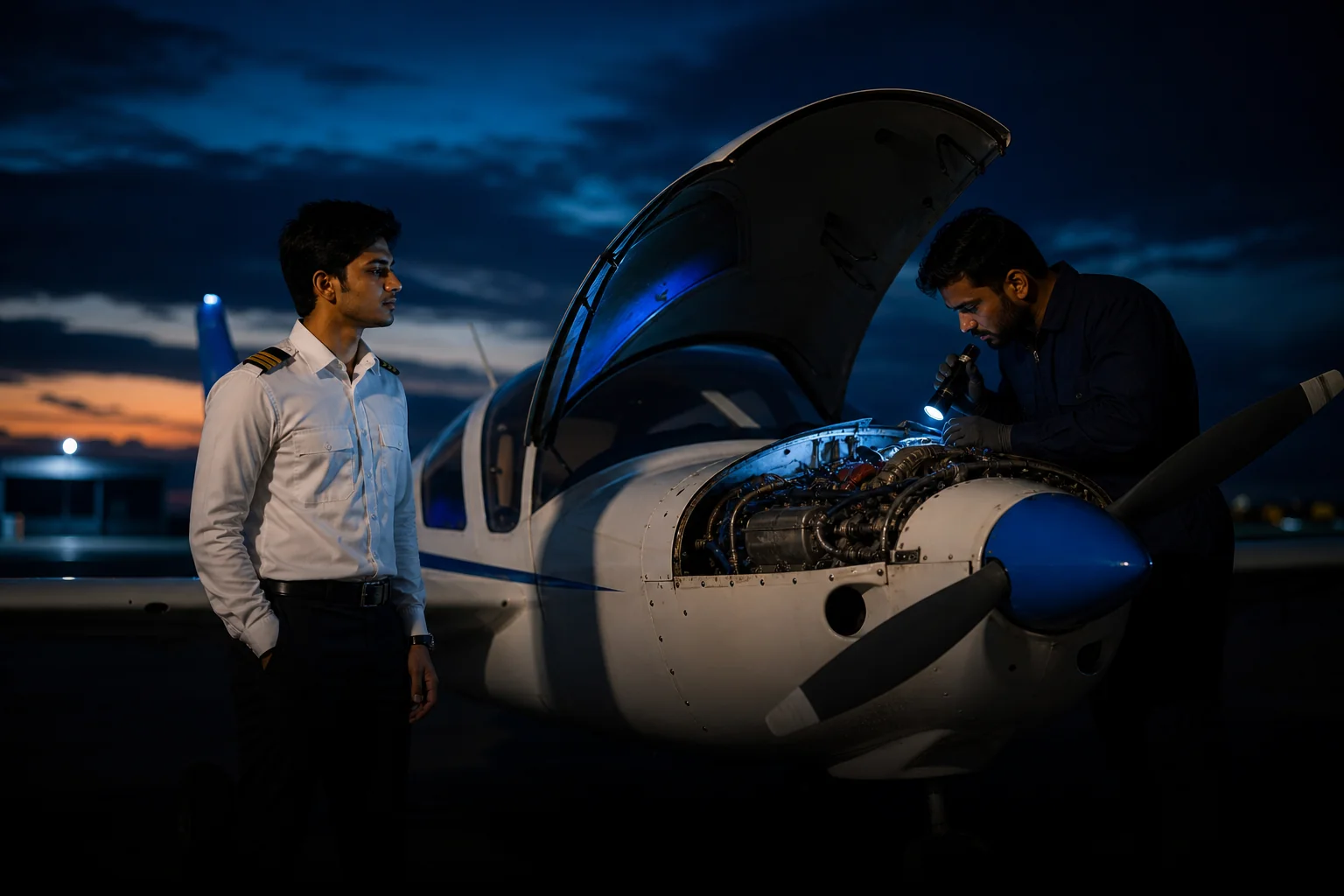
Flight training delays due to aircraft availability happen mainly because aircraft must go in for mandatory maintenance, not because schools are careless. A single Cessna 172 needs a 100-hour inspection, an annual inspection, GPS and VOR currency checks, and eventually an engine overhaul near 2,000 hours. The real variable is not whether maintenance happens; it is whether a school stocks spares in advance or waits until something breaks.
Key Takeaways
- 100-hour checks are routine, not a red flag: a well-stocked school turns one around in 2 to 4 days, while a school without spares can lose 2 to 3 weeks waiting for a part.
- Annual inspections go deeper: expect 1 to 2 weeks of downtime even with parts on hand, because the airframe, engine and avionics all get a full teardown check.
- Engine overhaul near TBO can ground an aircraft for 4 to 8 weeks: schools that plan fleet rotation around this avoid a full batch stall.
- Student-to-aircraft ratio decides how much a delay actually hurts you: a school running 10 students per aircraft absorbs downtime far better than one running 20 to 30 students per aircraft.
- Waiting time has a real rupee cost: extra weeks in a training city mean extra accommodation and living expenses, which is why a "cheap" school can end up the more expensive one.
At a Glance: Maintenance Time vs Training Time
| Maintenance Type | Typical Frequency | Downtime (Stocked Spares) | Downtime (No Spares in Stock) |
|---|---|---|---|
| 100-hour inspection | Every 100 flying hours | 2-4 days | 2-3 weeks |
| Annual inspection | Once every 12 months | 1-2 weeks | 3-4 weeks |
| GPS database update | Every 28 days | Same day | Same day |
| VOR accuracy check | Every 30 days (per CAR) | 1-2 days | 1 week if a component fails |
| Engine overhaul (TBO) | ~2,000 hours or 12 years | 4-6 weeks | 8-12 weeks |
| Unscheduled snag (tyre, brake, magneto) | As needed | 1-3 days | 1-2 weeks |
Week One: The Diary Entry That Started the Complaint
Aryan, a 19-year-old CPL student training out of Delhi, wrote this in his logbook notes: "Instructor said the aircraft is grounded again. Third time this month. I don't understand why it keeps happening to us."
His father called the school the same evening, annoyed that the Cessna 172 he had scheduled a lesson on was "gone for maintenance" again. It is a common reaction. Parents and students hear "grounded" and assume something has gone wrong with the school, when in most cases it means the school is doing exactly what it is supposed to do.
Aryan's instructor sat him down and walked him through the maintenance log. The aircraft had crossed 98 flying hours. A 100-hour inspection was due within the next two flights, whether Aryan liked the timing or not.
Why Aircraft Go Down for Maintenance: It Is a Feature, Not a Failure
An aircraft goes in for maintenance to protect the people flying it and the people on the ground below it. That is not an inconvenience; it is the entire point of a regulated training environment. The Directorate General of Civil Aviation (DGCA) mandates inspection intervals through its Civil Aviation Requirements, and no training organisation can legally skip them, regardless of how full the schedule looks.
Safety on an aircraft is never something a school can compromise on to save a week of downtime. Every hour an aircraft flies past its due inspection is a legal and safety violation, not a scheduling convenience. Students who understand this stop resenting the grounded tail number and start asking a better question: how fast can my school get it back in the air?
2. The 100-Hour Inspection: What It Covers and How Long It Takes
The 100-hour inspection is the most frequent major check a training aircraft undergoes, required after every 100 hours of flight time under DGCA rules for aircraft used in flight instruction. It covers the engine, control surfaces, landing gear, brakes, tyres, and all life-limited components.
A school that stocks common wear items, oil filters, spark plugs, brake pads, tyres, can usually complete this in 2 to 4 days. A school waiting on a supplier to ship a part can lose 2 to 3 weeks, and every one of those days is a day a batch of students cannot fly.
3. Annual Inspection: The Deeper Teardown
The annual inspection is more invasive than the 100-hour check. Engineers open up panels the 100-hour check does not touch, inspect wiring harnesses, check corrosion points, and verify every Airworthiness Directive (AD) has been complied with for that specific tail number.
Even with spares on hand, an annual typically takes 1 to 2 weeks at a CAR-145 approved maintenance facility. This is planned downtime; a school that schedules its annuals in the off-peak weeks of a batch cycle barely disrupts training. A school that lets the annual sneak up mid-batch disrupts every student on that aircraft at once.
4. GPS Database and VOR/Avionics Currency Updates
GPS navigation databases go stale every 28 days under the aeronautical information cycle, so every IFR-capable training aircraft needs a fresh database load roughly once a month. This is a same-day task and rarely causes a real delay by itself.
VOR receiver accuracy checks are required at similar intervals under CAR provisions for aircraft using VOR for instrument navigation training. Individually, these are small tasks. Stacked against a 100-hour check and an annual falling in the same month, they add up to real downtime a school has to plan around, not react to.
5. Engine Overhaul and Time-Between-Overhaul (TBO) Limits
Piston engines used in trainers like the Cessna 172, typically Lycoming units, carry a manufacturer Time Between Overhaul limit of around 2,000 hours or 12 calendar years, whichever comes first. Once an engine nears TBO, a full overhaul is not optional.
An overhaul with spares and an exchange engine ready can take 4 to 6 weeks. Without a spare engine lined up, that stretches to 8 to 12 weeks, long enough to derail an entire student batch's timeline if the school has no backup aircraft. This single factor explains more flight training delays due to aircraft availability than any other maintenance event on this list.
6. Other Routine and Unscheduled Maintenance
Beyond the scheduled items, trainers accumulate smaller, unscheduled snags: a worn tyre after a hard landing, a magneto drop on a runup check, a propeller nick from gravel on an unpaved strip, or an AD issued mid-year requiring a specific part replacement across the fleet.
- Tyre and brake replacement after heavy circuit training
- Magneto and spark plug servicing
- Propeller inspection after any foreign object strike
- Mid-year Airworthiness Directive compliance
- Battery and electrical system checks
None of these are dramatic on their own. A school with a spares shelf handles most of them within a day or two. A school without one grounds the aircraft until an order arrives.
Why Does Aircraft Availability Delay Flight Training So Often in India?
Aircraft availability delays training in India mainly because import lead times for spare parts and engines are long, and many smaller schools order parts only after a fault appears instead of stocking them in advance. Add a high student-to-aircraft ratio, and one grounded tail can stall a dozen students at once.
India's flight schools mostly rely on imported aircraft, engines and avionics from the United States and Europe. Customs clearance and freight alone can take weeks for a part that a well-funded academy would already have on its shelf. This is not unique to Delhi, Mumbai or Thrissur; it is an industry-wide pattern that has more to do with financial planning than geography.
Good School vs Cheap School: The Real Cost of Waiting
The difference between a well-run academy and a so-called cheap school rarely shows up in the fee structure. It shows up six months in, when one student is still flying on schedule and another is sitting in a hostel room waiting for a part to clear customs.

Good schools carry an inventory of common spares, oil filters, tyres, brake components, batteries, and even standby avionics units, so a snag becomes a same-week fix instead of a month-long wait. Cheap schools run on tighter margins and order parts only after something fails, which keeps the aircraft grounded for far longer.
| Factor | Well-Stocked School | Budget-Run School |
|---|---|---|
| Spares inventory | Stocked in advance | Ordered after failure |
| Typical unscheduled repair time | 1-3 days | 1-3 weeks |
| Student-to-aircraft ratio | Around 10:1 | 20 to 30:1 |
| Impact of one grounded aircraft | Absorbed by fleet capacity | Stalls the whole batch |
| Extra living cost from delay | Minimal | Can run into extra months of rent and food |
That last row is the one families underestimate. A course that should finish in 12 months but stretches to 15 or 16 because of grounded aircraft adds three or four extra months of accommodation and living expenses in a city like Delhi or Mumbai. A lower headline fee stops looking cheap once that bill arrives. Our earlier breakdown on why the cheapest flight training does not exist covers this pattern in more depth.
How Rian Air Structures Fleet Availability
Rian Air's exclusive partnership with The Aviator Institute exists specifically to control this variable. Instead of letting enrolment run unchecked, the partnership caps the ratio at roughly 10 students per aircraft, well below the 20 to 30 students per aircraft seen at many budget operations.
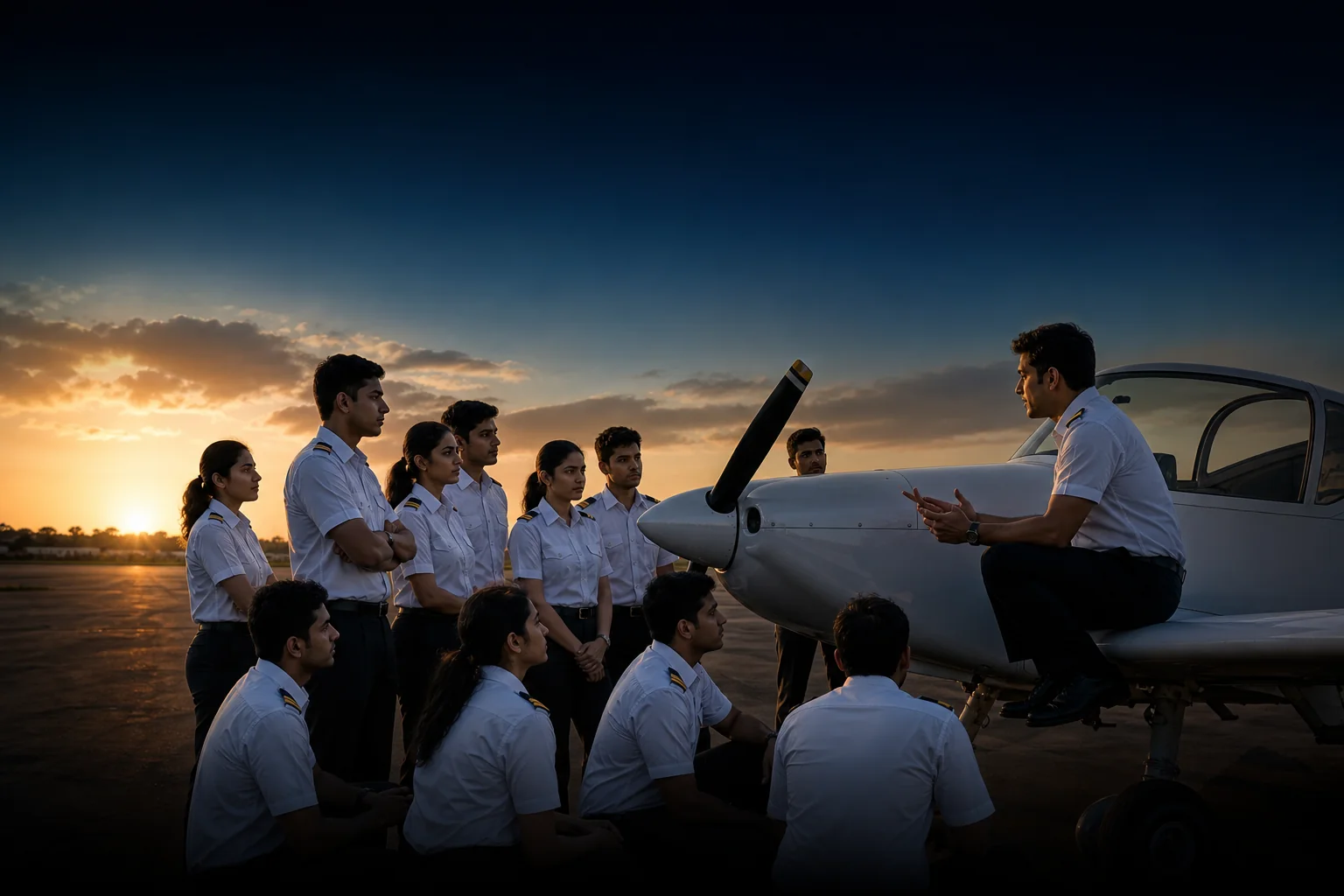
Fewer students sharing one tail number means a single 100-hour check or unscheduled snag affects a smaller group, and the fleet has more slack to absorb it. The RAPT™ platform gives parents and students visibility into where a batch stands, so a maintenance-related pause is communicated as a schedule note, not a surprise phone call. Students training through Rian Air's programs in Delhi, Mumbai and Thrissur see this fleet planning reflected directly in how few flying gaps show up on their digital logbook.
If you are comparing training pathways before committing, it helps to first understand how to become a commercial pilot in India after 12th, since the fleet and ratio questions matter just as much as the syllabus itself.
Budgeting for Delay: What Parents Should Ask Before Enrolling
Before signing up, ask the school directly how many students share each aircraft and whether spare parts are stocked on-site or ordered on demand. Both answers predict your actual course timeline far better than the brochure does.
- How many students are currently assigned to each training aircraft?
- Does the school stock common spares, or order them after a fault is found?
- What is the fleet size relative to the current batch size?
- How is a maintenance-related delay communicated to students and parents?
- What is the typical downtime for a 100-hour check at this specific school?
Parents who want ongoing visibility rather than a one-time answer should also look at how a school tracks progress. Our guide on questions to ask about a parent dashboard for tracking pilot training progress lists exactly what a transparent school should be willing to show you. Hidden cost planning matters here too; the piece on pilot training cost in India and hidden fees parents miss covers what unplanned months of delay actually cost a family.
Frequently Asked Questions
How many flying hours pass between 100-hour inspections?
A 100-hour inspection is due every 100 hours of flight time on a training aircraft used for instruction. Schools track this closely because flying even one hour past the limit without inspection is not permitted under DGCA rules.
Does maintenance downtime add to the total course duration?
It can, but only when a school lacks the fleet capacity or spares to absorb it. A school with enough aircraft and stocked parts schedules maintenance around student batches so the course timeline stays largely unaffected.
Can a student choose a school based on aircraft-to-student ratio?
Yes, and it is one of the most useful questions to ask before enrolling. Ask the school directly how many students are currently sharing each aircraft, since a lower ratio, closer to 10:1, means maintenance events affect fewer students at once.
Why does an engine overhaul take so much longer than a 100-hour check?
An engine overhaul involves a full teardown, inspection, and rebuild of the engine's internal components near its 2,000-hour or 12-year TBO limit, work that a 100-hour check never touches. That is why overhaul downtime runs into weeks instead of days, even at well-prepared schools.
Flight training delays due to aircraft availability are not going away, because the maintenance behind them protects every student who steps into that cockpit. What you can control is which school you choose to sit that delay out with. If you want a fleet plan built to keep a single grounded aircraft from stalling your entire timeline, start your pilot journey with Rian Air and ask about current batch-to-aircraft ratios directly. You can also explore pathways across Delhi, Mumbai and Thrissur, follow real training days on Instagram, or watch fleet and simulator walkthroughs on YouTube.