Scholarships and Loans: Funding CPL Flight Training in Tunisia for Indian Students
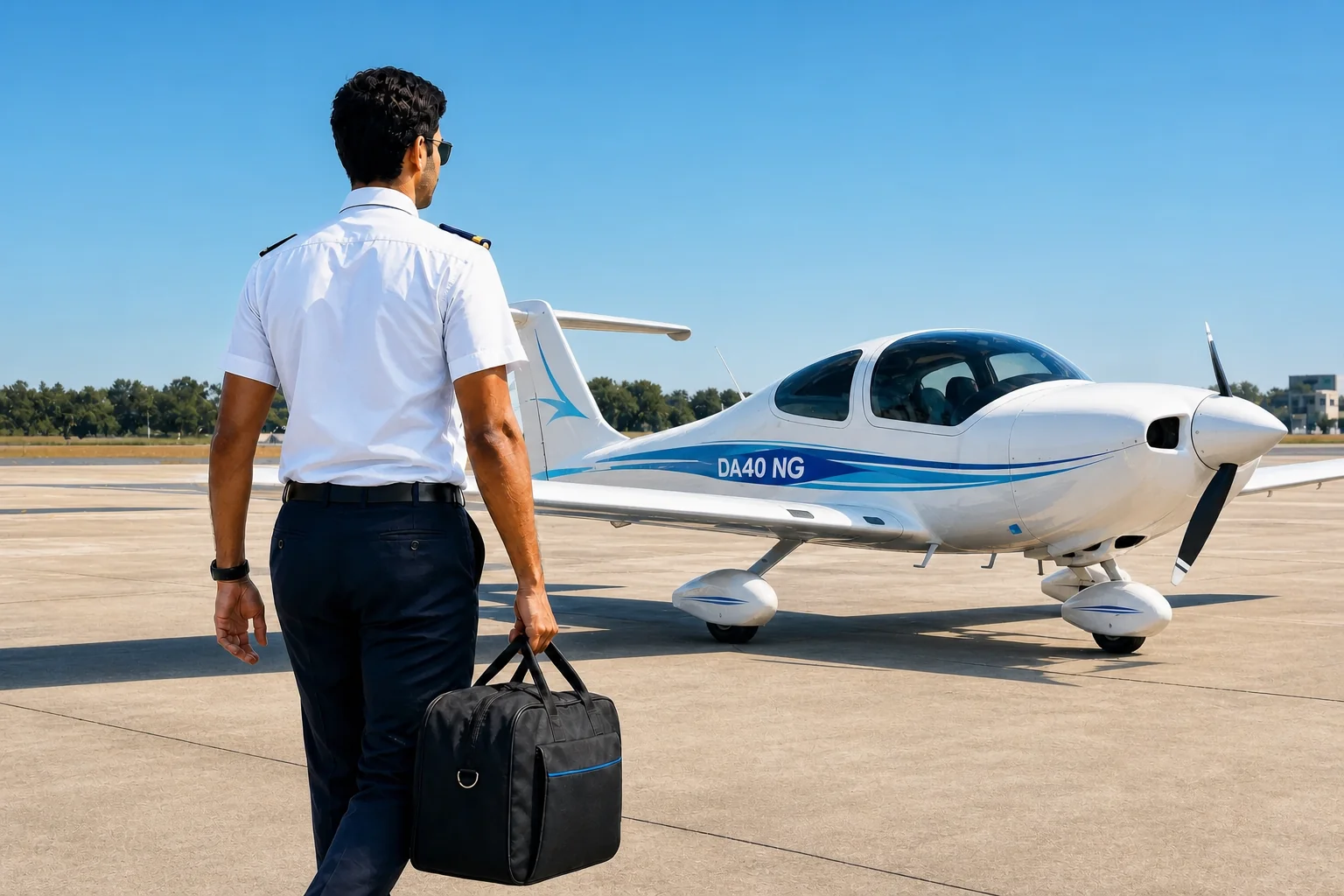
A Diamond DA40 in Monastir, Tunisia costs less per flying hour than the same aircraft in Malta, but that headline number is only half the funding picture. CPL flight training in Tunisia for Indian students is affordable relative to Europe, yet families still need a real plan combining scholarships, education loans, and staged instalments to cover ground school in India, the flying phase abroad, and the currency swings in between.
Key Takeaways
- Tunisia's cost edge is real but partial: flying hours on glass-cockpit Diamond aircraft run lower than Malta or New Zealand, but visa, accommodation, and currency conversion can add lakhs if unplanned.
- Scholarships mostly cover ground school, not the flying phase: Rian Air's Women Empowerment Program offers zero* fee DGCA ground training for eligible women aspirants (*a refundable commitment deposit applies), while a gender-neutral, merit-based scholarship exists for other qualifying candidates.
- Education loans need documentation from day one: banks and NBFCs ask for admission letters, fee breakups, and often collateral before releasing funds for training abroad.
- Staged funding reduces risk: pairing a ground-school scholarship in India with a loan disbursed in instalments against verified flying hours protects families from paying for hours not yet flown.
- Digital tracking matters for both loans and parents: a logbook and dashboard that verify hours flown make loan disbursement smoother and give sponsors real visibility into an overseas programme.
At a Glance: Funding CPL Training in Tunisia
Funding Component | Typical Coverage | Who Provides It |
|---|---|---|
DGCA ground school (India) | Theory, exam prep, question bank access | Academy fee or scholarship |
Women Empowerment Program | Zero* fee ground training (merit-based) | Rian Air (refundable deposit applies) |
Gender-neutral merit scholarship | Partial ground school support | Rian Air, merit-based |
CPL flying phase (Tunisia) | Flying hours, aircraft rental, instructor fees | Flight school in Tunisia, paid by family/loan |
Living costs abroad | Accommodation, food, local transport | Family, often underestimated |
Education loan | Full or partial flying-phase cost | Public bank or NBFC, secured/unsecured |
Currency buffer | Protects against Tunisian dinar/Euro swings | Family reserve, planned in advance |
Why Tunisia Draws Indian CPL Aspirants
Tunisia has become a serious option for Indian cadets because its flight schools run modern, glass-cockpit Diamond aircraft at a cost lower than most European bases. That combination of newer avionics and a lighter bill is rare.
Families comparing destinations usually weigh Tunisia against Malta and New Zealand on three factors: aircraft type, weather consistency for flying hours, and total cost including living expenses. Our detailed breakdown of how to become a commercial pilot in India after 12th covers where an overseas flying phase fits into the larger DGCA pathway.
A Tunisian CPL, once flown under an approved syllabus and validated correctly, can be converted toward a DGCA licence. That conversion process has specific documentation requirements, and getting it wrong costs both time and money, which is exactly why funding decisions should be made alongside pathway decisions, not after.
What Does CPL Training in Tunisia Actually Cost?
The headline flying-hour rate in Tunisia is genuinely competitive, but four cost heads routinely surprise parents: visa processing, shared or private accommodation, weather-related training extensions, and currency conversion losses on instalments paid in euros or dinars.
A delay of even a few weeks due to aircraft availability or weather can mean extra weeks of accommodation that nobody budgeted for. Our guide on pilot training cost in India and the hidden fees parents miss lists similar traps that apply just as much to overseas legs of training.
The families who plan best treat the quoted flying-hour rate as the floor, not the ceiling, and set aside a currency and delay buffer of roughly 15-20% above the quoted programme cost.
Before signing any contract with a Tunisian flight school, ask for a full fee schedule broken down by ground handling, dual instruction hours, solo hours, examiner fees, and any re-test charges. Compare that against what a DGCA-aligned academy in India quotes for the equivalent theory phase, since bundling the two badly is where most budgets go wrong.
How Do Education Loans Work for Overseas CPL Training?
Is a Tunisia CPL programme eligible for an Indian education loan?
Yes, most nationalised banks and several NBFCs fund CPL training abroad, including Tunisia, provided the flight school is recognised and the applicant furnishes an admission letter with a clear fee breakup. Approval usually depends on collateral value and the co-applicant's income, not the destination country alone.
Public sector banks typically offer lower interest rates but ask for tangible collateral, such as property, once the loan amount crosses a threshold, commonly around seven to ten lakhs. NBFCs move faster and sometimes lend unsecured, but at a higher interest cost.
Documentation that speeds up approval includes:
- Signed admission or enrolment letter from the Tunisian flight school with an itemised fee schedule
- Academic records from Class 12 and any prior aviation ground school certificates
- Co-applicant (usually a parent) income proof and credit history
- A clear repayment plan tied to expected type-rating and airline placement timelines
Banks disburse loans in tranches tied to programme milestones rather than as one lump sum. That is where verified flying-hour records become useful, since lenders increasingly want proof that a tranche was actually used for training before releasing the next one.
Scholarship Options for Indian Pilot Aspirants
Scholarships rarely cover the full cost of an overseas flying phase, but they meaningfully reduce what a family needs to borrow for the Indian ground school leg. Rian Air runs two such programmes.

The Women Empowerment Program offers zero* fee DGCA ground training for aspiring women pilots, based on merit, with a refundable commitment deposit applying as per terms. Alongside it, a gender-neutral, merit-based scholarship is open to qualifying candidates regardless of gender, again assessed on merit rather than need alone.
Neither scholarship is a blanket discount on the Tunisia flying phase itself. What they do is free up family funds and loan headroom that would otherwise go toward ground school fees, leaving more room in the loan amount for the actual flying hours abroad. Our detailed checklist on DGCA CPL exam subjects and syllabus is a useful reference once ground school begins, scholarship or not.
Can you combine a scholarship with a loan?
Yes, and it is often the most efficient structure: a merit scholarship covers or reduces the DGCA ground school fee in India, while an education loan, disbursed in stages, funds the flying phase in Tunisia. This keeps the loan principal smaller and the repayment burden lighter.
Staging the funding this way also reduces currency exposure. Instead of converting a large lump sum to euros or dinars at one exchange rate, families release smaller instalments as flying milestones are completed, spreading the currency risk across the programme instead of absorbing it all upfront.
How Rian Air's RAPT Platform Helps Parents Track the Investment
How does a parent verify progress during the Tunisia flying phase?
A parent verifies progress through a digital dashboard that shows hours flown, subjects cleared, and simulator performance in real time, rather than relying on periodic phone updates from an overseas school. Rian Air's RAPT platform is built for exactly this.

For sponsors funding training through a loan, this visibility does double duty. The same digital logbook that reassures a parent also gives a lender concrete evidence that disbursed funds correspond to actual flying hours completed, which can make follow-on tranches easier to justify to a bank's credit team.
Our piece on questions parents should ask about the parent dashboard walks through exactly what to check before you rely on any platform, including one used for an overseas programme like Tunisia.
Step-by-Step: Building a Funding Plan Before You Sign Up
- Audit the full cost, not just flying hours. Get itemised quotes for ground school, flying hours, accommodation, visa, and insurance separately.
- Compare pathways honestly. Weigh Tunisia against Malta, New Zealand, and India-based training on cost, weather reliability, and conversion timeline, not brochures alone.
- Apply for scholarships early. Merit-based scholarship windows often close before flying-phase admissions do, so apply for the ground school scholarship first.
- Shortlist lenders based on disbursement style. Prefer lenders willing to release funds in tranches tied to milestones over a single lump-sum disbursement.
- Build a currency buffer. Set aside 15-20% above the quoted flying-phase cost to absorb exchange rate movement and possible delays.
- Set up progress tracking from day one. Use a digital logbook and parent dashboard so both the family and the lender have a shared, verifiable record.
Ground school habits also shape how efficiently a student moves through the syllabus once flying begins abroad. Avoiding common early errors saves both time and money; our instructor-written guide on common mistakes DGCA aspirants make during ground school is worth reading before departure, not after.
Frequently Asked Questions
Is a Tunisian CPL valid for DGCA conversion?
A CPL earned in Tunisia can be converted toward a DGCA licence if the training organisation, syllabus, and examiner approvals meet DGCA's recognition requirements. Families should verify this recognition status directly with the flight school and DGCA before enrolling, not after training is complete.
Do Indian banks actually fund flight training abroad?
Yes, several public sector banks and NBFCs offer education loans for CPL training abroad, including Tunisia, subject to collateral, co-applicant income, and an admission letter with a clear fee breakup from the flight school.
What is Rian Air's money-back promise, and does it apply here?
Rian Air's money-back promise states that if Rian Air fails to get a student through the DGCA exams, the student gets their money back, subject to terms and conditions. This promise applies to Rian Air's DGCA ground training component; ask for the T&C sheet to see exactly how it applies alongside an overseas flying phase like Tunisia.
Should every student choose Tunisia over Malta or New Zealand?
Not necessarily. Tunisia suits students prioritising lower flying-hour costs on modern aircraft, but a family less comfortable with currency risk or wanting a longer-established regulatory track record might find Malta or New Zealand a better fit. That decision genuinely depends on individual risk tolerance and budget, and it is one families should make with full cost data in hand, not brochure comparisons.
Funding a CPL programme in Tunisia works best when scholarship applications, loan documentation, and pathway comparisons happen together, not as separate, last-minute decisions. If you are weighing Tunisia against other destinations, explore pathways to see how ground school, scholarships, and flying phases fit together for your situation. You can also follow real training updates on Instagram or watch cockpit and simulator sessions on YouTube. When you are ready to talk through scholarship eligibility and loan-friendly instalment structures, get in touch with Rian Air's admissions team to build a funding plan around your specific budget.