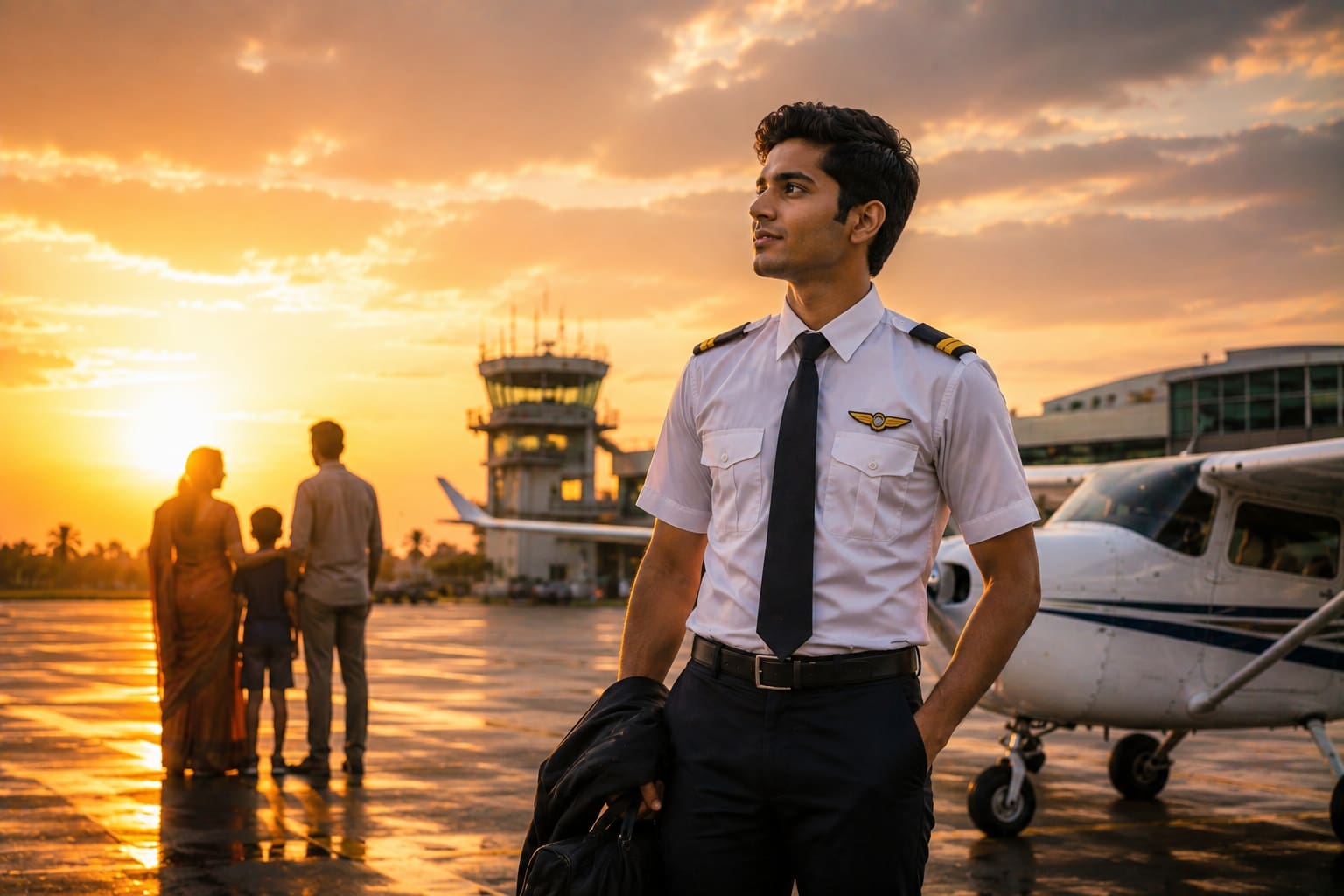
Many students believe that choosing Commerce in Class 11 and 12 automatically ends their dream of becoming a pilot. Over the years, we have spoken to countless aspiring aviators and parents who were surprised to learn that this is simply not true.
If you are searching for information on how to become a pilot after 12th Commerce, the good news is that there is a clear pathway available. While Physics and Mathematics are required for Commercial Pilot Licence (CPL) training, Commerce students can still meet these requirements and successfully pursue a career in aviation.
Today, pilots come from diverse educational backgrounds. What matters most is proper planning, the right guidance, and a commitment to completing the required training.
Quick Answer
Yes, you can become a pilot after completing 12th Commerce.
Commerce students are eligible to become pilots provided they complete Physics and Mathematics at the 10+2 level and satisfy the licensing requirements prescribed by the Directorate General of Civil Aviation (DGCA).
Complete Physics and Mathematics at the 10+2 level
Obtain a DGCA Class 2 Medical
Obtain a DGCA Class 1 Medical
Apply for a DGCA Computer Number
Complete CPL Ground Training
Pass DGCA examinations
Complete flight training
Meet CPL licence requirements
💡
Choosing Commerce does not prevent you from becoming a pilot. Thousands of aspiring pilots have successfully entered aviation after completing the required Physics and Mathematics qualifications.
Can Commerce Students Become Pilots?
Yes. Commerce students can absolutely become pilots in India and abroad. One of the biggest misconceptions in aviation is that only Science students are eligible for flight training.
The reality is much simpler. DGCA requires Physics and Mathematics at the 10+2 level. The stream itself is not the deciding factor.
The Most Common Misconception
Many students believe they must repeat Class 11 and 12 if they studied Commerce. Fortunately, that is not true.
Students can complete the required Physics and Mathematics subjects through recognized educational pathways and continue their aviation journey.
ℹ️
The requirement is Physics and Mathematics at the 10+2 level. DGCA does not specifically require students to come from the Science stream.
Why Commerce Students Often Perform Well
Aviation is not solely about science and calculations. Successful pilots are expected to demonstrate professionalism, communication, decision-making, situational awareness, and leadership.
Many of these qualities are independent of academic stream.
Strong communication skills
Professional attitude
Leadership qualities
Time management
Decision-making ability
Situational awareness
Discipline
Educational Requirements for Commerce Students
Before beginning CPL training, Commerce students must ensure they satisfy the educational requirements prescribed by DGCA.
Physics Requirement
Physics is mandatory for CPL eligibility. Students who did not study Physics during Class 11 and 12 must complete the subject through a recognized pathway before licence issuance.
Mathematics Requirement
Mathematics is also mandatory. Students without Mathematics at the 10+2 level must complete the requirement before progressing toward CPL issuance.
Popular Pathways
Several recognized options are available for Commerce students who need to complete these subjects.
National Institute of Open Schooling (NIOS)
Recognized state boards
Equivalent approved educational pathways
⚠️
Always verify the latest eligibility requirements directly through DGCA and your chosen training organization before making academic decisions.
How to Become a Pilot After 12th Commerce
The process of becoming a pilot can be broken into a series of manageable steps.
Step 1 – Complete Physics and Mathematics
If you did not study Physics and Mathematics during higher secondary education, complete these requirements through an approved pathway.
Step 2 – Obtain a DGCA Class 2 Medical
This is usually the first aviation medical examination completed by aspiring pilots.
It helps determine medical fitness before significant investments are made in training.
Confirms medical eligibility
Identifies potential medical concerns
Helps avoid unnecessary expenses
Provides clarity before training begins
Step 3 – Apply for a DGCA Computer Number
The DGCA Computer Number is required for examinations and licensing procedures.
Step 4 – Begin CPL Ground Training
Ground training provides the theoretical foundation required for flight training and DGCA examinations.
Air Navigation
Meteorology
Air Regulations
Technical General
Technical Specific
RTR Preparation
Step 5 – Pass DGCA Examinations
Students must successfully complete the required theoretical examinations before licence issuance.
Step 6 – Complete Flight Training
Flight training develops practical flying skills and operational competence.
Dual Flying
Solo Flying
Instrument Flying
Night flying
Cross-country flying
Multi Engine flying
Skill tests
Step 7 – Apply for CPL Issuance
Start your journey
Ready to become a commercial pilot?
Our admissions team can help you map out the right training path — from zero hours to a CPL.
After meeting all requirements, students can apply for Commercial Pilot Licence issuance.
🚨
Complete your aviation medical examination before making major financial commitments toward pilot training.
Eligibility Criteria
Aspiring pilots must satisfy educational, medical, and regulatory requirements before obtaining a Commercial Pilot Licence.
Educational Eligibility
Class 12 pass or equivalent
Physics at the 10+2 level
Mathematics at the 10+2 level
Medical Eligibility
DGCA Class 2 Medical
DGCA Class 1 Medical
Additional Requirements
English language proficiency
DGCA Computer Number
Required flying hours
DGCA examination completion
ℹ️
Eligibility requirements may change over time. Always consult the latest DGCA regulations before beginning training.
Cost of Pilot Training
The cost of pilot training is one of the most important considerations for students and parents.
Ground Training Cost
Ground training generally costs between ₹1.5 Lakhs and ₹3 Lakhs depending on the institution, resources provided, and simulator exposure.
Flight Training Cost
Flight training usually represents the largest investment.
Most students spend between ₹50 Lakhs and ₹80 Lakhs depending on the training location, aircraft fleet, and operational costs.
Additional Expenses
Students should also budget for various additional expenses during training.
Medical examinations
Examination fees
Documentation costs
Travel expenses
Accommodation
Uniforms and study materials
Fuel Surcharge
💡
Selecting a flying school based purely on price can be a costly mistake. Training quality, aircraft availability, instructor support, and safety standards are equally important.
Estimated Total Cost
Most aspiring pilots should realistically plan for a total investment of approximately ₹50 Lakhs to ₹50 Lakhs for CPL and an additional ₹5 to ₹20 Lakhs for Instructor Rating or Type Rating.
Duration and Training Process
The duration of pilot training depends on multiple factors including weather, aircraft availability, examination schedules, and student performance.
Typical Timeline
1Physics and Mathematics Completion (if required): 6–12 months
2Ground Training: 4–8 months
3Flight Training: 12–24 months
4CPL Issuance Process: Variable
Overall Duration
Most Commerce students can expect the complete journey to take approximately 18 to 36 months.
ℹ️
Consistent training quality is more important than simply completing training as quickly as possible.
Pilot Training in India vs Abroad
Many students explore both domestic and international flight training options before making a decision.
Advantages of Training in India
Familiar environment
DGCA-focused training
Easier documentation process
Proximity to family
Better understanding of local aviation regulations
No visa procedures
Advantages of Training Abroad
Better weather in some regions
International exposure
Access to modern fleet
Controlled airspaces
Independent living environment
Popular Training Destinations
India
United States of America
Tunisia
Malta
New Zealand
Australia
South Africa
ℹ️
The best training destination depends on your budget, goals, timelines, and preferred learning environment.
💡
A strong foundation in ground training often determines how smoothly students progress through flight training later.
Frequently Asked Questions
Can I become a pilot after 12th Commerce?
Yes. Commerce students can become pilots after completing the required Physics and Mathematics qualifications and satisfying DGCA requirements.
Is Physics compulsory for pilot training?
Yes. Physics at the 10+2 level is mandatory for CPL eligibility.
Is Mathematics compulsory for pilot training?
Yes. Mathematics at the 10+2 level is mandatory for CPL eligibility.
Can I study Physics and Mathematics after completing Commerce?
Yes. Many students complete these subjects through NIOS or other recognized educational pathways.
How much does pilot training cost in India?
Most students should budget between ₹50 Lakhs and ₹80 Lakhs depending on their chosen training pathway.
How long does it take to become a pilot?
Most students complete the process within 18 to 36 months.
Can Commerce students join airlines?
Yes. Once they obtain the required licences and qualifications, Commerce students are eligible to apply for airline positions.
Is pilot training abroad better than India?
Not necessarily. The best option depends on individual goals, budget, training quality, and long-term career plans.
Final Thoughts
Choosing Commerce does not end your dream of becoming a pilot. Every year, students from Commerce backgrounds successfully complete pilot training and build rewarding careers in aviation.
With the right guidance, proper planning, and a commitment to meeting the required qualifications, becoming a pilot after 12th Commerce is entirely achievable. The aviation industry values skill, professionalism, and dedication far more than the stream you selected in school.